Bacteria cannot grow in a true, hard vacuum, but that is not what vacuum sealing actually creates. When you seal food in a vacuum bag, you remove most of the air and oxygen, but you do not sterilize anything. Some bacteria, especially anaerobes, either prefer or tolerate low-oxygen environments and can survive, stay dormant, or even grow actively inside a sealed bag if temperature, moisture, and nutrients allow it. So the short practical truth is: vacuum sealing slows spoilage, but it does not make food safe to ignore.
Can Bacteria Grow in a Vacuum? Vacuum-Sealed Food Safety

Marcus Holloway
6 Jun 2026
Vacuum vs sterilization: what vacuum sealing actually changes
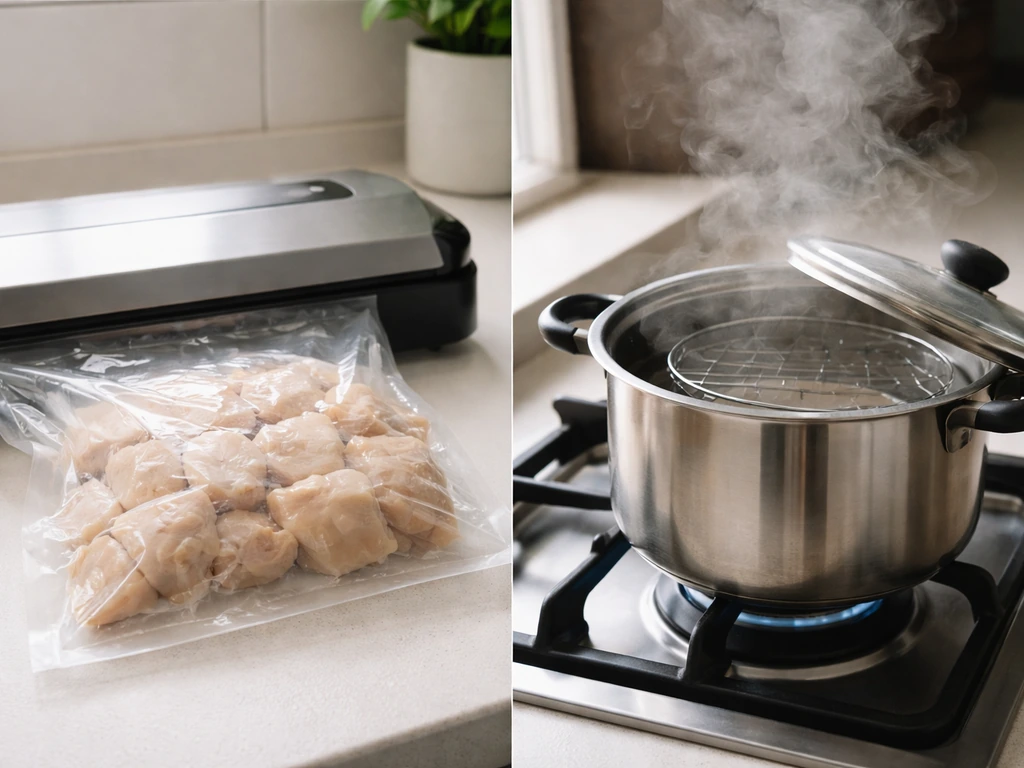
This is the biggest misconception worth clearing up. Sterilization means destroying all microbial life. A vacuum just means removing air. Those are two very different things, and confusing them is where food safety mistakes happen.
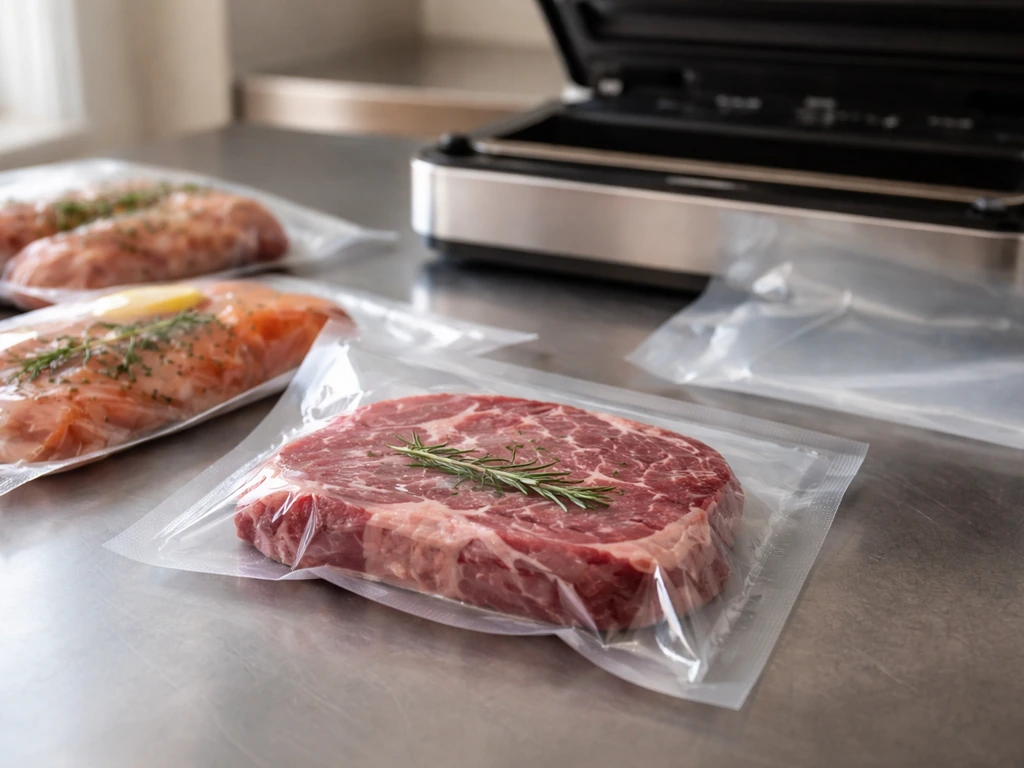
When vacuum packaging removes oxygen from a food package, it creates what food scientists call a reduced-oxygen environment. The oxygen level drops dramatically, which is great for slowing the spoilage bacteria and chemical reactions that need oxygen to thrive. That is why vacuum-sealed meat, for example, often turns a deep purple-red color instead of the bright red we associate with fresh meat at the butcher: the color-changing protein myoglobin is not reacting with oxygen the way it normally would. This is a chemistry change, not a safety change.
Crucially, even after vacuum sealing, some oxygen can remain trapped in the food itself, dissolved in liquids or occluded in the tissue. So "vacuum" in a food context almost never means absolute zero oxygen. It means low oxygen, and low oxygen is a different biological situation than no oxygen. Some microbes find it downright comfortable.
Which bacteria can survive or grow with low oxygen
Microbiology classifies bacteria by their relationship with oxygen. Obligate aerobes need oxygen and will die or stop growing without it, so vacuum conditions genuinely stop them. But there are two other categories that matter a lot here.
- Facultative anaerobes: these bacteria can grow with or without oxygen. They switch strategies depending on what is available. Seal away the oxygen and they keep going, just using a different metabolic pathway. Many common bacteria fall into this category.
- Obligate anaerobes: these bacteria not only tolerate the absence of oxygen, they require it. Oxygen can actually inhibit or kill them. A vacuum-sealed bag is not a hostile environment for obligate anaerobes; it can be ideal.
- Spore-formers: certain bacteria produce endospores, which are dormant, incredibly tough structures that can survive extreme conditions including drying, heat, and low oxygen. When conditions improve, spores can germinate back into active bacteria.
The most important name in this conversation is Clostridium botulinum. It is an obligate anaerobe, a spore-former, and the cause of botulism. The USDA has explicitly noted that C. botulinum prefers low-oxygen environments and can reproduce well in vacuum-packaged foods. Its spores can survive the vacuum sealing process entirely intact. If the temperature is right and nutrients are available, those spores can germinate and produce botulinum toxin inside a sealed bag, with no obvious odor or visible sign to warn you.
What still controls growth: temperature, moisture, pH, and nutrients
Oxygen is just one of several factors that determine whether bacteria grow, slow down, or go dormant. Food safety scientists think about these factors as a set of hurdles: controlling multiple hurdles at once is far more effective than relying on any single one. Vacuum sealing removes one hurdle (oxygen) but leaves the others in play.
| Factor | What it does to bacterial growth | Practical threshold to know |
|---|---|---|
| Temperature | The single most powerful control. Cold slows growth significantly; heat kills bacteria at sufficient levels. | Non-proteolytic C. botulinum strains can grow as low as about 3°C (37°F). Most pathogens thrive between 4°C and 60°C (40°F–140°F), known as the danger zone. |
| Water activity (moisture) | Measures how much free water is available for microbial use. Lower water activity means less available moisture for growth. | C. botulinum proteolytic strains need a water activity of at least 0.94 to grow. Dried or cured foods use this principle. |
| pH (acidity) | Very acidic or very alkaline conditions inhibit most bacterial growth. | Most pathogens prefer neutral to slightly acidic conditions (pH 4.6–7.5). Highly acidic foods below pH 4.6 inhibit C. botulinum toxin production. |
| Nutrients | Bacteria need a carbon source, nitrogen, and trace elements to grow and reproduce. | Protein-rich foods like meat provide ideal nutrients; this is why vacuum-sealed meat carries more risk than, say, vacuum-sealed dry rice. |
The key insight here is that these factors interact. A food that is slightly acidic, low in moisture, and kept cold is protected by three simultaneous hurdles. Remove one, say by leaving vacuum-sealed meat at room temperature, and the remaining hurdles may not be enough to prevent growth. This is exactly why USDA guidance stresses that vacuum packaging does not make perishable food safe to store at room temperature, period.
Vacuum-sealed meat and food safety: spoilage vs pathogens
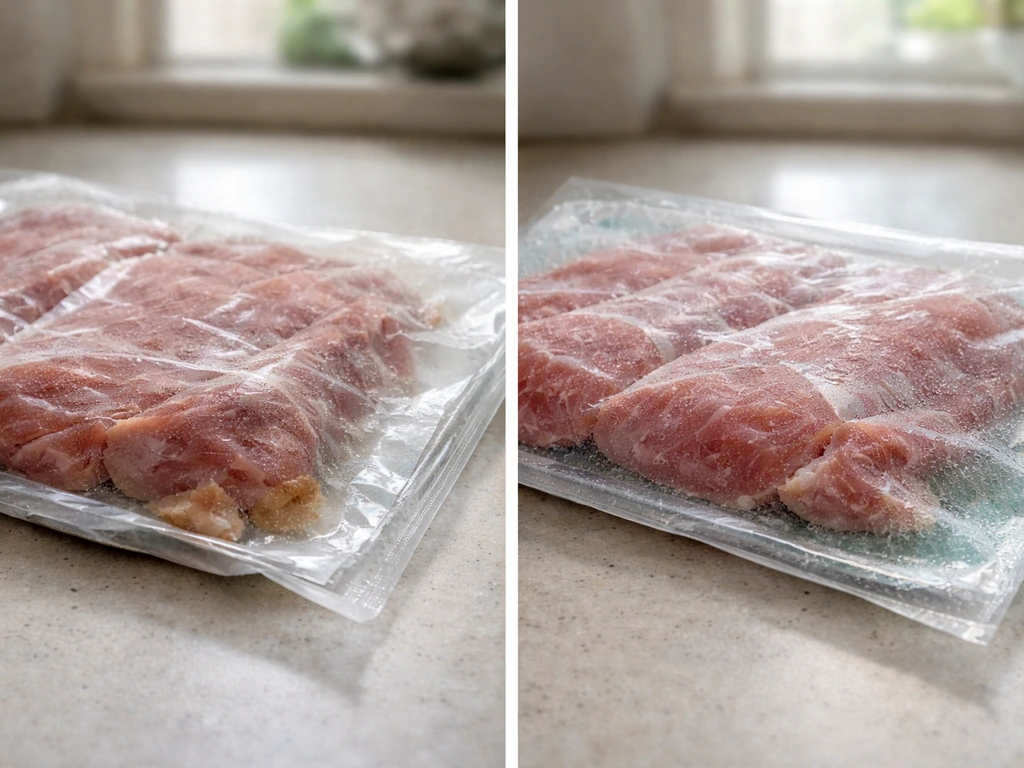
There is an important distinction between spoilage bacteria and pathogens, and vacuum sealing affects them differently in ways that can be genuinely misleading.
Many spoilage bacteria are aerobic, meaning they need oxygen. Vacuum sealing does a solid job of suppressing them, which is why vacuum-sealed meat often looks, smells, and feels fine well past the point where regular-packaged meat would clearly be off. That improved shelf life is real and useful. But it can create a false sense of security, because the absence of spoilage signals does not mean the absence of pathogens.
Pathogens like C. botulinum do not produce the obvious off-odors and sliminess that spoilage bacteria do, especially in the early stages of toxin production. USDA FSIS is direct about this: you cannot see, smell, or taste harmful bacteria. A vacuum-sealed bag of meat can look perfectly normal and still carry a dangerous microbial load if temperature control was ever lost. The low-oxygen environment that suppresses visible spoilage is the same environment that can allow anaerobic pathogens to thrive unseen.
This is why comparing vacuum-sealed meat to, say, bacteria growth on an inert surface like glass or silicone is not especially useful. Meat is a rich nutrient environment with high water activity, sitting in a sealed reduced-oxygen pouch: it is almost optimized for anaerobic bacterial growth if temperature control fails. The packaging material itself is not the risk; the conditions inside are.
Practical next steps: storage, signs to watch, and what to do if the bag is compromised
Storage rules that actually matter
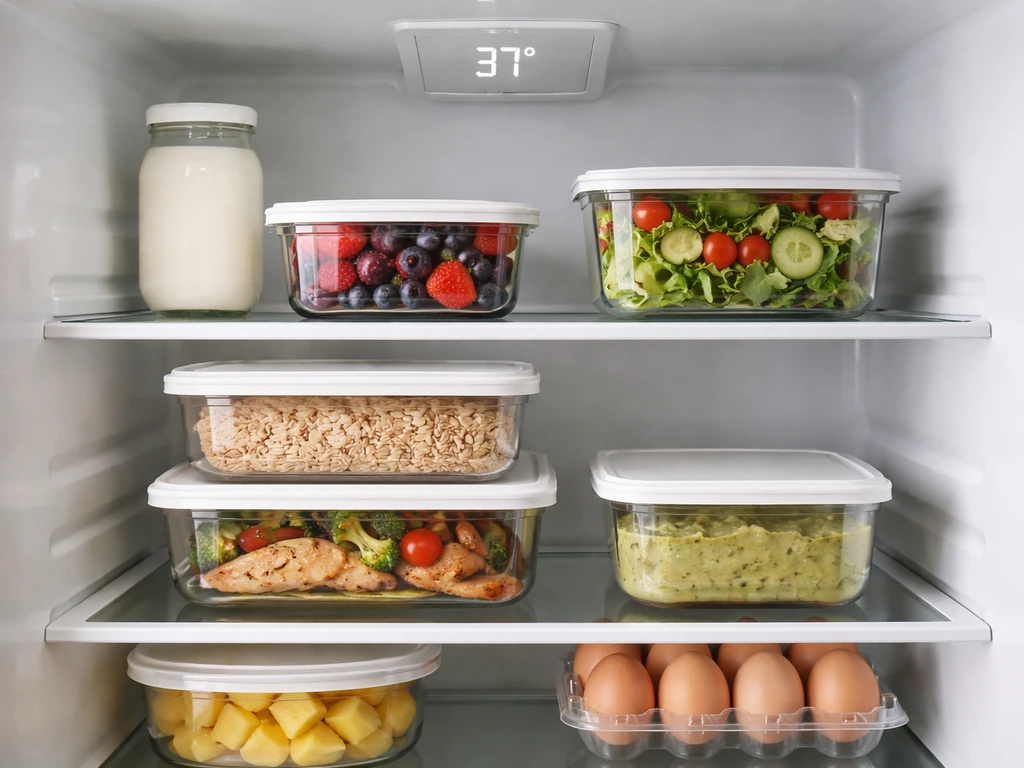
- Keep vacuum-sealed perishables refrigerated at or below 40°F (4.4°C) at all times. Non-proteolytic C. botulinum strains can grow as low as 37°F, so even a fridge running slightly warm creates risk.
- If you are not using vacuum-sealed meat within a few days, freeze it. USDA advises freezing unopened vacuum packages as-is. Freezing prevents microbial growth entirely by stopping cellular metabolism.
- Always follow the use-by date on commercially vacuum-sealed products. These dates are validated against specific storage conditions, not just a suggestion.
- Never leave vacuum-sealed perishable food at room temperature for more than 2 hours, or 1 hour if the ambient temperature is above 90°F (32°C).
Warning signs to take seriously
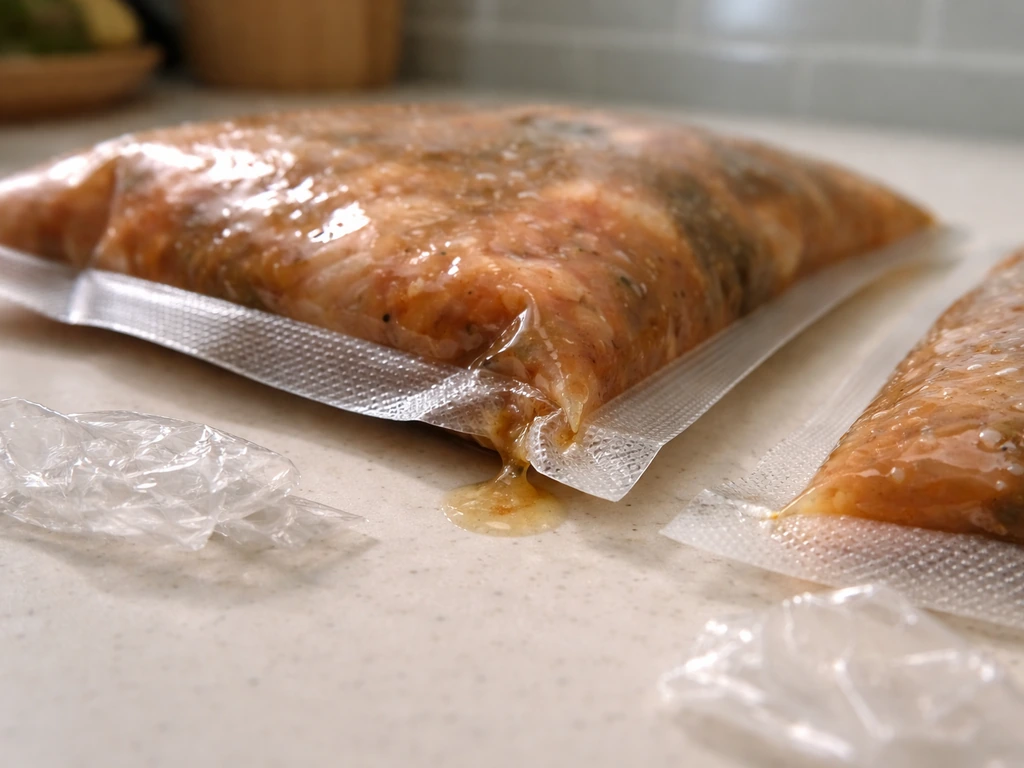
Do not rely on appearance or smell alone, but do pay attention to the package itself. Signs that a vacuum-sealed food may be unsafe include:
- Bag swelling or puffiness: gas production by bacteria inside the package can inflate the bag. This is a serious red flag.
- Visible leaks or broken seals: if air has re-entered, the anaerobic environment that your safety controls were based on is gone, and the microbial ecology inside has likely shifted unpredictably.
- Any off-odor on opening: while odor alone is not reliable for ruling out pathogens, a foul smell is a reliable reason to discard.
- Unusual texture, color changes beyond what is expected for vacuum-packed meat, or visible mold.
What to do if the bag is compromised
If a vacuum bag has leaked, swelled, or lost its seal, the conservative and correct move is to discard the food. Do not taste it to check. The safety controls designed for reduced-oxygen packaging, specifically time and temperature control aimed at suppressing C. botulinum and other anaerobes, are built around maintaining package integrity. Once that is gone, those controls no longer apply. A bag that has been punctured or lost its seal has potentially allowed oxygen back in, which changes the microbial environment in ways you cannot assess visually.
If your vacuum-sealed food was stored above safe temperatures for more than 2 hours, or if you have any doubt about whether it was properly refrigerated throughout its storage history, treat it as unsafe. USDA guidance is straightforward here: when in doubt, throw it out. No meal is worth a botulism risk, which carries serious neurological consequences and can be life-threatening.
The big takeaway from all of this is that a vacuum is a useful tool for preservation, not a substitute for the fundamentals of microbial growth control. Bacteria survive, go dormant, and sometimes actively grow in vacuum-sealed environments, depending on temperature, moisture, pH, and available nutrients. USDA FSIS notes that blank" rel="noopener noreferrer">freezing preserves food by preventing the growth of microorganisms, and it advises freezing unopened vacuum packages “as is.”. Even on PDA, bacteria can grow if the medium and incubation conditions support their needs, which is why growth depends on factors like nutrients and oxygen. If you are wondering whether can bacteria grow in a fridge, the key idea is that refrigeration slows growth but does not sterilize food, so time and temperature still matter bacteria survive, go dormant. Understanding those interconnected factors is what actually keeps food safe, and it is why no single packaging method, on its own, is enough.
FAQ
If bacteria cannot grow in a true vacuum, why do vacuum-sealed foods still spoil?
Vacuum sealing usually creates a reduced-oxygen package, not absolute zero air or zero oxygen. Residual oxygen trapped in the food, plus available nutrients, moisture, and especially temperature, can still let some microbes survive and certain anaerobes grow. That is why a sealed bag can keep food looking normal while internal microbial activity changes.
Does vacuum sealing kill bacteria or spores?
No. Vacuum packaging removes air, it does not sterilize or destroy microbes. Spore-formers are particularly important because spores can survive the packaging process, so safety depends on limiting growth conditions rather than eliminating organisms.
Can Clostridium botulinum grow only if the package is a total vacuum?
It does not require a perfect vacuum, it requires low-oxygen conditions plus the right temperature and food environment. That is why losing temperature control or having a compromised bag can change the risk profile, even if the package still looks tightly sealed.
Why does vacuum-sealed meat sometimes look darker, does that mean it is unsafe?
Darker purple-red coloration is commonly due to reduced oxygen and changes in how myoglobin behaves, it is not by itself a safety warning. Safety still hinges on time and temperature history, because pathogens can be present without classic spoilage signs.
What is the safest way to decide whether a vacuum-sealed bag is still good?
Use storage time and temperature, not smell or appearance. If the bag was refrigerated reliably and kept within recommended durations, risk is lower, but if there is any uncertainty about refrigeration or timing, the conservative approach is to discard rather than try to “test” it.
Is it ever safe to taste vacuum-sealed food to check for spoilage?
No. Vacuum sealing can suppress visible spoilage while allowing dangerous hazards to develop, so tasting is not a reliable or safe safety check. If you suspect a seal issue or temperature abuse, discard the product.
How can I tell if a vacuum-sealed bag has lost its seal without opening it?
Look for obvious seal failures such as leaking fluid, a broken or poorly formed seal line, swelling, or a bag that appears no longer collapsed around the food. Any sign of loss of vacuum means oxygen may have returned, and you should treat the contents as unsafe if you cannot confirm proper conditions.
What happens if a vacuum-sealed food is left out at room temperature for a short time?
Even brief time above safe refrigeration temperatures can allow conditions to shift from “slowed growth” to “growth possible,” especially for vacuum-tolerant anaerobes. If it was above safe temperatures for more than about 2 hours, or you are unsure of the storage history, discard according to the conservative guidance discussed in the article.
Does freezing vacuum-sealed food completely solve the problem?
Freezing generally stops active growth, but it does not remove microbes or spores, and it does not guarantee safety if the food was mishandled before freezing. After thawing, growth can resume if time and temperature are not controlled, so thaw promptly and keep it cold.
Does vacuum sealing work the same way for all foods, like vegetables, soups, or deli items?
No. Low-acid foods, high-protein foods, and foods with higher moisture can present different risk levels, especially if anaerobic conditions are present. Foods that are not naturally acidic or that support bacterial growth require stricter time-temperature control, and vacuum sealing alone does not compensate for that.