Distilled water, on its own, does not support bacterial growth. Bacteria need more than just water to multiply: they need nutrients like carbon, nitrogen, and phosphorus, plus trace minerals to fuel their metabolism. Strip all of that out through distillation, and you've removed the grocery store bacteria depend on. They can survive for a short while in distilled water, but they cannot meaningfully reproduce without a nutrient source. The catch is that the moment contamination enters the picture, either from a dirty container, airborne particles, or even your skin, that changes fast.
Does Distilled Water Grow Bacteria? The Real Answer

Marcus Holloway
1 May 2026
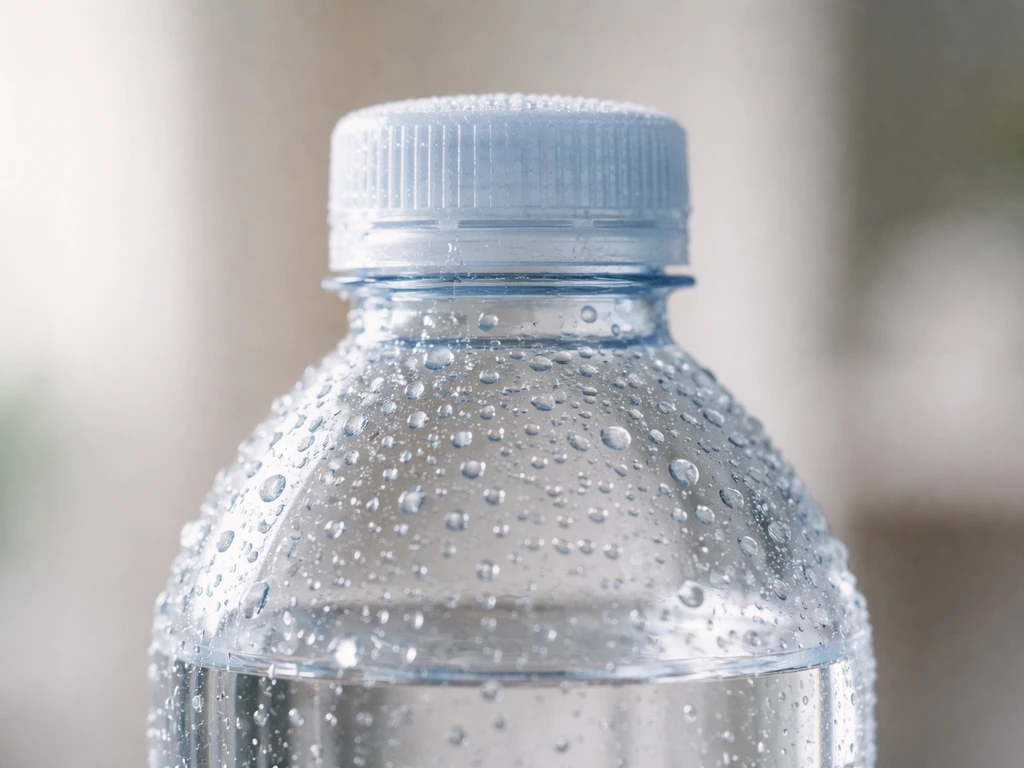
Why distilled water doesn't feed bacteria
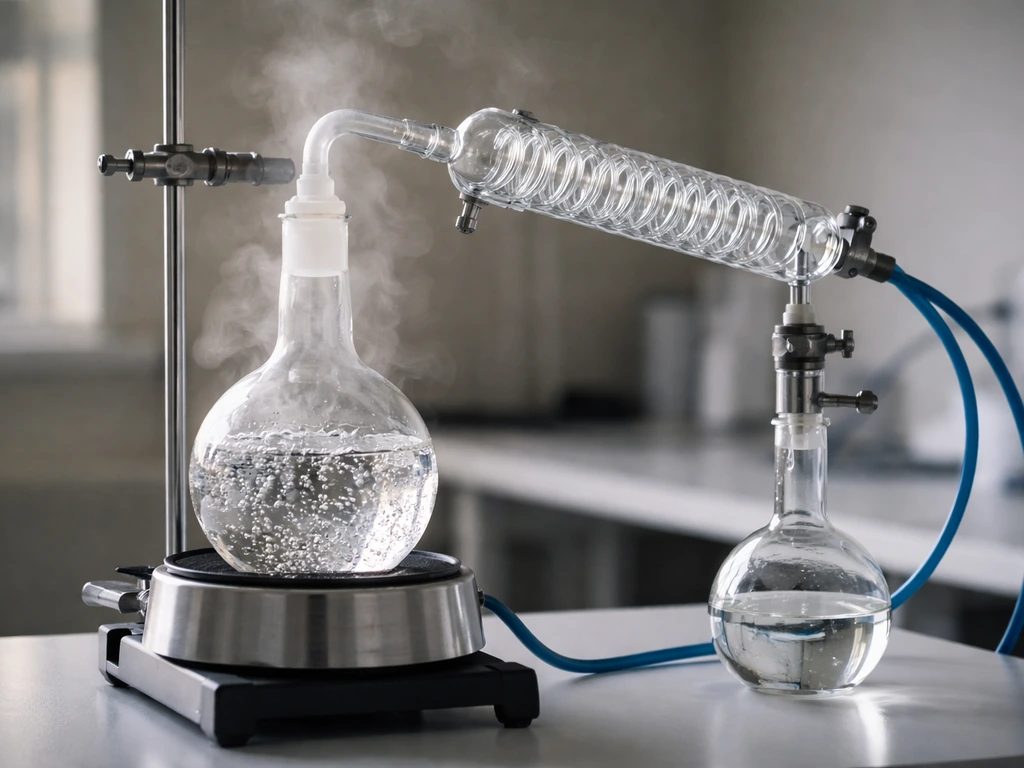
Distillation works by boiling water and collecting the steam, leaving behind dissolved minerals, salts, and most organic compounds. What comes out the other side is water that is about as nutrient-poor as a liquid can get. For a bacterium trying to survive and divide, that's a problem.
Bacterial growth requires what microbiologists call a growth medium: a source of carbon for energy, nitrogen and phosphorus for building proteins and DNA, plus mineral ions like iron, magnesium, and calcium for enzyme function. Distilled water provides none of that. This is also why lab researchers use nutrient broth or agar plates rather than distilled water when they want bacteria to actually grow: plain water just doesn't cut it as a culture medium. If you are wondering about culturing, bacteria are more likely to grow on PDA than on plain distilled water because PDA provides a dedicated nutrient base for fungi and other microbes agar plates.
There's also an osmotic pressure angle worth understanding. Distilled water is hypotonic, meaning it has almost no dissolved solutes. When bacterial cells sit in a hypotonic environment for long enough, water rushes into the cell faster than the cell can manage, stressing the membrane. Most bacteria tolerate brief exposure, but it's another reason pure distilled water is a hostile environment for microbial life rather than a welcoming one.
That said, there's an important nuance. Some bacteria, called oligotrophs, are specialists at surviving in ultra-low-nutrient environments. A PubMed-indexed study on Pseudomonas aeruginosa in tap water found growth when very low-molecular-weight substrates were available at microgram-per-liter concentrations ultra-low-nutrient environments. Genera like Pseudomonas, Caulobacter, and Arthrobacter have been found living in distilled and ultrapure water systems. The CDC has noted that certain gram-negative non-fermenters have such minimal nutritional requirements that they can persist in distilled water. Persist, however, is different from actively proliferating. Without any carbon or nutrient source at all, even these survivors eventually lose viability.
What actually changes whether bacteria grow or not
The answer to whether bacteria will grow in your specific bottle of distilled water depends almost entirely on what else ends up in it alongside the water. Here are the factors that shift the outcome.
Contamination and dissolved organics
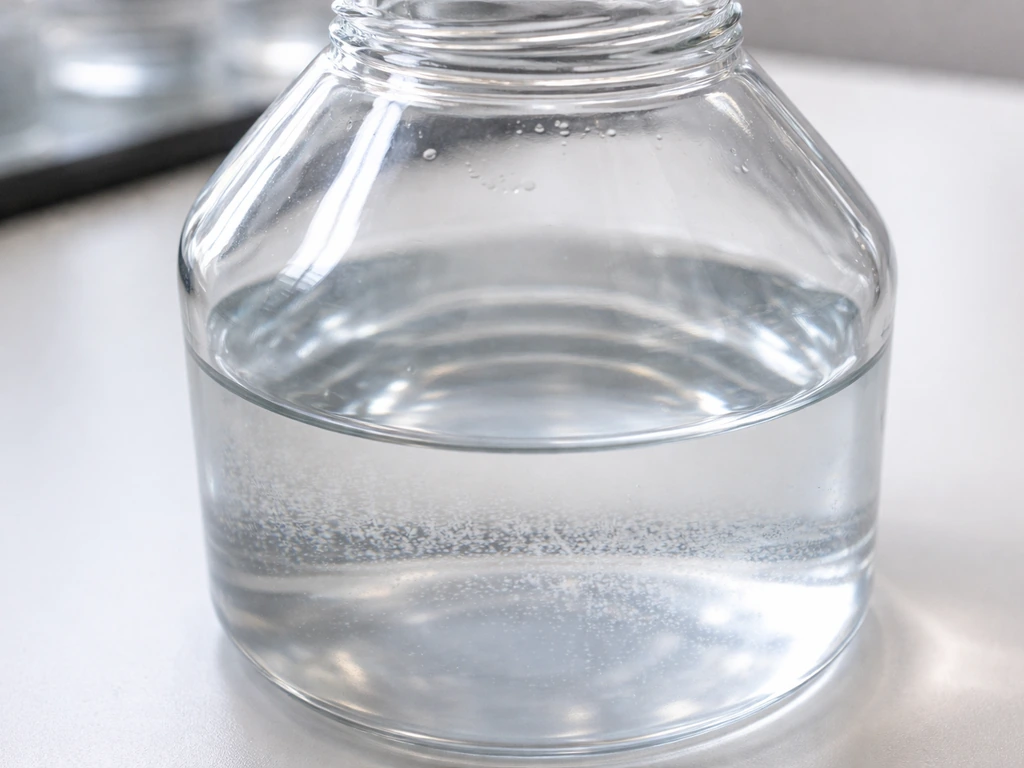
This is the biggest one. Dust settling into an open container, a finger touching the rim, a cap that wasn't clean, or even air exposure in a room full of organic particulates can all introduce both bacteria and the trace organics they need to grow. Research on water-associated bacteria like Pseudomonas aeruginosa shows they can grow on assimilable organic carbon (AOC) at concentrations of just a few micrograms per liter. That's a vanishingly small amount of contamination, which is exactly why pharmaceutical and semiconductor industries treat even parts-per-trillion contamination in purified water systems as a serious quality risk.
Containers and biofilm formation
The container you store distilled water in matters more than most people expect. Plastic containers can leach trace organic carbon over time. Reused bottles may have residues from previous contents. Rough or scratched interior surfaces give bacteria places to anchor, and once anchored, they can form biofilms: structured communities encased in a self-produced matrix that offers both physical protection and access to nutrients migrating from the surface itself.
CDC notes that waterborne heterotrophic bacteria such as Pseudomonas species can multiply rapidly in hospital-associated fluids and persist in biofilms attached to water system components [biofilms: structured communities encased in a self-produced matrix that offers both physical protection and access to nutrients migrating from the surface itself. ](https://www. cdc. gov/infection-control/hcp/environmental-control/water.
html). Studies on ultrapure water pipe systems have found that high organic carbon migration from pipe materials and rougher surfaces are key drivers of biofilm growth, even in waters with almost no nutrients in bulk. Biofilm formation is a self-reinforcing problem: once a thin community forms on a surface, it acts as a seeding source that can shed bacteria back into the water.
Temperature, pH, and oxygen
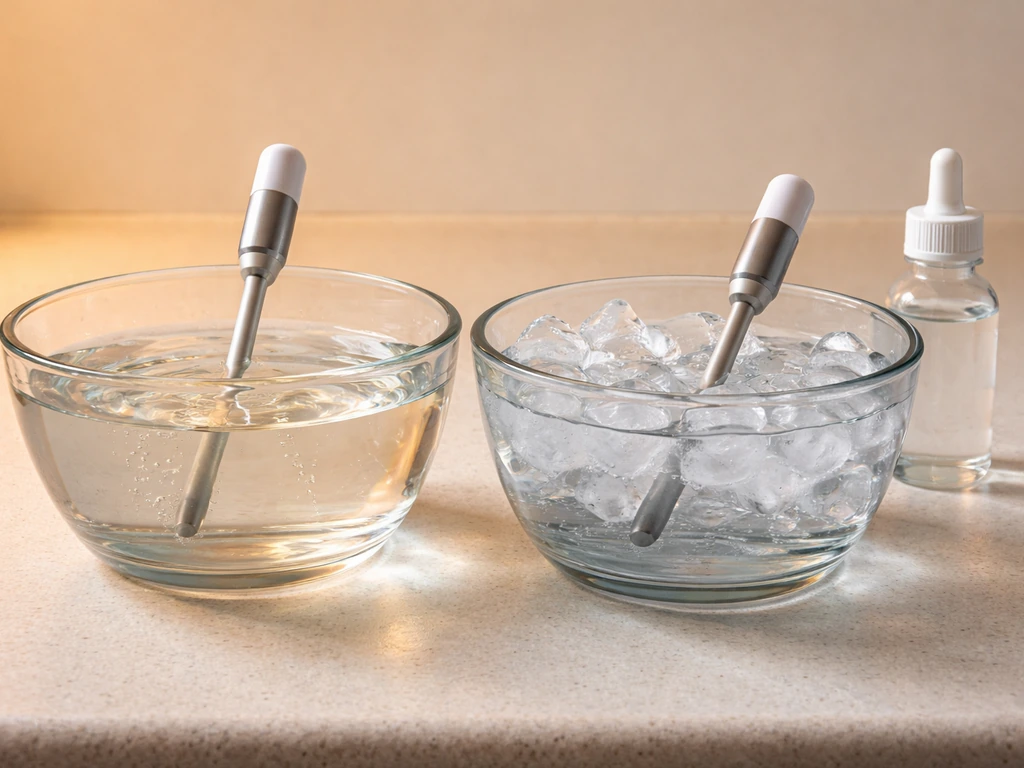
These are the same foundational growth factors that apply everywhere in microbiology. Room temperature (around 20 to 37°C) is far more permissive for bacterial growth than refrigerator temperatures, where growth slows significantly. If a fridge is colder, bacterial growth slows, but bacteria can still survive and start multiplying again if contamination and nutrients are introduced refrigerator temperatures. Distilled water has a pH close to 7, which is comfortable for most bacteria. And unless the container is completely sealed and oxygen-depleted, aerobic bacteria have everything they need on that front. Anaerobic species would actually be disadvantaged in an open container, but the aerobic and facultative anaerobic bacteria that dominate most contamination events are fine with ambient oxygen.
How fast bacteria grow if contamination happens
Bacteria don't start multiplying the instant they enter a new environment. There's a lag phase, where cells are adjusting their metabolism and gene expression to the new conditions rather than actively dividing. In a nutrient-poor environment like near-distilled water with only trace organics, that lag phase can be extended. But once bacteria have adapted and trace nutrients are present, exponential growth kicks in, and numbers can rise rapidly.
Pharmaceutical water standards give you a practical sense of the thresholds that matter. USP guidelines set action levels at 100 CFU/mL (colony-forming units per milliliter) for purified water, and the CDC uses 50 CFU/mL as an action level in certain clinical water contexts. These limits exist precisely because once contamination enters a water system, bacterial proliferation can be rapid, especially in stagnant sections where there's no flow to dilute or flush microbes out. A 'dead leg' in a pharmaceutical water distribution loop, for example, is a section of pipe with poor circulation, and USP specifically notes that contamination in these areas can grow unabated.
In a practical home setting, an open bottle of distilled water stored at room temperature in a used container could show detectable microbial growth within days to a week, depending on how much contamination was introduced. A sealed, properly cleaned bottle might stay low for weeks. The difference is entirely about what got into the water and what surface the water is in contact with.
How to observe this safely at home or in a classroom
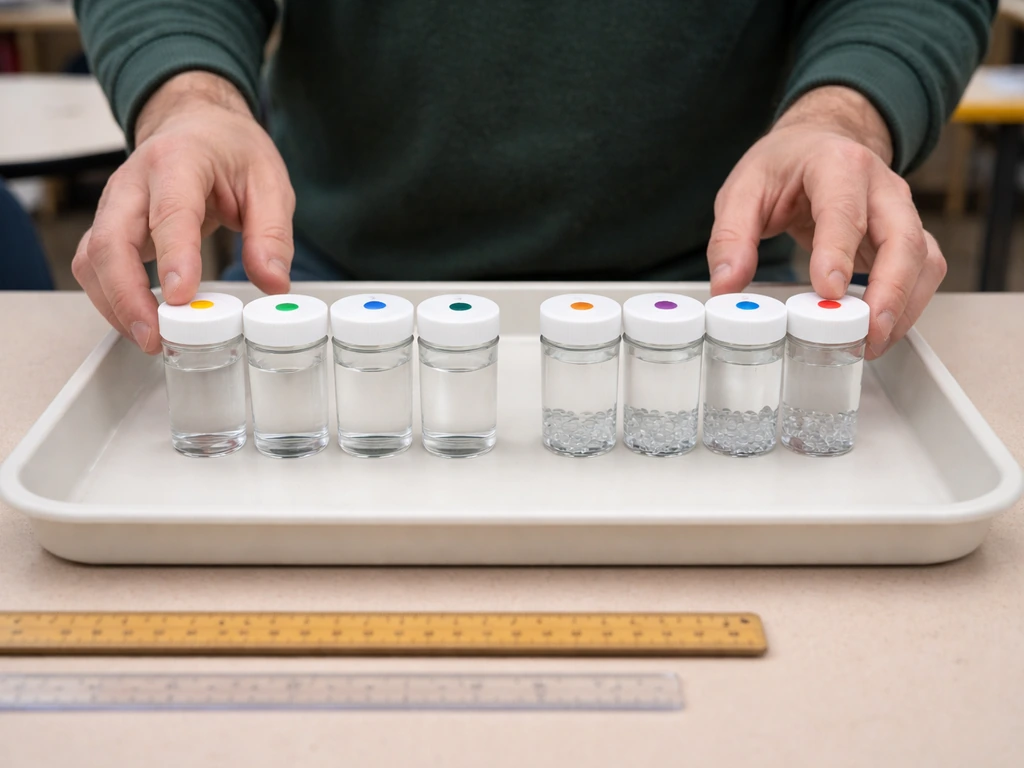
You don't need a microbiology lab to get meaningful observations here. The key is thinking carefully about what you're comparing and what you're actually measuring.
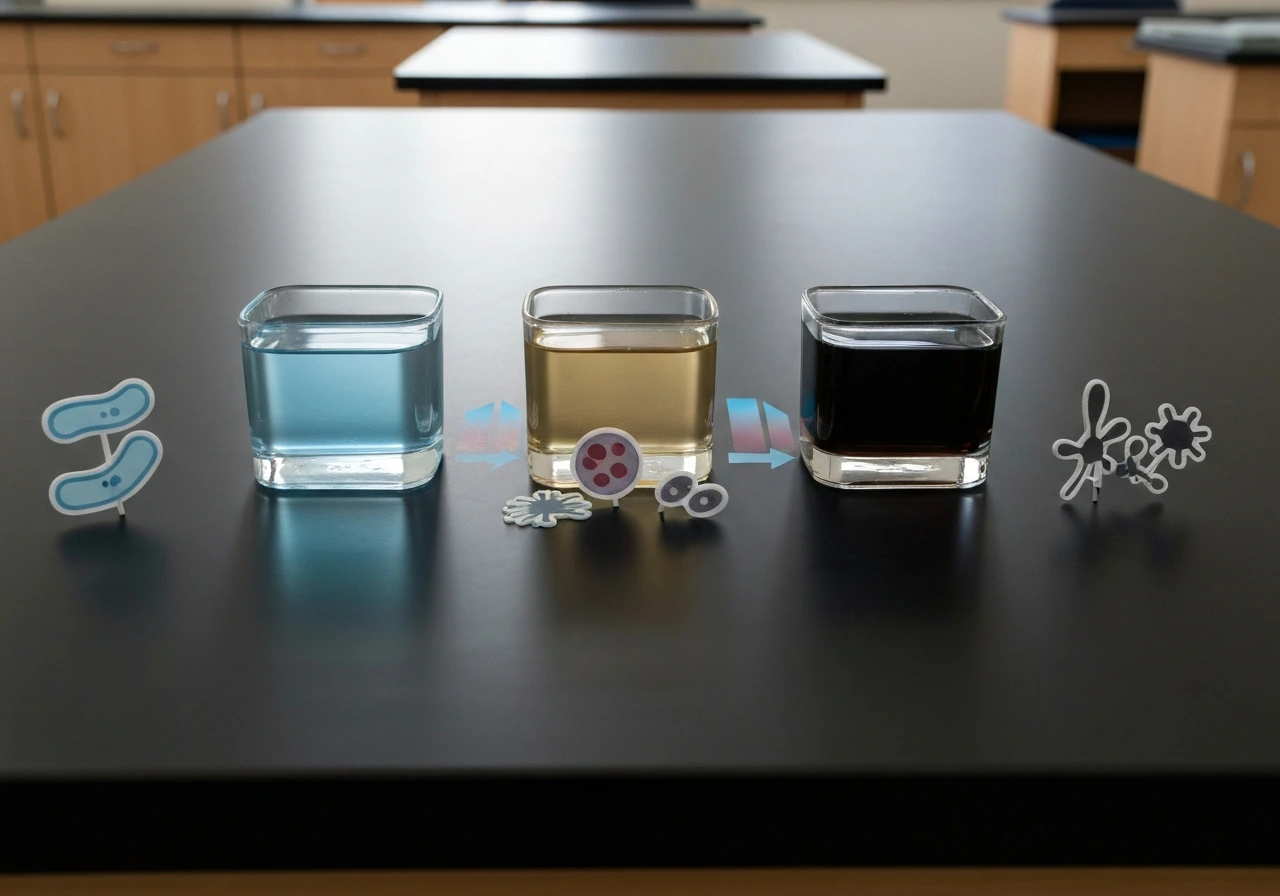
A straightforward classroom-safe comparison involves setting up multiple containers of distilled water under different conditions: one sealed in a clean glass jar, one open to air at room temperature, one touched at the rim before sealing, and one stored with a small piece of soil-contaminated material introduced. Over one to two weeks, compare turbidity (cloudiness), odor, and any visible biofilm on surfaces. Turbidity is a rough proxy for bacterial growth because bacteria in suspension scatter light, making water look hazy. This isn't a precise measurement, but it's a legitimate observational method and it illustrates the contamination-drives-growth principle clearly.
For more quantitative results without unsafe culturing, ATP (adenosine triphosphate) bioluminescence test kits are available for water testing and are commonly used in food safety and water quality monitoring. ATP is the energy currency of all living cells, so a spike in ATP reading in a water sample indicates microbial activity. These kits give an immediate readout of biological contamination and are much faster than traditional plate counting.
The limitation is that ATP measurement is a viability and activity indicator rather than a direct count of cultureable bacteria, so it complements rather than replaces traditional culture methods. R2A agar, a low-nutrient medium specifically designed for recovering oligotrophic water bacteria, is the standard microbiological tool professionals use for heterotrophic plate counts in water, though plating requires a basic lab setup.
The most important safety note: do not deliberately culture potentially pathogenic bacteria outside a proper lab setting. Observing turbidity changes and using commercial ATP test kits are the practical limits for home and classroom work.
What this means for food safety and hygiene
Understanding this distinction between survival and growth has real practical implications. Distilled water is not a disinfectant. It will not kill bacteria that get into it, and if you introduce contamination through poor handling, you can end up with a bottle of bacteria-laden water that looks perfectly clear. Clarity is not safety.
For household use, the CDC's guidance on safe water storage is directly relevant: store water in clean, sanitized containers with lids that prevent contact with hands during retrieval. Use a pour spout or tap rather than reaching into a container. Don't top off old water with new water without sanitizing the container first. These steps matter because even distilled water will accumulate microbes if the container introduces them repeatedly over time.
Distilled water is commonly used in humidifiers, CPAP machines, steam irons, and medical device rinsing precisely because its lack of minerals prevents scale buildup and reduces the risk of chemical contamination. But 'reduced chemical contamination' is not the same as 'microbiologically safe.' A humidifier reservoir filled with distilled water and left sitting at room temperature is still a warm, moist environment where introduced bacteria can grow, especially on the reservoir surfaces. Cleaning those reservoirs regularly is necessary regardless of whether you're using distilled or tap water.
This topic connects to a broader principle worth internalizing: whether bacteria grow is always about whether the total environment (water, surface, temperature, oxygen, nutrients) crosses a threshold for viability and replication. Distilled water removes one major variable (dissolved nutrients) but does not eliminate all the others. Think of it the way you'd think about whether bacteria can grow on glass or silicone surfaces: the material itself may not be nutrient-rich, but residues, moisture films, and contamination can make almost any surface or fluid a viable habitat if the other conditions align.
The bottom line on distilled water and bacterial growth
| Scenario | Bacterial Growth Risk | Key Reason |
|---|---|---|
| Sealed, clean glass container, fresh distilled water | Very low | No nutrients, no contamination source, no surface biofilm |
| Open container at room temperature | Moderate over days to weeks | Airborne particles and dust introduce bacteria and trace organics |
| Reused plastic bottle, not sanitized | Moderate to high | Residues and plastic leaching provide trace organics; surface may harbor biofilm |
| Distilled water with soil or organic material introduced | High | Organic contamination provides carbon and nutrients for rapid growth |
| Industrial/pharmaceutical ultrapure water system with dead leg | High without proper sanitation | Stagnant sections allow biofilm accumulation and unchecked proliferation |
The takeaway is straightforward: distilled water by itself does not grow bacteria because it lacks the nutrients bacteria need to multiply. This ties into related extremes like whether bacteria can grow in a vacuum, since the ability to replicate depends on having the right kind of environment can bacteria grow in a vacuum. But 'distilled water' in practice is rarely perfectly isolated. Containers, handling, air exposure, and surface conditions all conspire to introduce exactly the nutrients and microbes that tip the balance. Good hygiene around storage and handling matters just as much as the type of water you start with.
FAQ
If distilled water is sterile when it’s sealed, can bacteria grow later just from the water itself?
No. Distilled water lacks the nutrients bacteria need to reproduce. Growth starts when something introduces microbes and, importantly, trace organic carbon or other growth-supplying material. Even a sealed bottle can become a growth source if the seal is compromised, or if the container is dirty and sheds material into the water over time.
How long does distilled water take to show bacterial growth?
There is usually a lag phase, so you may not see changes immediately. In room temperature conditions with repeated contamination, detectable growth can appear in days up to about a week. The faster timeline happens when you contaminate the water more than once (for example, repeated hand contact, topping off old water, or a dirty container).
Can bacteria grow in distilled water in the refrigerator?
They can persist and some may resume activity if they have been introduced along with trace nutrients. Cold temperatures slow growth, but they do not make contamination disappear. If you keep the container sealed and clean, the risk stays lower, but it is not zero.
Does “clear” distilled water mean it is microbiologically safe?
No. Bacteria can be present without visible cloudiness. Biofilm can also form on the container walls while the bulk liquid looks clear. For higher confidence, use non-culture indicators like ATP testing (as discussed in the article) or follow appropriate lab-based counting methods.
What’s more important for growth risk, the water or the container material?
The container and how it’s handled are often the deciding factors. Rough surfaces, scratches, residues from prior use, and leaching of trace organics can provide a foothold for microbes and support biofilm formation. Even with nutrient-poor water, a contaminated surface can seed growth.
Do distilled water bacteria grow if there are no visible particles or odor?
Yes, because the key nutrients are usually invisible (trace organic carbon) and because lag phases can mask activity early on. Absence of odor or turbidity does not rule out microbial presence, especially in the first days after contamination.
Is distilled water safe for humidifiers and CPAP if it’s used “only once” and changed frequently?
Frequent changes and proper cleaning reduce risk, but moisture reservoirs at room temperature still support growth on surfaces when contamination is introduced. Treat it as a hygiene schedule problem, not a “distilled water is safe” problem. Clean reservoirs and follow the manufacturer’s guidance even when using distilled water.
Can I improve microbial safety by boiling distilled water again?
Boiling can kill existing microbes, but it does not prevent recontamination during cooling and storage. If you pour into a non-sanitized container or handle it frequently, you can reintroduce microbes and trace organics. For best results, sanitize containers and minimize exposure during transfer.
Will activated charcoal filters or UV devices make distilled water “microbe-free”?
They can reduce microbes, but they do not guarantee long-term sterility. Filters can clog or shed material if not maintained, and UV works only for water passing through the light path with sufficient clarity. After treatment, contaminated handling or unsanitized containers can reintroduce microbes.
Is it safe to culture anything from distilled water at home to “test” it?
No. The article advises against deliberately culturing potentially pathogenic bacteria outside a proper lab. If you want actionable information, stick to safer observational methods (turbidity, odor changes) and commercial ATP kits, which indicate biological activity without requiring growth of unknown organisms.