Yes, bacteria can grow in a fridge. Can bacteria grow in a vacuum, or does the lack of air stop them bacteria can grow in a fridge. Refrigeration slows bacterial growth dramatically, but it does not stop it entirely. blank" rel="noopener noreferrer">Some bacteria, especially cold-tolerant types like Listeria monocytogenes, can multiply at typical refrigerator temperatures. The key word is "slowly", but slowly still means multiplying, and over days that adds up. So while your fridge is one of your best food-safety tools, treating it as a preservation vault with no time limits is a mistake that can make you sick.
Can Bacteria Grow in a Fridge? Growth and Safety Tips

Marcus Holloway
13 May 2026
Why refrigeration slows bacterial growth
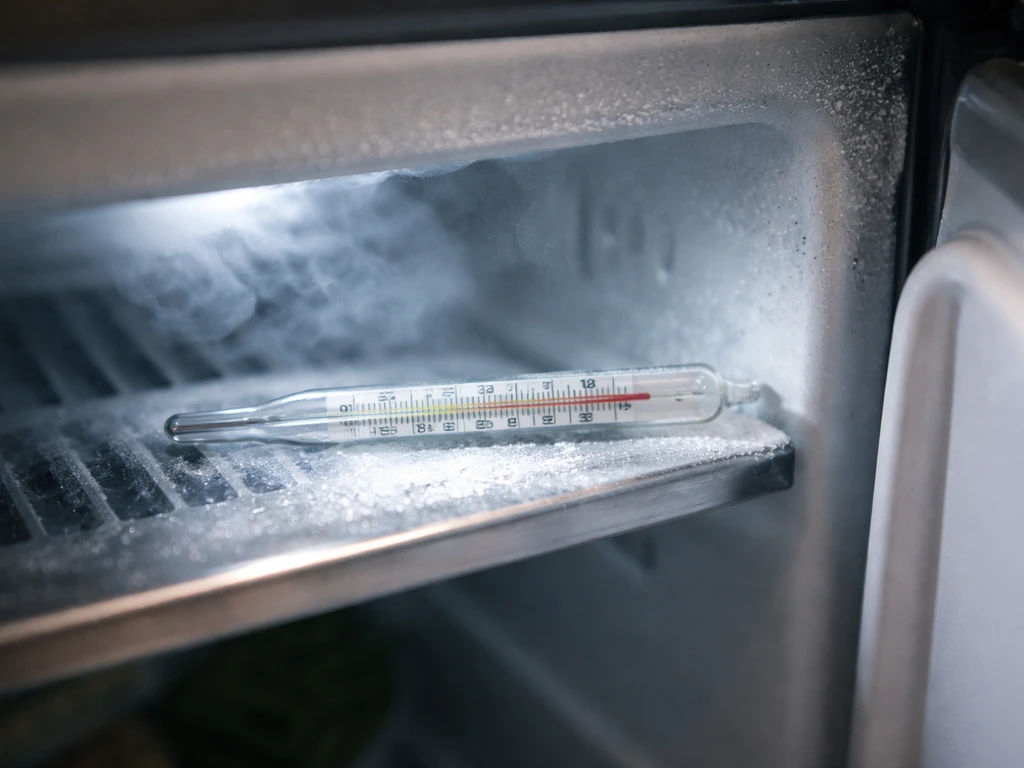
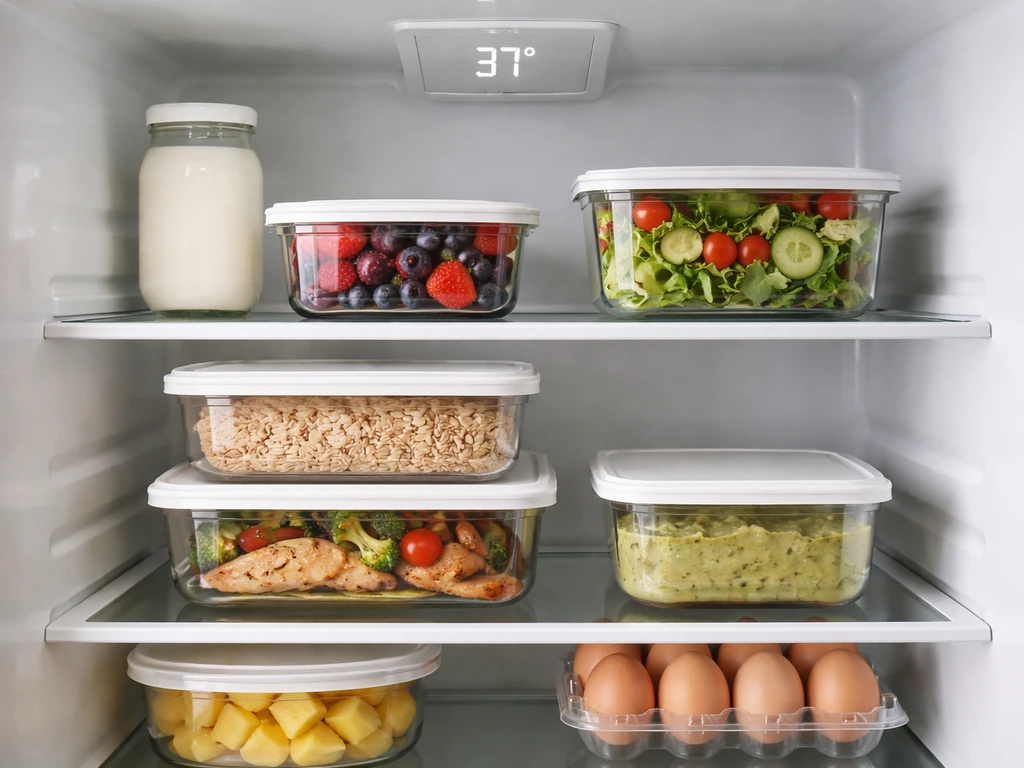
Temperature is one of the most powerful levers controlling microbial growth. Bacteria are chemical machines, every step of their metabolism, from digesting nutrients to copying their DNA, depends on enzyme reactions. Enzymes work best within a specific temperature range. Drop the temperature below that range and you slow those reactions down significantly. At 40 °F (4.4 °C) or below, most common bacteria that cause foodborne illness are running on very low power: their enzymes are sluggish, their membranes are less fluid, and the whole process of growing and dividing slows to a crawl.
This is the biological principle behind the USDA's recommendation to keep your refrigerator at 40 °F (4.4 °C) or below throughout the unit. It is not an arbitrary number, it is the threshold below which most harmful bacteria shift from active multiplication into a much slower, suppressed state. Above that threshold, and especially above 40 °F, you are back in what food scientists call the "danger zone," where bacteria multiply rapidly enough to reach dangerous levels within hours.
It is also worth understanding what "slowing" means versus "stopping." Refrigeration suppresses growth; it does not sterilize food. Think of it like turning down the heat under a pot, the water does not boil, but it is still warm and things can still happen. That distinction between dormant survival and active (if slow) growth is exactly why time still matters in the fridge.
Which bacteria can survive and grow at fridge temperatures
Most pathogens that cause food poisoning, like Salmonella and E. coli O157:H7, are mesophiles, meaning they grow best between roughly 77–104 °F (25–40 °C). Refrigerator temperatures effectively suppress them to near dormancy. But a smaller group of bacteria are psychrotrophic, meaning they are adapted to grow at cold temperatures, including the 35–40 °F range inside your fridge.
The most important example is Listeria monocytogenes. The FDA is clear: Listeria can grow at refrigerator temperatures, and the risk increases the longer food sits in the fridge. FDA’s “Control of Listeria monocytogenes” document also notes that L. monocytogenes can survive longer under adverse environmental conditions than many other vegetative bacteria blank" rel="noopener noreferrer">Listeria can grow at refrigerator temperatures. Distilled water is not sterile once it contacts air and surfaces, so bacteria can still grow in it under the right conditions Listeria can grow at refrigerator temperatures. The CDC adds that refrigeration does not kill Listeria, it can persist and slowly multiply in cold storage. This is why Listeria is such a concern in ready-to-eat and deli-style foods that go directly into the fridge and are eaten without cooking, which would otherwise kill the bacteria.
Other psychrotrophic organisms worth knowing include certain strains of Yersinia enterocolitica, some Clostridium species, and various spoilage bacteria (like Pseudomonas) that cause food to go off in the fridge even if they are not all dangerous pathogens. The point is that the fridge selects for cold-adapted organisms over time. The longer food sits, the more opportunity cold-tolerant types have to dominate.
How fast bacteria actually grow in the fridge
Growth rate is measured by generation time, how long it takes one bacterium to divide into two. The difference between fridge and room temperature is dramatic. Research on Listeria monocytogenes in dairy products illustrates this well:
| Temperature | Approximate Listeria Generation Time |
|---|---|
| 4 °C (39 °F) — typical fridge | ~29 to 46 hours per doubling |
| 8 °C (46 °F) — slightly warm fridge | ~9 to 15 hours per doubling |
| 13 °C (55 °F) — cool room | ~4.5 to 7 hours per doubling |
| 21 °C (70 °F) — room temperature | ~1.5 to 2 hours per doubling |
| 35 °C (95 °F) — body/optimal temperature | ~41 minutes per doubling |
At a properly maintained 4 °C fridge, a Listeria cell takes roughly 29 to 46 hours to double. That sounds reassuringly slow, but think about it over a week: starting from a small contamination, the population can still grow meaningfully by the third or fourth day. Now consider that many home fridges actually run warmer than 40 °F, especially in the door shelves or when the door is opened frequently. At 8 °C, that generation time drops to under 15 hours, much more concerning for longer storage times.
For context, at room temperature (around 21 °C), bacteria can double every couple of hours, which is why the FDA warns that leaving perishable food out for two hours or more allows bacteria to multiply to dangerous levels fast. The fridge does not eliminate that risk, it just stretches the timeline significantly. For most bacteria, "slowly" still means "eventually dangerous" if you give it enough time or slightly warmer conditions.
What this means for your food safety right now
Understanding that bacteria can grow in the fridge, even if slowly, changes how you should think about storage time and temperature. The USDA and FDA give clear time limits for refrigerated foods at 40 °F or below, and those limits exist precisely because slow bacterial growth is still real bacterial growth.
| Food Type | Safe Refrigerator Storage Time (at 40 °F or below) |
|---|---|
| Cooked leftovers | 3 to 4 days |
| Raw ground meat or poultry | 1 to 2 days |
| Raw whole poultry pieces | 1 to 2 days |
| Deli meats / ready-to-eat foods | 3 to 5 days (use quickly) |
| Raw fish / seafood | 1 to 2 days |
These are not conservative guesses, they are based on how quickly bacteria can reach unsafe levels even at cold temperatures, combined with typical contamination levels found in real food. The FDA also warns that if your fridge has been above 40 °F for four hours or more, perishable items (meat, poultry, fish, eggs, milk, leftovers) should be discarded. A fridge running even a few degrees warm changes the safety math significantly.
One practical misconception worth addressing: many people assume the fridge is universally safe storage as long as food "looks and smells fine." It is not. Psychrotrophic pathogens like Listeria grow without any obvious signs of spoilage. The food can look, smell, and taste completely normal and still carry a dangerous bacterial load. Time and temperature together are your real indicators, not your senses alone.
How to actually prevent bacterial growth in your fridge
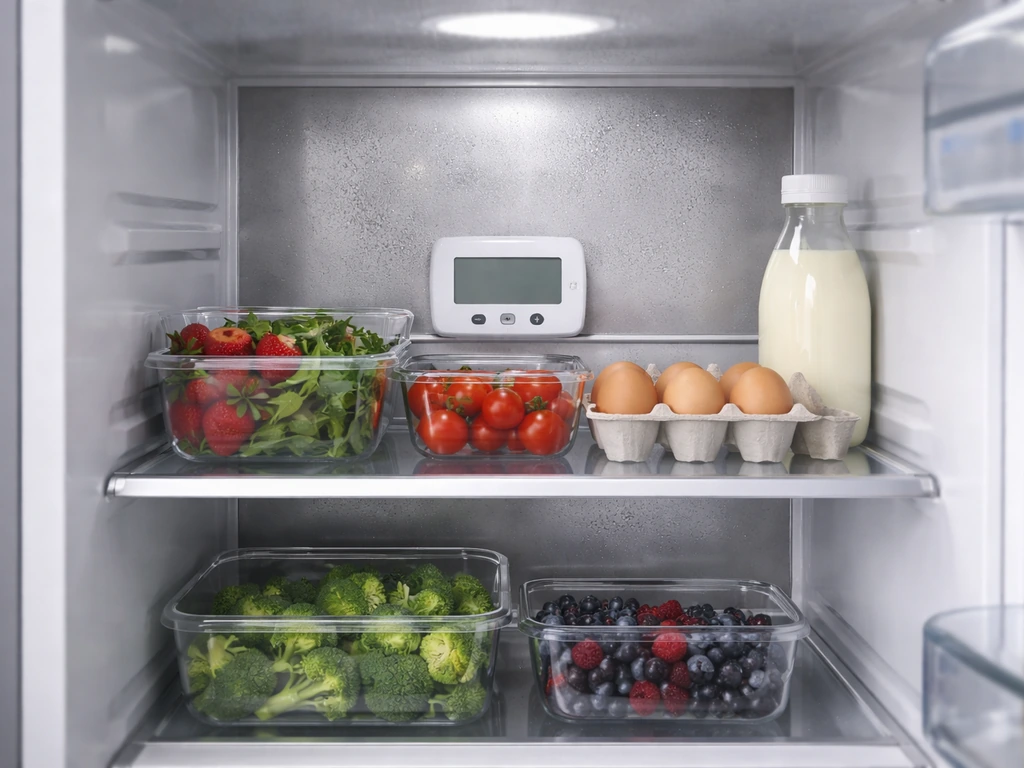
Check and control the temperature
The single most impactful thing you can do is verify your fridge is actually running at 40 °F (4.4 °C) or below. Most fridge thermostats are not perfectly calibrated, and internal temperatures vary by zone, door shelves are consistently warmer than the back of the middle shelf. The FDA recommends using a separate appliance thermometer placed inside the fridge to confirm real temperatures. If after 5 to 8 hours your fridge thermometer reads above 40 °F, turn the temperature control colder and check again.
Refrigerate food quickly
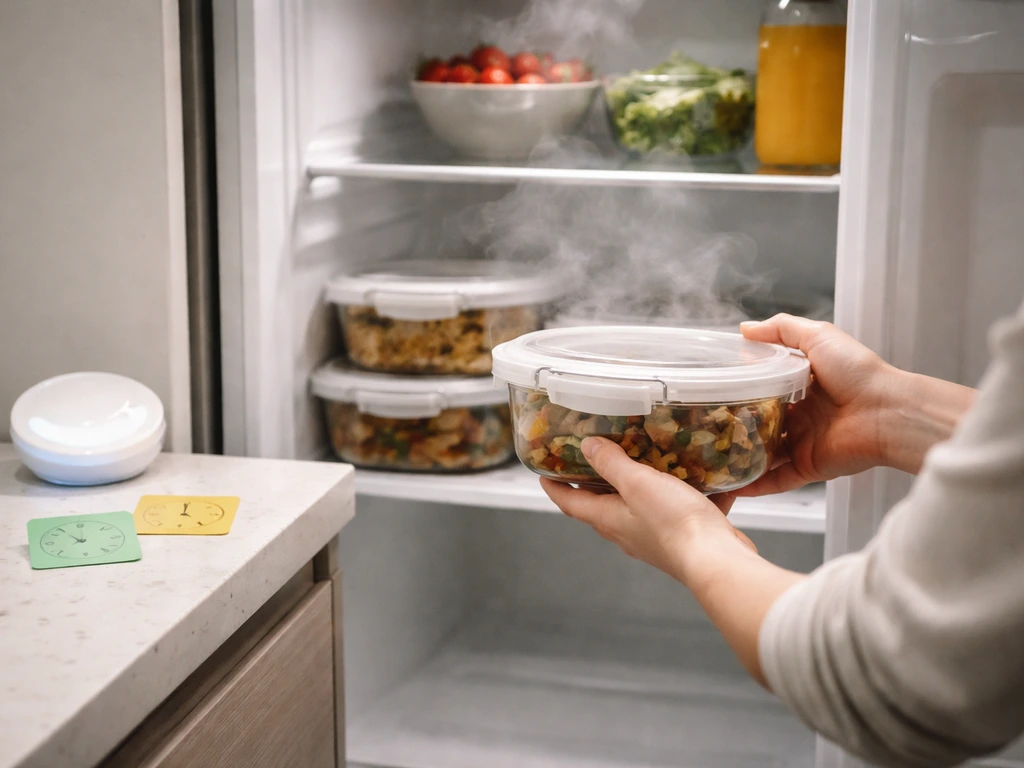
Get perishable food into the fridge within two hours of cooking or purchasing. If the ambient temperature is above 90 °F (32 °C), a hot kitchen or outdoor setting, that window drops to one hour. Large batches of hot food (like a big pot of soup) should be divided into shallow containers so they cool to 40 °F quickly rather than sitting warm in the fridge for hours while the center stays hot. The goal is to minimize the time food spends in the danger zone (40–140 °F) where bacteria multiply fast.
Store food properly and avoid cross-contamination
- Store raw meat, poultry, and seafood on the lowest shelves in sealed containers so drips cannot contaminate ready-to-eat foods below.
- Keep ready-to-eat foods (deli meats, cooked leftovers, produce) covered and stored above raw proteins.
- Use airtight containers or sealed bags — exposure to fridge air and contact with other foods are both contamination routes.
- Clean up spills immediately, especially from raw meat juices. Listeria and other organisms can transfer from fridge surfaces to food.
- Do not overfill the fridge — air circulation matters for maintaining even, consistent cold temperatures throughout the unit.
Respect storage time limits
Follow the USDA/FDA time limits seriously and date your containers when you store leftovers. Three to four days for cooked food means three to four days, not "until it smells bad." For high-risk groups (pregnant people, older adults, young children, and immunocompromised individuals), the guidance on Listeria-prone foods like deli meats and soft cheeses is even more stringent. The longer food sits in the fridge, the more time cold-tolerant bacteria have to grow, so shorter storage is always safer.
Clean the fridge itself regularly
Bacteria from food can colonize fridge surfaces, shelves, and drawers, then transfer to new food items. Listeria, in particular, is known for surviving on surfaces in cold environments. Wiping down the interior regularly with a mild cleaning solution and sanitizing shelves after any raw meat contact removes this reservoir. This is the same principle that applies when thinking about bacteria on other surfaces, the environment itself can become a source of contamination, not just the food you put into it. The same idea applies beyond food and fridge surfaces, including bacteria on glass where contamination can persist if you do not clean properly. Bacteria can also grow on silicone kitchen tools, so you should clean and sanitize them regularly too can bacteria grow on silicone.
The bottom line is straightforward: your fridge is an essential tool for slowing bacterial growth, but it works only when the temperature is right, you follow time limits, and you practice basic hygiene. Temperature is just one of the conditions bacteria need to grow, alongside moisture, nutrients, and a suitable environment, and the fridge addresses only one of those variables. Understanding that interplay is what separates genuinely safe food handling from a false sense of security.
FAQ
How cold does my fridge need to be for bacterial growth to slow enough to be safe?
It should be at 40°F (4.4°C) or below throughout the food zones, not just on the thermostat. Use a separate appliance thermometer inside the main storage area, check after the fridge has run steadily, and recheck after loading big groceries or when doors are opened often.
Can bacteria grow in water or drinks stored in the fridge?
Yes, as long as the water contacts air or surfaces that can introduce microbes. Even “clear” water can allow growth, and some organisms tolerate cold. If water is meant to be sterile or longer-term, rely on proper handling and storage, not just refrigeration.
If food is still cold, is it automatically safe even if it has been there for a week?
No. Cold only slows multiplication, it does not stop it. Time matters because slow growth over multiple days can still reach higher levels, especially for cold-tolerant bacteria and foods that are ready-to-eat.
Do I need to worry about bacterial growth in leftovers that have been reheated?
Reheating can kill bacteria, but it does not erase the risk from contamination that occurred before reheating. The key safety step is rapid cooling and correct refrigerated storage time before reheating.
What happens if my fridge temperature is slightly high, like 42°F to 45°F (about 5.5°C to 7°C)?
Even a few degrees can shorten the “safe” timeline because the growth rate increases with temperature. Treat that as a potential safety problem, turn the control colder, confirm with an internal thermometer, and be stricter with discard dates.
Can I tell if bacteria are growing by smell or appearance in the fridge?
Not reliably. Some cold-tolerant pathogens can be present without noticeable off-odors, color changes, or texture changes. Use time and temperature rules instead of senses, especially for deli meats, soft cheeses, and ready-to-eat foods.
How should I cool large pots before refrigerating so bacteria do not grow too much?
Divide into shallow containers (smaller thickness cools faster), let steam vent briefly before sealing, then refrigerate quickly. The goal is to reduce the time the food spends in the 40°F to 140°F range where bacteria multiply faster.
Is the fridge door shelf safer than the back of the middle shelf?
Usually the door area is warmer and can cycle more when opened. Store higher-risk ready-to-eat foods toward the colder parts of the fridge, and keep items in tight containers to reduce cross-contamination.
Can bacteria spread from raw meat juices in the fridge to other foods?
Yes. Liquids and drips can contaminate shelves, drawers, and nearby foods. Store raw meat on a lower shelf in sealed containers, clean spills promptly, and sanitize surfaces after raw meat contact.
Does freezing stop bacterial growth, and should I freeze to prevent growth in the fridge?
Freezing stops growth but does not necessarily kill all bacteria. Freezing can be a smart way to pause risks, but you still need safe thawing and you should not assume frozen then thawed food becomes “new” or fully sterilized.
What if my fridge was accidentally above 40°F for a few hours, what should I do?
Follow the discard guidance for perishable items, since time above the threshold matters. In practice, if it was above 40°F for several hours, be more cautious with meat, poultry, fish, eggs, milk, and leftovers, and do not rely on taste or smell.
How often should I clean the fridge to reduce bacterial risk?
At minimum, clean after spills and raw meat leaks, and do periodic full interior cleaning. Focus on high-drip areas, drawers, and reusable containers, since residue can serve as a contamination source even when the fridge is cold.