The bacterial growth danger zone is 40°F to 140°F (4°C to 57°C). Inside that range, bacteria like Salmonella, Staph aureus, and E. coli can double in number roughly every 20 minutes under ideal conditions. The USDA, CDC, and FDA all agree on the same rule: perishable food should never spend more than 2 hours in that temperature range, and that drops to just 1 hour when the air temperature is above 90°F. But temperature is only one piece of the puzzle. pH, moisture, available nutrients, and oxygen levels all determine whether bacteria can grow, and understanding all of them helps you make smarter decisions about food, surfaces, and storage every day.
What Is the Danger Zone for Bacteria to Grow

Marcus Holloway
27 May 2026
Bacterial growth basics: why time, temperature, and conditions matter
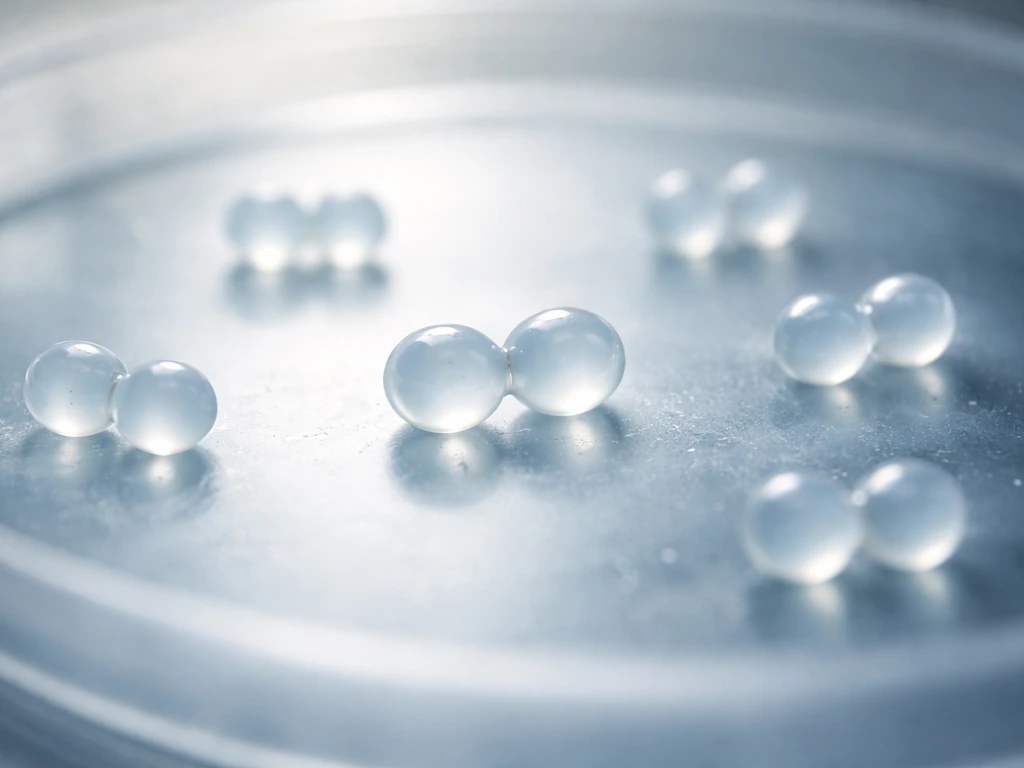
Bacteria grow by binary fission: one cell splits into two, two become four, and so on. Given enough time and the right conditions, a small starting population can become dangerous surprisingly fast. The key phrase there is "the right conditions." Bacteria are not uniformly dangerous in every environment. They need a specific window of temperature, a compatible pH, enough available water, the right nutrients, and (depending on the species) the right oxygen level. When all of those line up, growth is rapid. When even one of them falls outside the tolerable range, growth slows or stops entirely.
This is why food safety rules are not arbitrary. They are built around disrupting at least one of those growth requirements. Refrigeration targets temperature. Pickling and fermenting target pH. Drying and curing target moisture. Understanding the "why" behind each rule makes it much easier to apply them correctly and to recognize when a situation is genuinely risky versus when it is not.
One important misconception to clear up before going further: you cannot tell whether food is dangerous by smelling or tasting it. Many of the most hazardous bacteria, including Salmonella and Staph aureus, produce no noticeable off-odor, discoloration, or taste change at dangerous population levels. The only reliable protection is controlling conditions from the start.
The temperature danger zone for food (and why it works the way it does)
The 40°F to 140°F range is dangerous because most foodborne bacteria are mesophiles, meaning they are adapted to moderate temperatures. Mesophiles have optimal growth temperatures that fall roughly between 20°C (68°F) and 45°C (113°F), which lines up almost perfectly with room temperature, the human body, and warm stored food. At those temperatures, their enzymes run efficiently, their cell membranes stay fluid enough to transport nutrients in and waste out, and cell division proceeds at maximum speed.
Cold temperatures slow bacteria down by disrupting those same mechanisms. When temperature drops toward 0°C, bacterial cell membranes become more rigid and lose the fluidity they need to function. Research on organisms like Listeria monocytogenes shows that at 15°C, membranes are measurably more rigid than at 30°C. Beyond membrane effects, cold also dramatically slows enzyme activity: for enzymes adapted to body temperature, dropping from 37°C to 0°C can reduce activity by 20 to 80 times. This is why refrigeration works so well, even though it does not kill bacteria. It just makes their cellular machinery run too slowly to divide at a dangerous rate.
Heat works in the opposite direction. Above 140°F (60°C), most bacteria's proteins begin to denature, their enzymes stop functioning, and cell structures break down. This is why cooking and reheating to safe temperatures kills pathogens rather than just slowing them.
The 2-hour rule in practice
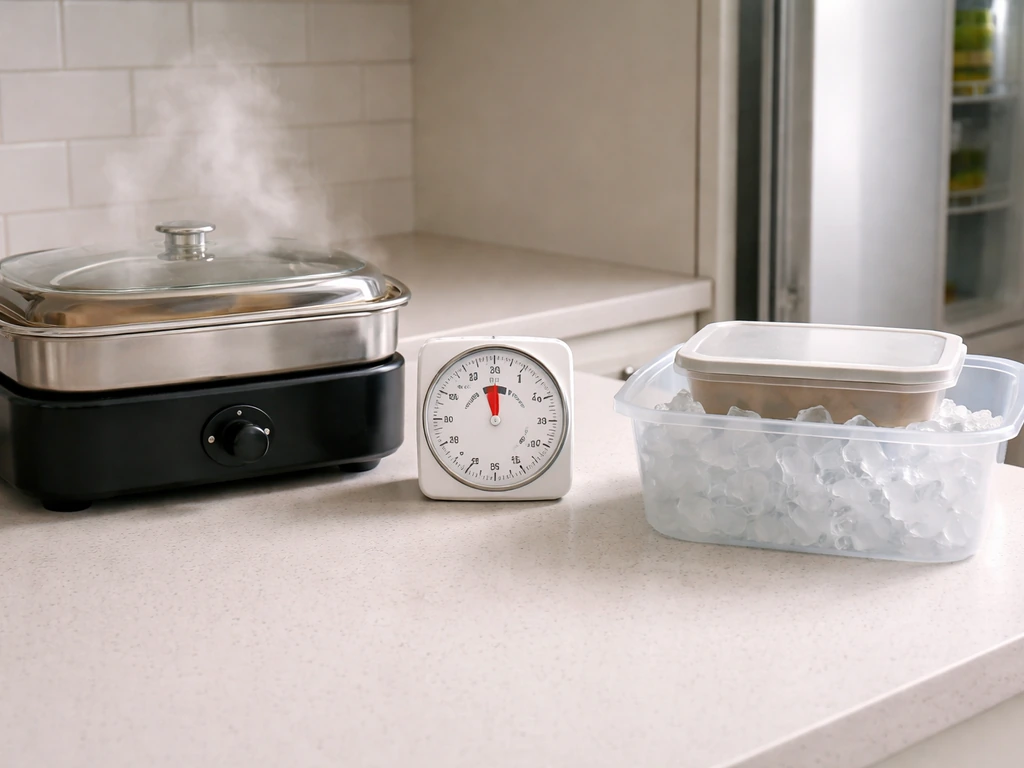
The 2-hour rule comes directly from how fast bacteria multiply at room temperature. Within 2 hours in the danger zone, populations can grow large enough to become a food safety concern. The 1-hour threshold above 90°F reflects that warmer ambient temperatures push food deeper into the optimal growth range faster, accelerating the risk. These are not conservative guesses: they are backed by USDA, CDC, and FDA guidance and apply to any perishable food sitting out, including buffet dishes, takeout containers, and cooling leftovers.
- Keep hot foods above 140°F until served (use warming trays or slow cookers on warm settings).
- Keep cold foods at or below 40°F (use ice baths, ice packs, or chilled serving platters).
- Refrigerate or discard perishables within 2 hours (or 1 hour if the environment is above 90°F).
- When in doubt about how long something has been out, throw it out. No smell test required.
Other key growth conditions: pH, moisture, and nutrients
pH and acidity
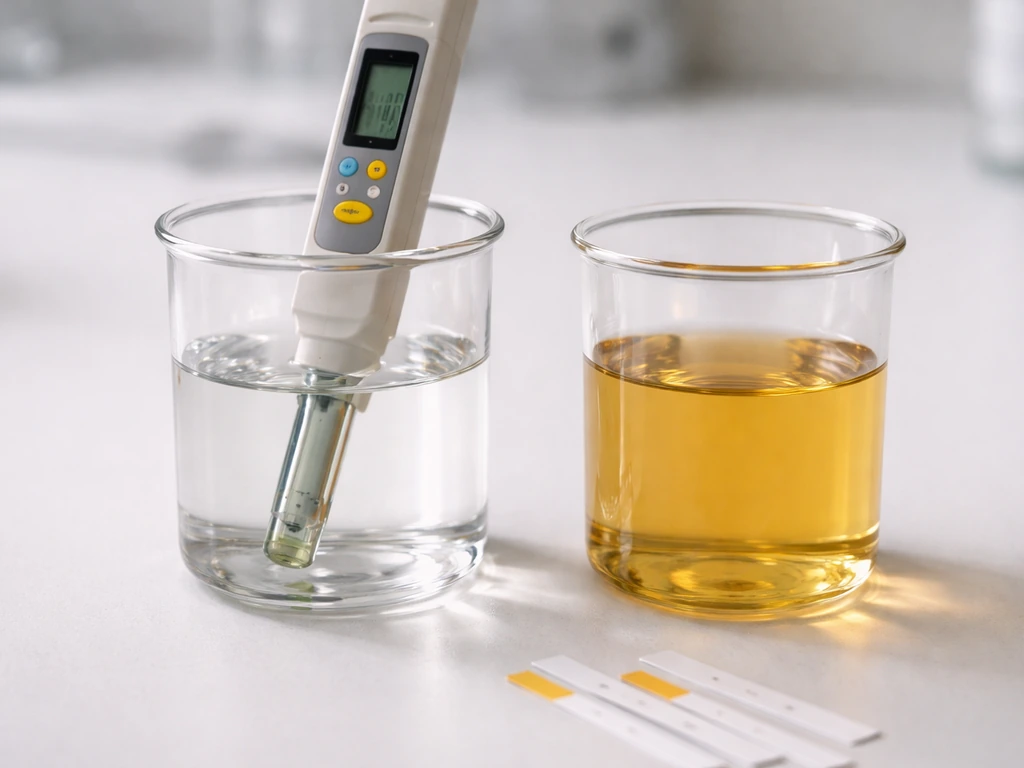
Most foodborne bacteria are neutrophiles, meaning they prefer a near-neutral pH in the range of roughly 6.5 to 7.5. Salmonella, for example, has an optimal pH of 7.0 to 7.5, though it can grow as low as pH 4.2 under the right conditions. The practical takeaway: high-acid foods like vinegar-based pickles, properly fermented products, and citrus-heavy dishes create an environment that inhibits or kills most dangerous bacteria. Low-acid foods (pH above 4.5), such as meats, cooked grains, dairy, and most vegetables, offer bacteria a much friendlier environment. This is why low-acid foods require more careful temperature and time control. pH and temperature together determine the overall risk level, and the best conditions for bacteria to grow tend to involve both neutral pH and danger-zone temperatures at the same time.
Moisture and water activity
Water activity (written as aw) is a measure of how much water is actually available for microbial use in a food. Pure water has an aw of 1.0. Bacteria generally need an aw above about 0.86 to grow, and most fresh, perishable foods have a water activity above 0.95, which easily supports bacterial growth. This is why drying, curing with salt, and adding high concentrations of sugar work as preservation methods: they reduce water activity below the threshold bacteria need. It also explains why dried pasta, crackers, and jerky are shelf-stable while fresh pasta, raw meat, and cut fruit are not.
A food can be dangerous even if it looks or feels dry on the surface. Bacteria need only enough available water at a cellular level to carry out nutrient transport and waste removal. If the aw is high enough internally, growth can proceed even when a food does not feel wet.
Nutrients
Bacteria need carbon sources (carbohydrates, fats, proteins), nitrogen, minerals, and in many cases vitamins. Most human foods provide all of these generously, which is why foods that are also warm, moist, and near-neutral in pH tend to be high-risk. Bacteria grow best in warm, dry food when conditions still provide enough nutrients, so don’t rely on how dry something looks warm, moist, and near-neutral in pH. Starches, proteins from meat and dairy, and sugars from fruit all serve as bacterial fuel. This is also why clean surfaces that have had food residue fully removed are safer: removing the nutrient base takes away one of the conditions bacteria depend on to multiply.
Oxygen needs and growth limits: aerobic vs. anaerobic vs. microaerophilic
One of the most common misconceptions about bacteria is that they all need air to grow. In reality, bacteria vary widely in their oxygen requirements, and this matters a lot for food safety.
| Type | Oxygen requirement | Example pathogens | Risk scenario |
|---|---|---|---|
| Aerobic | Requires oxygen to grow | Pseudomonas, some molds | Exposed food surfaces, open storage |
| Anaerobic (obligate) | Cannot tolerate oxygen; grows only without it | Clostridium botulinum | Canned foods, garlic-in-oil, vacuum packaging |
| Facultative anaerobe | Grows with or without oxygen | Salmonella, E. coli, Staph aureus | Most foodborne illness scenarios |
| Microaerophilic | Grows best at low oxygen levels | Campylobacter | Undercooked poultry |
| Aerotolerant | Does not use oxygen but tolerates it | Some Lactobacillus strains | Fermented foods (generally beneficial) |
The anaerobic case deserves special attention because it catches people off guard. Clostridium botulinum, the bacterium that produces the botulism toxin, actually thrives in low-oxygen and no-oxygen environments. Vacuum-sealed packaging, improperly home-canned foods, and garlic stored in oil at room temperature can all create the oxygen-depleted, moist, low-acid conditions where C. botulinum grows and produces toxin. There is no smell or visible sign that botulism toxin is present. This is why home canning has strict pressure and temperature requirements, and why garlic-in-oil must be refrigerated and used within a week.
Facultative anaerobes like Salmonella and E. coli are the ones responsible for most everyday food poisoning cases because they grow just fine whether or not oxygen is present, making them broadly dangerous across a wide range of storage conditions.
How to assess risk in real life: surfaces, hands, foods, and storage
Bacteria do not appear out of nowhere: they transfer from one surface, food, or person to another. In general, bacteria grow best on surfaces that are warm, moist, and have leftover nutrients from food. Cross-contamination is how a cutting board used for raw chicken ends up contributing to illness in a salad. The risk on any given surface depends on how much microbial contamination landed there, how much nutrient residue remains, how warm and moist the surface is, and how long bacteria have had to multiply.
Hands are one of the most common transfer points, which is why handwashing with soap for at least 20 seconds before and after handling raw meat, poultry, eggs, or seafood is so effective. Soap does not just rinse bacteria away: it disrupts the lipid membranes of many bacteria and physically removes them from skin surfaces. Surfaces like cutting boards, countertops, sponges, and utensils all accumulate bacteria from food contact, and sponges are particularly high-risk because they are warm, wet, and nutrient-rich all at once.
Wood versus plastic cutting boards come up a lot. Both can harbor bacteria in scratches and grooves if not properly sanitized. The USDA recommends sanitizing cutting boards with 1 tablespoon of unscented liquid chlorine bleach per gallon of water and replacing boards when they develop deep cuts that cannot be properly cleaned. Worn boards of either material are riskier than new ones because of those hard-to-reach grooves.
Refrigerators themselves are a hidden risk if their temperature drifts above 40°F. A refrigerator that runs at 42°F or 44°F is not safe for storing perishables long-term even though it feels cold. Using an inexpensive refrigerator thermometer and checking it periodically is the only way to know for sure. The goal is 40°F or below throughout the entire unit, not just in one spot.
Storage containers matter too. Large pots of soup or stew left to cool on the counter cool very slowly in the center, and that core can stay in the danger zone for hours. Splitting leftovers into shallow containers dramatically reduces cooling time and gets the food out of the danger zone faster.
What to do now: safer handling, storage, cooling, reheating, and cleaning
Cooling cooked food safely
The FDA's staged cooling guideline gives you a useful target: get hot cooked food from 135°F down to 70°F within 2 hours, then from 70°F down to 41°F within the next 4 hours. That means you should not leave a big pot of chili on the stove to cool on its own. Instead, divide it into shallow containers no more than 2 to 3 inches deep, use an ice bath in the sink, stir frequently, and get it into the refrigerator within 2 hours of cooking. This staged approach minimizes the total time food spends in the danger zone.
Reheating leftovers
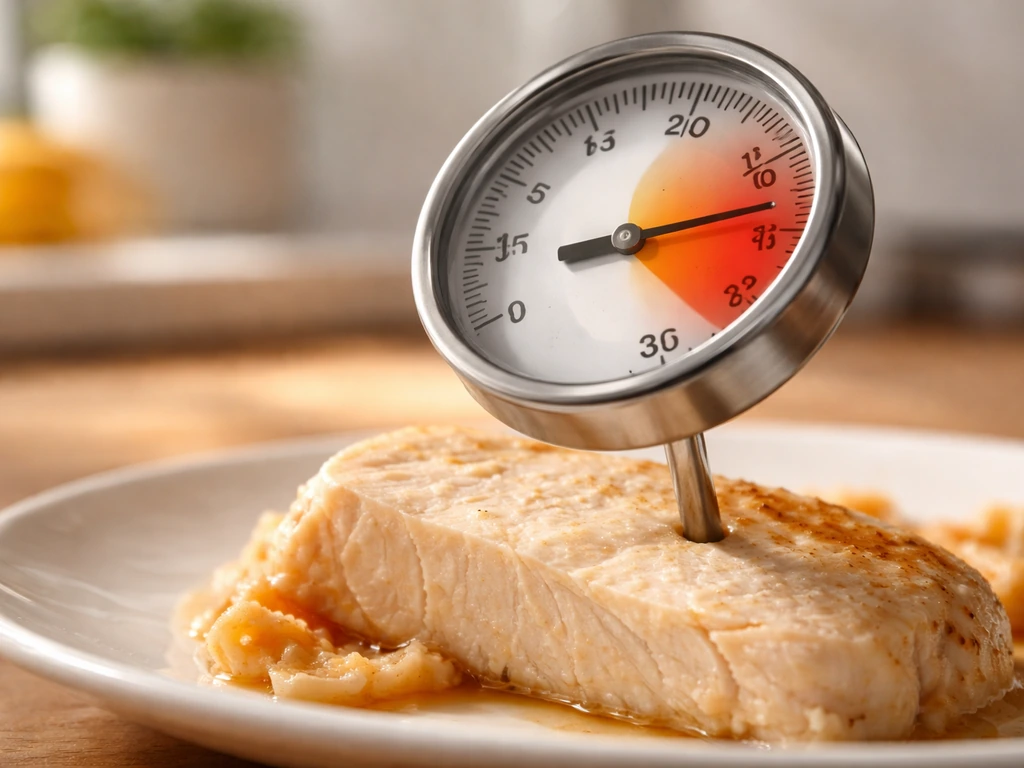
Reheating to 165°F (74°C) throughout is the standard for all leftovers. That temperature kills the vegetative (actively growing) forms of most dangerous bacteria. When using a microwave, cover the food, stir or rotate halfway through, and check the temperature in multiple spots because microwaves heat unevenly and cold pockets can persist. A meat thermometer is the only reliable way to confirm that you have hit 165°F all the way through, not just on the surface.
One important note on spores: some bacteria, including Bacillus cereus and C. botulinum, form heat-resistant spores. Reheating to 165°F kills active bacteria but does not destroy spores. For example, USDA FSIS safe minimum internal temperature guidance includes reheating targets such as reheating fully cooked ham to 140°F. This is why safe handling from the start, and not allowing food to sit in the danger zone for extended periods, is more important than relying on reheating to fix a storage mistake. A food that has been in the danger zone for hours may have bacteria that produced toxins, and some toxins (like Staph aureus enterotoxin) are heat-stable and survive cooking.
Cleaning and sanitizing surfaces
Cleaning and sanitizing are two different steps. Cleaning removes visible food residue and most bacteria physically. Sanitizing kills what remains. For kitchen surfaces that have contacted raw meat, poultry, or eggs, clean first with hot soapy water, then sanitize with a bleach solution (1 tablespoon of unscented chlorine bleach per gallon of water). Let the solution sit on the surface for about a minute before rinsing or air-drying. Countertops, sinks, and any surface that caught splatter from raw proteins need this two-step treatment.
A practical checklist for reducing bacterial growth risk
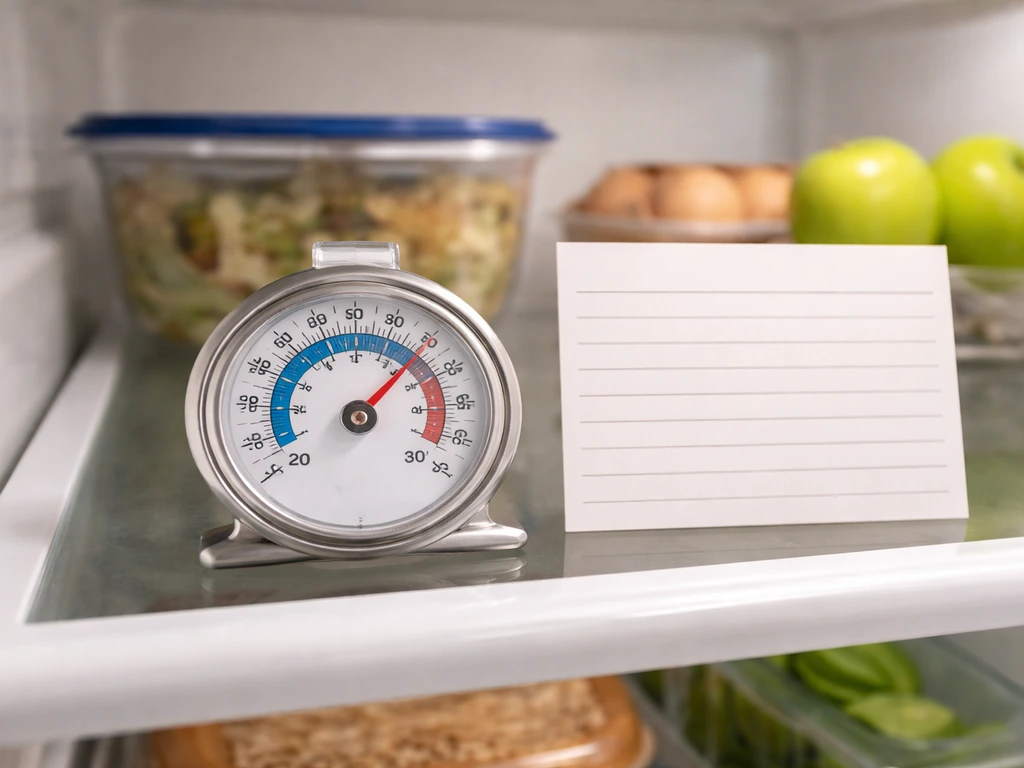
- Keep a thermometer in your refrigerator and confirm it reads 40°F or below.
- Refrigerate or discard perishable foods within 2 hours of cooking or serving (1 hour above 90°F).
- Cool large batches of food in shallow containers, not in the original pot.
- Reheat all leftovers to 165°F throughout, verified with a food thermometer.
- Wash hands with soap for 20 seconds before and after handling raw proteins.
- Clean cutting boards and countertops with hot soapy water after each use, then sanitize with a bleach solution when raw meat or poultry was involved.
- Replace cutting boards that have deep scratches or grooves that cannot be fully cleaned.
- Store garlic-in-oil in the refrigerator and use within one week.
- Treat vacuum-sealed and home-canned low-acid foods with extra caution: when in doubt, discard without tasting.
- Never rely on smell or appearance to decide if food is safe. Trust time and temperature records instead.
Temperature gets most of the attention in food safety conversations, but the danger zone really becomes dangerous when it overlaps with the other favorable conditions: near-neutral pH, high water activity, available nutrients, and the right oxygen environment. Understanding how these factors interact is what separates a vague rule of thumb from a genuinely useful framework. Whether you are studying microbiology for the first time or just trying to figure out if last night's leftovers are still safe to eat, the biology behind bacterial growth gives you the tools to make that call correctly every time.
FAQ
Is the danger zone the same for every bacteria and every food?
No. The 40°F to 140°F range is a general risk window, but actual growth speed depends on the species and the product. A food with very low pH, low water activity, or very low nutrients may not support rapid growth even if it sits in that temperature range.
What happens if food smells fine after sitting in the danger zone?
Smell is not a reliable indicator. Some high-risk bacteria and their toxins can be present without obvious odor or taste changes, so the safe decision should be based on time and temperature, not sensory checks.
Does “ice” or a cold pack keep food out of the danger zone?
It can, but only if the food actually stays at or below 40°F. Packs often cool the outside first, so check that the center temperature drops safely, especially for thick containers, big cuts of meat, and tall leftovers.
If I reheat leftovers, are they automatically safe?
Reheating to 165°F can kill active growing bacteria, but it does not reliably neutralize toxins already produced. If the food spent too long in the danger zone, the risk may remain even after reheating.
How do I tell whether “two hours” means total time or each time I opened the fridge or moved it?
Use total time spent in the danger zone while the food was at unsafe temperatures. Frequent temperature changes still add up, for example, a takeout container repeatedly carried in and out of air-conditioned or hot environments.
Is it safe to leave cooked food on a buffet table if it looks warm?
Not by appearance alone. Buffet warming equipment must hold hot foods above the danger zone, and many units can fail at the center. Use a thermometer to confirm temperatures, especially when food is covered, stirred infrequently, or served from deep pans.
Can bacteria grow on refrigerated food if the fridge is slightly warm, like 44°F?
Yes. A fridge at 44°F may slow growth but does not stop it, and some bacteria can increase at those temps. For long-term storage, the goal is 40°F or below throughout the unit, not just near the door.
What is a practical way to cool large foods faster without ruining them?
Split into shallow containers (about 2 to 3 inches deep), stir if practical, and use an ice bath for large batches. Avoid leaving food in a single deep pot, since the center often stays in the danger zone long enough to allow unsafe multiplication.
Does “dry” food ever stay safe if it was left out at room temperature?
Dryness on the surface does not guarantee safety. If water activity inside the food is still high enough, bacteria can grow even when the outside feels dry, which is why many perishable items become risky even when they do not look wet.
Are microwaves enough to reach safe temperature everywhere?
They can, but microwaves heat unevenly. Cover the food, stir or rotate halfway through, and measure multiple spots with a thermometer to confirm the center reaches 165°F.
Does cleaning a cutting board remove all risk?
Cleaning removes visible residue, but it may not be enough after raw meat contact. A two-step approach (clean with hot soapy water, then sanitize with the proper bleach solution and contact time) is needed, and heavily scratched boards are harder to sanitize effectively.
What should I do if I suspect food sat out longer than the 2-hour rule?
When you cannot verify that it stayed below 40°F or within safe time limits, discard is the safest option, especially for high-risk foods like poultry, dairy, cooked rice, and cut fruit. If you know only “roughly,” treat it as unsafe.
Are there special risks for vacuum-sealed or oil-stored foods?
Yes. Low-oxygen, moist conditions can support toxin-producing bacteria like C. botulinum. Vacuum-sealed deli items, improperly home-canned foods, and garlic in oil must follow strict temperature and time guidance, typically requiring refrigeration.
Does handwashing time change how safe it is?
Yes. Shorter washing often means incomplete removal of germs. Soap helps break down many bacterial cell membranes and removes contamination physically, so stick to at least 20 seconds when switching between tasks, especially after handling raw proteins.