No, bacteria do not grow best in warm dry food. Warmth helps many bacteria multiply, but dryness works against them. Most bacteria need moisture to grow, and a dry environment is actually one of the most effective natural brakes on bacterial growth. The real danger zone for food is warm AND moist, not warm AND dry.
Bacteria Grow Best in Warm Dry Food: True or False?

Marcus Holloway
30 Apr 2026
What bacteria actually need to grow

Think of bacterial growth like a recipe: you need several ingredients at once. Take away any one of them and growth slows or stops entirely. The key factors are temperature, moisture (measured as water activity), and nutrients. Oxygen, pH, and time also matter depending on the species. When students or food handlers ask about the conditions for bacterial growth, understanding all these factors together gives a much more accurate picture than any single rule.
Temperature
Most foodborne bacteria thrive in what food safety agencies call the "Danger Zone," which the USDA FSIS defines as 40°F to 140°F (4°C to 60°C). The FDA Food Code puts the upper boundary at 135°F (57°C) for practical food safety purposes, and the FAO describes rapid microbial growth occurring between roughly 41°F (5°C) and 140°F (60°C). Inside that range, bacteria can double in number in as little as 20 minutes under ideal conditions. Below 40°F, growth slows dramatically. Above 140°F, most vegetative (actively growing) bacterial cells are destroyed. So yes, warmth within that window promotes growth for most common foodborne pathogens.
Moisture and water activity
Water activity (abbreviated a_w) is the measurement food scientists use to describe how much water is actually available for microbial use in a food. It runs on a scale of 0 to 1. Pure water is 1. 0.
Most fresh foods like meat, dairy, and cooked vegetables sit above 0. 95, meaning they are very hospitable to bacteria. According to the FDA, foods with a_w above 0. [85](https://www.
fda. gov/inspections-compliance-enforcement-and-criminal-investigations/inspection-technical-guides/water-activity-aw-foods) can support the growth of vegetative bacterial cells under suitable temperature conditions, and most everyday foods sit well above that threshold. The FDA also identifies 0. 85 as a key control point: drop a food's water activity to 0.
85 or below and pathogens generally cannot grow in it, which is why certain shelf-stable products are regulated differently.
Nutrients
Bacteria need a food source too. Proteins and carbohydrates are especially good fuels, which is why cooked chicken, rice, dairy products, and egg dishes appear so frequently in foodborne illness cases. A food that is warm and moist but nutritionally empty would still support less growth than one with plenty of available proteins and sugars. This is one reason cooked starchy foods like cooked rice can be surprisingly risky when left at room temperature.
Why "dry" usually slows bacterial growth
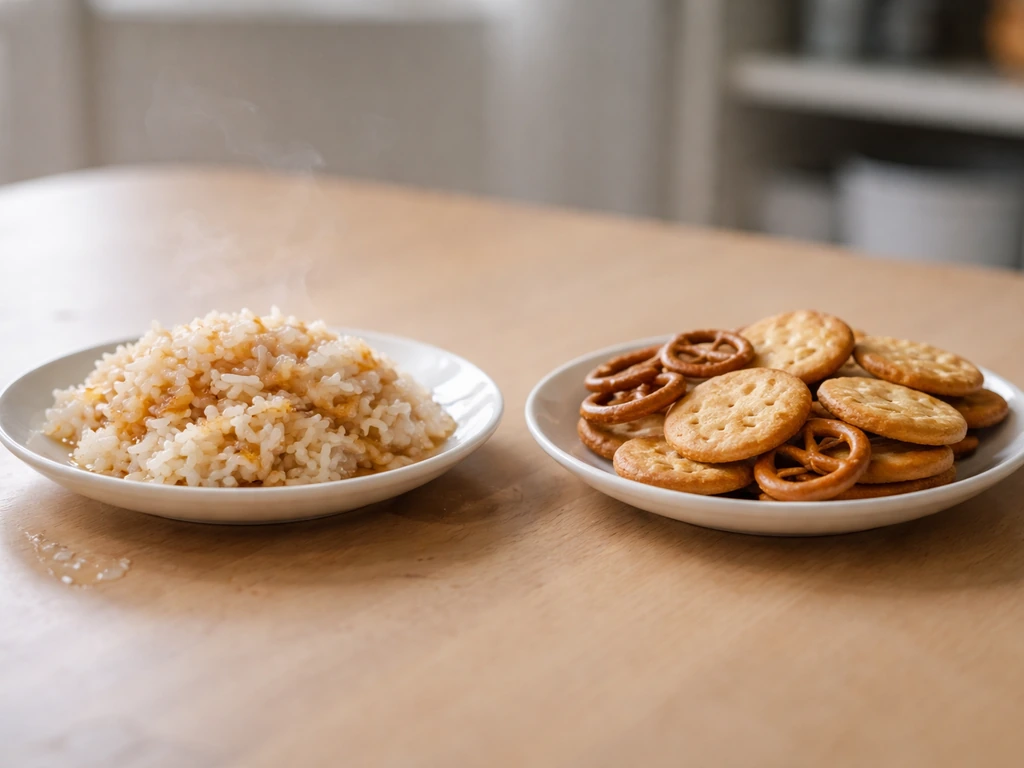
When a food is genuinely dry, its water activity is low enough that bacteria cannot pull water out of their environment to run the biochemical reactions needed to reproduce. Research shows that below aw 0. 6, no microorganisms can grow at all. Most bacteria require aw values well above that: for example, E.
A PubMed-indexed water activity quality-control article notes that bacteria usually require water activity values of at least about 0. 91, and that each microorganism has a minimum aw below which it will not grow [Most bacteria require aw values well above that: for example](https://pubmed. ncbi. nlm.
nih. gov/30021184/). coli generally needs a_w at or above 0. 95, Bacillus cereus needs at least 0.
93, and even relatively hardy Listeria monocytogenes typically requires at least around 0. 92. This is the biological reason why foods like dried pasta, crackers, and powdered spices are shelf-stable for months or years without refrigeration.
It is worth being precise about what "dry" actually means here, though. A food can feel dry to the touch and still have a water activity high enough to support bacterial growth, especially if it is only partially dried or if it has been exposed to humidity. The moisture content you measure in a lab and the water activity are related but not identical: water activity tells you specifically how much water is free and available to microbes, not just how much total water is present.
Not all bacteria behave the same way
One reason the "warm dry food" statement is misleading is that it treats all bacteria as a single group. They are not. Different species have very different tolerances for temperature, moisture, pH, and oxygen. Here is a quick look at how some well-known foodborne pathogens differ:
| Pathogen | Temperature range for growth | Minimum water activity (a_w) | Notable trait |
|---|---|---|---|
| Listeria monocytogenes | ~37°F to 104°F (3°C to 40°C) | ~0.92 | Grows at refrigerator temperatures |
| Bacillus cereus | ~39°F to 118°F (4°C to 48°C) | ~0.93 | Spore-former; survives cooking |
| E. coli (pathogenic strains) | ~50°F to 113°F (10°C to 45°C) | ~0.95 | Needs relatively high moisture |
| Salmonella | ~41°F to 113°F (5°C to 45°C) | ~0.94–0.95 for active growth | Can persist (not grow) in very dry foods |
Listeria is particularly worth highlighting because it breaks the intuitive rule that refrigeration stops all bacterial growth. The CDC has specifically noted that Listeria can grow on refrigerated foods, which is why it is especially dangerous in ready-to-eat deli meats and soft cheeses that are stored cold for extended periods. The key principle here is the same one discussed in the broader topic of best conditions for bacterial growth: no single variable tells the whole story.
Salmonella adds another complication to the warm-and-dry question. While Salmonella typically requires a_w around 0.94 to 0.95 for active growth, it can survive (though not multiply) in very low-moisture foods like dry spices, nuts, peanut butter, and powdered products. Outbreaks have been traced to these low-moisture foods precisely because the organism persisted through processing without actively growing. So "dry" can mean "no growth" without meaning "no risk."
The food conditions that actually create serious risk
If you want to identify a genuinely risky situation for bacterial growth in food, look for these conditions occurring together:
- Temperature in the Danger Zone (40°F to 140°F / 4°C to 60°C)
- Water activity above 0.85, which describes most fresh, cooked, and minimally processed foods
- Time: the USDA states bacteria can reach dangerous levels in as little as two hours at room temperature, or one hour if the ambient temperature exceeds 90°F (32°C)
- Adequate nutrients, especially proteins and carbohydrates
- Contamination from handling, surfaces, utensils, or cross-contact with raw foods
Time is the factor people underestimate most. A cooked chicken breast sitting on the counter at 72°F starts out safe, but at 20-minute doubling times, bacterial populations can reach unsafe levels faster than most people expect. The FDA's cooling guidance exists specifically because of this: cooked food must be cooled from 135°F to 70°F within 2 hours, and then from 70°F to 41°F within 4 more hours. That is a total of 6 hours from hot to safely cold, and both stages matter. Slowing cooling in a large container of soup, for instance, means the food spends too long passing through the middle of the Danger Zone.
Practical steps you can take right now
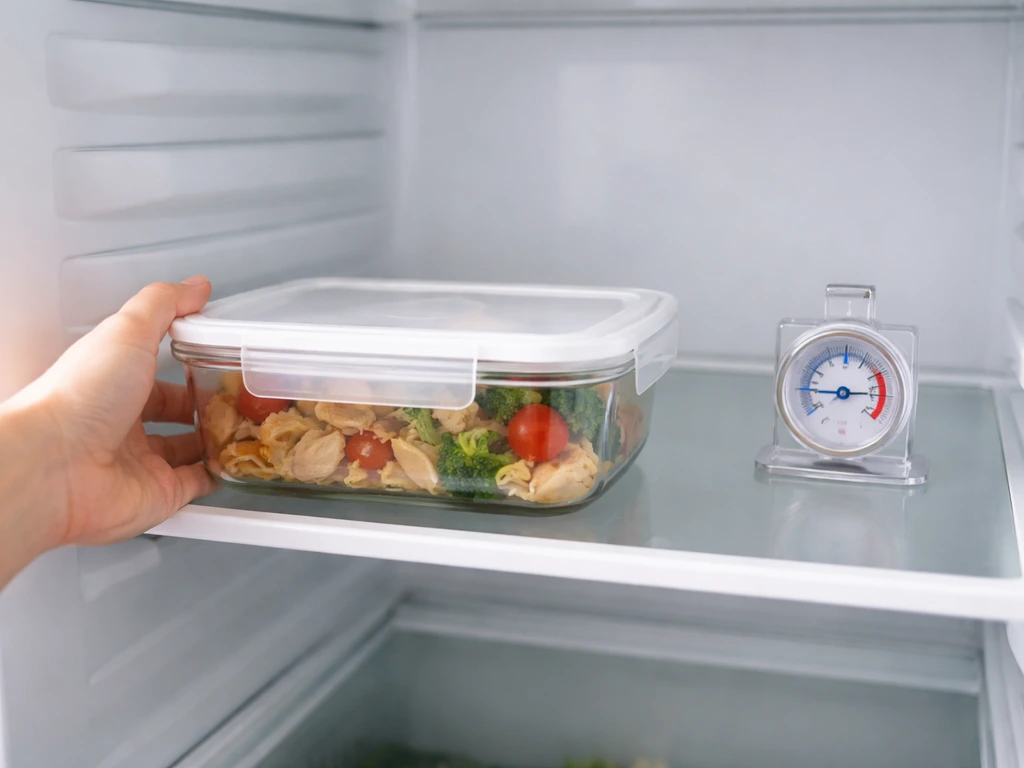
- Refrigerate leftovers within two hours of cooking (one hour if it is over 90°F in your kitchen or outdoors). Store them at 40°F or below. The FDA recommends using a refrigerator thermometer to confirm your fridge is actually at or below 40°F.
- Cool large portions quickly by dividing them into shallow containers before refrigerating. Do not leave a large pot of soup to cool on the stovetop overnight.
- Use the USDA FSIS guideline of 3 to 4 days for refrigerated leftovers. After that, freeze or discard.
- Keep your freezer at 0°F or below for long-term storage. Freezing stops bacterial growth but does not kill all bacteria, so proper handling after thawing still matters.
- Do not treat "dry" packaged foods as automatically safe after opening. Once a spice jar, flour bag, or powdered mix is exposed to humid air or water, its water activity can rise enough to support growth. Seal them properly.
- Be cautious about rehydrating dried foods and then leaving them at room temperature. Adding water restores water activity and can enable bacterial growth if the food then sits in the Danger Zone.
- Wash hands, cutting boards, and utensils thoroughly. Contamination is the starting point; even a low-moisture food with no active growth can carry enough surviving pathogens to cause illness if the conditions later change.
Common myths worth clearing up
Myth: warmth alone is enough to grow dangerous levels of bacteria
Warmth without moisture will not produce significant bacterial growth. A warm cracker, a warm dried herb, a warm hardtack biscuit: none of these are risky simply because of temperature, because their water activity is too low for bacteria to do anything. The FDA is explicit that warmth enables growth only when water activity is also above the threshold. Temperature and moisture work together; neither alone is the full answer.
Myth: drying food makes it permanently safe
Drying reduces water activity enough to stop bacterial growth, but it does not always kill bacteria. Pathogens like Salmonella can survive for months in dried, low-moisture foods. If the food is later rehydrated, even partially through humidity exposure, and then held at a warm temperature, those surviving organisms can revive and grow. Research on dried foodborne pathogens confirms that recovery of organisms is directly related to how rehydration occurs. "Dry" is a growth-stopping condition, not a sterilization method.
Myth: refrigeration stops all bacterial growth
Most pathogens grow very slowly or not at all below 40°F, but Listeria monocytogenes is the well-documented exception. It can grow at refrigerator temperatures (its range extends down to around 37°F), which is why listeriosis outbreaks have been linked to refrigerated ready-to-eat products. For most bacteria, the refrigerator is a strong protective tool. Just do not assume it is a complete barrier for every pathogen.
Myth: if food looks and smells fine, it is safe
Many dangerous pathogens including Salmonella, E. coli, and Listeria produce no obvious changes in the appearance, smell, or texture of food. The absence of visible spoilage tells you nothing reliable about pathogen levels. Time, temperature, and water activity are the actual indicators of risk, not sensory cues. This connects directly to why understanding the principles behind microbial growth matters so much more than a quick sniff test.
FAQ
If a food feels dry, is it always safe to leave out warm?
Not automatically. “Dry” by feel can still have a_w high enough to allow growth if it is humidified, partially dried, or coated with a moisture-rich ingredient (for example, a dry snack mix with oily sauce pockets). If the food was stored in a humid environment or was rehydrated during serving, assume risk returns when it is kept warm for long enough.
Does warming shelf-stable dry foods create the same risk as warming cooked leftovers?
It can be, but only for growth control, not for eliminating bacteria. Warmth is dangerous when paired with high water activity, typical of rehydrated or moist foods. For truly shelf-stable items with low a_w, you still can have survival, then growth later after rehydration.
Can “dry” recipes still support bacterial growth even if they are cooked?
Yes, if the food becomes moist during processing or afterward. For example, doughs, sauces, and batters can retain enough available water even after cooking if they are held warm. Also watch for “dry” coatings that trap moisture underneath (like breaded items or granola bars with binders).
Why can bacteria still grow in the refrigerator if cold stops most microbes?
Refrigeration slows growth for most bacteria, but it does not reliably stop it. Listeria can keep increasing at refrigerator temperatures, so ready-to-eat refrigerated foods that are stored for extended periods remain higher risk, even if they never reach room temperature.
If bacteria can survive drying, what happens when dried food is rehydrated?
Because rehydration changes water activity and can “unlock” surviving bacteria. If a low-moisture food is later brought to warmth while wet (for example, soup mix reconstituted and then held warm), organisms that survived drying can recover and multiply.
How do I know if my cooling time is adequate for a large batch?
Time thresholds depend on the specific product, starting temperature, and container size, because heat transfer changes how long the middle stays in the Danger Zone. A larger mass (thicker stew, deep pot of rice) keeps the center warmer longer, so cooling needs to be faster than you might expect from surface temperature alone.
What should I do if the food smells fine but I am worried about contamination?
Looking only at smell or texture is unreliable. Many pathogens cause no obvious sensory change, and “slightly stale” can be unrelated to microbial safety. Use practical handling rules, like limiting time at warm temperatures and avoiding warm holding of foods that contain moisture and nutrients.
Can starchy or sugary foods be risky even if they seem not very moist?
Yes, certain foods combine nutrients with enough available water even when they are not “wet.” Examples include cooked grains, cream-based fillings, and moist meat dishes, which can stay in a growth-supporting state if held warm too long. High sugar or salt can reduce growth by lowering water activity, but the effect varies widely by formulation.
Does freezing fully solve the problem if bacteria are present in dry or moist foods?
Not necessarily. Freezing prevents multiplication for many bacteria but does not guarantee inactivation, and thawing can allow surviving cells to grow if the thawed food is held warm. To reduce risk, thaw in the refrigerator or quickly under controlled conditions, then do not hold at warm temperatures.
Why do outbreaks sometimes involve low-moisture foods like spices even though they are “dry”?
Yes, for some pathogens, survival is the issue, not growth. If contamination occurs before drying (for example, in spices or nuts), low moisture may prevent multiplication but not eliminate the organisms. The risk can resurface later if the product is rehydrated or held warm after moisture exposure.