Most bacteria grow best at a pH close to neutral, roughly between 6.5 and 7.5. If you are looking for a single number to remember, pH 7 is the most commonly cited optimum for the majority of bacteria you will encounter in a classroom, a food safety context, or a clinical setting. That said, "most bacteria" is doing a lot of heavy lifting in that sentence, and if you only walk away with pH 7 you will eventually be wrong. Here is the full picture, explained in a way you can actually use.
Most Bacteria Grow Best at pH: What the Answer Means

Marcus Holloway
22 Apr 2026
The direct answer: the pH range most bacteria prefer
The broad working range for most bacterial growth is roughly pH 4 to pH 9, but optimal growth for the majority of bacteria sits in a narrower window: pH 6.5 to 7.5. FDA food safety references specifically cite pH 6.6 to 7.5 as the range where most bacterial pathogens grow best. Microbiology lab courses often widen this slightly to pH 6.5 to 8.5 to capture the full neutrophilic majority. For practical purposes, think of neutral pH (around 7) as the sweet spot for typical bacteria, the same approximate pH as pure water or healthy human blood.
Why neutral? Bacterial enzymes and membrane transport proteins are proteins, and like all proteins they have a pH at which they function most efficiently. Stray too far in either direction and enzyme activity drops, the cell struggles to maintain its internal chemistry, and growth slows or stops entirely. Most bacteria have evolved their cellular machinery around near-neutral conditions because that is what their ancestral environments provided.
Acidophiles, neutrophiles, and alkaliphiles: the three-category framework
Microbiologists classify bacteria by their pH preference into three groups. Knowing which group a bacterium belongs to tells you immediately where it will thrive and where it will struggle.
| Category | Optimal pH Range | Examples | Where You Encounter Them |
|---|---|---|---|
| Neutrophiles | 6.5 – 7.5 | E. coli, Salmonella, Staphylococcus aureus, most pathogens | Human gut, most foods, soil, water |
| Acidophiles | Below 5.5 (some as low as 1–2) | Helicobacter pylori, Thiobacillus thiooxidans | Stomach lining, acid mine drainage, fermented foods |
| Alkaliphiles | Above 8.5 (some up to 11) | Vibrio cholerae, Bacillus alcalophilus | Seawater, alkaline soils, some intestinal surfaces |
Neutrophiles are by far the largest group, which is why "most bacteria" statements point toward neutral pH. Acidophiles are genuinely adapted to acid, not just tolerating it but actually requiring it for optimal function. Alkaliphiles thrive in high-pH environments and are less commonly discussed in basic microbiology, but they are real and relevant. The key insight is that pH preference is a biological trait baked into each organism, not a setting you can override by giving the bacteria better nutrients or warmer temperatures.
How to predict what pH a bacterium prefers
You do not need to memorize every species. Instead, use the bacterium's natural environment as your first clue. Bacteria are adapted to where they live, so matching organism to habitat gets you surprisingly far.
- Identify the bacterium's natural habitat. Human body sites (gut, blood, skin wounds) hover near pH 6.5 to 7.5, so bacteria from those environments are almost certainly neutrophiles.
- Check whether the environment is inherently acidic or alkaline. Yogurt, vinegar-pickled foods, and the stomach (pH 1.5 to 3.5) select for acid-tolerant or acidophilic organisms. Alkaline soils and seawater select for alkaliphiles.
- Consider the clinical context. The vast majority of foodborne pathogens (Salmonella, E. coli O157:H7, Listeria, Campylobacter) are neutrophiles. If you are studying food safety, neutral-range pH applies to almost every pathogen on the standard list.
- Look at growth media formulations. Standard laboratory media like nutrient broth and tryptic soy broth are buffered to around pH 7, precisely because that suits the widest range of clinically relevant bacteria.
- Use extremes as a filter. If a bacterium is known to survive or grow in vinegar (pH ~2–3) or in highly alkaline cleaning solutions, it is clearly not a typical neutrophile.
This habitat-based reasoning works well enough for most classroom and food safety questions. When you need precision, the actual optimum pH for a specific strain is usually stated in its species profile or lab growth protocol.
How to test or estimate growth conditions across pH levels
Whether you are doing a lab experiment, checking a food product, or thinking through a hygiene scenario, here are practical steps for working with pH and bacterial growth.
In a lab or classroom setting
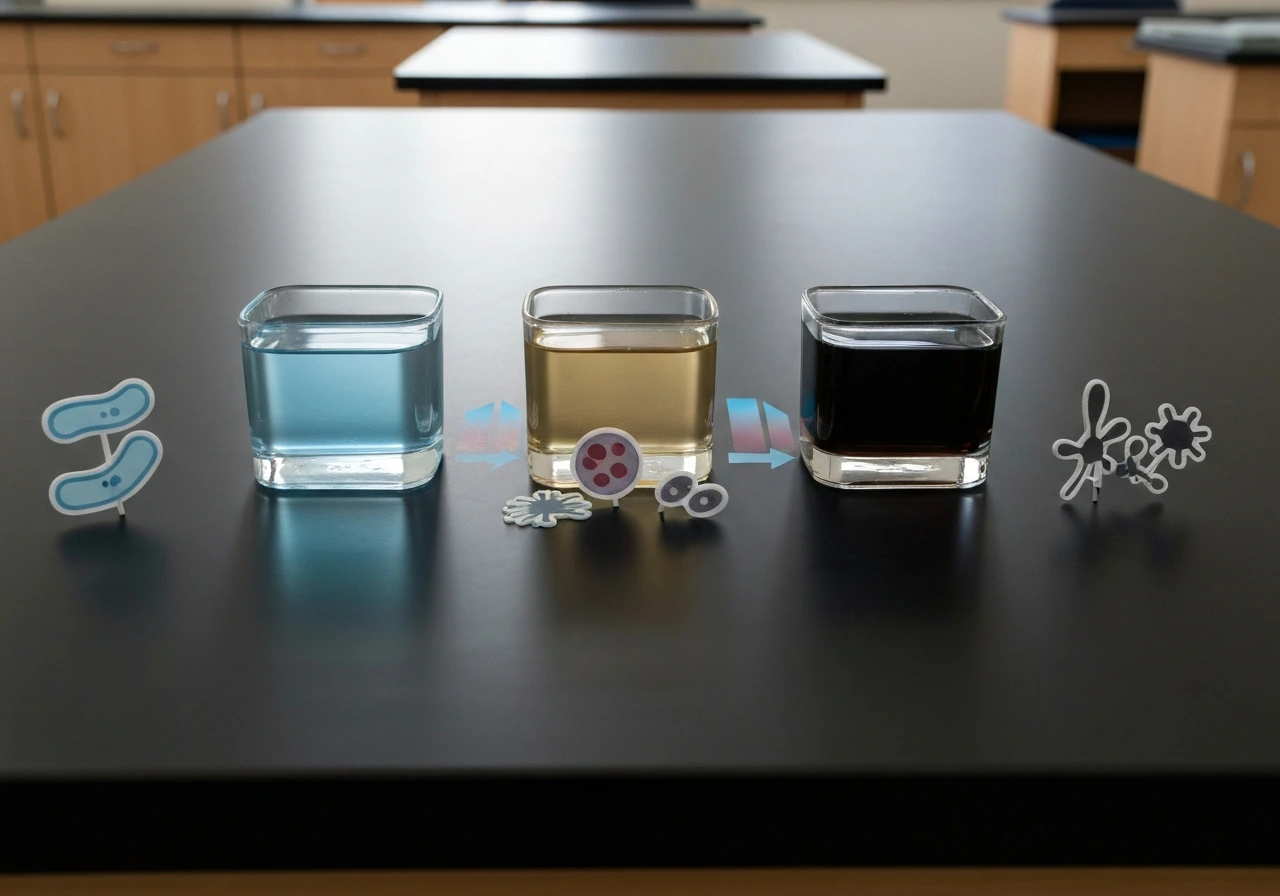
- Prepare or purchase broth media buffered to a series of pH values: for example, pH 4, 5, 6, 7, 8, and 9. Use a phosphate or citrate-phosphate buffer system to keep pH stable during incubation.
- Inoculate each pH-adjusted tube with the same bacterial strain at the same concentration.
- Incubate at the bacterium's known optimal temperature (typically 37°C for human pathogens) for 18 to 24 hours.
- Measure turbidity (cloudiness) using a spectrophotometer or by visual comparison. More turbidity means more growth.
- Plot turbidity against pH to find the growth optimum. The curve will peak at the optimal pH and fall off on both sides, giving you a visual growth profile.
In a food safety or real-world setting
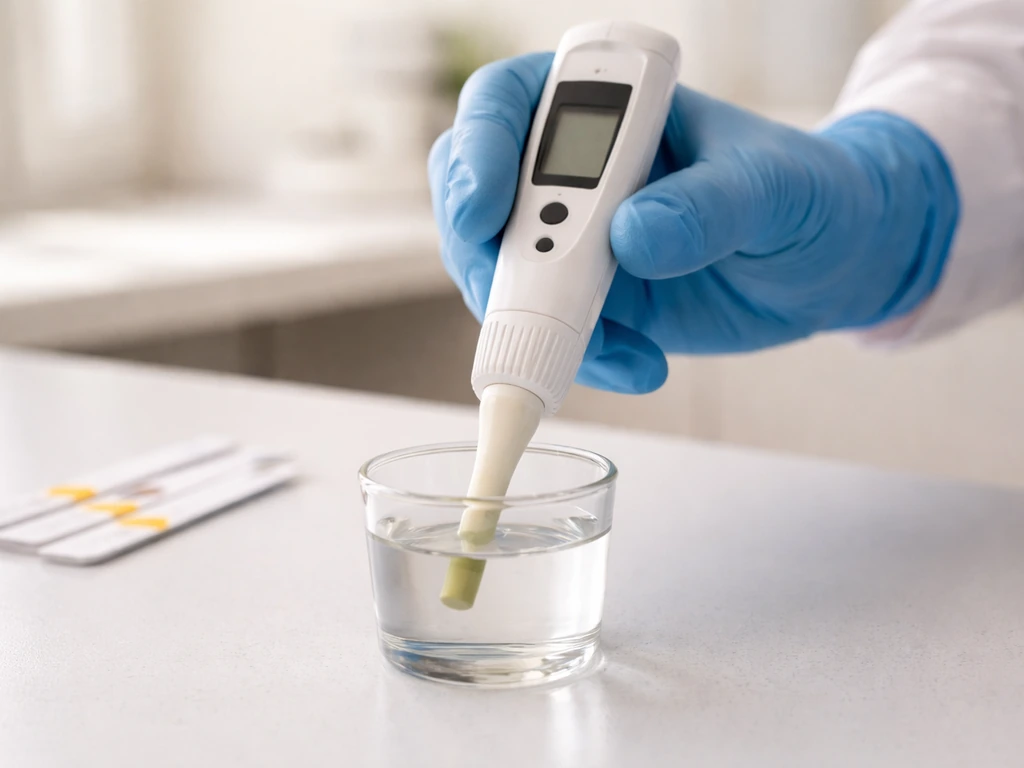
- Use a calibrated pH meter or pH test strips to measure the pH of the food or environment you are assessing. pH strips are less precise but fine for quick screening.
- Compare the measured pH against known growth thresholds. The FDA considers a pH at or below 4.6 to be a critical control point because it inhibits growth of most bacterial pathogens, including Clostridium botulinum.
- Remember that pH alone does not tell the whole story. Temperature, water activity, oxygen availability, and nutrient content all interact with pH to determine whether bacteria actually grow. A food at pH 5 might still support growth if it is warm and moist.
- Re-check pH after processing. Fermentation, cooking, and acidification all change pH, and some processes (like adding baking soda) can neutralize acidity and raise pH back into the danger zone for pathogens.
Common exceptions and the misconceptions worth clearing up
The biggest misconception is treating pH 7 as a hard rule that applies universally. It is a statistical tendency, not a law. Here are the specific exceptions and myths that trip people up most often.
- Helicobacter pylori is a pathogen that lives in the human stomach at pH 1.5 to 3.5. It does not grow best at neutral pH and in fact uses a urease enzyme to neutralize acid locally around itself. It is an acidophile with human-pathogen status, which surprises a lot of students.
- Listeria monocytogenes can grow at pH values as low as 4.4 under the right conditions. It is primarily a neutrophile, but its acid tolerance is broader than textbooks suggest, which is why it is a concern in minimally processed acidified foods.
- Low pH does not instantly kill bacteria. It often just slows growth. Survival and growth are different things: many neutrophiles can survive for hours or days in acidic conditions even if they cannot multiply.
- High pH is not always safe. Alkaliphiles genuinely grow better in alkaline conditions, and even some neutrophiles like Vibrio cholerae have a notably alkaline optimum (around pH 8.5 to 9). Assuming that alkaline cleaners leave surfaces free of all bacteria is an oversimplification.
- The idea that "bacteria need exactly pH 7" is a classroom shortcut, not a biological reality. Growth typically spans a range of two or more pH units on either side of the optimum before it stops entirely.
Another common confusion is mixing up pH tolerance with pH optimum. A bacterium might tolerate pH 5 to 9 but grow best only between pH 6.5 and 7.5. When a question asks what pH bacteria "grow best at," it is asking about the optimum, not the survival boundary. Because bacteria are most often neutrophiles, the pH range where they grow best is typically around neutral. Keep those two concepts separate and you will get the right answer in both lab and real-world contexts.
Why this matters in food safety, hygiene, and contamination control
pH is one of the most controllable variables in food preservation and infection control, and understanding the neutrophile majority is directly useful here. Most foodborne pathogens (Salmonella, E. coli O157:H7, Staphylococcus aureus, Clostridium perfringens) are neutrophiles. That is exactly why acidification is such a reliable preservation strategy: dropping a food's pH below 4.6 stops growth of essentially all common bacterial pathogens. FDA’s acidified foods process control requirement is that the finished equilibrium pH be 4.6 or lower within the scheduled process and maintained throughout all finished foods. This is the science behind pickling, fermentation, and acidified sauces.
OpenStax Microbiology notes that many food-spoilage microbes do not tolerate acidity well, which is why high-acid foods like tomatoes, citrus, and vinegar-based condiments have longer natural shelf lives than low-acid foods like meats, dairy, and cooked grains. Low-acid foods sit at pH 5 to 7, right in the neutrophile sweet spot, which is why they require refrigeration or other preservation methods to stay safe.
In hygiene and sanitation, pH matters in a different way. Many disinfectants work by pushing the pH to extremes, either very acidic or very alkaline, that denature bacterial proteins and disrupt membranes. Understanding that most bacteria are neutrophiles helps explain why bleach solutions (highly alkaline) and acid-based sanitizers are both effective against the typical bacterial contaminants on surfaces and in water systems.
It is also worth noting that pH does not work in isolation. The conditions that define whether bacteria grow involve temperature, moisture, available nutrients, and oxygen alongside pH. For more context on the best conditions for bacteria to grow beyond pH, consider how temperature and nutrients interact with the environment. Warm, dry food tends to be one of the better conditions for bacteria to grow, so pH alone is not the whole story temperature, moisture.
The bacterial danger zone in food safety (typically 40°F to 140°F, or 4°C to 60°C) intersects with pH because both must be in a permissive range for growth to occur. This means that as conditions move toward warmer temperatures and away from acidic or alkaline extremes, bacteria can grow more quickly. A food at pH 6. 8 stored at 4°C will not support rapid growth even though the pH is ideal, because the temperature suppresses it.
Managing multiple growth factors together is always more effective than controlling pH alone. Beyond pH and temperature, the surface properties matter too, including what surfaces bacteria grow best on.
Your practical takeaways
Start with pH 6.5 to 7.5 as your baseline answer for most bacteria, especially pathogens. Use the neutrophile, acidophile, alkaliphile framework to categorize any organism you are studying and predict where it will thrive. When assessing food safety or contamination risk, check pH with a meter or strips and compare against the 4.6 threshold that food safety authorities use as their pathogen control benchmark. And always factor in the other growth conditions: a single pH value without knowing temperature and water activity only tells part of the story.
FAQ
If most bacteria grow best near pH 7, do they die immediately if the pH is lower or higher?
No. “Grow best at pH” means the optimum growth rate, but bacteria can still survive outside that window. A common setup is: they may persist at more extreme pH values, then regrow once conditions become permissive again (for example, pH drifts back toward neutral after buffering in food or water).
Can I rely on pH strips or kitchen pH values to predict whether bacteria will grow in food?
Not always. Food pH tests and growth outcomes can differ because buffers and salts in real foods can change the effective pH experienced by cells. Also, pH strips read less precisely than a calibrated pH meter, especially near the cutoffs used for pathogen control.
Is pH 7 always the correct answer for “most bacteria” in every situation?
pH 7 is a good shorthand for many neutrophilic bacteria, but it is not a universal “magic number.” Some bacteria are acidophiles or alkaliphiles, and for them the optimum can be several pH units away from 7.
When a test asks about a specific bacterium, should I still use the “most bacteria” pH range?
You can use pH 6.5 to 7.5 as a typical optimum range, but if the question says “grow best” for a specific organism, you should switch to that organism’s stated optimum. Species and strain differences exist, and in a lab prompt the correct answer often comes from the organism’s growth profile rather than the generic neutrophile rule.
Does pushing pH to acidic or alkaline automatically guarantee disinfection, regardless of the surface and situation?
Yes, pH can be measured, but disinfectant effectiveness also depends on contact time, concentration, and whether the surface or fluid has organic matter. Organic residues can reduce activity, and some sanitizers work better because extreme pH works alongside detergents or oxidizers rather than pH alone.
If I measure pH once, is that enough, or do I need to re-check over time?
Measure before and after treatment if you can. Some solutions (especially diluted ones) can drift over time or change when mixed with water. For food, fermentation and spoilage can also change pH during storage, so “initial pH” may not reflect the pH microbes actually experience later.
Why might bacteria grow slowly even if the pH is in the optimal range?
Temperature can completely change the “practical” outcome. A sample at ideal pH may not support rapid growth if it is too cold or too dry, and a sample at a less favorable pH can still grow if temperature is in the permissive range and water activity is sufficient.
How can I tell whether a question is asking about survival range or growth optimum when it mentions pH?
pH tolerance and pH optimum are different traits. Tolerance is the range where cells can stay alive, optimum is where they reproduce fastest. In questions, wording matters: “survive” points to tolerance, while “grow best” points to the optimum.
In food safety scenarios, is the goal to slow bacterial growth or to prevent it entirely?
Yes. For food preservation, acidification targets a pH low enough to prevent growth, not just slow it. If a product is formulated with buffers, the pH threshold is more meaningful when you verify the final product pH (and sometimes monitor during storage).
What should I use to predict a bacterium’s pH preference if I do not know its species?
Focus on habitat clues when species-specific data is not given. Environments like acidic foods or sour soils suggest acid-adapted organisms, while alkaline soda lakes or marine settings suggest alkaliphile tendencies. This is often faster than trying to guess from pH alone.