Bacteria that grow in oxygenated environments are referred to as aerobic bacteria. Reddit commenters often distinguish “aerobic bacteria” from the more precise term “obligate aerobe,” which requires oxygen.
Bacteria That Grow in Oxygenated Environments Are Aerobic

Marcus Holloway
24 Mar 2026

If you want the more precise term, bacteria that absolutely require oxygen to grow are called obligate aerobes. Bacteria that require oxygen to grow are called obligate aerobes. But here's where it gets interesting: not every bacterium that can grow in an oxygenated environment is an obligate aerobe.
There's a whole spectrum of oxygen relationships in the microbial world, and understanding where each category falls on that spectrum makes a huge difference, whether you're answering a biology exam question, troubleshooting food spoilage, or trying to understand why some infections are harder to treat than others.
The core distinction: aerobes vs. anaerobes
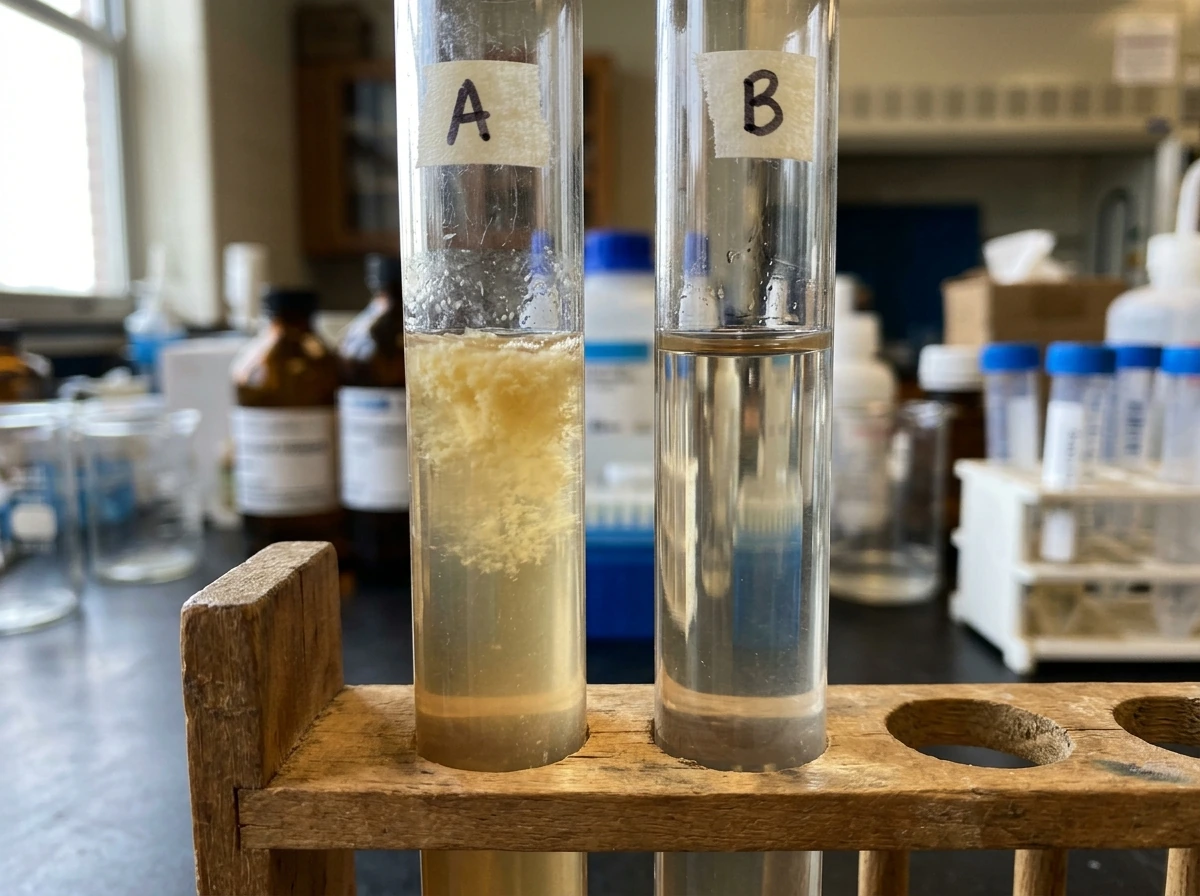
The simplest way to split bacteria by oxygen use is this: aerobic bacteria need oxygen to survive and grow, anaerobic bacteria do not, and many fall somewhere in between. Obligate aerobes sit at one end of the spectrum. They depend entirely on aerobic respiration, which means they use oxygen as the final electron acceptor in their energy-generating process. Without oxygen, they cannot produce enough energy to grow and will die.
Obligate anaerobes sit at the other end. They not only grow without oxygen, many of them are actually damaged or killed by it because they lack the enzymes needed to neutralize the toxic byproducts oxygen creates in cells. organisms which require oxygen to grow and survive. organism that may even grow in certain chemical disinfectants is.
organisms which do not require oxygen to grow and survive
Knowing these two poles sets up everything else. When people ask what bacteria that grow in oxygenated environments are called, they're usually looking for 'aerobic bacteria' or 'obligate aerobes,' but the honest answer is that several categories of bacteria can grow in the presence of oxygen, just for different reasons and to different degrees.
What 'oxygenated environments' actually means
In everyday life, an oxygenated environment usually means somewhere exposed to normal air, which is approximately 21% oxygen by volume. That's the atmospheric reference point used in microbiology. A slice of bread sitting on your counter, a surface you've just wiped down, or a wound open to air, all of these are oxygenated environments in the microbiology sense.
But oxygenated doesn't always mean 'open to air.' Water can also be oxygenated. Dissolved oxygen in liquids, like in a bowl of broth or a water-based food product, creates conditions where aerobic bacteria can thrive even in a closed container. This is why food safety guidance from sources like the USDA flags oxygen availability alongside temperature and humidity as a key factor in spoilage. Reduced oxygen packaging, like vacuum sealing, is specifically designed to eliminate that 21% atmospheric oxygen inside the package, shutting down the growth of aerobic spoilage organisms and shifting the risk toward anaerobic ones.
So when you're thinking about bacterial oxygen requirements in practical settings, ask two questions: Is oxygen physically present? And at what concentration? Both matter when predicting which organisms will grow.
The middle ground: facultative and aerotolerant bacteria
This is where a lot of confusion creeps in, especially in classroom settings. Not every bacterium that can survive in oxygen depends on it the way an obligate aerobe does.
Facultative anaerobes are the flexible opportunists of the bacterial world. They grow better in the presence of oxygen because they can use aerobic respiration when oxygen is available (which is more energy-efficient), but they can also switch to fermentation or anaerobic respiration when oxygen isn't around. Think of them as organisms with a preferred fuel source and a backup option. Many familiar bacteria, including E. coli and Staphylococcus aureus, are facultative anaerobes. They show up on surfaces, in food, and in the body, thriving equally well in oxygenated and low-oxygen environments.
Aerotolerant anaerobes are different again. They genuinely don't use oxygen for growth at all, but they can tolerate its presence for a limited time without dying. Their metabolism is strictly anaerobic, but they've evolved protective mechanisms that let them survive brief oxygen exposure. Lactobacillus species, commonly found in fermented foods like yogurt and sauerkraut, are a classic example of microorganisms that grow best in the absence of oxygen. They don't need oxygen, don't use it, but won't immediately die if exposed to it.
This distinction matters. Aerotolerant bacteria growing in your food are not 'using' the oxygen around them. They're just surviving it. Calling them aerobic would be a real mistake, and it's one of the more common misconceptions in introductory microbiology.
All four terms mapped to actual growth behavior
Let's lay out the full classification clearly, because the terminology is where most people get tripped up. Each label describes a specific growth behavior, not just a tolerance level.
| Term | Needs Oxygen? | Uses Oxygen for Respiration? | Grows Without Oxygen? | Example |
|---|---|---|---|---|
| Obligate aerobe | Yes, required | Yes | No | Mycobacterium tuberculosis |
| Facultative anaerobe | Preferred, not required | Yes, when available | Yes | E. coli, S. aureus |
| Microaerophile | Yes, but at low levels (2–10%) | Yes, at reduced concentration | No (or poorly) | Campylobacter jejuni |
| Aerotolerant anaerobe | No | No | Yes (primary mode) | Lactobacillus spp. |
| Obligate anaerobe | No, toxic | No | Yes (only mode) | Clostridium botulinum |
A closer look at microaerophiles
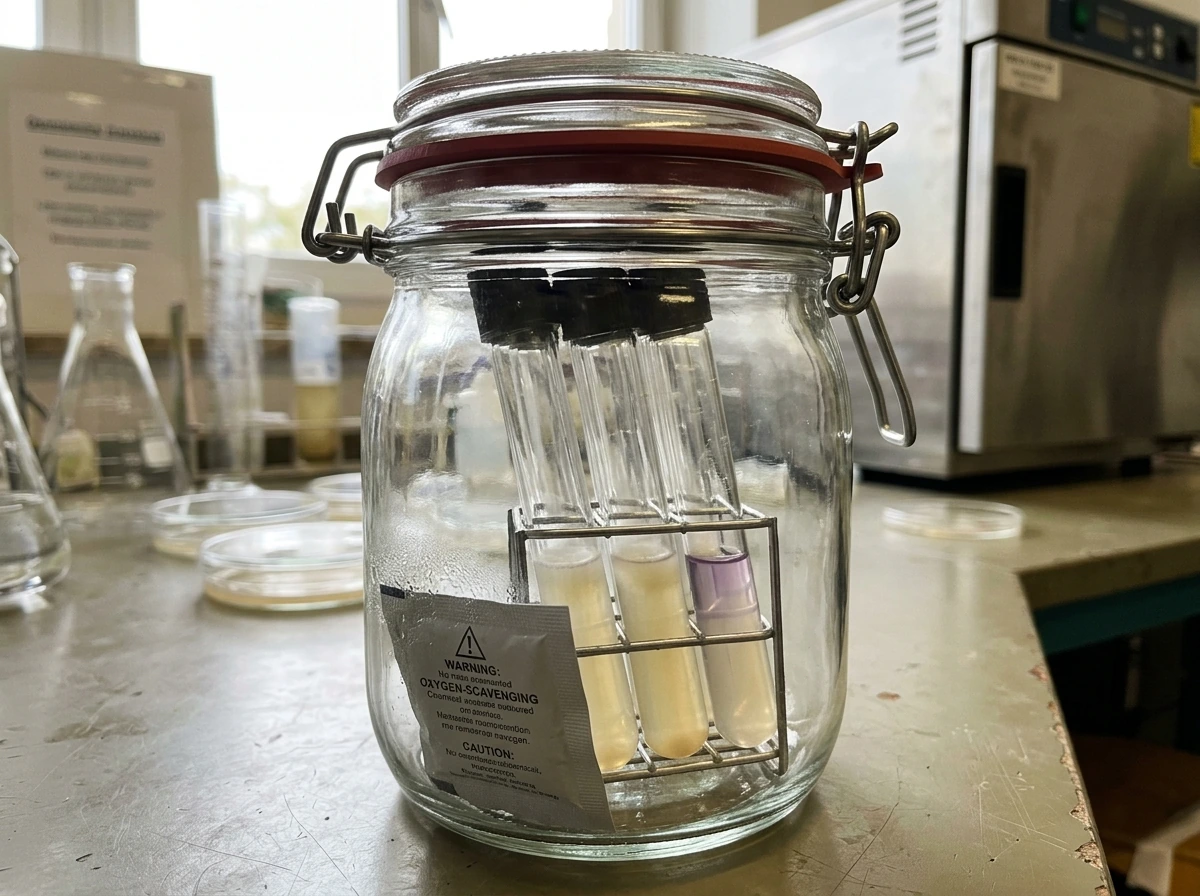
Microaerophiles deserve a special mention because they're easy to misclassify. They do need oxygen to grow, which puts them in the 'aerobic' category broadly speaking, but they cannot survive at normal atmospheric oxygen levels (21%). They grow best at reduced oxygen concentrations, typically somewhere between 2% and 10%, and many also require elevated CO2 levels (around 10%) to thrive. Microaerophiles deserve a special mention because they're easy to misclassify.
They do need oxygen to grow, which puts them in the 'aerobic' category broadly speaking, but they cannot survive at normal atmospheric oxygen levels (21%). a halophile would grow best in quizlet In a lab or food-safety context, this means standard aerobic growth conditions would actually fail to culture them properly.
Why these classifications matter in real life
Understanding oxygen requirements isn't just academic. It has direct, practical consequences in food safety, hygiene, and medicine.
In food safety, the oxygen environment inside a package determines which microbes can grow. Vacuum-sealed or reduced-oxygen packaged foods (like sous vide meals or modified atmosphere packaged deli meats) eliminate aerobic spoilage bacteria but create favorable conditions for anaerobic organisms like Clostridium botulinum, the cause of botulism. The USDA FSIS describes botulism-causing Clostridium botulinum as anaerobic, meaning it lives and grows in low-oxygen conditions. That's why temperature control is so critical in those products: you've removed one safeguard (oxygen exclusion of aerobes) and need another (cold temperature) to keep anaerobes in check.
In hygiene and wound care, surface cleaning exposes bacteria to air, which helps control obligate anaerobes but has little effect on facultative anaerobes or aerotolerant organisms. Understanding which type you're dealing with tells you whether aeration alone is a useful strategy.
In clinical microbiology, oxygen classification shapes how samples are cultured and how infections are diagnosed. Tuberculosis, caused by the obligate aerobe Mycobacterium tuberculosis, thrives in the oxygen-rich upper lobes of the lungs. Meanwhile, anaerobic infections tend to occur in deep wounds, abscesses, or areas of poor blood supply where oxygen is depleted. Knowing the organism's oxygen preference tells you a great deal about where it will cause problems in the body.
How oxygen requirements are identified in the lab
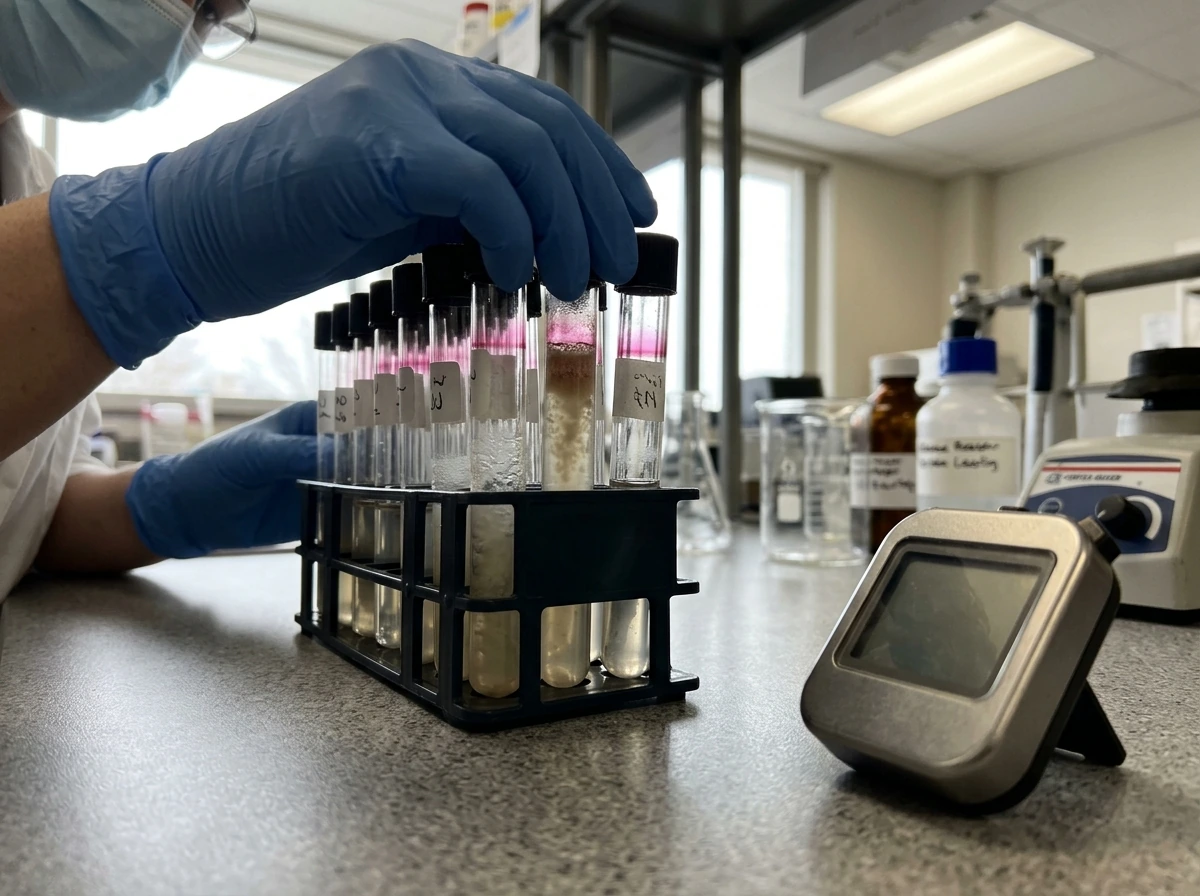
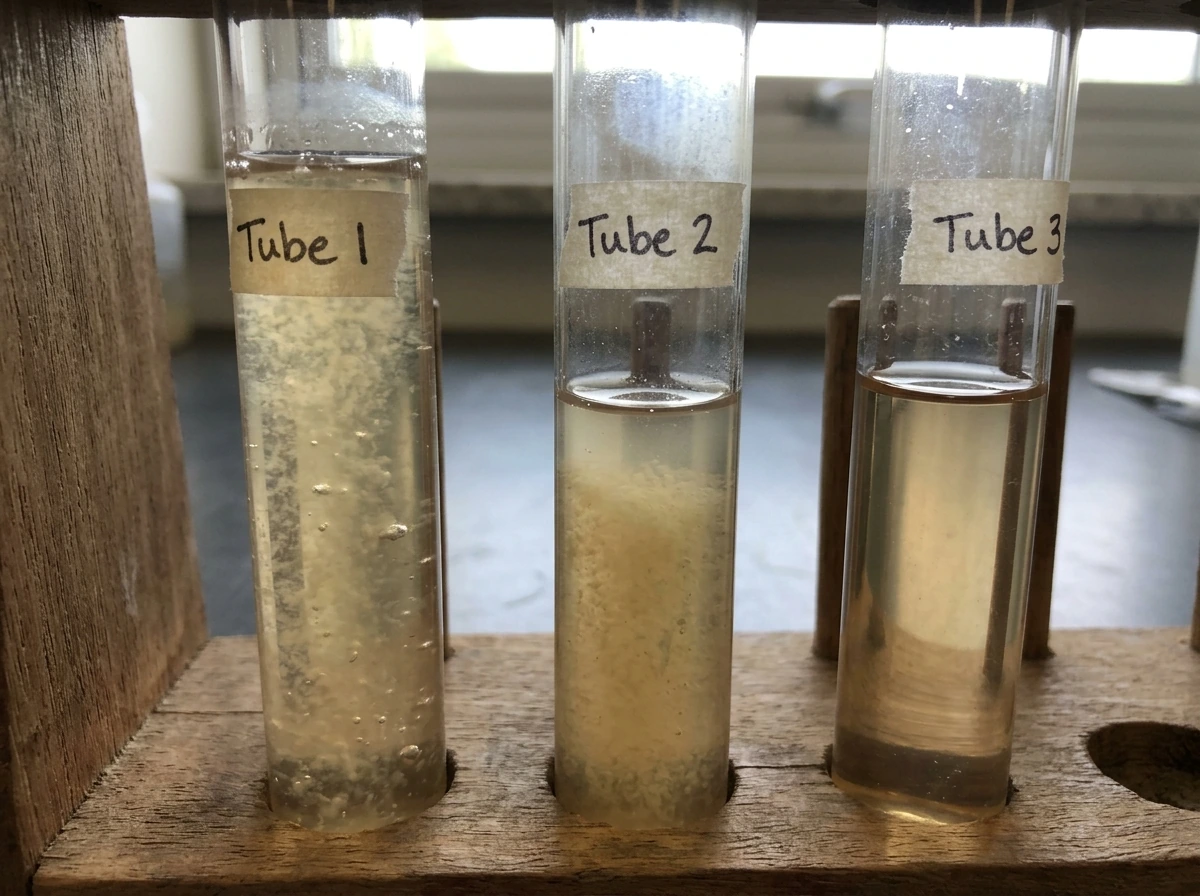
The classic tool for identifying bacterial oxygen requirements in a basic microbiology lab is thioglycollate medium. In thioglycollate medium, ATCC describes expected growth patterns for obligate aerobes, obligate anaerobes, facultative anaerobes, microaerophiles, and aerotolerant organisms. This is a differential liquid medium that creates an oxygen gradient within a single test tube. Sodium thioglycollate in the medium consumes oxygen, so the top of the tube stays oxygenated while the bottom becomes increasingly anaerobic. Where the bacteria grow in that tube tells you their oxygen preference at a glance.
- Obligate aerobes: grow only at the top of the tube, where oxygen is highest
- Obligate anaerobes: grow only at the bottom, away from oxygen
- Facultative anaerobes: grow throughout the tube but more densely near the top
- Microaerophiles: grow in a band near the upper portion but not at the very top, where oxygen is at 21%
- Aerotolerant anaerobes: grow evenly throughout the tube regardless of oxygen level
This single tube gives you a visual read on oxygen preference without needing complex equipment. It's a staple of introductory microbiology labs and a great concept to understand even if you're approaching this from a food science or public health angle rather than a bench science one.
Common misconceptions, cleared up
A few mix-ups come up almost every time this topic is taught, and it's worth addressing them directly.
'Aerobic' and 'facultative' are not synonyms. This is probably the most frequent error. If you say a bacterium is 'aerobic,' you're implying it needs or strongly prefers oxygen. A facultative anaerobe can grow with or without oxygen. If your bacteria grow fine in both conditions, 'aerobic' is not the right label. If your bacteria grow fine in both conditions, 'aerobic' is not the right label.
'Aerotolerant' does not mean 'aerobic.' Aerotolerant bacteria survive in oxygen but don't use it. Their metabolism is anaerobic. Lumping aerotolerant organisms in with true aerobes misrepresents their biology and can lead to mistakes in food safety or lab work.
'All bacteria found in open air must be aerobes.' Not true. Facultative anaerobes and aerotolerant organisms show up in oxygenated environments all the time. The presence of oxygen doesn't tell you which type is there, only that obligate anaerobes are probably not dominant.
'Microaerophiles can grow in normal air conditions.' They actually can't, or at least not well. Because they require below-atmospheric oxygen levels, standard aerobic lab conditions or open-air food storage won't favor their growth. This is why Campylobacter needs special culture conditions in clinical labs, making it easy to miss if the right oxygen conditions aren't set up.
Quick reference: the oxygen classification cheat sheet
If you need to lock in these terms fast, here's the condensed version you can come back to.
- Obligate aerobe: needs oxygen, uses it for respiration, dies without it. Grows only in oxygenated environments. The classic answer to 'bacteria that grow in oxygenated environments are referred to as' when a strict requirement is implied.
- Facultative anaerobe: prefers oxygen, grows better with it, but survives and grows without it too. Found in both oxygenated and low-oxygen environments.
- Microaerophile: needs oxygen but at reduced concentrations (2–10%), not full atmospheric levels. Dies or fails to grow in normal air.
- Aerotolerant anaerobe: does not use oxygen, does not need it, but tolerates it temporarily without dying. Growth is even regardless of oxygen.
- Obligate anaerobe: oxygen is toxic or inhibitory. Grows only in the absence of oxygen.
These categories are part of a broader framework for understanding microbial growth conditions, which also includes temperature ranges, pH tolerance, moisture requirements, and nutrient availability. Oxygen is one piece of the puzzle, but it's one of the most decisive factors in determining where a given organism will grow and what problems it might cause. If you're exploring how other growth conditions interact with these categories, looking into how temperature and pH connect to oxygen preferences gives a much fuller picture of microbial behavior.
FAQ
If a bacterium grows in oxygenated environments, is it automatically an obligate aerobe?
They’re called aerobic bacteria, but if the question is specifically about organisms that must have oxygen to grow, the more precise term is obligate aerobes. A key distinction is that some bacteria can grow in oxygenated environments without depending on it (for example, facultative anaerobes and aerotolerant anaerobes).
How can I tell the difference between aerobic bacteria and facultative anaerobes in a lab result?
No. “Aerobic” usually implies growth or strong preference with oxygen, while “facultative anaerobe” means it grows with or without oxygen. In practice, if growth occurs under both oxygenated and oxygen-free conditions, you should not label it aerobic.
What practical test can I use to classify an unknown bacterium by oxygen preference?
Use oxygen availability plus where growth occurs in an oxygen gradient. For example, in thioglycollate medium, organisms that grow near the top are more oxygen-tolerant for growth, while those that grow near the bottom are more oxygen-requiring or sensitive depending on the direction of the gradient and the organism type being tested.
Why is it incorrect to call aerotolerant bacteria “aerobic” even if they survive in air?
It can lead to misinterpretation. Aerotolerant bacteria can survive oxygen exposure, so “found in an air-exposed sample” does not mean they use oxygen for energy. Calling them aerobic can cause incorrect assumptions about metabolism and the kinds of treatments or storage changes that will work.
Why might a “needs oxygen” bacterium not grow on a routine aerobic culture plate?
Sometimes, depending on the organism. Microaerophiles need oxygen, but at lower concentrations than normal air and often with elevated CO2, so they can fail to grow under standard aerobic culture conditions that mimic 21% oxygen.
If oxygen is present but less than normal air, which oxygen class is most likely involved?
Oxygenated can mean reduced oxygen too. Oxygen level matters for microaerophiles, which may grow best at a few percent oxygen rather than normal atmospheric levels, so “oxygen present” alone is not enough to predict growth.
Does removing oxygen from packaged foods completely prevent microbial growth?
Usually, it shifts which microbes dominate rather than stopping growth altogether. Reduced-oxygen or vacuum packaging suppresses organisms that rely on oxygen, but it can increase the relative importance of anaerobes, so food spoilage risk changes more than it disappears.
What should I watch out for if thioglycollate results look confusing or inconsistent?
Thioglycollate medium creates an oxygen gradient, but the outcome can also depend on incubation conditions and the organism’s exact oxygen tolerance. If your unknown grows inconsistently, repeat testing and confirm the gradient and incubation setup match the intended protocol.
Why are obligate anaerobes especially likely to be killed by brief oxygen exposure?
Yes. Obligate anaerobes are often damaged by oxygen because they lack protective mechanisms against reactive oxygen species. In contrast, facultative anaerobes and aerotolerant anaerobes can persist despite oxygen exposure.
If I swab a surface exposed to air, does that mean most bacteria are aerobes?
Not necessarily. Aerobic presence often reduces the likelihood of obligate anaerobes becoming dominant, but facultative anaerobes and aerotolerant organisms can still be present. Oxygen exposure alone does not identify the specific oxygen requirement category.