The site where pathogens grow is called a reservoir, but depending on the context you might also hear it described as a habitat, a growth medium, or an ecological niche. These terms are not interchangeable. A reservoir is the environment where an infectious agent is permanently maintained and from which it can spread to new hosts. A habitat is the broader physical surroundings where an organism lives. A growth medium is a laboratory preparation of nutrients that supports cultivation in a controlled setting. An ecological niche describes the role and position an organism occupies within its environment, including how it interacts with other species and resources. Knowing which term applies in a given situation tells you a great deal about where a pathogen came from, what it needs to survive, and how to stop it from spreading.
The site where pathogens grow is called: Reservoirs & Niches

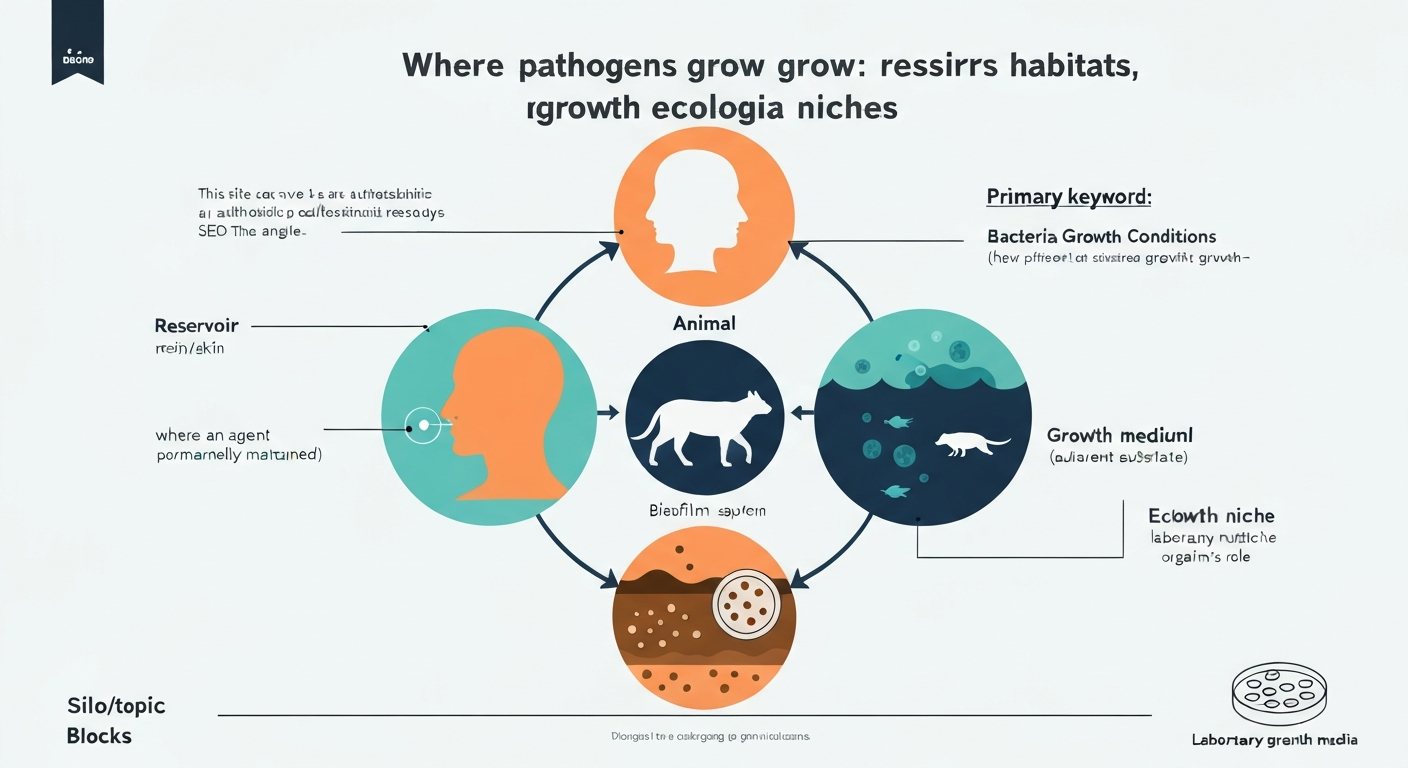
Key terms: reservoir, habitat, growth medium, and ecological niche
These four terms come up constantly in microbiology and epidemiology, and students often conflate them. Here is what each one actually means, and how they differ from one another.
A reservoir (in epidemiology and infection control) is the habitat in which an infectious agent normally lives, grows, and multiplies. It is where the pathogen is permanently maintained, and from which it can be transmitted to a susceptible host. Reservoirs can be human, animal, or environmental (soil, water, fomites, food). Critically, a reservoir is not just any place where a pathogen can be detected. It is the place where the agent primarily depends for its survival over time. For example, Vibrio cholerae has its reservoir in aquatic environments, particularly attached to plankton and in biofilms in estuarine and marine waters. Staphylococcus aureus has its principal reservoir in the human body, especially the anterior nares and the skin, where about 20 to 30 percent of healthy people carry it persistently without any sign of illness.
A habitat is a wider ecological concept referring to the physical environment in which an organism lives and finds what it needs to survive. Every reservoir is technically a habitat, but not every habitat is a reservoir. A surface a pathogen passes through briefly without multiplying is a habitat, but it would not qualify as a reservoir under the strict epidemiological definition.
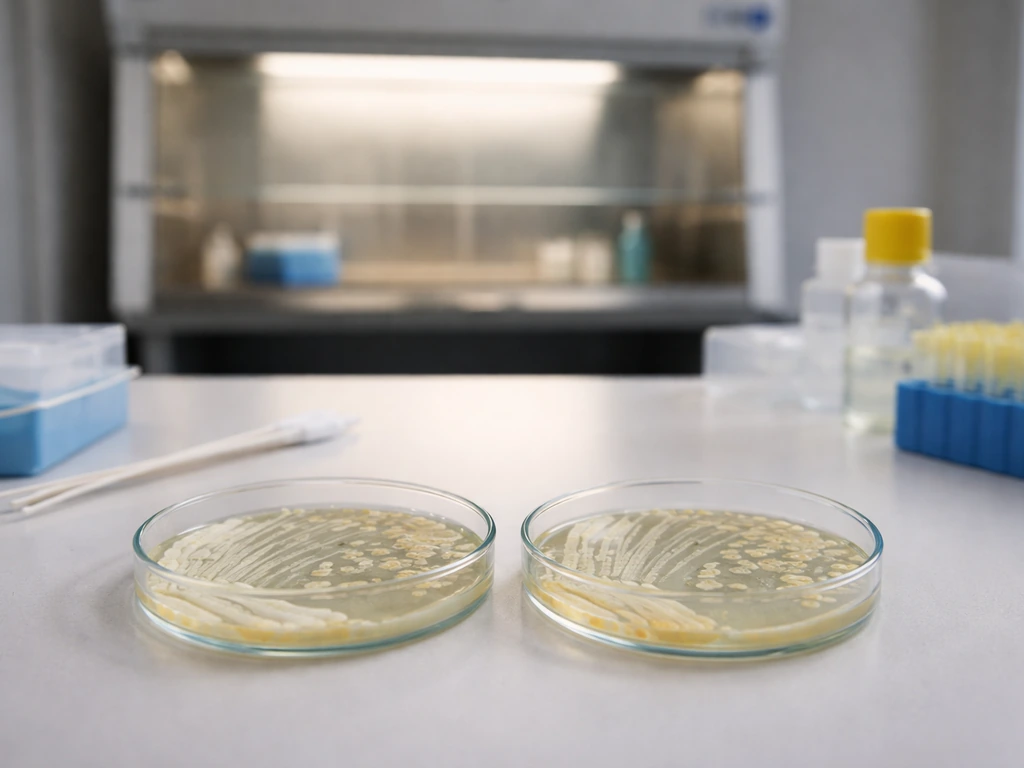
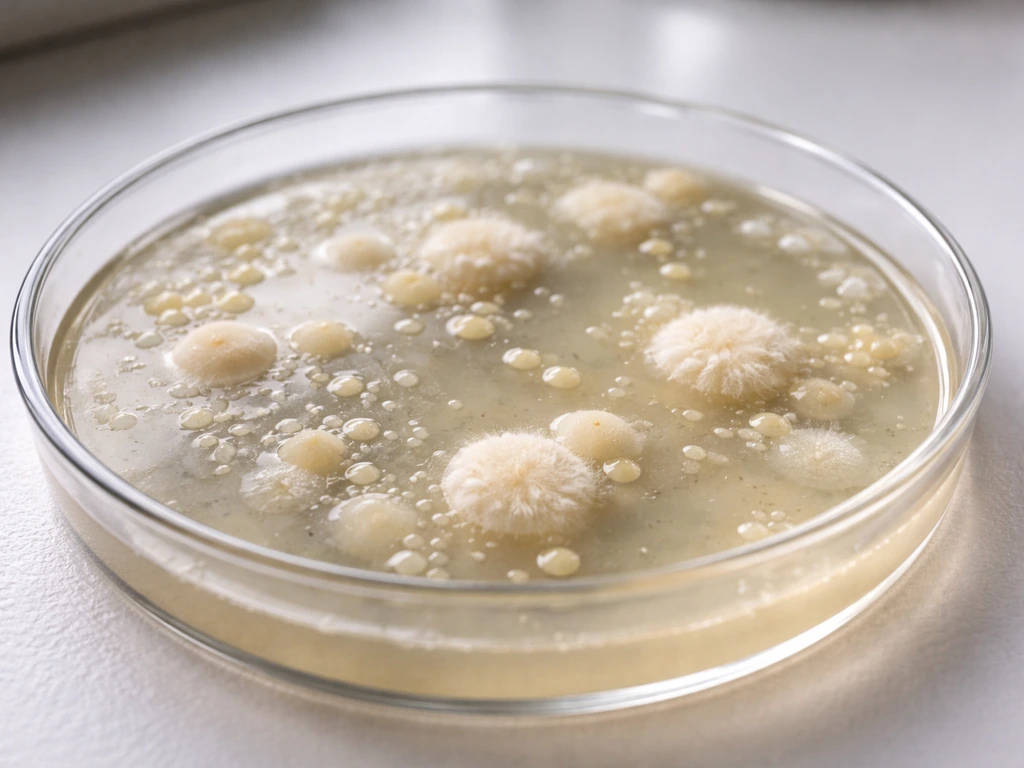
A growth medium (plural: media) is specific to the laboratory. It is a nutrient-rich preparation (liquid broth or solidified with agar) designed to support the cultivation of microorganisms in a controlled setting. A petri dish of nutrient agar is not a natural reservoir. It is a manufactured environment that mimics the nutrients an organism needs. Different media are formulated to select for or differentiate between species, which is enormously useful in clinical diagnostics.
An ecological niche describes not just where an organism lives, but how it functions there. It encompasses the organism's role: what it eats, what conditions it tolerates, what it competes with, and what it contributes to the ecosystem. Two organisms can share a habitat but occupy distinct niches, which is one reason biodiversity tends to reduce pathogen dominance in healthy ecosystems.
| Term | Core meaning | Who uses it | Classic example |
|---|---|---|---|
| Reservoir | Where an agent is permanently maintained and from which transmission occurs | Epidemiologists, infection control | S. aureus in human nasal passages |
| Habitat | The physical environment where an organism lives | Ecologists, microbiologists | Soil as a habitat for Bacillus spores |
| Growth medium | A prepared nutrient substrate used to cultivate microbes in the lab | Lab scientists, clinicians | Blood agar plate in a clinical lab |
| Ecological niche | The role and functional position of an organism in its environment | Ecologists, evolutionary biologists | E. coli as an intestinal commensal fermenter |
One more concept worth naming here is the carrier state. A carrier is a person or population that harbours an infectious agent without showing clinical disease but can still transmit it. An asymptomatic carrier is a kind of human reservoir. This matters practically: a food handler who carries S. aureus on their hands or in their nose can contaminate food without feeling ill at all.
Where pathogens and other microbes actually grow
Microbes are extraordinarily adaptable, and they grow in a wider range of environments than most people realise. Understanding where they grow also helps explain how infections and contamination events happen. For a concise overview of where do germs grow, see our short guide.
Surfaces and fomites
Hard surfaces (countertops, door handles, medical equipment) can harbour pathogens, but most do not actively multiply there unless moisture and organic material are present. Biofilm-forming organisms such as Pseudomonas aeruginosa and Staphylococcus epidermidis can establish persistent colonies on surfaces, embedded in a protective matrix that makes them more resistant to cleaning agents. This is why sanitation protocols in hospitals and food facilities target not just the presence of bacteria but the conditions (moisture, residual organic matter) that allow biofilms to form.
Skin and mucous membranes
Human skin is home to a complex community of microorganisms, most of them harmless or beneficial. But certain pathogens have evolved to exploit skin as a reservoir. S. aureus colonises the anterior nares, armpits, and groin, and its presence on intact skin can become dangerous if the skin is broken. The warm, moist folds of skin provide exactly the temperature and humidity that mesophilic bacteria prefer.
Food
Food is one of the most important growth sites for pathogens from a public health perspective, because contaminated food delivers microbes directly into the digestive system. Listeria monocytogenes is a particularly instructive example: it is psychrotolerant, meaning it can grow at refrigeration temperatures as low as 0 to 4 degrees Celsius and up to about 45 degrees Celsius. This means refrigeration slows but does not stop Listeria, which is why ready-to-eat foods like deli meats and soft cheeses carry listeriosis risk even when properly chilled.
Water
Aquatic environments are reservoirs for numerous pathogens. Vibrio cholerae, the agent of cholera, lives naturally in coastal and estuarine waters, attached to zooplankton. Environmental factors including water temperature, salinity, pH, and nutrient levels govern how abundant V. cholerae becomes in a given body of water. Cryptosporidium and Giardia are protozoal pathogens that contaminate drinking water sources and are notable for their resistance to chlorination.
Soil
Soil is one of the richest microbial habitats on Earth, containing billions of organisms per gram. Bacillus anthracis (the cause of anthrax) and Clostridium species (including C. tetani and C. botulinum) form highly resistant endospores in soil that can remain viable for decades. Foodborne pathogens, PMC review notes that Bacillus and Clostridium species are ubiquitous in soil and form highly resistant endospores that enable long-term environmental persistence and later germination under favourable conditions Foodborne pathogens — PMC review. These spores germinate into actively growing, toxin-producing cells when conditions become favourable, such as when they enter a wound or a low-oxygen food environment.
Environmental conditions that support microbial growth
No single factor determines whether a microorganism grows. For a concise answer to in which type of environment do microorganisms grow best, see the section on environmental conditions that support microbial growth. Temperature, pH, oxygen, moisture, and nutrients interact as a system. Typical food water-activity (aw) minima cited in that review are: most bacteria ≥ ~0.90–0.91, most yeasts ≥ ~0.88, most molds ≥ ~0.80, with exceptions such as some halophilic bacteria (~0.75) and xerophilic molds (~0.61) (Review: Effect of reducing sodium chloride on sensory and microbial properties, East Asian Journal of Food Science (summary table citing typical aw minima)) blank" rel="noopener noreferrer">Review: Effect of reducing sodium chloride on sensory and microbial properties — East Asian Journal of Food Science (summary table citing typical aw minima). Think of them as dials on a control panel: turn any one outside the organism's tolerance range and growth slows or stops, even if the other dials are at ideal settings. This is the logic behind food-preservation techniques that combine multiple hurdles simultaneously.
| Factor | What it controls | Typical range for most pathogens | Practical control point |
|---|---|---|---|
| Temperature | Enzyme reaction rates and membrane fluidity | 4–60 °C (danger zone for many pathogens) | Refrigerate ≤4 °C; cook/hold hot foods ≥60 °C |
| pH | Enzyme function and cell membrane integrity | pH 5.5–8.0 for most neutrophiles | Acidify foods to pH ≤4.6 to prevent C. botulinum toxin |
| Oxygen availability | Metabolic pathway selection; toxic for strict anaerobes | Varies widely by species (see oxygen section) | Vacuum packaging can favour anaerobes; modified atmosphere packaging balances this |
| Moisture (water activity, aw) | Free water available for cellular chemistry | aw ≥0.90 for most bacteria; ≥0.80 for most moulds | Drying, salting, or sugaring lowers aw below growth thresholds |
| Nutrients | Carbon, nitrogen, phosphorus, vitamins, minerals | Highly variable by species | Limiting key nutrients (e.g., iron availability) can inhibit pathogen growth |
Temperature and what it does to microbial growth
Temperature is often the first factor students learn about because it has the most dramatic and fastest effect. Every microorganism has three cardinal temperatures: a minimum below which growth stops, an optimum at which growth is fastest, and a maximum above which the organism dies or is damaged. These values vary significantly across species.
- Psychrophiles have an optimum temperature at or below about 15 °C and a maximum of around 20 °C. They thrive in cold soils, deep oceans, and polar environments.
- Psychrotrophs (psychrotolerant organisms) can grow at 5 °C or below but have higher optima. Listeria monocytogenes is the classic food-safety example.
- Mesophiles grow best between roughly 20 and 45 °C. Most human pathogens are mesophiles with an optimum near 37 °C (normal body temperature), which is why the human body is such an effective growth site.
- Thermophiles prefer temperatures at or above 50 °C and are rarely human pathogens, though they matter greatly in industrial fermentation and composting.
The food safety 'danger zone' is the temperature range between 4 °C (40 °F) and 60 °C (140 °F). Most bacterial pathogens capable of causing foodborne illness multiply rapidly within this window. USDA guidance instructs keeping cold foods at or below 4 °C and hot foods at or above 60 °C, and limiting the time any food spends between those temperatures. A common misconception is that freezing kills bacteria. It does not. Freezing suspends growth; the organisms resume multiplying once the food thaws.
pH and microbial survival: acid lovers and alkali tolerators
The pH scale runs from 0 (strongly acidic) to 14 (strongly alkaline), with 7 as neutral. Microorganisms are grouped by their pH preference into three broad categories, and most human pathogens belong in the middle group.
- Acidophiles grow optimally at pH values below about 5.5. Many fungi and some bacteria fall into this group. Lactobacillus species used in fermented foods can tolerate quite low pH values, which is why yogurt and kimchi are self-preserving to a degree.
- Neutrophiles have a pH optimum near neutral (about 5.5 to 8.0). Most pathogenic bacteria, including E. coli, S. aureus, and Salmonella, are neutrophiles.
- Alkaliphiles prefer pH values above 8 to 9. Some environmental bacteria thrive in alkaline lakes and soils, but true alkaliphiles are uncommon among human pathogens.
The practical food-safety application of pH is striking. Foods with an equilibrium pH at or below 4.6 are classified as 'acid foods' under FDA regulations specifically because Clostridium botulinum, the bacterium responsible for botulism, cannot produce its toxin below that threshold under normal water-activity conditions. This is why home canners are instructed to add vinegar or lemon juice to low-acid vegetables before processing. It is not just about taste; it is about preventing a potentially fatal toxin.
Fungi, including moulds and yeasts, are generally more pH-tolerant than bacteria. Many moulds can grow across a pH range of roughly 2 to 8, which explains why you find mould contamination on acidic foods like fruit and bread that would be hostile to most bacterial pathogens.
Oxygen requirements: not all microbes breathe the same way
A surprisingly common misconception is that all bacteria need oxygen to grow, or conversely that all bacteria thrive without it. The reality is more nuanced, and the diversity of oxygen requirements among microorganisms is one of the most useful things to understand about microbial ecology.
| Category | Oxygen relationship | Example organisms | Typical growth sites |
|---|---|---|---|
| Obligate aerobe | Requires O2; cannot grow without it | Pseudomonas aeruginosa, Mycobacterium tuberculosis | Lung tissue, well-oxygenated wounds, soil surface |
| Facultative anaerobe | Uses O2 when available; grows without it | Escherichia coli, Staphylococcus aureus | Intestinal tract, skin, food |
| Obligate anaerobe | Cannot tolerate O2; killed or inhibited by it | Many Clostridium spp., Bacteroides | Deep wounds, intestinal anaerobic zones, soil |
| Microaerophile | Requires reduced O2 (~5–10%); harmed by full atmospheric O2 | Campylobacter jejuni, Helicobacter pylori | Intestinal mucosa, stomach lining |
| Aerotolerant anaerobe | Tolerates O2 but does not use it metabolically | Streptococcus spp., Lactobacillus | Oral cavity, gut, fermented foods |
This matters enormously in food safety and clinical medicine. Vacuum packaging of food removes oxygen, which inhibits obligate aerobes but creates conditions where anaerobes like Clostridium botulinum can flourish if temperature control is inadequate. In clinical settings, Campylobacter jejuni, one of the most common causes of bacterial diarrhoea worldwide, requires that reduced oxygen environment of about 5 to 10 percent to grow in the lab, so standard aerobic culture methods will miss it entirely. Understanding oxygen requirements is therefore not just academic but directly shapes how infections are diagnosed and controlled.
How microorganisms grow and reproduce
Most bacteria reproduce through binary fission, a simple and remarkably efficient process: one cell grows to roughly twice its size, replicates its chromosome, and then divides into two genetically identical daughter cells. For a concise explanation of how do microorganisms grow, see the section “How microorganisms grow and reproduce.”. Under ideal conditions, many pathogens can do this every 20 to 30 minutes. That means a single E. coli cell can theoretically produce over a million descendants in about seven hours, which is why food left in the danger zone becomes genuinely hazardous quickly.
Fungi reproduce differently. Yeasts typically reproduce by budding, where a smaller daughter cell forms as an outgrowth of the parent cell and then pinches off. Moulds reproduce by producing spores, either sexually or asexually, that disperse through the environment and germinate when conditions are suitable. Some bacteria, notably Bacillus and Clostridium species, form endospores, which are not reproductive structures but rather dormant survival forms that can withstand extreme heat, desiccation, and chemical exposure before germinating back into actively growing cells.
The four stages of bacterial growth
When bacteria are introduced into a new environment (including a fresh growth medium in a lab), their population does not instantly explode. It follows a predictable curve with four distinct phases. This pattern includes the stage in which microorganisms grow and reproduce, commonly called the bacterial growth phases.
- Lag phase: Cells are adapting to their new environment. They are synthesising enzymes, taking up nutrients, and preparing for division. Cell numbers stay relatively flat. This phase can last minutes or hours depending on conditions and the organism's prior state.
- Log (exponential) phase: Cells divide at their maximum rate for the given conditions. Population doubles with every generation. This is the phase most relevant to food safety and infection risk, because this is when pathogen numbers escalate rapidly.
- Stationary phase: Nutrient depletion and the accumulation of waste products slow growth. The rate of new cell production equals the rate of cell death, so the total population levels off. Some organisms produce toxins or secondary metabolites more abundantly in this phase.
- Death (decline) phase: Nutrients are exhausted, waste products accumulate to toxic levels, and the population declines. In a closed system, most cells die, though survivors (including spore-formers) may persist indefinitely.
Understanding these stages helps explain real-world observations. Food left at room temperature does not become dangerous immediately; there is a lag period, which is why guidelines refer to a two-hour window before perishable food in the danger zone becomes a significant risk. By the time you smell something off, a food may already be well into the stationary or even death phase for the dominant organism, but other pathogens may still be in log phase.
Why microbiologists deliberately grow microbes
Growing microorganisms in the lab might seem counterintuitive given how much effort goes into stopping them from growing in the wrong places, but controlled cultivation is the foundation of almost everything we know about infectious disease and much of what modern medicine depends on.
Research and understanding basic biology
Laboratory cultivation allows scientists to study how pathogens behave, what genes they carry, how they respond to stress, and what makes them virulent. Without the ability to grow E. coli reliably in a flask, much of what we know about DNA replication, gene expression, and protein synthesis would not exist. Many foundational discoveries in molecular biology were made using cultured microorganisms as model systems.
Clinical diagnostics
When a patient presents with a bacterial infection, identifying the causative organism requires growing it. A clinical microbiologist takes a sample (blood, urine, sputum, wound swab) and cultures it on selective or differential media designed to support the likely pathogens while inhibiting others. The resulting colonies can be identified by their appearance, biochemical reactions, and increasingly by rapid molecular methods. Without culture, the correct antibiotic cannot be chosen reliably.
Antibiotic susceptibility testing
Once an organism is identified, it must be grown again to test which antibiotics can inhibit or kill it. This is done by exposing cultures to different drugs at different concentrations and observing whether growth is inhibited. The results guide clinical prescribing, meaning the difference between an effective treatment and a failed one. This is particularly critical in the era of antimicrobial resistance, where an organism's susceptibility cannot be assumed.
Vaccine development and production
Many vaccines are produced using large-scale microbial cultivation. Bacterial vaccines (like those against whooping cough or meningococcal disease) require growing large quantities of the target organism, then inactivating or processing them. Even some viral vaccines depend on bacterial systems to produce recombinant proteins used as antigens. Understanding how to grow organisms at scale, keep them consistent, and ensure safety are all technical challenges in vaccine manufacturing.
Industrial and biotechnological uses
Beyond medicine, microbes are deliberately grown to produce antibiotics (penicillin is produced by the fungus Penicillium), enzymes used in food processing and industrial chemistry, fermented foods and beverages, biofuels, and bioplastics. The pharmaceutical industry also uses engineered bacteria and yeasts to produce human insulin, growth hormones, and monoclonal antibodies. In these applications, controlling the growth environment precisely (nutrients, temperature, pH, oxygen levels) is the core of the manufacturing process.
Putting it together: practical prevention measures
Every growth requirement described above is also a potential control point. Denying pathogens the conditions they need is the principle behind food preservation, hospital hygiene, and public health interventions. The most effective strategies work on multiple factors simultaneously.
- Refrigeration (≤4 °C): Slows or stops growth for most mesophilic pathogens. Remember that psychrotrophs like Listeria are exceptions; use-by dates matter even in the fridge.
- Cooking and hot-holding (≥60 °C): Temperatures above 60 °C rapidly kill vegetative cells of most pathogens. Spores (Bacillus and Clostridium) require much higher temperatures, which is why pressure cooking matters for low-acid canned foods.
- Acidification (pH ≤4.6): Prevents toxin production by C. botulinum and inhibits most bacterial pathogens. Used in pickling, fermentation, and acidified canned foods.
- Drying and reduced water activity (aw <0.85): Most bacterial pathogens cannot grow below aw 0.90 to 0.91. Drying, salting, and sugar preservation exploit this. Moulds are more tolerant (minimum aw around 0.80) so dried foods are not necessarily mould-proof.
- Sanitation and surface hygiene: Removing organic matter and biofilms from surfaces eliminates the nutrient base that allows organisms to establish themselves on fomites.
- Hand hygiene: Breaking the chain of transmission from the human reservoir (especially nasal carriage and skin) is the single most consistently effective measure in healthcare-associated infection prevention.
The common thread is this: pathogens are not mysterious or unpredictable. They are organisms with specific biological needs, and understanding those needs gives you the means to interrupt their growth at any number of points. Whether you are studying for a microbiology exam, designing a food safety plan, or simply trying to understand why the news is reporting on an outbreak, the principles of reservoir, growth conditions, and microbial biology always apply.
FAQ
What is the precise definition of 'the site where pathogens grow' — reservoir, habitat, growth medium, and niche?
Reservoir (epidemiology): an ecological or epidemiological habitat (one or more connected populations or environments) in which an infectious agent is permanently maintained and from which it can be transmitted to a target host. Habitat (ecology): the natural environment where an organism lives (e.g., human skin, soil, water). Growth medium (microbiology): a prepared substrate (liquid or solid) that supplies nutrients and conditions for microbial growth in the laboratory. Niche (ecological micro-niche): the specific set of physical, chemical and biological conditions (microenvironment) that allow an organism to survive and reproduce within a habitat. Key distinction: 'reservoir' emphasizes maintenance and transmission at population/ecosystem scale; 'growth medium' is an artificial laboratory substrate; 'niche' describes the micro-scale conditions that permit growth.
How do these terms compare in everyday and classroom contexts?
Everyday: 'reservoir' is often used for places that maintain infectious agents (people, animals, water, soil); 'habitat' and 'niche' are broader ecological terms; 'growth medium' is typically lab-specific. Classroom: teach 'reservoir' as the source for transmission, show habitat examples (skin, food, streams), introduce 'niche' for micro-conditions (moist, nutrient-rich spot), and use growth media to demonstrate controlled cultivation. Linkable topics: temperature effects, pH and microbial survival, oxygen requirements, growth media types.
Where do germs commonly grow — representative environments and organisms?
Human reservoirs: skin and mucous membranes (Staphylococcus aureus in anterior nares/skin); gastrointestinal tract (Escherichia coli, Salmonella carried in some hosts). Animal reservoirs: livestock, wildlife (zoonotic agents). Environmental reservoirs: soil (Bacillus, Clostridium spores), freshwater and marine systems (Vibrio spp.), biofilms on surfaces and plumbing, contaminated food (Listeria monocytogenes), and fomites (inanimate objects). Food and water are common vehicles when reservoirs contaminate consumables.
What environmental conditions support microbial growth — concise table of factors and typical ranges?
Factor — Typical ranges/notes Temperature — Psychrophiles: optimum ≤~15°C; psychrotrophs: can grow ≤5°C but prefer higher; mesophiles (many human pathogens): optimum ~20–45°C (human pathogens often ~37°C); thermophiles: grow ≥50°C. (Food-safety 'danger zone' 4°C–60°C.) pH — Acidophiles: optimum <5.5; neutrophiles (most bacteria): ~5.5–8.0; alkaliphiles: >8–9. (C. botulinum inhibited below pH 4.6 in foods.) Oxygen — Obligate aerobes (require O2), facultative anaerobes (use O2 but grow without it), obligate anaerobes (O2 toxic), microaerophiles (low O2), aerotolerant anaerobes (tolerate but don’t use O2). Moisture / water activity (aw) — Most bacteria need aw ≥~0.90–0.91; yeasts ≥~0.88; molds ≥~0.80. Low‑aw foods usually don’t support bacterial growth but may preserve organisms. Nutrients — Carbon, nitrogen, minerals, trace elements and growth factors; nutrient-rich environments (biofilms, decaying organic matter, some foods) promote rapid growth. Other factors — Salinity, pressure, UV/light, competing microbiota, antimicrobial substances, and surface adherence (biofilms) affect survival and growth.
How do microorganisms grow and reproduce — mechanisms and growth curve stages?
Mechanisms: Bacteria reproduce mainly by binary fission (one cell divides into two). Some form spores (Bacillus, Clostridium) for long-term survival; others exchange genes by transformation, transduction or conjugation. Growth-curve stages (population-level in closed culture): Lag phase — cells adjust to new environment, little net increase; Log (exponential) phase — rapid, constant-rate growth; Stationary phase — growth rate slows as nutrients limit and waste accumulates; Death (decline) phase — viable cell numbers fall. In natural settings, growth often fluctuates with changing conditions rather than following a simple closed-curve.
Why do microbiologists intentionally culture bacteria — scientific and practical reasons?
Purposes include: diagnostic identification of pathogens (clinical microbiology), research into physiology/pathogenesis and basic biology, antimicrobial susceptibility testing and resistance surveillance, vaccine and therapeutic development, industrial production (enzymes, probiotics), food-safety testing and validation of control measures, and teaching/laboratory training. Culturing allows controlled study, quantification, and downstream molecular work.