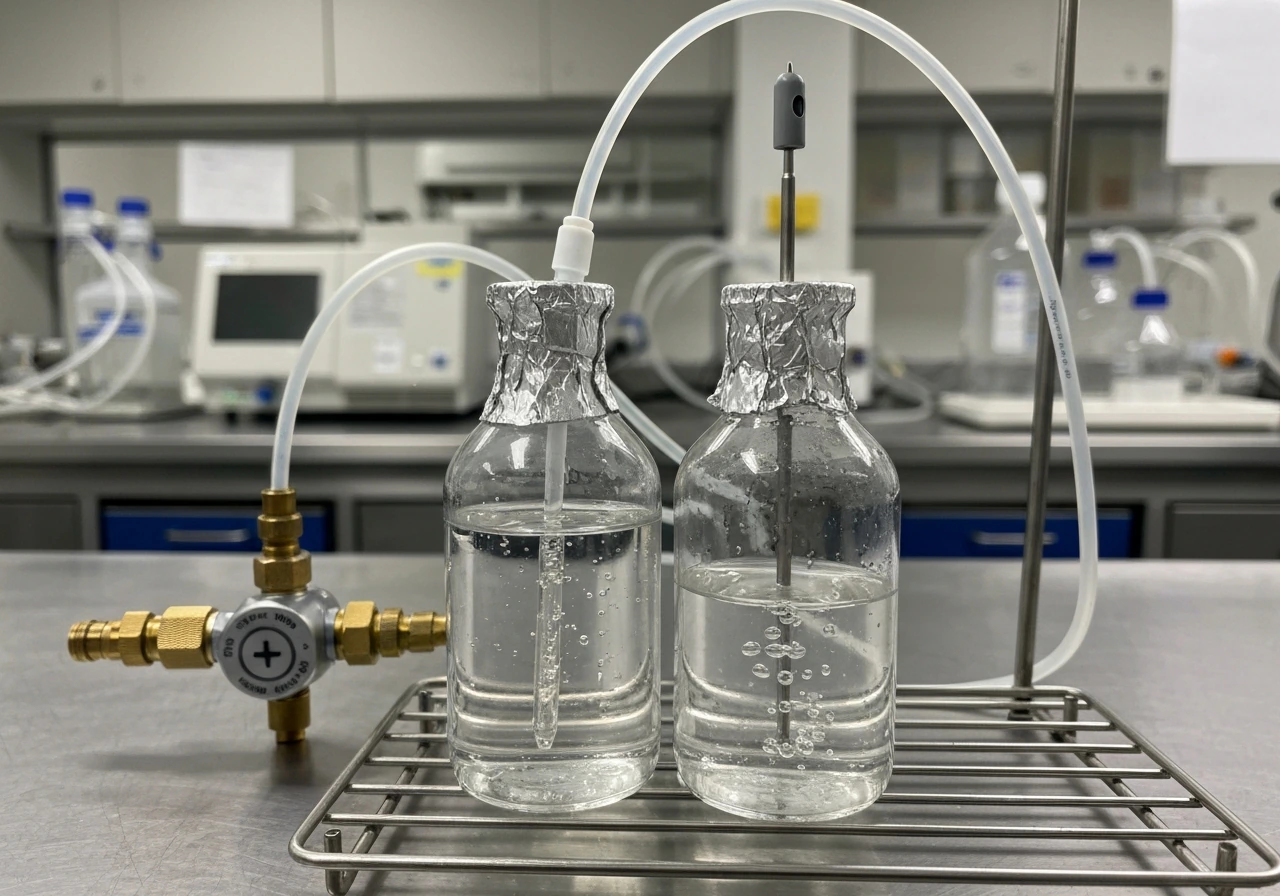
An anaerobic jar is most commonly used to grow obligate (strict) anaerobes: bacteria that are killed by molecular oxygen and can only grow when it is absent. The most clinically and educationally important examples include Clostridium, Bacteroides, Fusobacterium, and anaerobic Gram-positive cocci such as Peptostreptococcus. Clinical and teaching anaerobic cultures commonly recover genera including Clostridium (Clostridioides), Bacteroides (e.g., Bacteroides fragilis group), Prevotella, Porphyromonas, Fusobacterium, and anaerobic Gram‑positive cocci (Peptostreptococcus/Finegoldia and related taxa), Anaerobic Gram‑Negative Bacilli, Medical Microbiology (NCBI Bookshelf) Anaerobic Gram‑Negative Bacilli — Medical Microbiology (NCBI Bookshelf). Beyond those strict anaerobes, the same jar will also support facultative anaerobes like Escherichia and Enterococcus (which grow fine without oxygen, even though they do not require zero-oxygen conditions), and aerotolerant organisms like many Lactobacillus species, which tolerate oxygen but prefer to ferment. What all of these bacteria share is the ability to survive or thrive when you remove the oxygen from their environment.
Anaerobic Jar Is Commonly Used to Grow Which Bacteria?

What an anaerobic jar is and why it matters
An anaerobic jar (sometimes called a Brewer jar or GasPak jar) is a sealable, gas-tight container used in microbiology labs to create a low- or zero-oxygen atmosphere around agar plates or broth tubes. A gas-generating sachet placed inside the sealed jar consumes residual oxygen and produces carbon dioxide, giving oxygen-sensitive bacteria a chance to grow over 24 to 72 hours of incubation. The concept is simple enough to demonstrate in a high-school or undergraduate teaching lab, yet the biology behind it touches some of the most fundamental principles in microbiology: oxygen toxicity, redox chemistry, and the astonishing metabolic diversity of bacteria.
This article is written for students, educators, and curious learners who want to understand the 'why' behind the anaerobic jar: which organisms grow in it, why some bacteria die on contact with air, how the jar actually removes oxygen, and when a jar is the right tool versus when you need something else entirely. This is an explanation of principles, not a step-by-step protocol.
Oxygen requirements: the five categories you need to know
Before talking about what grows in an anaerobic jar, it helps to be clear on the terminology. Bacteria are grouped by how they respond to molecular oxygen (O2), and these categories often get blurred or misremembered, so it is worth laying them out precisely.
| Category | Relationship with O2 | Representative genera | Grows in anaerobic jar? |
|---|---|---|---|
| Obligate (strict) aerobe | Requires O2 for growth; cannot grow without it | Mycobacterium, Pseudomonas | No |
| Facultative anaerobe | Grows with or without O2; uses aerobic respiration when O2 is present | Escherichia, Enterococcus | Yes |
| Obligate (strict) anaerobe | Killed by O2; grows only when O2 is absent | Clostridium, Bacteroides | Yes (requires it) |
| Aerotolerant anaerobe | Not killed by O2 but does not use it; ferments regardless | Many Lactobacillus spp. | Yes |
| Microaerophile | Requires reduced but non-zero O2 (~2–10%) plus often elevated CO2 | Campylobacter, Helicobacter | Usually no (needs O2) |
Notice that an anaerobic jar serves four of those five categories reasonably well, but actually fails microaerophiles in standard use. That distinction is important and gets its own section below. Microaerophiles need a little oxygen, and a jar designed to eliminate oxygen entirely will suppress their growth just as surely as open air suppresses an obligate anaerobe. For clarity, microaerophiles are microbes that grow best at low oxygen concentrations (roughly 2–10%), requiring reduced O2 rather than ambient air or complete anoxia.
Which bacteria are commonly grown in anaerobic jars
When microbiologists talk about 'growing bacteria in an anaerobic jar,' they are most often working with four broad groups. Here is a genus-level tour of the main players.
Obligate anaerobic Gram-positive rods: Clostridium and Clostridioides
Clostridium (and the reclassified Clostridioides difficile) are probably the most famous obligate anaerobes in the clinical and teaching world. These spore-forming, Gram-positive rods produce some of the most potent biological toxins known, including the toxins responsible for botulism, tetanus, gas gangrene, and C. difficile-associated colitis. They are found in soil, the gut, and poorly preserved foods. In a teaching context, Clostridium is the go-to example of why oxygen exclusion matters: expose a plate culture to air for even a short time during streaking and growth can be dramatically reduced or absent.
Obligate anaerobic Gram-negative rods: Bacteroides, Prevotella, Porphyromonas, and Fusobacterium
The Bacteroides fragilis group is, statistically, the most common anaerobe recovered from human clinical infections. These Gram-negative rods live in the colon in enormous numbers and are harmless in that setting, but when they escape to normally sterile body sites (after abdominal surgery or trauma, for example) they are a major cause of abscesses and peritonitis. Fusobacterium is another Gram-negative anaerobic rod, associated with periodontal disease and, increasingly, with certain colorectal cancers. Prevotella and Porphyromonas are Gram-negative anaerobes prominent in oral and respiratory tract infections. All of these require an anaerobic jar or equivalent for laboratory recovery.
Anaerobic Gram-positive cocci: Peptostreptococcus and relatives
Once grouped under the single genus Peptostreptococcus, these anaerobic cocci have been reclassified into several genera including Finegoldia, Anaerococcus, and Peptoniphilus. They are frequent isolates in wound infections, abscesses, and gynecological infections. Some strains are more aerotolerant than others, but as a group they require anaerobic culture conditions for reliable recovery. They are a good example of why oxygen tolerance is a spectrum rather than a binary switch.
Facultative anaerobes: Escherichia and Enterococcus
Bacteria like Escherichia coli and Enterococcus faecalis do not need an anaerobic jar, but they grow perfectly well in one. These facultative anaerobes switch between aerobic respiration and fermentation depending on oxygen availability. In a teaching lab, plating E. coli inside an anaerobic jar alongside an obligate anaerobe is a useful control: if the E. coli grows, the anaerobic conditions did not kill facultative organisms; if the obligate anaerobe also grows, the jar worked. If neither grows, something went wrong with the incubation, not the organisms.
Aerotolerant anaerobes: Lactobacillus
Many Lactobacillus species are aerotolerant: they carry out fermentation regardless of whether oxygen is present, and they survive oxygen exposure without being killed by it. They grow in an anaerobic jar because they do not require oxygen in the first place. You will find these organisms in yogurt, fermented vegetables, the human vagina, and the gut, all environments where oxygen levels are reduced. Their tolerance without dependence on oxygen makes them a useful teaching bridge between strict anaerobes and obligate aerobes.
Why oxygen is toxic to some bacteria: the biology of oxygen sensitivity
A common misconception is that obligate anaerobes simply 'cannot use' oxygen, the way you cannot use a tool you have never been trained on. The reality is more violent than that: oxygen actively damages or destroys the key metabolic machinery of strict anaerobes, and for many of them the damage is irreversible.
When oxygen interacts with cellular metabolism, it generates reactive oxygen species (ROS): superoxide radicals (O2-), hydrogen peroxide (H2O2), and hydroxyl radicals (OH-). Aerobes and many facultative bacteria produce enzymes like superoxide dismutase (SOD), catalase, and peroxidases to neutralize these molecules before they cause damage. Many obligate anaerobes have reduced or absent versions of these defenses, leaving them vulnerable.
But it goes deeper than just ROS scavenging. Research has shown that oxygen toxicity in anaerobes is not solely a matter of lacking protective enzymes. Oxygen directly oxidizes low-potential metal cofactors in anaerobic enzymes, particularly iron-sulfur ([4Fe-4S]) clusters found in key enzymes like pyruvate:ferredoxin oxidoreductase (PFOR), a central enzyme in anaerobic energy metabolism. Once those clusters are oxidized, the enzyme stops working. Because the entire energy-generating pathway of an obligate anaerobe can hinge on such enzymes, even brief oxygen exposure can be lethal, not just inhibitory.
The concept of redox potential (Eh) is central here. Redox potential measures how oxidizing or reducing an environment is, on a scale in millivolts. Aerobic environments typically have a positive, oxidizing Eh (around +200 to +400 mV). Obligate anaerobes require strongly reducing conditions, often with Eh values near zero or well below, sometimes -200 mV or lower. Creating that reducing environment in the lab is exactly what an anaerobic jar, or a reducing culture medium, sets out to do.
Microaerophiles vs obligate anaerobes: Campylobacter and Helicobacter
Students sometimes assume that if a bacterium is 'sensitive to oxygen,' it should thrive in an anaerobic jar with zero oxygen. Campylobacter jejuni (the leading bacterial cause of foodborne diarrhea in many countries) and Helicobacter pylori (the cause of most peptic ulcers) are two bacteria that demonstrate exactly why that assumption is wrong.
Both are microaerophiles: they require oxygen, but at a reduced concentration of roughly 2 to 10 percent, compared to the 21 percent found in normal air. They also typically require elevated CO2 (around 5 to 10 percent). A standard anaerobic jar that drives oxygen below 1 percent will actually suppress or kill these organisms because it removes the trace oxygen they depend on for their electron transport chains. To culture Campylobacter or Helicobacter reliably, you need a microaerophilic gas system, such as a CampyPak or CampyGen sachet, which is specifically calibrated to deliver that narrow oxygen range rather than eliminating oxygen altogether.
So to directly answer the question of whether microaerophiles can grow without oxygen: for most clinically relevant microaerophiles, the answer is no. They are not obligate anaerobes; they are, in a sense, the opposite extreme from strict anaerobes, needing a 'Goldilocks' oxygen level that is neither too high nor absent. This distinction matters enormously in food safety and clinical microbiology, where choosing the wrong gas atmosphere means the organism simply does not grow and an infection goes undiagnosed.
Why obligate anaerobes grow in thioglycollate and other reducing media
Long before anaerobic jars became standard equipment, microbiologists grew obligate anaerobes in liquid reducing media, and fluid thioglycollate medium is still widely used today. Understanding how it works reinforces the redox chemistry discussed above.
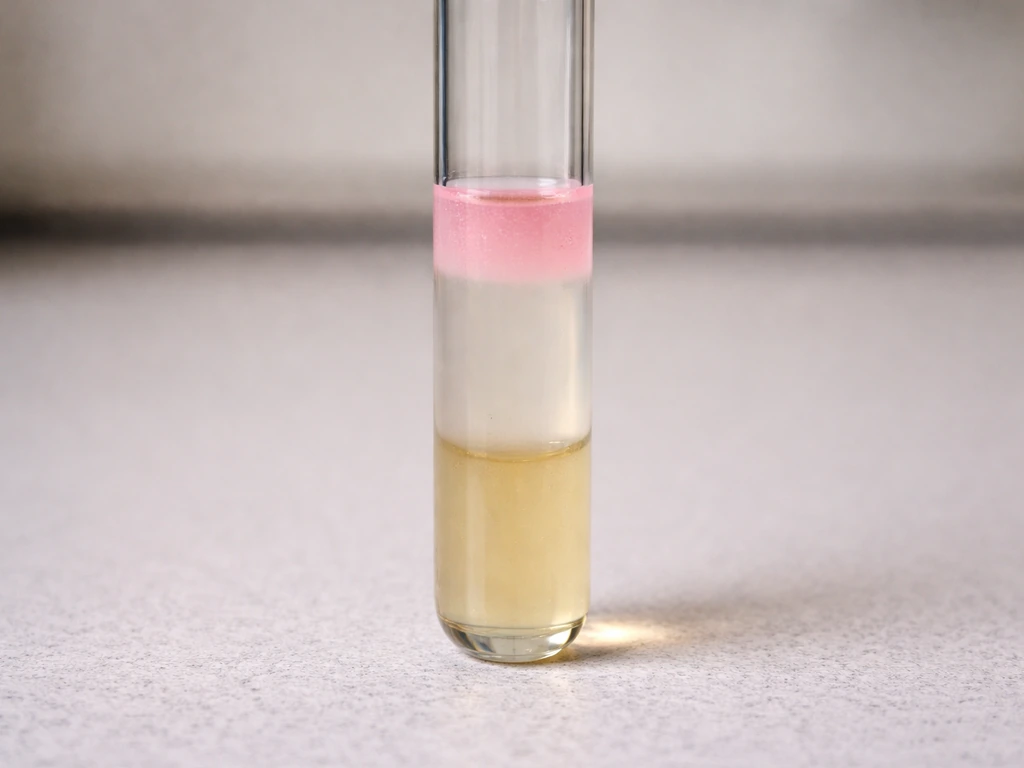
Fluid thioglycollate medium contains sodium thioglycollate and L-cysteine, both thiol-containing reducing agents that react with dissolved oxygen and lower the Eh of the medium. For a clear answer to why obligate anaerobes grow in thioglycollate, see the section explaining how thiol reducing agents and oxygen diffusion create a strongly reducing, anoxic zone that supports their growth. It also contains a small concentration of agar (around 0.075 percent), which is not enough to solidify the medium but is enough to slow the diffusion of oxygen from the surface downward. The result is a vertical chemical gradient: the top of the tube is aerobic (oxygen diffuses freely from the air at the surface), the middle is microaerophilic to anoxic, and the bottom is strongly reducing and essentially anaerobic. A redox indicator dye, usually resazurin or methylene blue, is incorporated to make this gradient visible: resazurin is pink when oxidized and colorless when reduced, so a properly prepared tube shows a pink band at the top and a colorless (reduced) zone below.
Obligate anaerobes grow preferentially in the lower, colorless, reducing zone. Facultative anaerobes grow throughout the tube. Obligate aerobes cluster at the top. Microaerophiles grow as a band just below the surface. This single tube is one of the most visually instructive demonstrations in all of introductory microbiology, showing how oxygen tolerance maps directly onto physical position in a gradient environment. The underlying principle is always the same: chemical reducing agents lower the Eh to a value that the obligate anaerobe's vulnerable enzymes can tolerate.
How an anaerobic jar actually removes oxygen
The mechanics of the anaerobic jar are elegant in their simplicity. You seal agar plates inside a gas-tight container, activate a gas-generating sachet, and incubate. But what is actually happening inside?
The classic GasPak system: hydrogen and a palladium catalyst
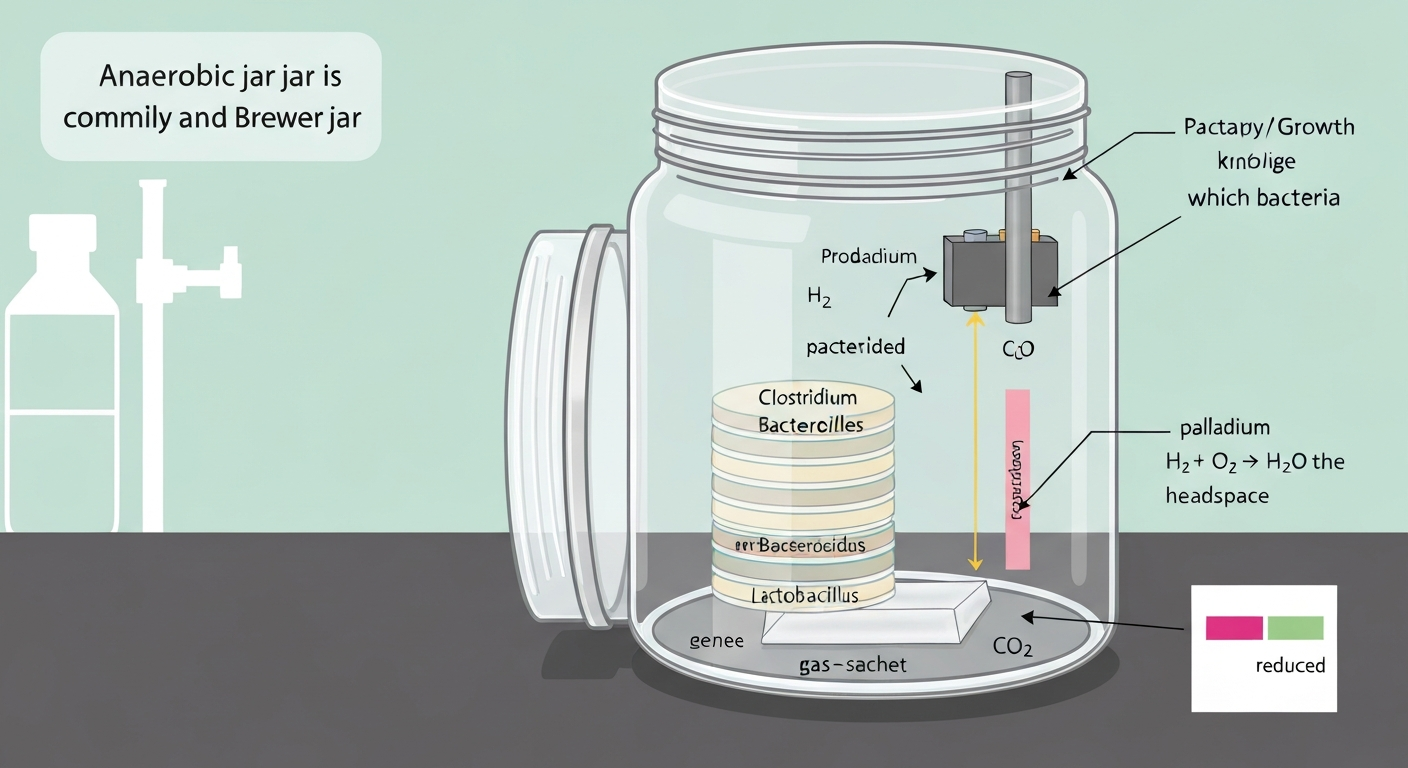
The traditional GasPak system uses a sachet that, when activated with water, generates hydrogen gas (H2) and carbon dioxide (CO2). The jar contains a palladium (Pd) catalyst pellet. On the catalyst surface, H2 reacts with residual O2 to form water (H2O), removing gaseous oxygen from the headspace. The CO2 produced is beneficial because many clinical anaerobes grow better with elevated CO2 (they are capnophiles as well). As oxygen is consumed, the partial pressure of O2 in the jar drops toward zero, achieving anaerobic conditions typically within one to two hours of sealing.
Modern waterless sachets: chemical oxygen scavengers
More recent products, such as the BD GasPak EZ and Oxoid AnaeroGen sachets, work without added water or a separate palladium catalyst. These sachets contain proprietary chemical O2-scavenging formulations that absorb oxygen directly and generate CO2. AnaeroGen, for instance, is reported to reduce headspace O2 to below 1 percent within approximately 30 minutes. The convenience is significant in teaching labs: no liquid to add, no catalyst to maintain or accidentally poison.
Monitoring anaerobiosis: resazurin and methylene blue indicators
Knowing that the jar reached anaerobic conditions is just as important as achieving them. Resazurin indicator strips or tablets are placed inside the jar. Oxidized resazurin is pink or violet; when reduced (i.e., in a truly anaerobic atmosphere), it turns colorless. Methylene blue strips work similarly, turning from blue to colorless under anaerobic conditions. Checking the indicator before opening the jar after incubation confirms whether the expected atmosphere was maintained throughout. If the indicator is still pink or blue, something failed: a leaking seal, a poisoned catalyst, or an improperly activated sachet.
Limitations of the jar: what can go wrong
Anaerobic jars work well for most routine purposes, but they have real limits. In traditional GasPak-style systems, palladium catalysts can be poisoned by hydrogen sulfide (H2S) and other volatile compounds produced by certain anaerobes, reducing the catalyst's ability to consume O2. A poisoned catalyst is colorless, unlike the typical gray-black of active Pd, and it must be regenerated by baking at 160°C or replaced entirely. Seal problems and incorrectly activated sachets are common failure modes in teaching labs. Perhaps most importantly, extremely oxygen-sensitive organisms, some strains of Bacteroides and certain environmental anaerobes, are more reliably cultured in an anaerobic chamber where every handling step occurs inside a continuously anoxic atmosphere.
Other ways to cultivate anaerobes and microaerophiles
The anaerobic jar is one solution among several, and each approach has a different trade-off between cost, convenience, and the strictness of anaerobiosis achieved.
Anaerobic chambers (gloveboxes and workstations)
An anaerobic chamber, also called a glovebox or anaerobic workstation, is a sealed cabinet filled with an anaerobic gas mixture (typically 80-85% N2, 5-10% H2, and 5-10% CO2). All specimen handling, plating, and manipulation happens inside the chamber without ever exposing cultures to ambient air. This gives dramatically stricter oxygen control than a jar (residual O2 can be maintained below 0.5 parts per million in well-maintained chambers) and is preferred in reference laboratories for highly fastidious anaerobes and for processing clinical specimens where organism recovery rates matter. The trade-off is cost: a full anaerobic workstation is expensive to purchase and maintain, which puts it out of reach for most teaching labs.
Thioglycollate broth and other reducing liquid media
As described earlier, fluid thioglycollate medium is an accessible, inexpensive alternative that requires no special equipment beyond a standard incubator. It is ideal for demonstrating oxygen tolerance categories and for supporting the growth of anaerobes in suspension. It does not support colony isolation the way agar plates do, so it is not a substitute for plate culture when you need to identify individual colony morphologies or perform susceptibility testing. Other reducing broths, such as cooked meat medium and brain-heart infusion supplemented with reducing agents, serve similar purposes for specific organisms.
Candle jars and CO2-generating systems for microaerophiles
A candle jar is the simplest low-tech option for creating a microaerophilic atmosphere: a candle placed inside a sealed jar burns until it exhausts enough oxygen that the flame goes out, typically raising CO2 to around 3-5% and lowering O2 modestly. This is adequate for capnophiles (CO2-requiring organisms) and some microaerophiles in a pinch, but it does not reliably lower O2 enough for strict obligate anaerobes, and CO2/O2 levels are not precisely controlled. Purpose-made microaerophilic gas-generating sachets (CampyGen, CampyPak, or equivalent) do the job far more reliably for Campylobacter and Helicobacter, achieving the targeted 5% O2 / 10% CO2 atmosphere with much greater consistency. For a teaching lab demonstrating why Campylobacter needs a special atmosphere, a CampyGen sachet in a standard jar is both affordable and effective.
| Method | O2 level achieved | Best for | Relative cost | Practical trade-off |
|---|---|---|---|---|
| Anaerobic jar + GasPak/AnaeroGen | <1% O2 | Obligate anaerobes, facultatives, aerotolerants | Low to moderate | Occasional catalyst poisoning or seal failure; not ideal for extremely sensitive species |
| Anaerobic chamber (glovebox) | <0.5 ppm O2 | Highly fastidious anaerobes, specimen processing | High | Expensive; best-in-class recovery but impractical for most teaching labs |
| Thioglycollate / reducing broth | Gradient (0% at bottom) | Demonstrating O2 tolerance; growing anaerobes in liquid | Very low | No colony isolation; not a substitute for plate culture |
| Candle jar | ~15-17% O2; ~3-5% CO2 | Capnophiles; rough microaerophilic conditions | Very low | Imprecise; unsuitable for strict anaerobes |
| Microaerophilic sachet (CampyGen, CampyPak) | ~5% O2 / ~10% CO2 | Campylobacter, Helicobacter, other microaerophiles | Low to moderate | Does not support strict anaerobes; O2 level too high |
Incubation, media choice, and practical considerations
Creating the right atmosphere is only part of the equation. Most clinically relevant anaerobes are incubated at 35 to 37 degrees Celsius, matching human body temperature. Pre-reduced anaerobically sterilized (PRAS) media are commercially available for fastidious organisms and have had oxygen removed during manufacture so plates do not expose organisms to air during streaking. Enriched blood agar (supplemented with hemin and vitamin K1 for certain Bacteroides and Prevotella), Bacteroides Bile Esculin (BBE) agar for the B. fragilis group, and egg yolk agar for Clostridium are common selective and differential media used alongside the anaerobic jar.
A practical classroom safety note: while anaerobic jars themselves present no unusual chemical hazard beyond careful handling of sealed pressurized vessels, the organisms grown in them include pathogens. Clostridium perfringens, Bacteroides fragilis, and anaerobic cocci are associated with serious human infections. Standard biosafety level 2 precautions apply in any lab working with clinical isolates, and teaching labs working with known non-pathogenic strains should follow their institutional biosafety protocols.
Clinical and food-safety relevance
Understanding which bacteria grow in anaerobic jars is not an abstract exercise. Anaerobic infections are clinically significant: the majority of intra-abdominal infections, aspiration pneumonia cases, and dental abscesses involve anaerobic bacteria, often in combination with facultative species. Failure to use anaerobic culture conditions in the diagnostic lab means these organisms go undetected and treatment is empirical rather than targeted.
In food safety, anaerobic conditions arise naturally in vacuum-packed foods, canned goods (especially low-acid foods improperly processed), and anaerobic zones within large pieces of meat. Clostridium botulinum grows in exactly these conditions, and understanding its oxygen requirements explains both how botulism occurs and why adequate heat treatment or acidification is required to make such foods safe. The same redox chemistry that governs a petri dish in a teaching lab governs the inside of a can of green beans.
Choosing the right method: a decision framework
If you are in a teaching lab trying to demonstrate anaerobic growth for the first time, an anaerobic jar with a modern waterless sachet (AnaeroGen or GasPak EZ) and a resazurin indicator strip is your best starting point. It is simple, affordable, and reliable for the common obligate anaerobes and facultatives used in educational settings.
If you suspect Campylobacter or Helicobacter, switch to a microaerophilic sachet and do not use a standard anaerobic jar. These organisms need oxygen, just less of it, and eliminating oxygen entirely defeats the purpose.
If you are working with extremely fastidious clinical anaerobes or processing patient specimens where organism recovery rates are clinically consequential, an anaerobic chamber is the standard of care in reference and clinical microbiology laboratories. Comparative reviews (Current and Past Strategies for Bacterial Culture in Clinical Microbiology, Clinical Microbiology Reviews (2014)) report that clinical labs favor jars and gas‑packs for routine anaerobic recovery because they are cost‑effective and simple, while anaerobic chambers provide stricter oxygen control and are preferred for extremely oxygen‑sensitive organisms and high‑throughput specimen processing Current and Past Strategies for Bacterial Culture in Clinical Microbiology — Clinical Microbiology Reviews (2014). The jar is a practical compromise; the chamber is the gold standard.
Finally, if you want to grow and observe anaerobe behavior in liquid culture without any special equipment, fluid thioglycollate medium in a standard incubator gives a visible, instructive result that directly illustrates the oxygen tolerance spectrum. It is one of the most underrated teaching tools in microbiology.
Broader context: other specialized cultivation strategies
The anaerobic jar fits into a much wider landscape of specialized microbial cultivation. Some bacteria have energy metabolisms so unusual that neither standard aerobic nor anaerobic culture will support them at all. Lithotrophs, for example, oxidize inorganic compounds like ammonia or hydrogen sulfide as their energy source, and historically required entirely novel enrichment strategies to cultivate, as pioneered by Sergei Winogradsky in the late 19th century. For a concise historical explanation of his enrichment methods, see how did Sergei Winogradsky grow lithotrophs. Methanotrophs, bacteria that oxidize methane as their sole carbon and energy source, require carefully controlled methane-containing atmospheres rather than standard carbon substrates. For practical cultivation methods and methane-containing atmosphere setups, see the guide on how to grow methanotrophs. These examples reinforce a broader principle: the oxygen requirement of an organism is just one dimension of its growth niche. Temperature, pH, available carbon and energy sources, and redox potential all interact to define where a given bacterium can flourish. The anaerobic jar addresses the oxygen dimension elegantly, but it is always operating within that larger biological context.
FAQ
Which bacteria are commonly grown in an anaerobic jar?
Anaerobic jars are used to cultivate organisms that prefer little or no oxygen. Common groups recovered in clinical and teaching settings include obligate (strict) anaerobes — for example Clostridium (now including Clostridioides), Bacteroides (e.g., Bacteroides fragilis group), Prevotella, Porphyromonas, Fusobacterium, and anaerobic Gram‑positive cocci (formerly Peptostreptococcus, now including Finegoldia and related genera). Many facultative anaerobes (Enterococcus, Escherichia) can also grow anaerobically, and some aerotolerant organisms (certain Lactobacillus species) tolerate low or zero O2 and will grow in such jars.
Why do these bacteria need low‑ or zero‑oxygen conditions? (Biology and chemistry)
Oxygen and its reactive derivatives (superoxide, hydrogen peroxide) can damage key cellular components in many anaerobes. Mechanisms include formation of reactive oxygen species (ROS) and direct oxidation of sensitive low‑potential metal cofactors (e.g., [4Fe‑4S] clusters) and enzymes central to anaerobic metabolism. Many strict anaerobes lack effective detoxifying enzymes (or have insufficient systems) and their core metabolic pathways are irreversibly impaired by O2. Chemically, lowering the redox potential (Eh) with reducing agents makes biochemical reactions favorable for anaerobic metabolism; obligate anaerobes therefore prefer strongly reducing environments.
What is the difference between obligate anaerobes, facultative anaerobes, aerotolerant organisms and microaerophiles?
- Obligate (strict) anaerobes: cannot grow in the presence of O2. - Facultative anaerobes: grow with or without O2; they respire aerobically when O2 is present and switch to fermentation or anaerobic respiration when O2 is absent (examples: Escherichia, many Enterobacteriaceae). - Aerotolerant organisms: do not use O2 but tolerate it; they can grow equally well with or without O2 (some Lactobacillus species). - Microaerophiles: require lower-than‑atmospheric O2 levels (typically ~2–10%) and often elevated CO2; they often fail to grow under strictly anoxic conditions (examples: Campylobacter, Helicobacter).
Can microaerophiles grow in an anaerobic jar (i.e., without oxygen)?
Most true microaerophiles need a small, nonzero O2 concentration and often added CO2, so a strictly anaerobic (0% O2) environment is not suitable. Some jars or gas sachets can be set to produce microaerophilic atmospheres (reduced but nonzero O2), but a standard anaerobic jar that eliminates O2 entirely will usually not support microaerophiles like Campylobacter or Helicobacter; those organisms need microaerophilic gas systems or controlled incubators.
How do reducing media like thioglycollate support obligate anaerobes?
Reducing media (e.g., fluid thioglycollate) contain chemical reductants such as sodium thioglycollate, L‑cysteine or sulfides that lower the medium’s redox potential (Eh). A small amount of agar or viscosity creates an oxygen gradient from the top (where O2 diffuses in) to the bottom (more reduced). Obligate anaerobes grow in the lower, strongly reducing zone. These media also typically include a redox indicator (resazurin or methylene blue) that changes color when oxidized, signaling oxygen presence.
How does an anaerobic jar work (GasPak, palladium catalyst, indicators)?
Traditional jar systems combine a sealed container with a gas‑generating packet that produces hydrogen (H2) and carbon dioxide (CO2). A palladium catalyst in the jar catalyzes the reaction of H2 with residual O2 to form water, removing gaseous O2 from the headspace and reducing dissolved O2 in media. Modern sachets (e.g., AnaeroGen, GasPak EZ) use chemical O2 scavengers and CO2 generators and may not require water or an external catalyst. Anaerobic indicators (resazurin or methylene blue strips/tablets) are placed inside the jar or in media to visually confirm anaerobiosis — the indicator is colorless when reduced (anaerobic) and colored when oxidized (oxygen present).