To grow methanotrophs successfully, you need to supply methane as the sole carbon and energy source, maintain the right oxygen concentration (not too high, not too low), use a mineral salts medium with nitrate or low-concentration ammonium as the nitrogen source, hold temperature between roughly 25 and 37°C for most common strains, and keep pH near 6.5 to 7.2. Get those five things right and methanotrophs will grow. Get one of them wrong and you'll get nothing, or the wrong organism entirely.
How to Grow Methanotrophs: Setup, Conditions, and Troubleshooting

Marcus Holloway
29 Jun 2026
What methanotrophs actually are and why they're tricky to grow
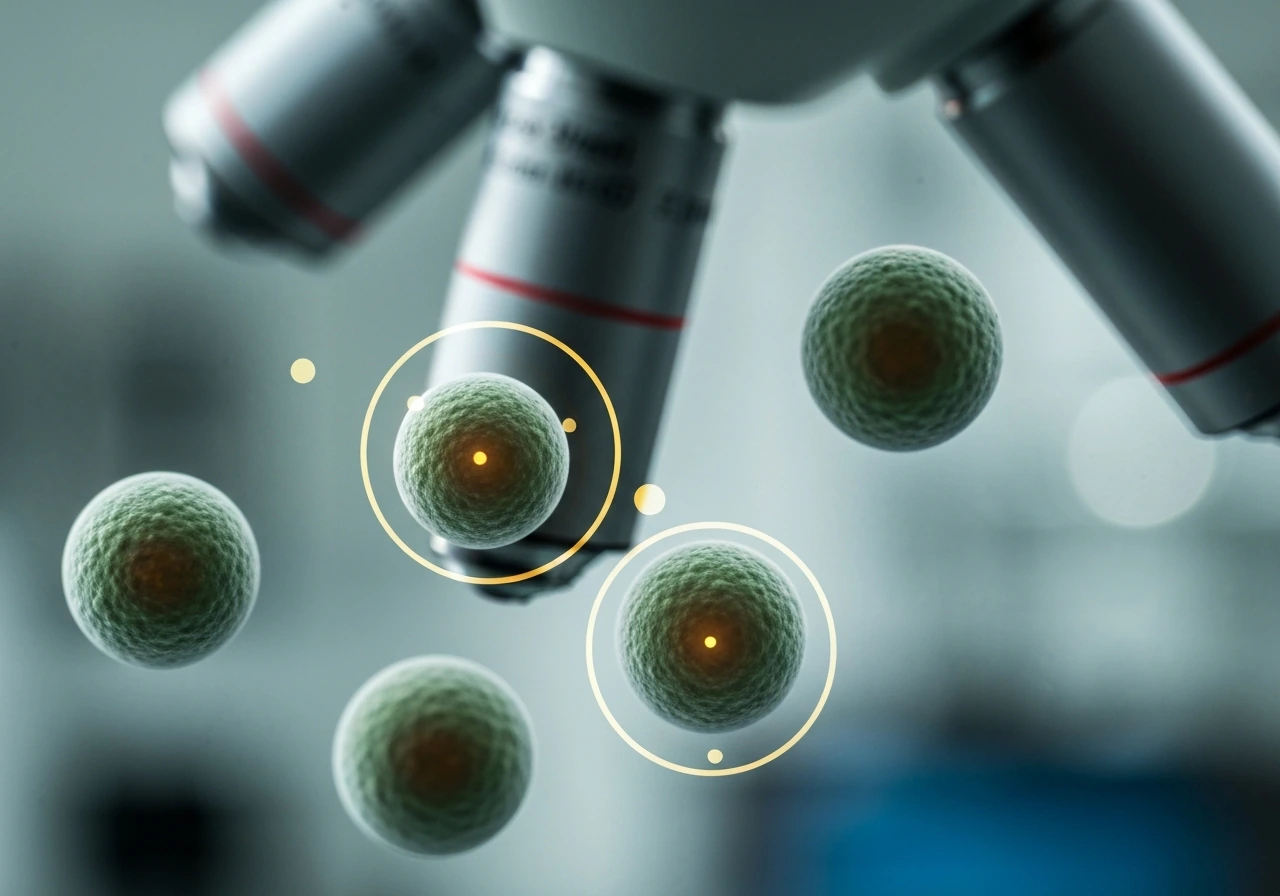
Methanotrophs are bacteria that use methane (CH4) as their sole carbon and energy source. They do this using an enzyme called methane monooxygenase (MMO), which comes in two forms: particulate MMO (pMMO), encoded by the pmoA gene and found in almost all methanotrophs, and soluble MMO (sMMO), encoded by mmoX and found in fewer strains. The pmoA gene has become the standard molecular marker to confirm you actually have methanotrophs growing, not just any bacteria that snuck in.
There are two main physiological groups to know about. Type I methanotrophs (mostly Gammaproteobacteria, like Methylococcus capsulatus) tend to thrive at higher dissolved oxygen and lower methane concentrations. Type II methanotrophs (Alphaproteobacteria) tend to prefer lower oxygen and higher methane. This isn't academic trivia: if you set your oxygen concentration too high, you'll enrich for Type I and potentially exclude Type II strains, or vice versa. So your oxygen setpoint is also a selection decision. This is the same principle that governs how microaerophiles occupy different oxygen niches in nature, and it applies directly here. Microaerophiles are microbes that grow best at low dissolved oxygen, so setpoints that are too high can select against them microaerophiles occupy different oxygen niches.
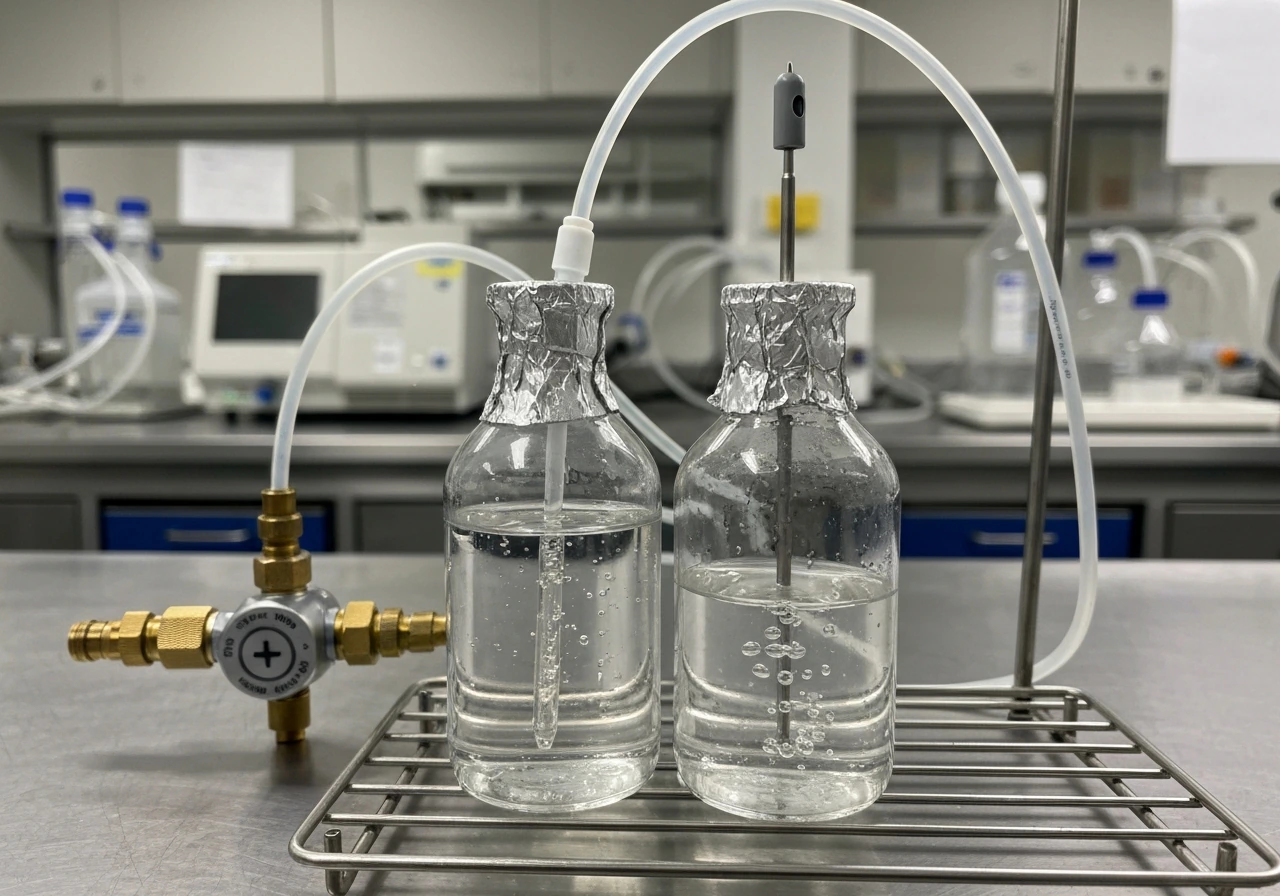
The reason methanotrophs are harder to grow than most bacteria is the double-substrate problem. They need both methane (a gas) and oxygen (also a gas) delivered simultaneously to liquid culture, and both have limited solubility in water. Transfer both gases efficiently without hitting flammable methane concentrations in the headspace, and you're in business. Fail at gas delivery and the culture just sits there doing nothing, which is the most common cause of apparent 'no growth.'
Oxygen, methane, and how to actually deliver both gases
This is the part most guides gloss over, and it's where most failures happen. Methanotrophs need both methane and oxygen simultaneously, but you can't just bubble in a 50/50 mixture and call it done. There are safety constraints, solubility limits, and type-selection consequences at every step.
The flammability problem and how to work around it
Methane in air becomes flammable between roughly 5 and 15% v/v. That range is exactly where you want to operate for good methanotroph growth, which is why conventional sparging setups are risky in enclosed systems. The practical solution used in research labs is to either use sealed serum bottles with a defined headspace mixture (keeping total volumes small and well-ventilated), or to switch to membrane-based gas delivery where methane and oxygen diffuse separately through membranes rather than mixing in a flammable gas phase. Hollow-fiber membrane bioreactors do this well, as do membrane-aerated biofilm reactors (MABRs). For a simple lab enrichment, a sealed serum bottle in a fume hood with a headspace of around 20% CH4 in air is a workable and widely used starting point.
Dissolved oxygen setpoints and what they mean for your culture
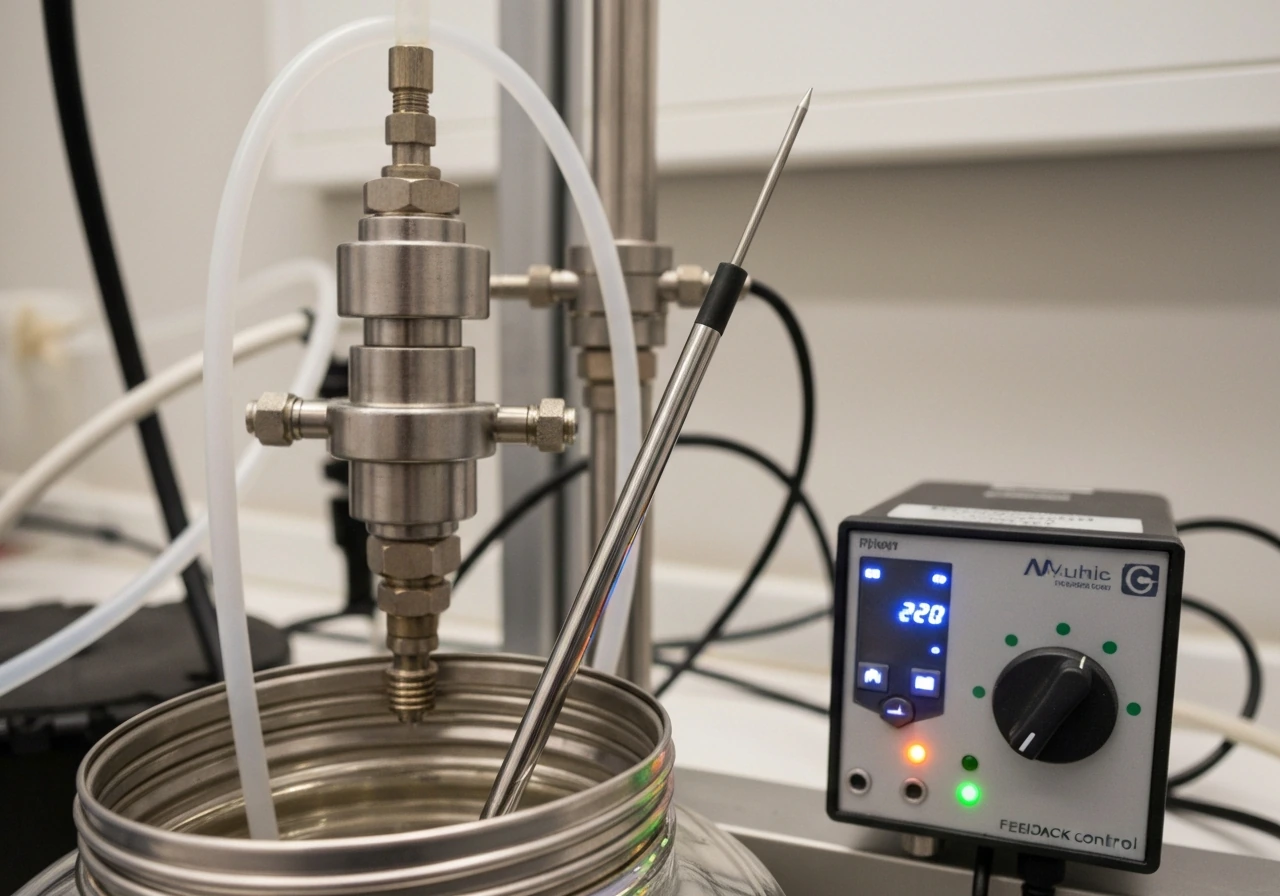
For most aerobic methanotrophs, you want dissolved oxygen (DO) in the range of 2 to 5% of air saturation in a controlled bioreactor, or simply an oxygen-containing headspace in simpler bottle setups. One well-documented cultivation of Methylococcus capsulatus in a hollow-fiber membrane bioreactor maintained DO at exactly 2 to 5% of saturation by adjusting agitation (200 to 800 rpm) and methane/air feed rates (0. One well-documented hollow-fiber membrane bioreactor cultivation of Methylococcus capsulatus maintained dissolved oxygen at about 2, 5% of saturation by controlling methane/air feed and agitation dissolved oxygen at about 2–5% of saturation. 7 to 1.3 L/min). In contrast, a fluidized-bed reactor study used DO near 9 mg/L with a pH of 6.2 to 6.5 and nitrate as the nitrogen source, and that environment selected strongly for Type I methanotrophs in the biofilm. So higher DO selects Type I; lower DO with higher methane tends to favor Type II. Choose your setpoint based on which strain you want to grow.
Headspace ratios for simple bottle enrichments
For straightforward enrichment work, a common and reliable starting ratio is roughly 1 part methane to 4 parts air by volume (about 20% CH4 in air). Some protocols go as low as 400 ppmv CH4 in synthetic air for atmospheric methane oxidizers, but for standard soil or water enrichments, 20% headspace methane works well as a starting point. Set up 10 mL of medium in a 100 mL serum bottle, flush or fill the headspace with your CH4/air mixture, seal with a butyl rubber stopper and crimp cap, and you have a self-contained enrichment vessel.
The right growth medium: nutrients, nitrogen, and trace elements
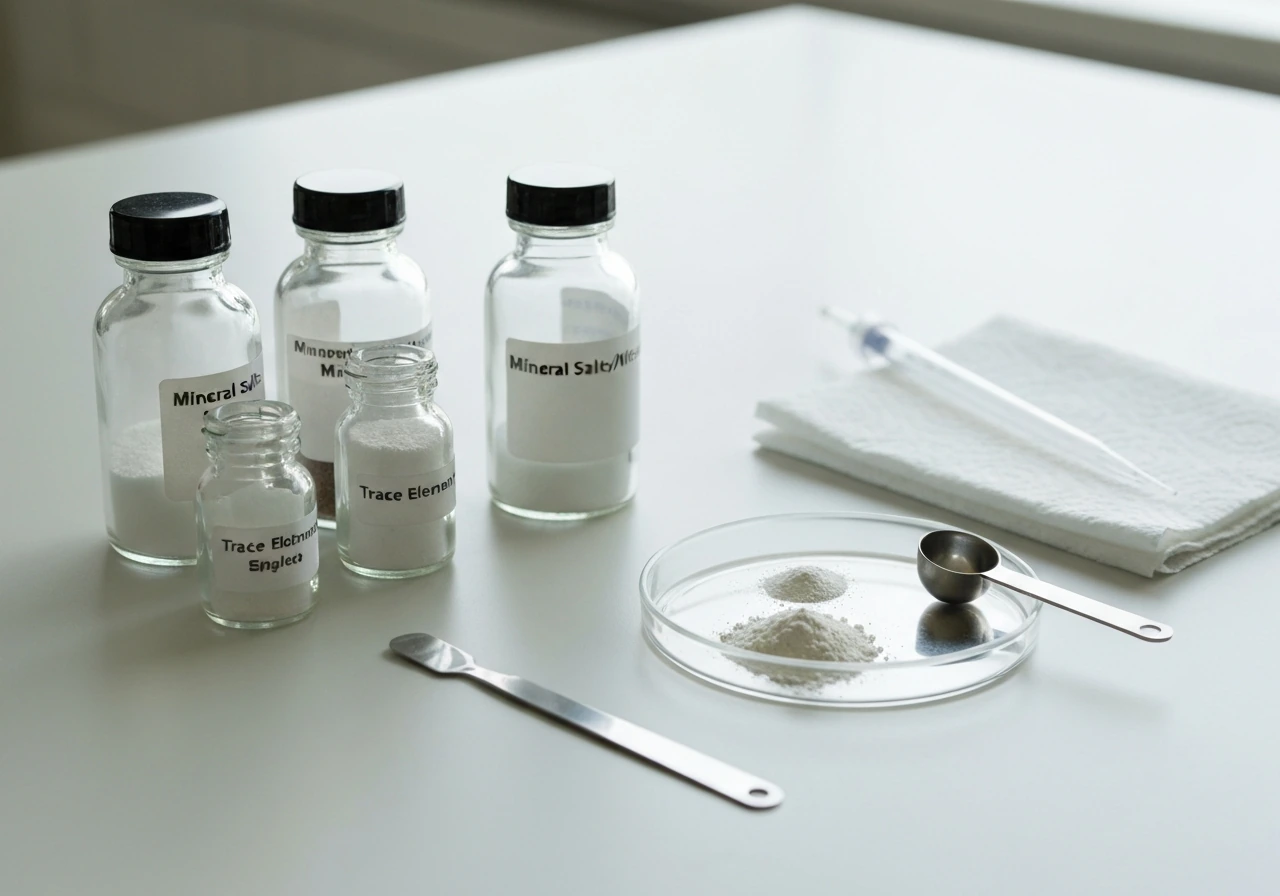
Nitrate Mineral Salts medium, universally called NMS, is the standard starting point. It was developed by Whittenbury and colleagues in 1970 and has been the backbone of methanotroph cultivation ever since. NMS uses potassium nitrate (KNO3) as the nitrogen source and provides the phosphate, sulfate, magnesium, calcium, iron, and trace elements that methanotrophs need for biomass synthesis. Think of it as providing everything except the carbon, which the bacteria will get from the methane you supply.
If you prefer to use ammonium instead of nitrate, you can substitute ammonium chloride (NH4Cl) for KNO3 to make Ammonium Mineral Salts (AMS) medium. A typical substitution is around 0.5 g NH4Cl in place of 1 g KNO3 per liter. The key constraint is that ammonium inhibits some strains at concentrations above 10 mM, so stay below that if you go the ammonium route. Nitrate is generally the safer and more widely supported choice, especially for enrichments from unknown environmental samples.
Phosphate buffering within the NMS recipe matters too, because pH drift in an unbuffered mineral salts medium can kill a slow-growing culture before it gets started. Some protocols incorporate phosphate buffer directly into the NMS recipe rather than adding it separately. Trace elements (copper, zinc, manganese, molybdenum, and others) need to be included at low concentrations because the MMO enzymes require copper as a cofactor, particularly pMMO. Leaving out trace elements is a subtle failure mode that shows up as extremely slow growth or complete stalling.
| Component | Role | Typical amount per liter |
|---|---|---|
| KNO3 (or NH4Cl) | Nitrogen source for biosynthesis | 1 g KNO3 or 0.5 g NH4Cl |
| MgSO4 | Sulfur and magnesium source | 1 mM |
| CaCl2 | Calcium for membrane/cell functions | 0.1 mM |
| KH2PO4 / K2HPO4 | Phosphate buffer and P source | Buffered to target pH |
| FeSO4 or FeCl3 | Iron cofactor for MMO enzymes | ~10 µM |
| Trace element solution | Cu, Zn, Mn, Mo, Co, Ni | 1 mL/L of concentrated stock |
| Methane (gas phase) | Sole carbon and energy source | ~20% headspace v/v for enrichments |
Temperature and pH: the ranges that work and how to fine-tune them
Most methanotrophs isolated from soil, freshwater sediment, or wastewater environments are mesophiles and grow well between 20 and 37°C. Methylococcus capsulatus Bath, one of the most studied strains, is a moderately thermophilic outlier with an optimum around 45°C. If you're working with an environmental sample of unknown origin, starting at 25 to 30°C is a safe default that captures the broadest range of common mesophilic strains. Temperature-range experiments with moderately thermophilic gammaproteobacterial methanotrophs have tested growth across 20 to 70°C, with distinct optima depending on the strain, so if you're working with unusual environmental samples (hot spring sediments, for example) it's worth testing a wider range.
For pH, start at 6.8 for most common strains. Some strains grow better at 5.8 (particularly acid-tolerant isolates from peatlands or forest soils) and others do well up to 7.4. The research literature shows clear strain-dependence: a Nature Communications study on atmospheric methane oxidizers used pH 6.8 for some strains and pH 5.8 for others in the same experimental setup. If you're doing an enrichment from a soil sample, match the pH to the source environment. Peatland soils are acidic; agricultural soils are often near neutral; alkaline spring samples may go above 7.5. The fastest path to failure is using a pH that doesn't match the original habitat of your target organisms.
pH drift is a real problem during active growth because oxidation of methane and assimilation of nitrate both generate acid or base depending on metabolic state. Check pH every 24 to 48 hours during active enrichment and correct as needed. Using phosphate buffer in your NMS medium reduces the frequency of manual correction and keeps the culture in the growth window longer.
Vessel options and reactor setups: from simple bottles to bioreactors
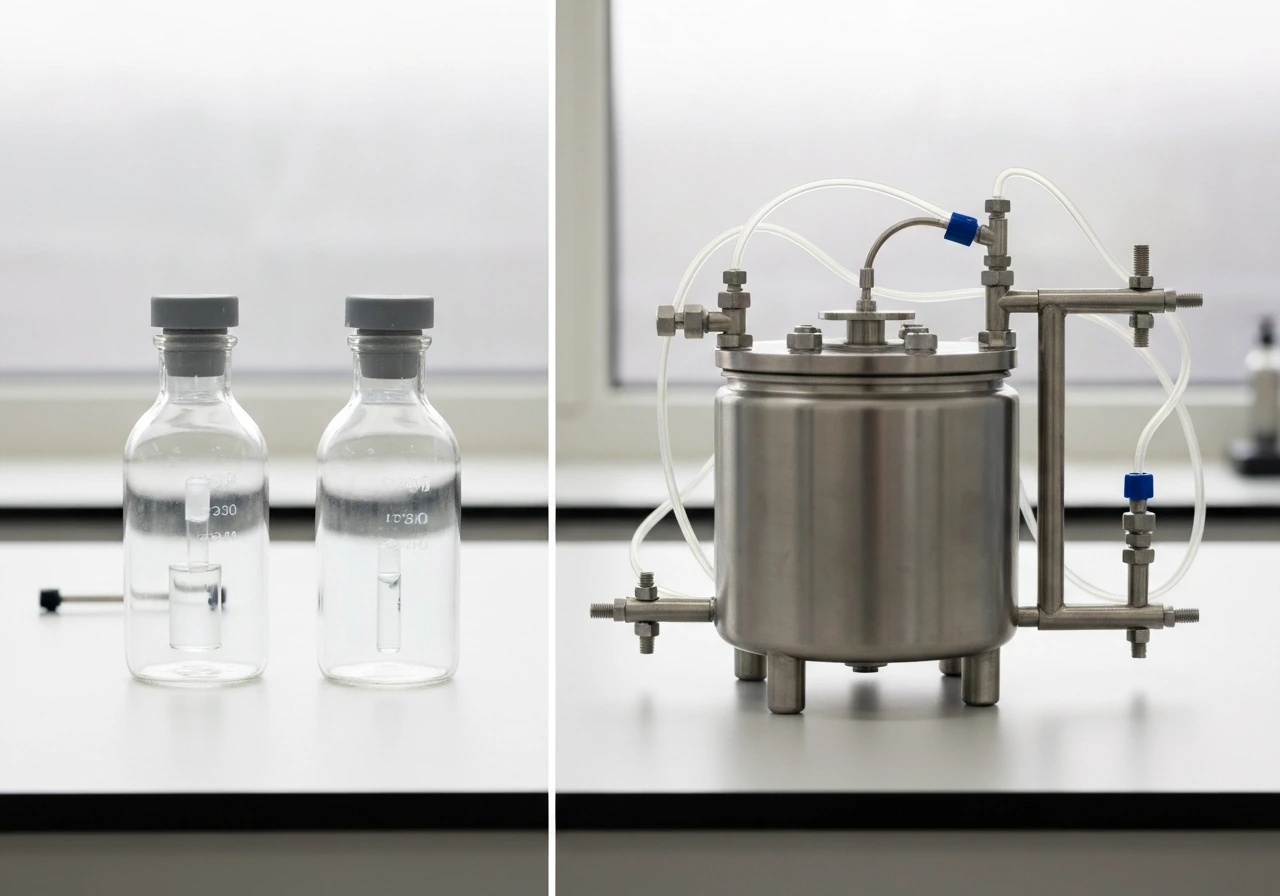
The right vessel depends on how much control you need and what you're trying to accomplish. Here's how to think through your options.
Serum bottles (best for enrichment and isolation)
A 100 mL serum bottle with 10 mL of NMS medium and a CH4/air headspace is the most accessible and common starting point for anyone enriching from an environmental sample. You crimp-seal it, incubate it on a rotary shaker at 150 to 200 rpm for gas/liquid mixing, and replenish the headspace every few days by venting and re-flushing. The advantages are simplicity, low cost, and the ability to run many conditions in parallel. The downside is that gas exchange is limited to passive diffusion from the headspace, so growth tends to be slower than in aerated systems.
Stirred-tank bioreactors with controlled gas feeds
For scaling up or maintaining steady-state cultures, a stirred-tank bioreactor with controlled methane and air feed lines gives you the most control. The hollow-fiber membrane bioreactor approach used for Methylococcus capsulatus is a refined version of this: methane and air are fed at 0.7 to 1.3 L/min through hollow-fiber membranes, agitation runs at 200 to 800 rpm depending on the DO setpoint, and pH is held at 6.8 to 7.4. This kind of setup requires a DO probe and a pH controller, but it produces consistent, reproducible growth and lets you maintain DO precisely in the 2 to 5% saturation range that many strains prefer.
Membrane-aerated biofilm reactors (MABRs)
MABRs are an elegant solution to the double-substrate problem. Oxygen diffuses from the gas phase through a membrane to an attached biofilm, and methane is supplied separately from the liquid side. This creates counterdiffusion gradients that mimic natural methane/oxygen interfaces (like lake sediment surfaces or landfill cover soils). Methanotrophic biofilm growth rates of around 300 µm per day and oxygen uptake rates up to about 16 g/m2 per day have been reported under MABR conditions. These systems are more complex to build but avoid flammable headspace mixtures and allow fine-tuned gas delivery.
Fluidized-bed and attached-film reactors
For biofilm-based work, attached-film fluidized-bed reactors dissolve methane and oxygen using separate gas-liquid aeration columns before the liquid enters the bed. In one reported system, over 90% of biomass remained attached in the bed, making washout much less of a problem than in suspended-growth systems. These are research-grade setups but worth knowing about if you're dealing with slow-growing cultures that keep washing out of simpler continuous systems.
Starting cultures, enrichment strategy, and knowing if it's working
Starting from a pure culture vs. an environmental sample
If you have access to a deposited strain (DSMZ, ATCC, or a university culture collection), starting from a pure culture removes a lot of variables. Methylococcus capsulatus Bath (DSMZ 11853 or equivalent) is the most common workhorse strain and is well-characterized. If you're starting from an environmental sample (soil, sediment, water from a methane-rich environment), you're running an enrichment and you need to be patient: doubling times for methanotrophs can range from 4 to 24 hours depending on strain and conditions, so early enrichments may show no visible growth for a week or more.
Enrichment protocol step by step
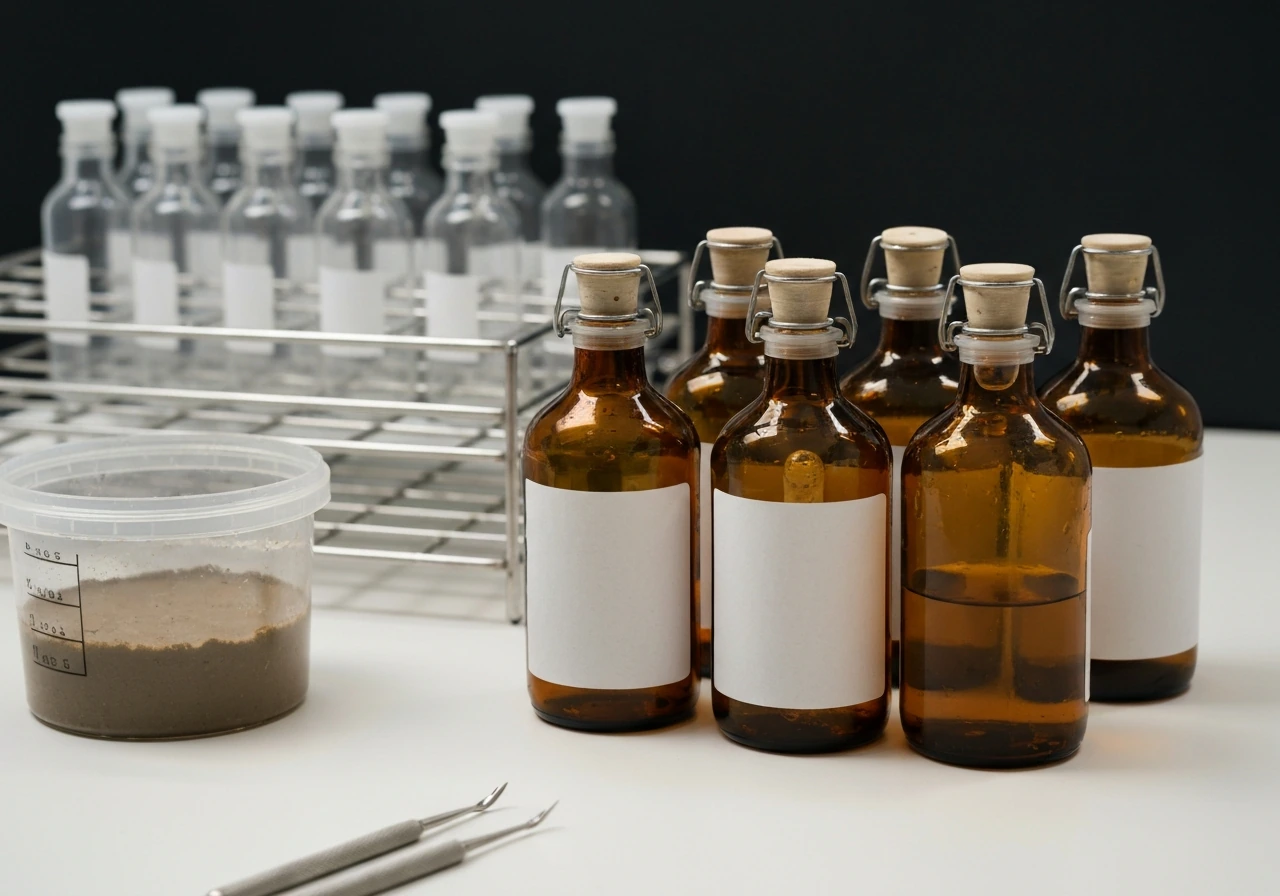
- Collect your environmental sample (1 to 5 g of soil, sediment, or 10 to 50 mL of water) from a methane-rich location: landfill cover soils, rice paddy sediment, lake sediment near anoxic zones, or compost.
- Suspend sample in NMS medium (pH 6.8 as default) at roughly 1: 10 dilution in a 100 mL serum bottle containing 10 mL of medium.
- Flush the headspace with a 1: 4 methane:air mixture (approximately 20% CH4 in air) and seal with a crimped butyl rubber stopper.
- Incubate at 25 to 30°C on a rotary shaker at 150 to 200 rpm.
- Every 3 to 5 days, check headspace methane by gas chromatography (GC) or, at minimum, replenish the headspace by briefly venting and re-flushing with fresh CH4/air mixture.
- After 1 to 2 weeks, transfer 10% of the enrichment culture to fresh NMS medium and repeat the headspace flushing. This dilutes out non-methanotrophs over time.
- Repeat transfers 3 to 5 times before attempting isolation on NMS agar plates incubated under CH4/air headspace.
How to tell if methanotrophs are actually growing
The most direct confirmation is methane consumption: measure headspace CH4 by GC at the start and after 24 to 48 hours of incubation. If CH4 is decreasing, something is oxidizing it, and in a properly set up NMS enrichment that something is very likely a methanotroph. Optical density at 600 nm (OD600) can track biomass, with cell biomass correlated against OD600 readings as a proxy. For definitive confirmation, use qPCR with pmoA primers to quantify gene copy numbers. pmoA transcripts (by RT-qPCR) give you not just presence but activity, which is a more meaningful measurement than gene copies alone. These molecular endpoints have been used in research studies tracking methanotroph populations over periods of 70 days or more in industrial systems.
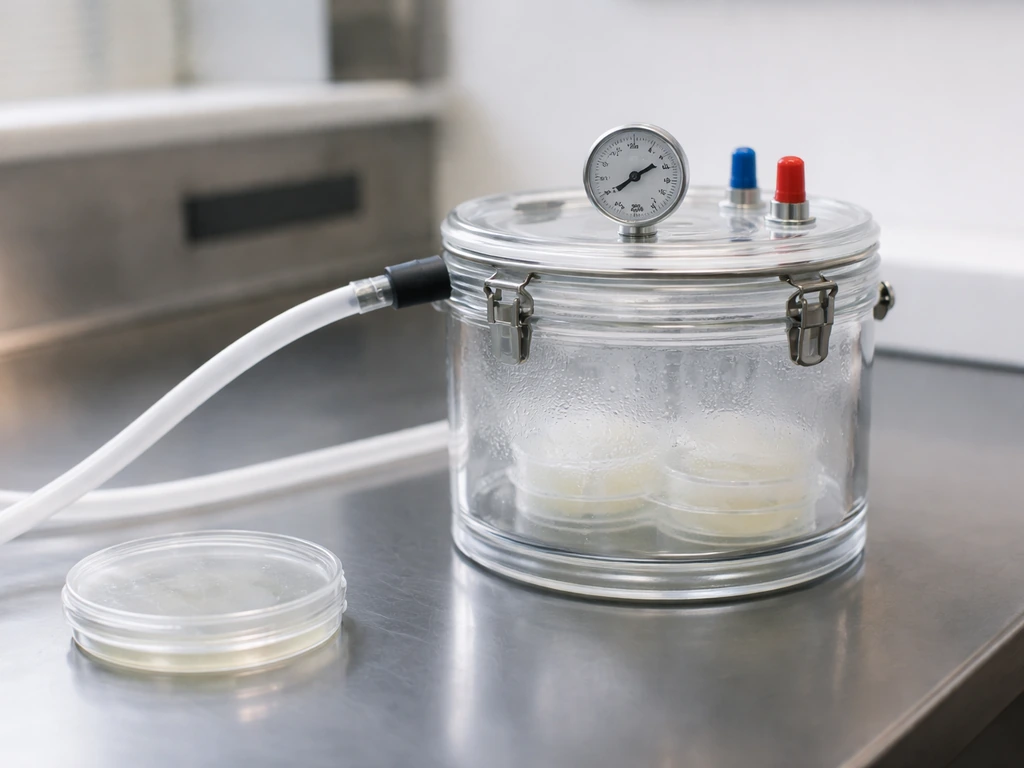
If you don't have access to GC or qPCR, you can use a simple indicator: slow but steady turbidity developing over 7 to 14 days in an NMS bottle with methane headspace, combined with no growth in an identical bottle given only air (no methane), is a strong preliminary signal. Growth in the methane bottle but not the air-only control is exactly what you expect from a methane-obligate organism. An anaerobic jar is commonly used to grow which bacteria methane-obligate organism.
When nothing grows: common failures and how to fix them
Most methanotroph cultivation failures come down to a short list of problems. Here's how to diagnose and fix each one.
No methane consumption, no turbidity after 2 weeks
First suspect: gas delivery failure. The headspace methane may have been consumed quickly and not replenished, or the headspace ratio was wrong. Check that your crimp seals are airtight (test with a syringe and pressure check), replenish headspace, and re-incubate. Second suspect: pH mismatch. If your source sample is from an acidic environment (peat, forest litter) and you set up at pH 7, you may be outside the growth window for your target organisms. Try parallel cultures at pH 5.8, 6.5, and 7.2. Third suspect: missing trace elements, especially copper. Omitting or underpreparing the trace element solution is more common than it sounds, and without copper the pMMO enzyme can't function.
Very slow growth (weeks with barely detectable OD increase)
Methanotrophs are inherently slow growers compared to heterotrophs, but if growth is much slower than expected, oxygen limitation is the first thing to check. Some methanotrophs are able to persist under very low-oxygen or microoxic conditions, but they generally still require an oxygen source to support their methane oxidation pathways oxygen limitation. In bottle enrichments, increase headspace volume relative to liquid volume, or switch to a larger vessel. In bioreactors, increase agitation speed and check that DO is staying in the 2 to 5% saturation range. Methanotroph culturing guidance also recommends including dissolved oxygen probe monitoring in gassing and plate or similar enrichment setups so oxygen control becomes part of the selection strategy blank" rel="noopener noreferrer">check that DO is staying in the 2 to 5% saturation range. Nitrogen limitation is another common culprit: if you used ammonium and it's been depleted or has inhibited growth at higher concentrations, switch to nitrate as your N source. Temperature also matters more than people expect: even a 5°C drop below the strain's optimum can cut growth rates significantly.
Good early growth that crashes or stops
This pattern usually means one substrate ran out. In a sealed bottle system, methane is the most likely culprit: consumption is faster than replenishment. Replenish headspace every 2 to 3 days during active growth, not every 5 to 7 days. It can also mean pH has drifted out of range during active growth. Check pH at every replenishment cycle. A culture that looked healthy at pH 6.8 on day 3 may have drifted to pH 5.2 by day 10 without buffering.
Washout in continuous or semi-continuous systems
Washout happens when the dilution rate in a continuous culture exceeds the maximum growth rate of the methanotrophs, flushing the cells out faster than they can divide. The fix is to either reduce the dilution rate, switch to a biofilm-based system where cells attach to a surface and are not washed out with the effluent, or use an attached-film reactor design. As noted earlier, attached-film fluidized-bed designs have shown over 90% biomass retention, making them much more resistant to washout than suspended-growth systems.
Contamination with heterotrophic organisms
NMS medium has no organic carbon, which should starve out most heterotrophs. Obligate anaerobes can grow on thioglycolate because it provides a low-oxygen, reducing environment where they can survive and respire without oxygen. But heterotrophs can grow on metabolic byproducts (methanol, formaldehyde, or cellular debris) released by methanotrophs during active metabolism. If you see rapid turbidity in the first 24 to 48 hours without methane consumption, you likely have fast-growing heterotrophic contamination. Reset the enrichment with a more dilute inoculum, ensure all glassware is autoclaved thoroughly, and consider adding cycloheximide if fungal contamination is also a concern. Transferring to fresh NMS and diluting aggressively before re-enrichment is usually enough to reduce heterotrophic competitors over multiple serial transfers.
Wrong community outcome (enriched the wrong methanotroph type)
This is less a failure than a selection artifact, but it matters if you want a specific type. Elevated dissolved oxygen near 9 mg/L with nitrate at pH 6.2 to 6.5 strongly selects for Type I strains. Lower DO and higher methane partial pressure favors Type II. Adjust your gas-phase ratios and DO setpoints deliberately based on which group you're targeting. Confirm community composition with pmoA-targeted qPCR or sequencing to verify what you've actually enriched before calling it a success.
Growing methanotrophs is fundamentally about managing two gas substrates simultaneously while keeping temperature, pH, and nutrients in the right window. Each of those parameters connects to the same foundational growth principles that govern all microbial cultivation: if any single environmental condition is outside the organism's tolerance, growth simply stops. Work through the checklist systematically, confirm methane consumption as your primary growth indicator, and use pmoA as your confirmation tool. With those in hand, you'll know exactly whether you have a methanotroph culture, and if not, exactly where to look for the problem.
FAQ
How can I tell if CH4 is being consumed by microbes rather than just disappearing from the headspace?
Use an uninoculated NMS bottle with the same CH4/air headspace setup as a blank, then measure headspace CH4 by GC at the start and after 24 to 48 hours. If CH4 drops in the blank, you likely have abiotic loss or leaks, not biological oxidation. If it stays flat in the blank but drops in the inoculated bottle, that supports true methanotroph activity.
If my OD600 rises, does that mean I successfully grew methanotrophs?
No. Many heterotrophs can survive transiently and create turbidity even when methane is not driving growth, especially if the inoculum is rich. Treat methane consumption as the primary endpoint, and only use OD600 as secondary evidence (OD can rise from non-methane-using contaminants). A practical check is to run methane and air-only controls in parallel and confirm CH4 decreases only in the methane bottle.
Why does my enrichment look stalled after a few days?
Plan for a longer lag and slower kinetics by budgeting at least 1 to 2 weeks for visible changes in enrichment bottles. Methanotroph doubling times can be 4 to 24 hours, but early enrichments often show delayed biomass accumulation because the starting population is low and selection takes time. If you expect visible growth by day 2 or 3, you are likely setting the wrong timeline.
Can I switch from nitrate (NMS) to ammonium (AMS) after I start the enrichment?
For ammonium-based media, keep ammonium low enough to avoid inhibition, and do not switch nitrogen sources mid-run. If you need to troubleshoot, it is better to restart enrichment in fresh AMS or, preferably, NMS rather than adjusting nitrogen in an ongoing bottle, because inhibition and depletion effects can persist while the community is already enriched.
How often should I re-flush or replenish methane in serum bottles?
Maintain headspace replenishment more frequently during active consumption. A common mistake is replenishing every 5 to 7 days, which can let methane drop below what the cells can oxidize. During active growth, replenish roughly every 2 to 3 days (or sooner if CH4 is falling quickly).
What’s the best way to respond when pH drifts out of the target range?
If pH drifts upward or downward, correct toward the target window using the smallest practical adjustment and continue frequent monitoring, especially every 24 to 48 hours during active growth. Also confirm the medium is buffered as intended, because unbuffered mineral salts setups can shift rapidly once methane oxidation and nitrate assimilation begin.
My culture is very slow, but agitation is already high. What should I change first?
For bottle setups, increasing headspace volume relative to liquid can improve gas delivery and reduce oxygen limitation. For example, use the same culture volume but move to a larger bottle (keeping the headspace fraction higher) rather than adding only agitation, since agitation mostly helps liquid mixing and oxygen transfer limitations can remain gas-limited.
How should I design the air-only negative control to prove methane dependence?
Air-only controls should match everything except methane, including incubation time, temperature, medium, and bottle/headspace size. If you see growth or turbidity in both methane and air-only controls, your culture is likely being dominated by non-methane heterotrophs, and you should reduce inoculum and restart serial enrichment with stricter methane selection.
What should I do if continuous cultures wash out but bottles work?
If washout or failure happens in continuous culture, reduce dilution rate or use a design that retains biomass. A practical approach is to move from suspended cells to an attached-biofilm or attached-film system, because attached biomass is not removed with the effluent the way planktonic cells are.
How do I troubleshoot extremely slow growth that doesn’t respond to changing methane or DO?
If copper or trace elements are missing or underprepared, methanotrophs can stall without obvious signs other than extremely slow growth. During troubleshooting, verify that the trace element solution was included at the correct strength and prepared fresh or stored appropriately, then compare against a verified reference recipe using the same NMS/AMS base formulation.
Why is dissolved oxygen still a problem in my setup even when I use oxygen-containing headspace?
Don’t assume DO is “set” by gas composition alone. In bioreactors, verify DO with a probe and control loop, because agitation and methane/air feed can change oxygen availability over time. In bottle enrichments, oxygen transfer depends on headspace, shaking rate, and volume ratios, so comparing to a fixed “DO by saturation” target is harder and leaks or poor sealing can masquerade as DO problems.
If I change DO and methane ratios, will I reliably get Type I or Type II methanotrophs?
Yes, but confirm the organism level outcome with pmoA-based assays rather than expecting a predictable single response. Setting DO and methane partial pressure nudges which group dominates, but mixed communities can persist. If your goal is a Type I or Type II enriched culture, verify with pmoA-targeted qPCR or sequencing after enrichment.
What are the best confirmation steps if I only have basic equipment?
Use methane consumption and pmoA activity as your strongest confirmation path: GC for CH4 decrease (over 24 to 48 hours), qPCR for pmoA gene copies, and RT-qPCR for pmoA transcripts if you need evidence of active metabolism. OD600 and even visible turbidity are not sufficient on their own.
What temperature should I start with if I do not know the source environment?
In most workflows, start with mesophilic conditions at 25 to 30°C unless you have a strong reason to target thermotolerant strains. If you have an unusual environmental source (for example, hot spring material), run a small parallel temperature screen, otherwise temperature is a common reason enrichments fail without obvious culture collapse.