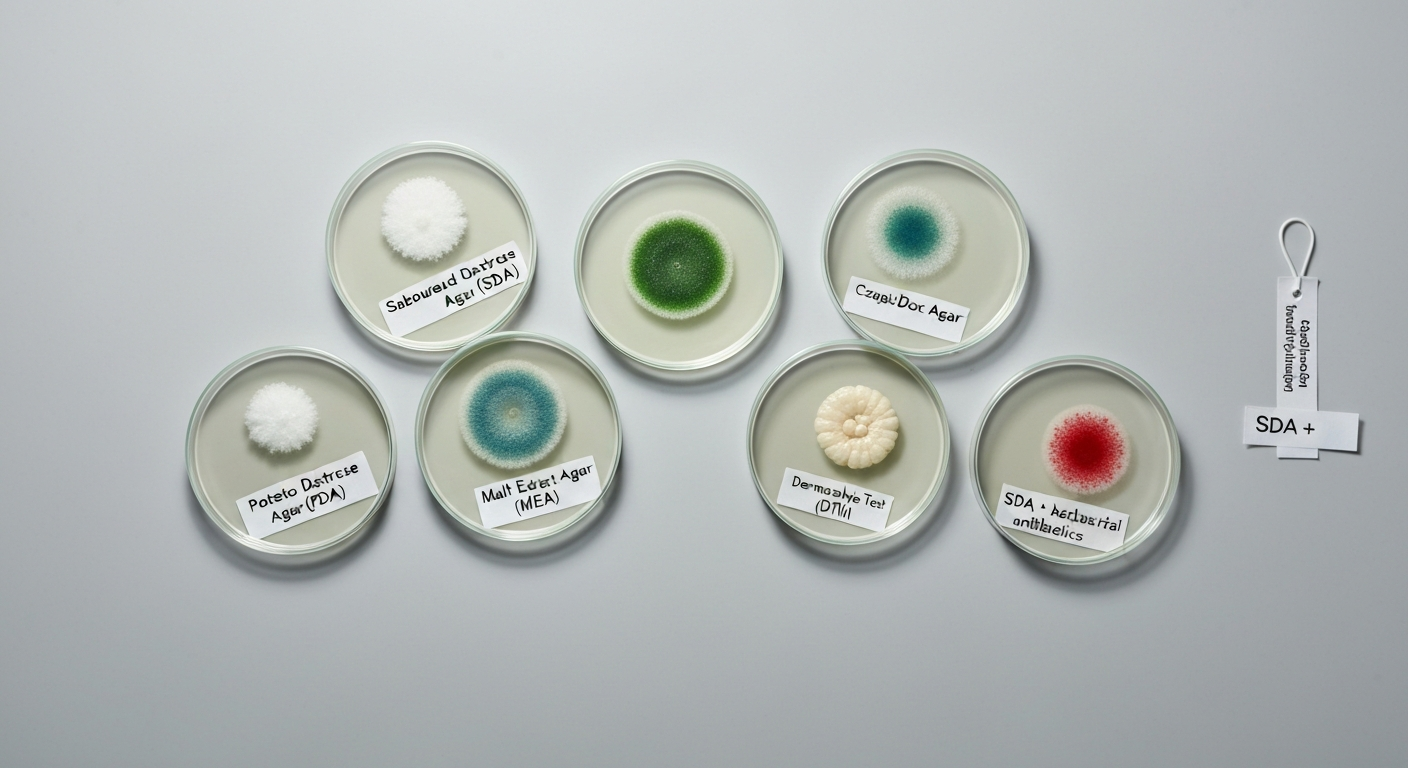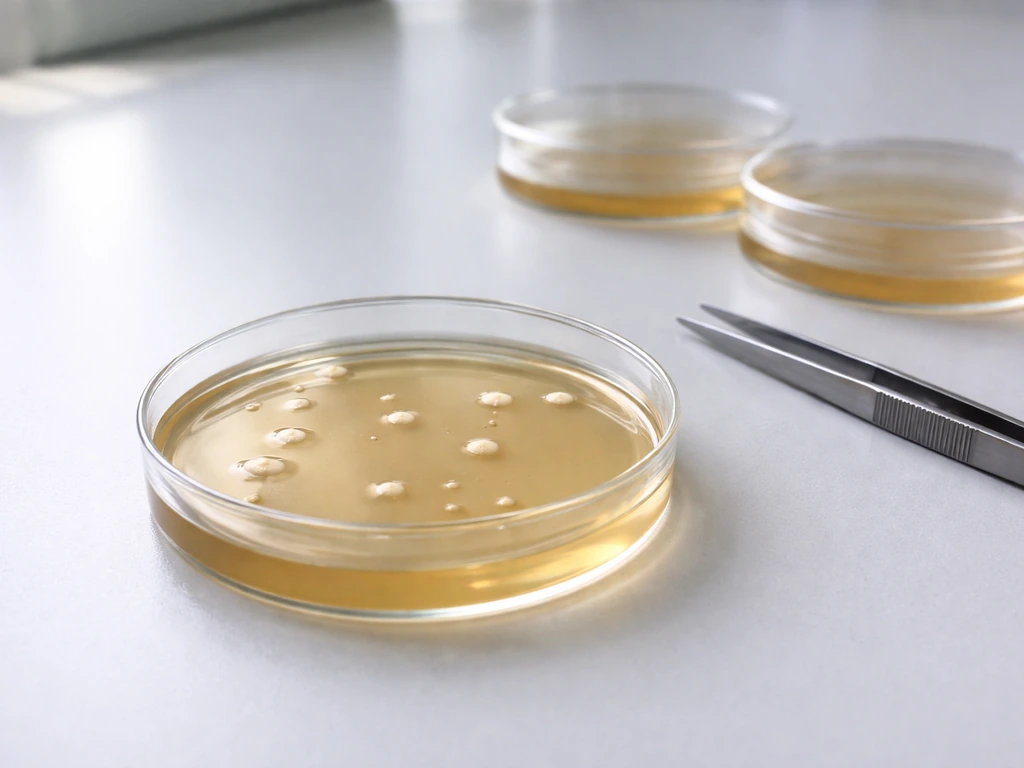
Yes, bacteria can grow on potato dextrose agar (PDA), but most do so poorly compared to fungi. PDA is formulated to favor yeasts and molds, and its mildly acidic pH of around 5.6 plus its simple-carbohydrate-heavy, nitrogen-poor nutrient profile make it a genuinely hostile environment for many common bacteria. That said, acid-tolerant bacteria, environmental species like Bacillus and Pseudomonas, and some opportunistic plant-associated organisms will grow on standard PDA if you give them the chance. The short version: PDA is not a bacterial medium, but it is not a bacterial barrier either.
Can Bacteria Grow on Potato Dextrose Agar? Clear Answer

Marcus Holloway
24 Jul 2026
What is potato dextrose agar?
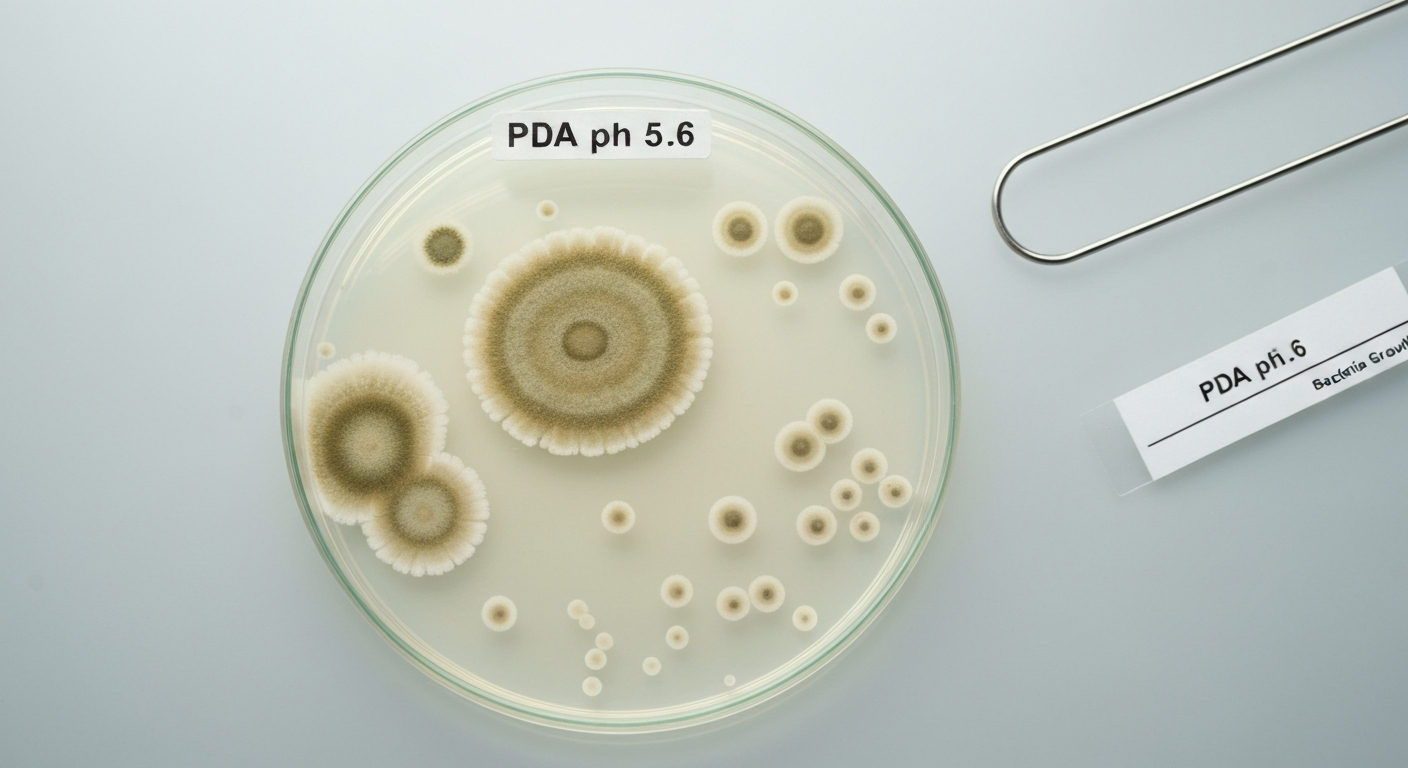
Potato dextrose agar is one of the most widely used mycological media in microbiology labs and food-safety testing. The formulation is straightforward: an infusion made from roughly 200 g of peeled potatoes per litre of water, 20 g of dextrose (glucose) per litre, and 15 to 20 g of agar as the solidifying agent. The U.S. FDA Bacteriological Analytical Manual (BAM M127) specifies this composition with a final pH of 5.6 plus or minus 0.2, which is mildly acidic. Commercial powdered versions from suppliers like HiMedia typically list 4 g of potato extract (the dried equivalent), 20 g of dextrose, and 15 g of agar, arriving at the same pH range.
Nutritionally, PDA is carbohydrate-rich and nitrogen-poor. The potato infusion contributes starch breakdown products, some minerals, and a small amount of vitamins, but it supplies very little usable nitrogen. Dextrose is a fast-metabolising simple sugar that fungi readily ferment or oxidise. That combination of high carbon, low nitrogen, and acidic pH is essentially a recipe tailored to the metabolic preferences of saprotrophic fungi and yeasts, not the proteolytic, nitrogen-hungry bacteria you would culture on something like LB broth.
Why PDA naturally favours fungi over bacteria
Several overlapping biological factors push PDA toward fungal selectivity. Understanding each one separately helps explain why the effect is so consistent.
pH is the biggest gatekeeper
Most clinically and environmentally common bacteria prefer a neutral pH of around 6.5 to 7.5. At pH 5.6, the medium is already outside the comfortable growth range for many Gram-negative organisms including E. coli and most enteric bacteria. Fungi, by contrast, tolerate a wide pH window and actively thrive in acidic conditions. Some mycology protocols push PDA even further by acidifying it to around pH 3.5 to 3.6 using tartaric acid, which almost completely eliminates bacterial competition while still supporting mold and yeast colonies. That option is worth remembering if you are ever trying to diagnose fungal contamination in a food sample.
Carbon source without nitrogen is a problem for many bacteria
Bacteria generally need both carbon and nitrogen in roughly balanced proportions to build proteins, nucleic acids, and cell walls. PDA gives them plenty of dextrose for carbon but provides almost no assimilable nitrogen. Fungi handle this imbalance more gracefully because they are slower-growing and often scavenge nitrogen from trace amounts in the agar or the environment. Many bacteria, particularly the fast-dividing coliforms and enterics, stall when nitrogen is the limiting factor.
Osmolarity and water activity
The 20 g/L dextrose concentration contributes to a moderately elevated osmolarity compared to minimal or blood-based media. Many fungi are osmotolerant and can handle higher sugar concentrations, which is exactly why molds ruin jams and other high-sugar foods. Bacteria sensitive to osmotic stress grow less vigorously under these conditions, though osmolarity alone is rarely a decisive factor at typical PDA concentrations.
Bacteria that will grow on PDA
Despite its fungal bias, PDA is not bacteria-proof. Several bacterial groups are regularly recovered on standard PDA, and some of the most practically important examples come from environmental, plant-associated, and food-related contexts.
- Bacillus species: These spore-forming, Gram-positive soil bacteria are hardy enough to tolerate PDA's acidity and nutritional limitations. Plant pathology and microbial ecology labs routinely inoculate Bacillus spp. onto PDA for antagonism assays against fungal pathogens, and colony growth is reliable.
- Pseudomonas species: Environmental Pseudomonas strains, including plant-associated isolates, have been reported growing on PDA in quorum-sensing and biocontrol experiments published in peer-reviewed microbiology journals.
- Enterobacter and Pantoea species: Plant Disease literature documents that plant-associated Gram-negative bacteria including Enterobacter asburiae and Pantoea ananatis have been recovered on PDA during isolation workflows, showing that not all enterics are blocked by the medium's acidity.
- Slow-growing and acid-tolerant mycobacteria: A published case report in Frontiers in Medicine (2025) described isolation of Mycobacterium marinum from clinical material cultured on PDA among other media, illustrating that unusual slow-growing bacteria can appear on PDA in unexpected settings.
- Environmental and rhizosphere bacteria: Studies using diluted PDA (as low as one-fifth strength) have successfully isolated diverse soil and rhizosphere bacteria, suggesting that nutrient and acid stress is partially responsible for the selectivity rather than a hard biological block.
The pattern across these examples is consistent: bacteria that grow on PDA tend to be environmentally tough, acid-tolerant, or simply slow enough in their metabolism that PDA's meagre nitrogen supply is not immediately fatal. They are also often organisms that coexist with fungi in nature, so they have evolved to survive in the same slightly acidic, sugar-rich microenvironments.
Bacteria that struggle or fail on PDA
Standard fast-growing enteric bacteria are the clearest examples of organisms that perform poorly on PDA. E. coli, Salmonella, and most other members of the Enterobacteriaceae family are adapted to neutral-pH, nitrogen-rich intestinal environments. ATCC product information for E. coli strain 25922, the universal quality-control reference strain, recommends Trypticase Soy Agar or Broth at 37°C as the standard growth medium, and PDA does not appear on that list. For details on what nutrients E. coli needs to grow, see what nutrients does E. coli need to grow. The acidic pH, low nitrogen, and non-optimal carbon-to-nitrogen ratio combine to suppress fast-growing coliforms effectively, which is why food safety labs use PDA specifically to count fungi without getting overwhelmed by bacterial colonies.
Other organisms that typically underperform on PDA include fastidious pathogens that require enriched media (such as blood agar or chocolate agar), strict anaerobes that cannot survive standard aerobic PDA incubation, and obligate intracellular bacteria that require living host cells entirely. The common thread is nutritional or environmental incompatibility rather than any toxic property of PDA itself.
Why agar works as a solidifying agent
Agar is a polysaccharide extracted from red algae, and its physical behaviour is what makes it so useful in microbiology. It melts at around 85°C and solidifies on cooling at roughly 32 to 42°C, which means you can autoclave a liquid medium to sterilise it, pour it into plates while still molten, and let it set without disturbing the gel structure. Critically, almost no bacteria or fungi can digest agar, so the gel remains firm as colonies grow on its surface rather than collapsing or becoming incorporated into the microorganism's biomass. That firmness is what allows individual colonies to be isolated, counted, and identified. See why is agar used to grow bacteria for more on its melting/solidifying temperatures and resistance to microbial digestion, which preserve plate firmness and allow colony isolation.
At the standard concentration of about 15 g/L (1.5%), agar produces a firm but not brittle plate. The gelling temperature is well below the growth optimum of most mesophilic organisms (those that prefer 20 to 45°C), so plates are solid long before you need to inoculate them. The same agar chemistry works in PDA, LB agar, nutrient agar, and virtually every other solid bacteriological medium, which is one reason agar became the almost universal solidifying agent in microbiology after Robert Koch adopted it in the 1880s.
The growth factors that media are actually controlling
When you choose a culture medium, you are not just picking a recipe; you are setting a combination of environmental controls that determine which organisms can and cannot grow. PDA's selectivity for fungi is a perfect illustration of how these factors interact.
Carbon and nitrogen sources
Carbon provides the energy and building-block backbone for microbial growth. Nitrogen is essential for making amino acids and nucleotides. LB medium supplies both: tryptone (a protein digest) delivers nitrogen and carbon together, and yeast extract adds vitamins and additional amino acids. PDA gives organisms carbon in abundance (dextrose) but almost no nitrogen. That difference alone explains much of the bacteria-versus-fungi outcome. Organisms like E. coli need a well-balanced nutrient profile, with an adequate nitrogen source being non-negotiable for rapid replication.
pH
pH affects enzyme function and membrane integrity at a cellular level. A medium adjusted to pH 5.6 does not kill most bacteria instantly; it simply creates conditions where fungal enzymes work efficiently and many bacterial enzymes operate below their optimal rate. The practical result is that fungi outcompete bacteria over the typical 3 to 5 day incubation period used for yeast and mold counts.
Osmolarity
High sugar concentrations reduce the water activity of the medium, meaning less free water is available for microbial use. Fungi that spoil preserved foods are already adapted to low water-activity environments, which is another reason they thrive on PDA while osmotically sensitive bacteria lag behind.
Temperature and oxygen
PDA plates are typically incubated at 25 to 28°C for fungal counts, a temperature range that is below the optimum for most human-associated bacteria (which peak around 35 to 37°C). Oxygen availability depends on incubation conditions rather than the medium itself, but the convention of incubating PDA aerobically at room temperature further disadvantages anaerobic or thermophilic bacteria. Understanding how liquid versus solid media affect oxygen exposure is directly relevant to how organisms like E. For more detail on Escherichia coli growth in broth and the factors that influence it, see how does escherichia coli grow in liquid. coli behave differently in broth compared to agar plates.
How to modify PDA when you need selectivity
If you are running an experiment where bacterial contamination would obscure your fungal results, you have two main options supported by the FDA BAM guidelines. First, acidification: adding 10% tartaric acid to lower the pH to around 3.5 creates conditions where virtually all bacteria are suppressed. The catch is that this also limits some yeast species that prefer milder acidity. Second, antibiotics: the BAM recommends chloramphenicol because it is heat-stable and can be autoclaved with the medium. A concentration of around 100 mg/L is commonly used, sometimes combined with chlortetracycline added after the medium cools. BAM M127: Potato Dextrose Agar, antibiotic recommendations (chloramphenicol/chlortetracycline), U.S. FDA recommends around 100 mg/L chloramphenicol and describes strategies such as 50 mg/L chloramphenicol autoclaved with the medium plus 50 mg/L chlortetracycline added after tempering to suppress bacteria on mycological plates BAM M127: Potato Dextrose Agar — antibiotic recommendations (chloramphenicol/chlortetracycline) — U.S. FDA. Chloramphenicol inhibits bacterial protein synthesis without affecting eukaryotic (fungal) ribosomes.
Going the other direction, if you want to isolate bacteria from a mixed environmental sample without fungal interference, cycloheximide (an antifungal) can be added to selective bacterial media at roughly 100 mg/L to suppress fungal growth. This is standard practice when culturing soil or plant samples that are likely to be heavily contaminated with environmental molds. Keep in mind that cycloheximide is toxic to humans, so it is not a reagent for unsupervised student labs.
Comparing PDA to common bacterial media
Choosing the right medium is always about matching your organism's needs to the medium's properties. The table below compares PDA to five widely used media across key properties and typical applications.
| Medium | pH | Key nutrients | Primary use | Good for | Not ideal for |
|---|---|---|---|---|---|
| Potato Dextrose Agar (PDA) | ~5.6 | Dextrose (20 g/L), potato infusion; low nitrogen | Fungal enumeration and identification | Yeasts, molds, acid-tolerant/environmental bacteria | Fastidious bacteria, enterics like E. coli |
| LB Agar (Miller) | ~7.0 | Tryptone (10 g/L), yeast extract (5 g/L), NaCl (10 g/L) | General Gram-negative and Gram-positive bacterial growth | E. coli, many lab strains; broad bacterial recovery | Selective isolation; fungal culture |
| Nutrient Agar | ~6.8–7.2 | Beef extract, peptone; simple balanced nutrients | Routine non-selective bacterial culture | Non-fastidious bacteria in teaching labs | Fastidious organisms, selective isolation |
| MacConkey Agar | ~7.1 | Peptone, bile salts, crystal violet, lactose, neutral red | Selective and differential for Gram-negative enterics | E. coli (pink/red colonies), Salmonella, other enterics | Gram-positive bacteria, fungi |
| Blood Agar | ~7.3 | Trypticase soy base + 5–10% defibrinated blood | Enriched medium for fastidious organisms; haemolysis typing | Streptococcus, Haemophilus, fastidious pathogens | Selective isolation; not fungal-selective |
| Pseudomonas-selective media (e.g., Cetrimide Agar) | ~7.2 | Peptone, glycerol, cetrimide (quaternary ammonium) | Selective isolation of Pseudomonas aeruginosa | P. aeruginosa (fluoresces under UV) | Gram-positive bacteria, fungi, most other Gram-negatives |
The table makes the trade-offs visible. PDA and MacConkey are both selective, but they select for completely different groups. LB and nutrient agar are essentially permissive, welcoming almost any heterotrophic organism, while blood agar fills the gap for organisms too fastidious to grow on either. Pseudomonas-selective media use a chemical inhibitor (cetrimide) rather than pH to achieve selectivity, which is a useful reminder that media designers have many tools beyond just adjusting acidity or nutrients.
Practical and safety considerations for students and educators
For classroom contexts, PDA is actually one of the safer media to handle because its primary purpose is culturing environmental fungi like bread molds and food spoilage yeasts rather than human pathogens. Commercial pre-poured PDA plates are available and avoid the need for autoclaving in school settings. If students are comparing bacterial and fungal growth side by side, a paired experiment using PDA and a standard nutrient agar or LB plate from the same environmental swab makes the selectivity concept immediately tangible.
From a food safety standpoint, the fact that some bacteria can grow on PDA matters in diagnostic settings. If a food microbiologist sees bacterial-looking colonies on a PDA yeast and mold count plate, they know the medium's selectivity was not absolute and should interpret results accordingly. Understanding that PDA suppresses but does not eliminate bacteria is essential for anyone working in food quality or clinical mycology.
A common misconception worth correcting: some students assume that because PDA is an agar plate, it will grow bacteria just like any other plate. The selectivity is not obvious from appearance alone. Two plates that look identical when empty can produce dramatically different colony profiles because of differences in pH, nitrogen, and additives. This is a core lesson in microbiology: the medium is an active participant in the experiment, not just a passive support surface.
Choosing the right medium for your question
If your goal is to culture fungi and suppress bacteria, standard PDA at pH 5.6 is a good starting point, and adding chloramphenicol makes it even more selective. If you want to understand why bacteria grow the way they do, media like LB or nutrient agar give you an unrestricted view of bacterial diversity, while selective media like MacConkey or cetrimide agar let you zoom in on specific groups. For details on common bacteria that grow on LB agar, see what bacteria grow on LB agar. For E. coli specifically, Trypticase Soy Agar or LB at neutral pH and 37°C is the benchmark environment, and MacConkey agar adds differential power. For specifics on what agar E. coli grows on, see what agar does E. coli grow on. For Pseudomonas aeruginosa, cetrimide-based selective media are the standard choice. For more detail on what agar Pseudomonas aeruginosa grows on, see the guidance titled "what agar does Pseudomonas aeruginosa grow on.". For any fungal isolation, PDA is the default, and what you find growing alongside the fungi tells you something important about the selectivity of your conditions. For a quick answer on what agar is used to grow fungi, see our PDA overview.
The deeper principle is that no single medium answers every microbiological question. PDA's ability to let some bacteria grow through while blocking others is not a flaw; it is a property you need to understand and account for when you design an experiment or interpret a result. Whether you are investigating soil bacteria, diagnosing a food spoilage event, or running a classroom experiment, knowing what your medium is and is not selective for is the difference between a useful result and a misleading one.
FAQ
Can bacteria grow on potato dextrose agar (PDA)?
Yes — bacteria can grow on PDA, but PDA is formulated to favor fungi. Standard PDA (potato infusion + 20 g/L dextrose, agar ~15–20 g/L, pH ≈5.4–5.6) is acidic and carbohydrate‑rich, which biases recovery toward yeasts and molds. Still, many environmental and plant‑associated bacteria (e.g., Pseudomonas, Bacillus, Enterobacter, Pantoea, some acid‑tolerant species and slow growers like certain mycobacteria) will grow on PDA under typical incubation conditions.
Why does PDA favor fungi over bacteria?
PDA's low pH (≈5.4–5.6) and high simple‑sugar content (dextrose) create conditions that many filamentous fungi and yeasts tolerate or prefer, while many common bacteria prefer neutral pH and different nitrogen/carbon sources. The acidic environment suppresses many typical enteric bacteria and opportunistic contaminants, so mycology labs use PDA to encourage fungal growth.
Which bacterial groups are likely to grow on PDA and which are unlikely?
Likely to grow: environmental and plant‑associated bacteria that tolerate acidic conditions or exploit simple sugars — examples include Pseudomonas spp., some Bacillus spp., Enterobacter and Pantoea isolates, and other saprophytes. Unlikely or poor growers: typical enteric bacteria (e.g., Escherichia coli, Salmonella) and many clinical Gram‑negatives that prefer neutral pH and richer peptide/yeast extract media; however, growth is possible for acid‑tolerant strains or at high inoculum.
Does E. coli grow on PDA?
E. coli is not well suited to PDA and is unlikely to form robust colonies under standard PDA conditions because it prefers neutral pH and peptide/yeast extract nutrients (as provided in LB, TSA). In environmental or mixed samples, occasional E. coli colonies may appear on PDA if conditions permit, but PDA is not a recommended medium for recovering or identifying E. coli.
Why is agar used in PDA and how does media composition control microbial growth?
Agar is a stable gelling agent that solidifies culture medium so colonies can form and be observed; it melts at high temperature and remains solid near incubation temperatures. Media composition (carbon source type and concentration, nitrogen source, pH, osmolarity), plus incubation temperature and oxygen availability, determine which microbes can grow. For example, PDA's high dextrose supplies simple carbon favored by fungi; low pH inhibits many bacteria; incubation at room temperature favors many molds, while 37°C favors human pathogens.
How does PDA compare to common bacterial media like LB, nutrient agar, MacConkey, and blood agar?
- LB (Luria‑Bertani): peptide/yeast extract rich, neutral pH — general bacterial growth (including E. coli). - Nutrient agar (NA): general purpose for nonfastidious bacteria. - MacConkey: selective/differential for Gram‑negative enterics (bile salts, crystal violet; lactose indicator). - Blood agar: enriched and differential for hemolysis — good for fastidious bacteria. - PDA: acidic, dextrose‑rich — optimized for fungi. Use LB/NA/MacConkey/blood when targeting bacteria like E. coli or Pseudomonas; PDA when targeting fungi or fungal–bacterial interaction assays.