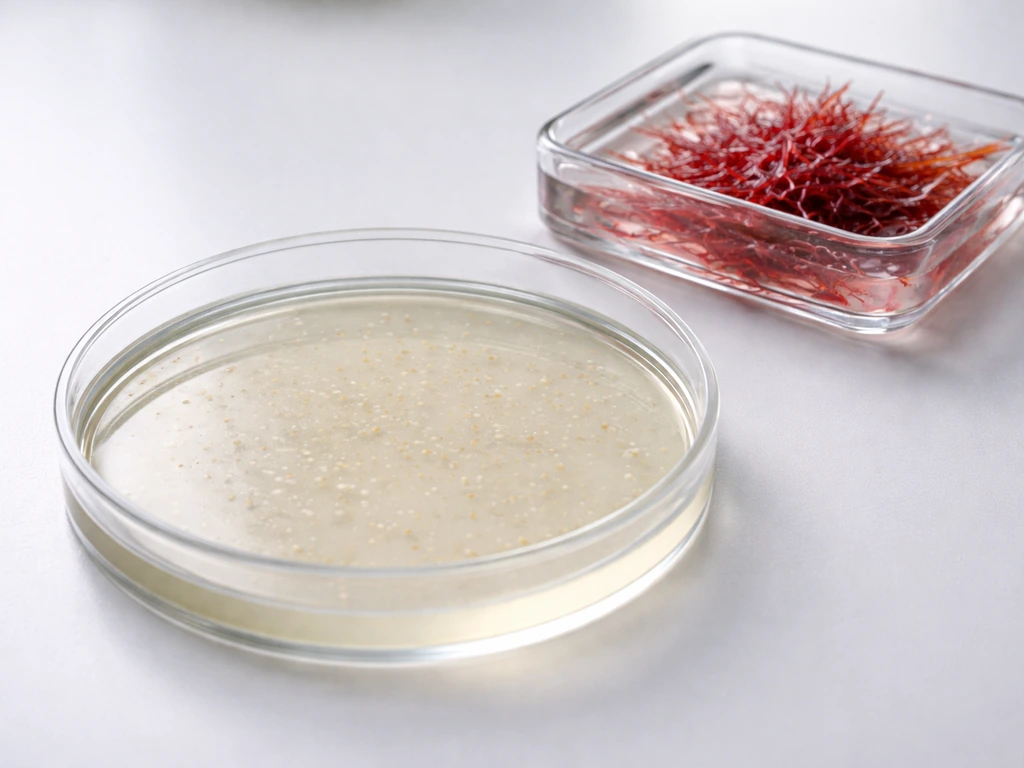
E. coli needs six broad categories of inputs to grow: a carbon source for energy and building blocks, a nitrogen source for proteins and DNA, phosphorus for membranes and ATP, sulfur for certain amino acids and cofactors, a handful of essential ions and trace metals to power its enzymes, and the right environmental conditions (temperature, pH, water, and oxygen access) to actually use all of those nutrients. Get all six right and E. coli grows fast. Miss even one, and growth stalls no matter how well-stocked everything else is.
What Nutrients Does E. coli Need to Grow

Marcus Holloway
28 Jun 2026
The four macronutrients E. coli can't live without
Carbon is the headline nutrient because it does double duty: it fuels metabolism and provides the raw material for every organic molecule in the cell, from sugars to proteins to DNA. Glucose is the textbook carbon source for E. coli, and it is the only organic compound in classic minimal media recipes like M9. But E. coli is flexible and can use many other carbon sources including acetate, glycerol, and lactose, among others.
Nitrogen comes next. Every amino acid and every nucleotide in the cell contains nitrogen, so demand is high. In minimal media, ammonium chloride (NH4Cl) serves as the nitrogen source. The bacterium strips the ammonium ion out of the salt and uses it to synthesize whatever nitrogenous compounds it needs. In richer media, pre-made amino acids from digested proteins (tryptone, for example) hand nitrogen over in a form E. coli can use directly, which is partly why growth in rich media is so much faster.
Phosphorus is used mainly for phosphate groups, which show up in ATP (the cell's energy currency), in the phospholipid backbone of every membrane, and in the sugar-phosphate backbone of DNA and RNA. In M9 minimal medium, phosphorus comes from potassium phosphate salts (KH2PO4 and Na2HPO4), which also conveniently act as pH buffers, stabilizing the growth environment at the same time.
Sulfur is needed for two amino acids, cysteine and methionine, and for certain enzyme cofactors. In minimal media it is supplied through magnesium sulfate (MgSO4), which is a smart choice because that single salt covers two requirements at once: the sulfate anion handles sulfur needs while the magnesium cation handles a separate essential ion requirement. That kind of efficiency in media design is worth noticing when you read an ingredient list.
Essential ions and trace metals: small amounts, huge consequences
Beyond the big four macronutrients, E. coli relies on a set of metal ions to make its enzymes work. A large fraction of bacterial proteins require a metal cofactor to fold correctly or catalyze their reaction. Without the right metal in the right place, the enzyme is useless. This is not optional chemistry. It is hardwired into how the proteome is built.
Iron and zinc are the most abundant metals measured inside E. coli cells. Iron is central to electron transport (the process E. coli uses to generate energy from respiration), while zinc stabilizes the structure of many regulatory and metabolic proteins. E. coli has dedicated import systems and tight regulatory circuits to manage iron levels precisely, including the Fur (ferric uptake regulator) system that adjusts iron uptake based on how much is already inside the cell. Too little iron starves key enzymes; too much causes oxidative damage. The cell walks a narrow line.
Magnesium, calcium, manganese, copper, cobalt, and nickel are also required, though at much lower concentrations. Magnesium is notable because it is needed in relatively larger amounts as a cofactor for ribosomes and for many phosphate-handling enzymes. Calcium plays structural and signaling roles. Nickel is interesting from a practical standpoint: E. coli carries nickel-dependent hydrogenase enzymes, and research on M9 minimal medium has shown that trace nickel contaminating the phosphate salts can actually be enough to satisfy the cell's nickel requirement. That tells you just how small the needed amounts are.
| Ion / Metal | Primary role in E. coli | Typical source in minimal media |
|---|---|---|
| Magnesium (Mg2+) | Ribosome stability, phosphate-transfer enzymes | MgSO4 |
| Calcium (Ca2+) | Structural, signaling roles | CaCl2 |
| Iron (Fe) | Electron transport, enzyme cofactors | Trace impurities or added FeSO4 |
| Zinc (Zn) | Protein structural stabilization, regulatory proteins | Trace element solution |
| Manganese (Mn) | Antioxidant enzymes (superoxide dismutase) | Trace element solution |
| Copper (Cu) | Electron transport chain components | Trace element solution |
| Nickel (Ni) | Hydrogenase enzymes | Trace impurities in phosphate salts |
| Cobalt (Co) | Vitamin B12-related cofactors | Trace element solution |
Vitamins and growth factors: where E. coli surprises people
Here is something that surprises a lot of students: under normal conditions, E. coli can synthesize all the vitamins it needs from scratch. It is what microbiologists call a prototroph for vitamins, meaning it has the biosynthetic pathways built in and does not depend on an outside supply. This is actually one of the reasons E. coli is so easy to grow on minimal media.
That said, there are two vitamins worth knowing about. Biotin (vitamin B7) is genuinely essential for E. coli because it is required for fatty acid biosynthesis. The enzyme acetyl-CoA carboxylase, which kicks off fatty acid synthesis, is biotin-dependent. Wild-type E. coli makes its own biotin, but certain mutant strains with defects in the biotin synthesis pathway become biotin-auxotrophs, meaning they cannot grow without an outside supply. So if you see biotin added to a growth medium, it is likely accommodating a specific genetic background.
Thiamine (vitamin B1) is another one to know. Wild-type E. coli synthesizes thiamine, but some lab protocols for M9 minimal medium include thiamine supplementation anyway. Research has shown that when E. coli is shifted to minimal medium during amino acid starvation, there is a rapid accumulation of thiamine triphosphate, suggesting thiamine metabolism plays a role in the cell's stress response under nutrient-limited conditions. Practically speaking, many researchers add thiamine to M9 as cheap insurance, especially when working with strains of uncertain genotype.
Minimal vs rich media: how the nutrient supply changes everything
Understanding the difference between minimal and rich media is one of the most useful conceptual tools in microbiology, and it maps directly onto how nutrient requirements work in practice. For comparison, the same idea of nutrient availability applies to Pseudomonas aeruginosa as well, including what agar it grows on.
Minimal media like M9 are chemically defined: every ingredient is a pure compound added at a known concentration. Glucose is the sole carbon source. Ammonium chloride is the sole nitrogen source. Phosphate salts supply phosphorus. MgSO4 covers magnesium and sulfur. That is essentially it, plus trace elements and sometimes thiamine. Because the recipe is simple and precise, you know exactly what the bacterium is getting and can trace any growth defect back to a specific nutrient. This is why minimal media are the tool of choice in genetics and metabolic research.
Rich (or complex) media like LB broth take the opposite approach. LB is made from tryptone (enzymatically digested casein, a milk protein), yeast extract, and sodium chloride. Tryptone and yeast extract are complex mixtures of amino acids, small peptides, nucleotides, vitamins, and a wide variety of trace nutrients. The exact composition is not defined and varies slightly between batches and manufacturers.
E. coli does not need to synthesize much from scratch because so many building blocks are already present in ready-to-use form. The result is faster, more robust growth, which is why LB is the default for most everyday lab work. E.
coli growth in liquid media like LB broth follows the same nutrient and environmental rules, but the rich supply makes cells get building blocks faster how does escherichia coli grow in liquid. The tradeoff is that you cannot use LB to probe specific nutrient requirements because you do not know exactly what is in it.
Selective media like MacConkey agar occupy a different category. A StatPearls (NCBI Bookshelf) entry describes [MacConkey agar as selective and differentiating](https://www. ncbi. nlm.
nih. gov/books/NBK557394/) because Gram-negative growth is supported while differentiation depends on lactose metabolism, producing pink or red colonies for lactose fermenters. Agar is commonly used as the solidifying agent in many fungal culture media, helping fungi form colonies on a stable surface. They still provide nutrients (lactose is the carbon source, and peptone supplies nitrogen), but they also contain selective agents like bile salts and crystal violet that suppress many Gram-positive organisms.
MacConkey also contains neutral red, a pH indicator that turns colonies of lactose-fermenting E. coli pink or red because acid production drops the local pH. So MacConkey is not primarily about optimizing nutrient supply. It is about using selective pressure to isolate specific organisms from mixed samples while simultaneously differentiating them by metabolism.
Environmental conditions that interact with nutrients
This is the point most people underestimate: even a perfectly formulated nutrient supply does nothing if the environmental conditions are wrong. Nutrients and environment are not separate checkboxes. They interact directly.
Temperature
E. coli grows optimally around 37°C, which makes sense given that it evolved as an intestinal bacterium in warm-blooded hosts. At this temperature, enzyme activity is at its peak and nutrients are processed efficiently. Drop the temperature toward 10-15°C and growth slows dramatically, not because nutrients have changed but because the enzymes that metabolize those nutrients are slowed. This is the principle behind refrigeration as a food safety strategy.
pH
E. coli grows best between about pH 6 and pH 8, with pH 7 being close to ideal. Growth becomes noticeably impaired below pH 5. pH matters for nutrient uptake because many transport proteins are sensitive to the proton gradient across the cell membrane, and because pH affects the ionization state of nutrient molecules themselves. The phosphate buffers in M9 minimal medium are not just there for the phosphorus. They actively maintain pH in the growth-supporting range. When acid-producing waste products build up during growth (a real issue in rich media), pH can drift and slow or stop growth even when nutrient concentrations are still adequate.
Oxygen
E. coli is a facultative anaerobe, which means it can grow with or without oxygen, but it strongly prefers oxygen when it is available. With oxygen, E. coli runs full aerobic respiration using the electron transport chain, extracting the maximum energy from each glucose molecule. Without oxygen, it switches to anaerobic respiration (using alternative electron acceptors like nitrate or fumarate) or fermentation. The FNR regulatory protein acts as the key oxygen sensor, reprogramming gene expression when oxygen disappears. The practical implication is that poor aeration in a culture can limit growth even when the nutrient supply is perfectly adequate, because the energy yield per unit of carbon drops sharply without oxygen.
Water activity and moisture
Like all bacteria, E. coli needs water both as a solvent for nutrients and for all of its internal chemistry. Dissolved nutrients are only accessible in aqueous solution. Very high solute concentrations (high osmolarity) pull water out of the cell and can inhibit growth through osmotic stress. This is why the salt concentration in media matters: LB uses 10 g/L NaCl, which approximates physiological osmolarity and is well-tolerated, but significantly higher concentrations would inhibit growth. On LB agar, a wide range of bacteria can grow, not just E. coli LB uses 10 g/L NaCl. Water activity is also why dry environments do not support E. coli despite whatever nutrients might be present in them.
Reading an E. coli media ingredient label: what each component is doing
Once you understand the nutrient categories, ingredient lists on common E. coli media start to make intuitive sense. Here is how to decode the most common ones.
In LB broth (Miller formulation: 10 g/L tryptone, 5 g/L yeast extract, 10 g/L NaCl), tryptone is the primary nitrogen and carbon source, supplying a rich mixture of amino acids and peptides from digested casein. Yeast extract adds B vitamins, additional amino acids, nucleotides, and trace nutrients. Sodium chloride adjusts osmolarity to a comfortable physiological range. There is no added glucose in standard LB because the amino acids and small organic molecules in tryptone and yeast extract are themselves carbon sources and energy substrates.
In M9 minimal medium, the ingredient logic is transparent by design. The phosphate salts (KH2PO4 and Na2HPO4) supply phosphorus and buffer pH simultaneously. NH4Cl supplies the sole nitrogen source. NaCl adjusts osmolarity. MgSO4 provides magnesium and sulfur. CaCl2 provides calcium. Glucose is added separately as the sole carbon and energy source. Trace element solutions (sometimes added in research protocols) supply iron, zinc, copper, manganese, and the rest of the metals. Thiamine or biotin may be added depending on the strain.
MacConkey agar ingredients reflect its selective-and-differential purpose rather than nutritional optimization. Peptone provides carbon and nitrogen for growth. Lactose is the differentiating substrate (E. coli ferments it; non-fermenters do not). blank" rel="noopener noreferrer">Bile salts and crystal violet are the selective agents that inhibit Gram-positive organisms. Neutral red is the pH indicator that reveals lactose fermentation by turning colonies pink or red. Agar is simply the solidifying agent.
Why growth sometimes fails even when nutrients look right
This is the practical troubleshooting section, and it is where understanding nutrient biology really pays off. There are several common reasons E. Whether can bacteria grow on potato dextrose agar depends on the specific bacterium’s nutrient needs and how the agar medium supports those requirements. coli fails to grow or grows poorly even when the media appears correct on paper.
- Trace metal deficiency in minimal media: M9 prepared strictly from standard reagents can sometimes lack sufficient iron or other trace metals if the reagent-grade phosphate salts are unusually pure. Research has shown that trace metal impurities in phosphate salts have a measurable effect on E. coli physiology in M9. If growth in minimal media is unexpectedly poor, adding a standard trace element solution is an easy first fix.
- pH drift from acid buildup: In rich media, active growth generates acidic byproducts. In an unbuffered or poorly buffered medium, this can drop the pH below the comfortable growth range even while nutrients remain abundant. Using buffered media or reducing batch size can prevent this.
- Oxygen depletion in dense liquid cultures: E. coli is an oxygen-preferring facultative anaerobe, and in a static liquid culture, dissolved oxygen can be depleted quickly at high cell densities. Growth slows dramatically at that point not because of nutrient exhaustion but because aerobic energy generation is cut off. Shaking or aerating cultures solves this.
- Using the wrong strain for minimal media: Mutant or engineered lab strains may carry auxotrophies (nutritional requirements that the wild type would not have). A biotin-auxotrophic strain will not grow on M9 without added biotin even though wild-type E. coli would. Always check the genotype of the strain you are using.
- Inhibitory selective agents in the wrong context: If you are trying to grow a Gram-positive organism, MacConkey agar's bile salts and crystal violet will prevent growth entirely. But even with E. coli, the wrong selective medium or an incorrectly prepared inhibitor concentration can suppress growth. Match the medium to the organism and purpose.
- Nutrient depletion in aged or stationary cultures: In liquid cultures that have reached stationary phase, available nutrients in the medium can be exhausted. If you are trying to restart growth by inoculating from an old culture, the original medium may not support fresh growth. Subculturing into fresh medium is the straightforward fix.
- Water quality and reagent impurities: Distilled or deionized water with unexpected contamination, or phosphate salts from different suppliers, can introduce inhibitory compounds or alter trace metal availability in ways that are not obvious from the label. Using consistent, well-characterized reagents matters in minimal media work.
The broader lesson from all of this is that E. coli's nutrient requirements are not a simple checklist. Carbon, nitrogen, phosphorus, sulfur, essential metals, and growth factors all have to be present and accessible, and the environmental conditions have to allow those nutrients to actually be taken up and processed. When growth fails unexpectedly, the nutrient categories covered here give you a systematic framework for diagnosing what went wrong rather than guessing. That is what makes understanding the biology more useful than just following a recipe.
FAQ
If E. coli can grow on minimal media, does it ever require nutrients from the outside?
Yes, but usually only for specific cases. Wild-type E. coli can synthesize vitamins, yet certain mutant strains become auxotrophic for biotin or thiamine, so those vitamins must be added to support growth. Also, if a strain has an impaired pathway for a carbon or nitrogen source, supplementation may be required even in otherwise “minimal” recipes.
Why would E. coli fail to grow in M9 even if I added glucose, NH4Cl, phosphate, and MgSO4?
The missing piece is often one of the small components or the culture conditions. Trace metal mix, correct osmolarity, calcium, or correct aeration can be limiting even when the big nutrients look right. Another common issue is pH drift, since waste products can change the effective pH during growth and slow uptake or metabolism.
Can I use an arbitrary carbon source instead of glucose in minimal media?
Not always. E. coli can use multiple carbon sources, like acetate, glycerol, and lactose, but the chosen compound must be metabolizable by that strain under your oxygen conditions. Some substrates may require specific transporters or metabolic pathways, so growth can remain poor if the strain cannot process them efficiently.
Do phosphate and buffer capacity matter only for pH, or do they also change growth through metabolism?
They do both. Phosphate is required for ATP and membrane phospholipids, and it also participates in sugar-phosphate backbones for nucleic acids. If phosphate concentration is too low, you can see stalled growth even at a good pH, because ATP production and biosynthetic steps are limited.
Why does iron affect growth so strongly, and what goes wrong if I add too much or too little?
Iron availability controls key enzymes, especially those involved in electron transport. Too little iron starves the cell, and too much can promote oxidative damage. This is why many protocols rely on carefully prepared trace element solutions rather than hand-adjusting iron.
What is the practical difference between “trace metals” and “macro nutrients” when troubleshooting?
Trace metals are needed in tiny amounts, but they are often absolute requirements for enzyme function and correct protein folding. In experiments, a subtle change like using an old or contaminated phosphate salt that lacks trace metals (or introduces inhibitory impurities) can make growth look like a major nutrient is missing.
Why might E. coli grow poorly in liquid culture even when the media recipe is correct?
Aeration is a frequent culprit. Inadequate shaking or low oxygen transfer reduces respiration efficiency, so energy yield drops and growth slows even with abundant nutrients. If you see slow growth in broth but normal growth on agar, check oxygen delivery first.
Does high salt always improve growth because E. coli can handle osmolarity?
No. E. coli tolerates physiological osmolarity, but excessive NaCl increases osmotic stress and can pull water out of the cell, inhibiting growth. If you are comparing media formulas, keep an eye on both total solute concentration and which salts are present, since osmotic effects and ion-specific effects can both matter.
Are vitamins truly unnecessary for E. coli, or can they still matter in real labs?
Wild-type E. coli is typically vitamin-prototrophic, but vitamins can matter in practice due to strain differences or starvation responses. For example, thiamine is sometimes added to minimal media as a safeguard, and some strains become biotin-auxotrophs, so the “need” depends on genotype.
Why would my colonies look normal on selective media, but liquid growth still fails?
Selective or differential media add agents that can affect metabolism, not just survival. For instance, bile salts and pH indicators can influence growth physiology, and the same nutritional conditions may produce different outcomes in liquid because pH, oxygen availability, and diffusion differ between surfaces and broth.
If growth fails, what is a good order of checks so I do not waste time?
First verify the environmental conditions you control directly (temperature near 37°C, pH in the ~6 to 8 range, and oxygen transfer for broth). Next confirm the “small” necessities, trace metals and any required vitamins for your strain. Finally, consider substrate compatibility (whether the carbon and nitrogen sources are actually usable by your specific strain and conditions).