Mold grows whenever moisture, moderate warmth, oxygen, and an organic surface all show up in the same place at the same time. Remove any one of those conditions and mold cannot establish a colony. Because mold is easy to grow and has simple nutritional needs, controlling moisture and the available surface material is what prevents repeat growth. The catch is that most homes quietly provide all four of them in bathrooms, basements, attics, and wall cavities without the occupants ever noticing until there's a visible patch or a musty smell. Understanding exactly which condition is doing the work in your space is the fastest route to fixing the problem for good.
What Helps Mold Grow: Moisture, Humidity, and Fixes

Marcus Holloway
18 Jun 2026
Mold growth in one sentence: the conditions it needs
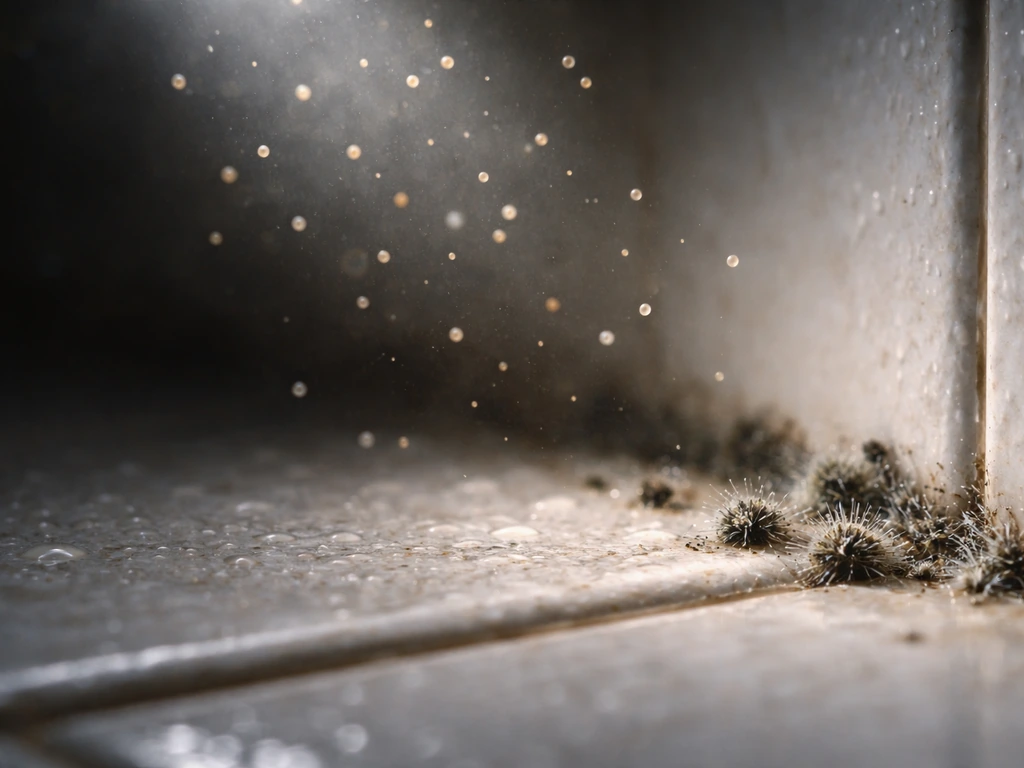
Mold is a fungus that reproduces by releasing microscopic spores into the air. Those spores are essentially dormant until they land on a surface that is wet or consistently moist, has an organic material to feed on, sits within a workable temperature range, and has access to oxygen. When all of those boxes are checked, a colony can establish itself and become visible within days. The excess moisture piece is by far the most controllable variable indoors, which is why virtually every public health authority frames mold prevention as a moisture control problem first and everything else second.
Moisture and humidity: where water comes from and how mold uses it
Mold does not need standing water. What it actually needs is water activity, meaning enough moisture in a surface or in the surrounding air for the fungal cells to absorb liquid and carry out their metabolic processes. Relative humidity (RH) above 60% is enough to keep many mold species active on porous materials even when there is no visible wet spot. The EPA recommends keeping indoor RH between 30% and 60% to reduce mold risk, and the sweet spot for most homes is somewhere around 45 to 50%.
Water sources indoors come from more directions than most people expect. Roof leaks, plumbing leaks, flooding events, and groundwater seeping through foundation walls are the obvious ones. Less obvious sources include steam from cooking and showering that never fully exhausts, water vapor from damp soil under a crawl space, wet laundry drying indoors, and even human breathing in a poorly ventilated room. Mold uses that moisture the same way any organism uses water: as a solvent for chemical reactions, a transport medium inside cells, and the trigger that keeps enzymatic processes running. Without it, spores just sit dormant and wait.
Temperature, condensation, and hidden damp spots
Most indoor mold species thrive between about 60°F and 80°F (15°C to 27°C), which is exactly the range most people keep their homes. That is not a coincidence. Mold evolved alongside organisms that live in similar temperature bands, and our comfort zone is essentially their comfort zone too. Temperatures below 40°F slow fungal metabolism dramatically, and sustained heat above 100°F can kill many species, but neither condition is practical to maintain indoors as a prevention strategy.
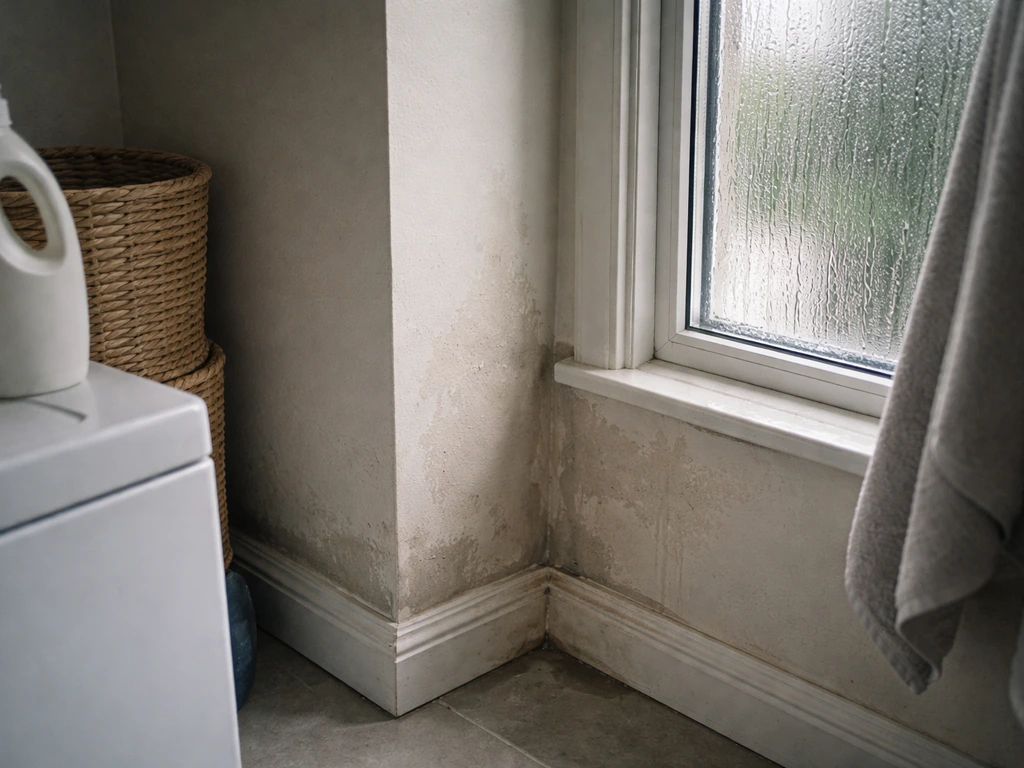
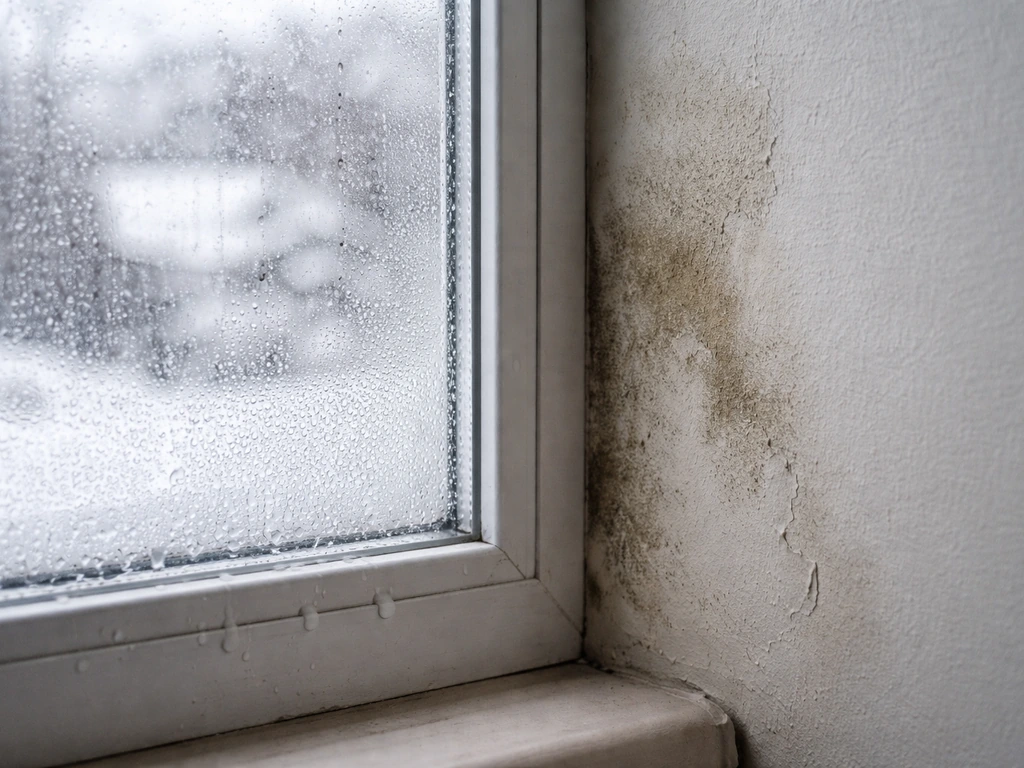
Condensation is the hidden link between temperature and moisture. When warm, humid indoor air touches a cold surface, like a window frame, an exterior wall section, an uninsulated pipe, or a concrete floor slab, it cools past its dew point and deposits liquid water directly onto that surface. That thin film of condensation is enough to keep mold colonies supplied with water indefinitely even if the rest of the room feels dry.
The fix here is a thermal fix: add insulation, add a vapor barrier, or improve surface temperatures so that cold surfaces no longer drop below the dew point of the air touching them. Wiping off condensation repeatedly without addressing the temperature differential is exactly the kind of surface-only cleaning that will never solve the underlying problem.
Hidden damp spots are the hardest to catch. Wet insulation inside a wall cavity, a slow pipe drip behind drywall, or moisture wicking up from a slab can keep a surface at mold-friendly water activity levels for months while the visible surface looks fine. A musty odor in a room with no visible mold is a reliable signal that moisture is sitting somewhere out of sight.
Oxygen and airflow: why stagnant areas become hotspots
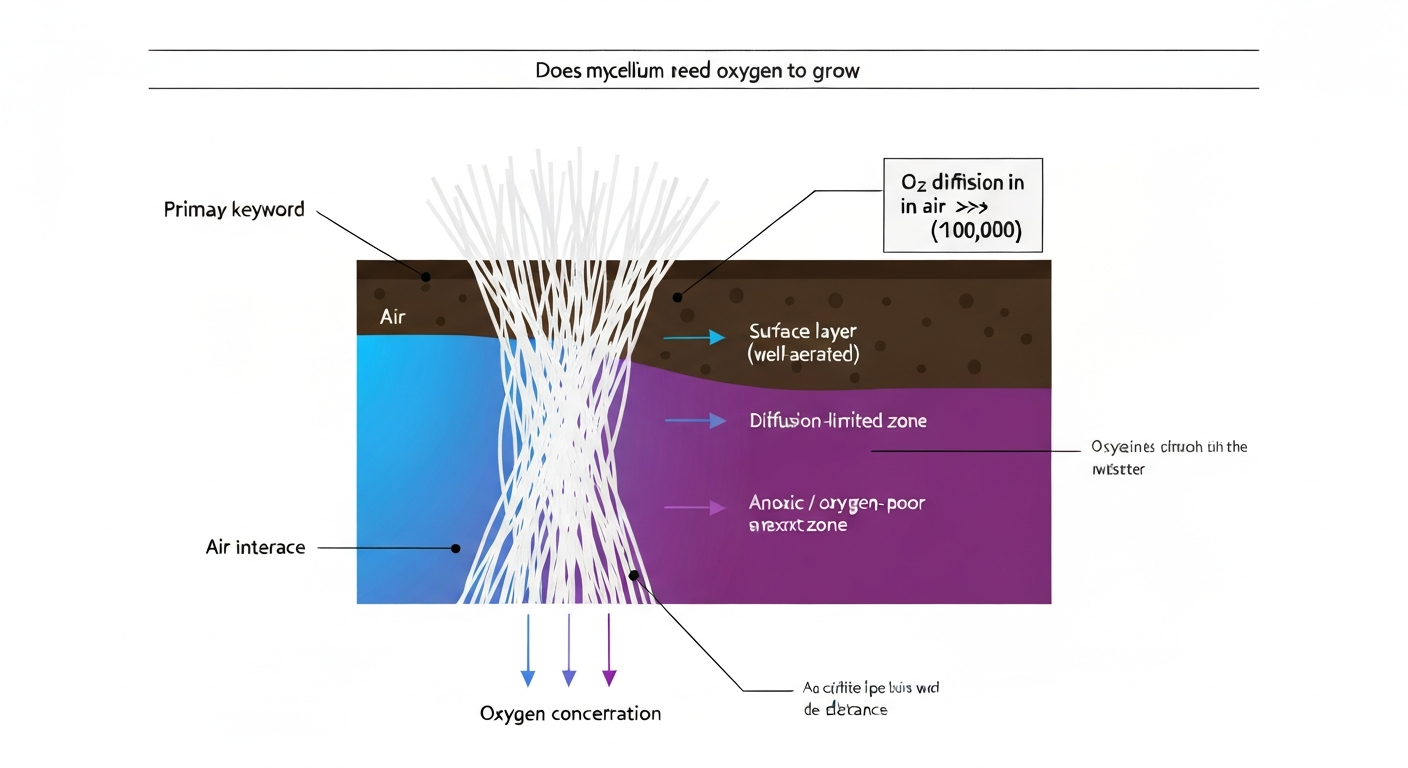
Mold is an aerobic organism, meaning it requires oxygen to grow. Unlike some bacteria that can switch between oxygen-dependent and oxygen-free metabolism, mold cannot. This is why mold does not typically colonize the inside of sealed, anaerobic environments. In practice, though, almost no indoor space is truly oxygen-free, so this condition is almost always met. What matters more in real homes is airflow, because stagnant air allows both humidity and mold spores to concentrate.
Poor ventilation creates pockets of humid, still air directly against surfaces. The air layer right next to a bathroom ceiling or the inside corner of a closet barely exchanges with the rest of the room, so moisture from steam or exhalation accumulates there rather than being carried away. This is why bathroom corners, the back walls of closets against exterior walls, and under-sink cabinets are classic mold hotspots even in homes that do not have obvious leaks. Improving ventilation, even with something as simple as a better bathroom exhaust fan rated for the room size, directly removes the moist stagnant layer that mold depends on.
Nutrients and surfaces: what mold eats (and where it finds it)
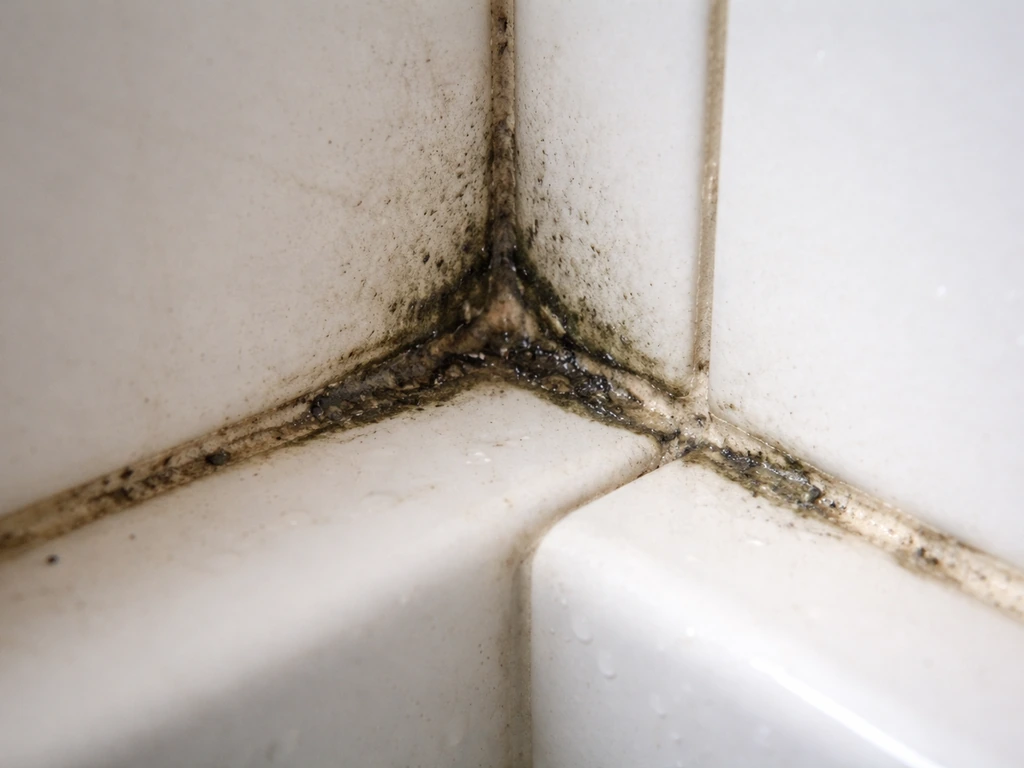
Mold is a decomposer. Its hyphae (the thread-like structures that form the body of a mold colony) secrete enzymes that break down organic material into simpler compounds the mold can absorb as food. Indoors, carbon-containing building materials are the primary food source: the paper facing on drywall, wood framing, OSB sheathing, cellulose insulation, cotton or wool textiles, and dust that contains skin cells and food particles. Concrete, metal, and glass do not feed mold directly, but a thin layer of dust or grime on any of those surfaces provides enough organic carbon to support a colony when moisture is present.
This is why mold keeps coming back on bathroom grout even after cleaning. The grout itself is inorganic, but soap scum, skin cells, and body oils create a nutrient film. Clean that film and you remove the food supply. The same logic applies at a larger scale: a flooded basement with drywall and wood framing is an almost perfect mold environment because it combines moisture, organic nutrients, moderate temperature, and oxygen all at once. Understanding the nutrient dimension also explains why some surfaces need more than just drying: if the organic material has been digested or stained by mold, full remediation often means removing and replacing the material rather than just cleaning the surface.
It is worth noting that mold's nutritional needs are relatively simple compared to many other organisms. It primarily needs a carbon source and some trace minerals, both of which ordinary building materials supply in abundance. If you want a more detailed look at exactly which substances mold extracts from its environment, the substances molds need in order to grow is a topic worth exploring on its own. Knowing those substances also helps answer a practical question like what containers spores grow in around your home in order to grow.
pH and other supporting conditions that tip the balance
Mold is remarkably pH-tolerant compared to most bacteria. Most species grow well across a wide range, roughly pH 3 to 7, with some tolerating even more acidic conditions. This means acidic environments like citrus fruit, certain cheeses, and wood surfaces do not deter mold the way they can slow bacterial growth. It is one reason mold colonizes so many different surface types indoors.
A few secondary factors also tip conditions in mold's favor. Light level matters in the sense that UV light from direct sunlight can inhibit mold on exposed surfaces, which is part of why dark closets and wall cavities become problem areas. Indoor air pollutants like volatile organic compounds from paints and adhesives can serve as additional carbon sources.
And the presence of other microbial communities on a surface, such as bacteria colonizing a wet area first, can alter surface chemistry in ways that either compete with or facilitate mold establishment. None of these factors are as controllable as moisture, but they are worth knowing when you are trying to understand why one area keeps growing mold while an adjacent area stays clean.
How to measure what's helping mold grow and stop it today
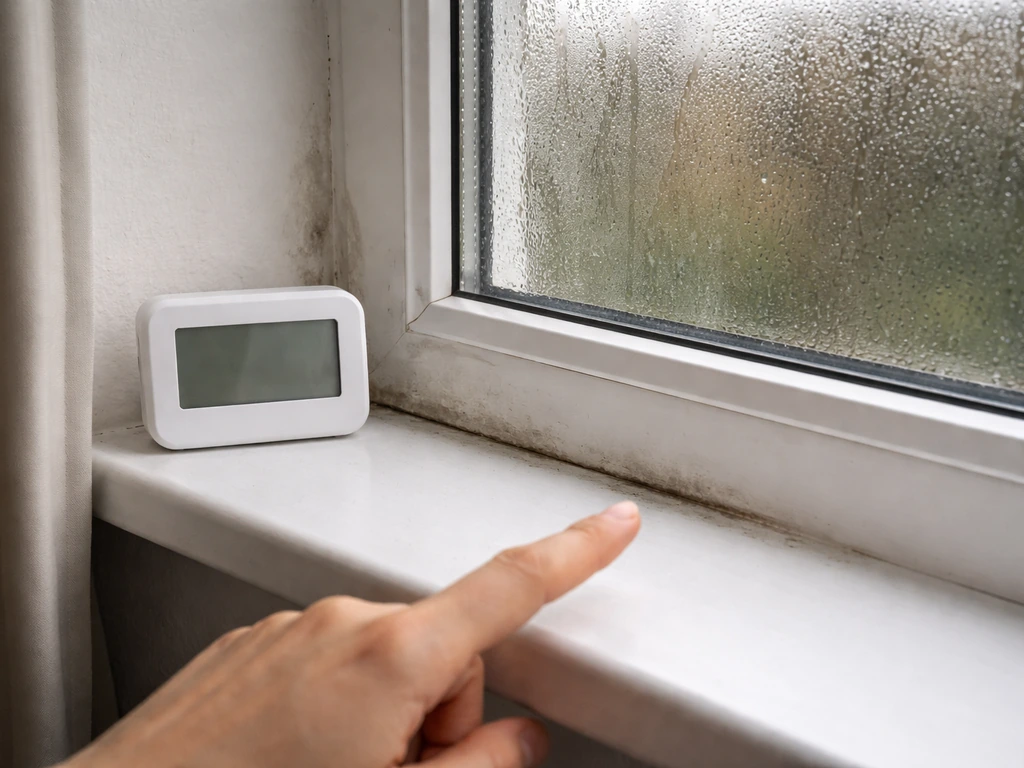
Start with a hygrometer. These are inexpensive digital devices that measure relative humidity and are available at any hardware store for under $20. Place one in any room you suspect and check readings at different times of day. If you are regularly seeing RH above 60%, you have confirmed that humidity is actively helping mold grow in that space. The EPA's target range of 30 to 60% is your benchmark, with 45 to 50% being a reasonable practical goal for most homes.
For condensation, a visual inspection on a cold morning is often enough. Look for water droplets on window edges, pipe surfaces, exterior-facing wall sections, and concrete floors near exterior walls. If you find them, that surface is below the dew point of your indoor air and is providing a persistent water supply for mold. A thermal imaging camera (many HVAC contractors carry these, and handheld consumer versions exist for a few hundred dollars) can reveal cold spots behind walls and ceilings that would otherwise be invisible.
A visual inspection supplemented by your nose is more reliable than air sampling for finding actual mold problems. A persistent musty smell in a room, a closet, or near a vent is a stronger signal than any air sample result, because musty odor means mold is actively metabolizing somewhere nearby. Check the obvious spots first: under sinks, around toilet bases, along the base of exterior walls in basements, behind washing machines, and above drop ceilings near HVAC ducts.
| Condition | Measurement tool | Mold-friendly threshold | Target to reduce mold risk |
|---|---|---|---|
| Relative humidity | Digital hygrometer | Above 60% RH | 30 to 60% RH (ideally 45 to 50%) |
| Surface moisture | Moisture meter (pin or pinless) | Reading varies by material; above 20% for wood is high risk | Below 16% for wood, dry to touch for drywall |
| Condensation | Visual inspection or thermal camera | Any visible condensation | No condensation; surface temp above indoor dew point |
| Airflow | Simple tissue test or anemometer | Still air, no perceptible movement | Regular air exchange, exhaust fans operating correctly |
| Water intrusion | Visual + smell | Any musty odor or staining | No active leaks, no staining, no odor |
Immediate cleanup and remediation choices, and when to call in help
The single most important rule in mold remediation is this: cleaning the mold without fixing the moisture source will not work. The mold will come back, sometimes within days. Fix the water problem first, or at the same time, and then clean. This sequence is the EPA's explicit guidance and it holds up in practice every time.
For a wet event like a leak or minor flooding, the clock starts immediately. Dry water-damaged areas and materials within 24 to 48 hours to prevent mold from establishing. That means running fans, dehumidifiers, and heat, removing soaked materials that cannot be dried quickly (like carpet padding and wet drywall), and checking with a moisture meter that surfaces are actually drying rather than just feeling dry on the outside.
- Stop the water source: repair the leak, fix the plumbing, seal the roof penetration, or address the drainage problem outside.
- Dry the affected area thoroughly within 48 hours using fans, dehumidifiers, and if needed, professional drying equipment.
- Remove materials that cannot be adequately dried: saturated drywall, carpet padding, and wet insulation almost always need to go.
- Clean hard, non-porous surfaces with soap and water (detergent removes the nutrient film, and physical scrubbing removes the colony). Let the surface dry completely.
- Improve ventilation in the space: install or upgrade exhaust fans, open interior doors to improve air circulation, and reduce humidity sources.
- Monitor with a hygrometer for at least a few weeks to confirm RH stays in the target range.
DIY remediation is reasonable for small, contained areas, generally under about 10 square feet of visible mold on a cleanable surface. Use gloves, an N95 or better respirator, and eye protection. Bag and remove all debris without spreading spores through the rest of the home.
Call in professional help when: the mold covers a large area (more than roughly 10 square feet), it is inside HVAC ducts or air handling systems, it is inside wall cavities or under flooring where structural materials may be affected, the building occupant has respiratory conditions or immune compromise, or you have cleaned and dried the area and mold keeps returning.
OSHA mold control guidance emphasizes controlling mold and exposure during cleanup and after mold events, including cleanup and remediation steps OSHA provides mold control guidance for cleanup and remediation after mold events. An OSHA-aligned remediation contractor or a certified industrial hygienist can scope the problem properly and prevent cross-contamination during cleanup.
Major projects are not a DIY situation, and attempting them without proper containment can spread spores to previously clean areas of the home.
The biology here connects directly to the practical steps. Mold needs moisture, oxygen, nutrients, and moderate temperature all at once. Every action on that list above targets at least one of those conditions. Dry the surface and you cut off water. Remove the material and you eliminate the nutrient base. Improve ventilation and you reduce both humidity and stagnant air. You do not need to defeat all the conditions simultaneously, but removing moisture is the fastest and most durable lever available, which is why every credible public health resource treats it as the starting point.
FAQ
If I clean visible mold, will it stop growing for good?
It may stop temporarily, but it often returns if the underlying moisture source or condensation pattern is still there. The practical test is to verify the RH stays in the 30% to 60% range and to check the original area with a moisture meter after drying, not just by touch.
What helps mold grow faster, and how can I avoid making it worse during cleanup?
Warm temperatures plus high humidity and lots of airflow that spreads spores can accelerate colonization elsewhere. During cleanup, avoid using fans that blow toward other rooms, keep the area contained, and seal contaminated materials in bags immediately to reduce cross-contamination.
Does mold need a visible wet spot to start growing?
No. Mold can establish on porous materials when surface moisture activity is high due to sustained humidity or condensation, even if the surface looks dry. Look for condensation on cold surfaces and track RH at different times, especially after showers and cooking.
How low do I need to set humidity to prevent mold?
Aim for an indoor RH target roughly between 45% and 50% for best practicality, and avoid staying above 60% for long periods. If outdoor humidity is higher than indoor targets, you may need dehumidification plus HVAC adjustments rather than ventilation alone.
Can I just use bleach or vinegar to kill mold?
Killing surface mold without removing the moisture problem usually leads to regrowth. Also, bleach is less effective on porous materials because it does not reliably penetrate deeply. For porous items, drying and removing affected materials often works better than trying to disinfect the surface.
Why does mold keep coming back in the same bathroom spot even after cleaning the grout?
The grout can have a nutrient film from soap scum, oils, and skin cells that remains if the film is not fully removed. More importantly, persistent humidity at that exact location, often from poor exhaust timing or insufficient ventilation coverage, keeps the surface water-activity high.
Is condensation the same as a leak, and how do I tell which one I have?
Condensation is a temperature and dew-point problem, where moisture forms on cold surfaces, often on mornings or near exterior walls. A leak is usually associated with a specific penetration point or a continuing wet path. Checking for repeating cold-surface droplets and correlating with RH changes helps distinguish the causes.
What is the safest way to confirm the problem location if I do not see mold?
Rely on patterns, not just visuals: persistent musty odor, RH trends above 60%, and signs of condensation at cold spots are stronger clues than air samples. If you have recurring odor with no visible growth, inspect concealed areas like behind toilets, under sinks, and behind washing machines, and consider thermal imaging for hidden cold spots.
When should I stop DIY and call a professional?
Call in help if the area is larger than about 10 square feet, if it is in wall cavities or under flooring, if it is in or near HVAC components, or if it returns after proper drying and cleaning. Additional triggers include occupants with asthma, allergies, or immune compromise, because containment and air control become more important.
How long should I run a dehumidifier or fans after a leak before the space is considered safe?
Do not rely on the room feeling dry. Continue drying until moisture meters confirm the materials have returned to normal moisture levels, and keep dehumidification running during and after the remediation window (commonly 24 to 48 hours for small events) to prevent rebound humidity.
Can mold grow on non-porous surfaces like tile or concrete?
Yes, even though these materials are not food sources, mold can grow with a thin organic residue like dust, soap film, or grime. The edge case is that the surface may look clean after wiping, but residue in grout lines or textured surfaces can remain, so thorough cleaning plus moisture control is still required.