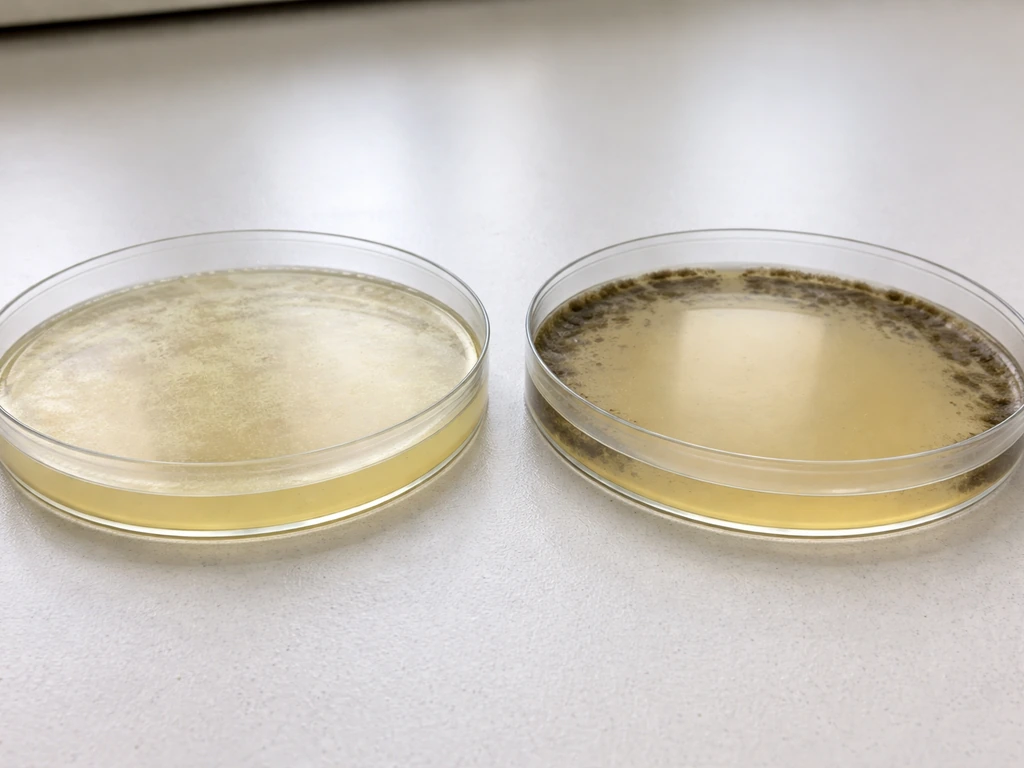
Yes, most mycelium needs oxygen to grow well. The vast majority of fungi that form mycelium (the thread-like network of hyphae you see in soil, compost, and rotting wood) are aerobic organisms, meaning they rely on oxygen as the final electron acceptor in cellular respiration. Without enough oxygen, their energy production drops sharply, their growth slows, and the shape and chemistry of their hyphae changes in measurable ways. That said, there are genuine exceptions worth knowing about, and the picture gets more interesting once you understand how oxygen actually reaches fungal cells inside dense substrates.
Does Mycelium Need Oxygen to Grow? Clear Science Explained

Marcus Holloway
26 Jul 2026
Why oxygen matters for fungal growth
To understand why oxygen is so important to mycelium, it helps to think about what fungi are actually doing at the cellular level. Like most living things, fungi need energy to build cell walls, extend hyphae, produce enzymes, and reproduce. That energy comes primarily from breaking down sugar molecules, and the efficiency of that breakdown depends heavily on whether oxygen is available.
Through aerobic respiration, a fungal cell uses oxygen as the terminal electron acceptor in a mitochondrial process called oxidative phosphorylation. This pathway generates roughly 30 to 38 ATP molecules per glucose molecule. Fermentation, the fallback when oxygen is absent, produces only 2 ATP per glucose. That is a massive difference. It means a fungus running on fermentation alone is working with about 5% of its normal energy budget. Growth slows, hyphal extension becomes limited, and biosynthesis of structural molecules like chitin (the main component of fungal cell walls) is compromised.
Oxygen also plays roles beyond energy production. Fungal sterol synthesis, heme production, and iron metabolism all depend on oxygen-consuming enzymatic reactions. These are not optional processes. Sterols are essential membrane components, and disrupting sterol pathways affects how hyphae behave structurally. So when oxygen drops, the effects on mycelium are not just about speed of growth but also about structural integrity and chemical signaling.
The exceptions: anaerobic fungi and flexible strategies
Here is where a lot of students are surprised. There is an entire phylum of fungi, the Neocallimastigomycota, that are obligate anaerobes. They live exclusively in the digestive tracts of herbivores like cows, sheep, and horses, environments where oxygen is essentially absent. These anaerobic gut fungi do not have conventional mitochondria. Instead, they use organelles called hydrogenosomes to generate energy without oxygen. They are genuinely thriving in conditions that would kill most common mold species.
Beyond those obligate anaerobes, many filamentous fungi show a range of tolerance. Species like Aspergillus have been observed growing and adapting at oxygen concentrations as low as 0.1 to 1% (compared to the roughly 21% in normal air). They do not grow as fast or as robustly, and their morphology shifts noticeably, but they are not completely stopped. This kind of flexible response sits somewhere between true aerobic dependence and full anaerobic tolerance. Yeasts, which are fungi but not mycelium-forming in the traditional sense, offer the clearest example of fungal flexibility: Saccharomyces cerevisiae (baker's yeast) is a facultative anaerobe, able to switch between aerobic respiration and fermentation depending on what is available. Measured specific oxygen uptake rates for Saccharomyces cerevisiae commonly span ~0–8 mmol O2·g^-1·h^-1 in chemostat studies, with reported maxima up to ~13–19 mmol·g^-1·h^-1, demonstrating much higher flexible respiratory capacity than many filamentous cultures (Oxygen dependence of metabolic fluxes and energy generation of Saccharomyces cerevisiae, PMC) Oxygen dependence of metabolic fluxes and energy generation of Saccharomyces cerevisiae (experimental study, PMC).
The takeaway here is that while most mycelium-forming fungi are aerobic, oxygen requirements exist on a spectrum, and the biology of fungi is more varied than a simple yes-or-no answer suggests.
How oxygen actually reaches mycelium inside a substrate
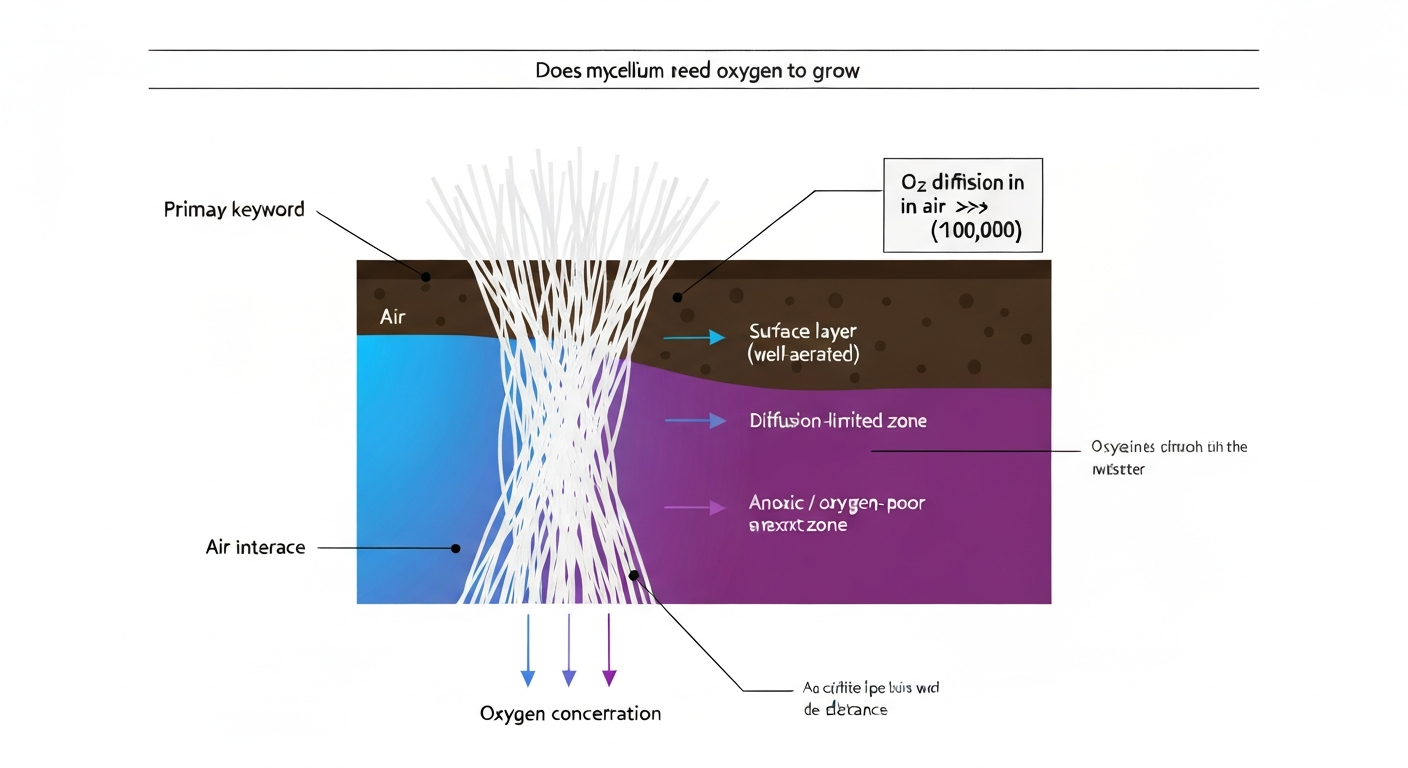
This is one of the most practically important and under-discussed aspects of fungal oxygen biology, and it connects directly to real-world situations like food spoilage, compost health, and hygiene. Oxygen does not magically appear inside a substrate just because the surrounding air contains it. Getting oxygen from the air to the mycelium inside a material depends on diffusion, and diffusion through liquids is extremely slow compared to diffusion through air.
The diffusion coefficient of oxygen in water at around 20 to 25 degrees Celsius is approximately 2.0 × 10^-9 m²/s. In air, it is about 100,000 times faster. This enormous difference explains why oxygen-depleted zones form so quickly inside wet or compacted materials. In a static liquid culture, oxygen from the air-liquid interface penetrates only about 0.5 to 1 mm downward under calm conditions. Below that thin layer, the liquid is essentially oxygen-limited. In solid substrates like compost, grain, or wood, the situation depends heavily on how much of the pore space is filled with water versus air.
As moisture content rises or compaction increases, water-filled pores replace air-filled ones, and effective oxygen diffusion collapses. Studies in compost and soil-compost mixtures show that at high saturation levels (above roughly 50 to 90% of pore space filled with water), diffusion-limited, near-anoxic zones develop within just a few centimeters. Measured gas-diffusion studies, including Methane diffusion coefficient in compost and soil–compost mixtures (experimental study), show effective diffusion coefficients fall sharply with increasing moisture and bulk density, creating diffusion-limited (near-anoxic) zones within centimeters at saturations of roughly 0.5–0.9. Aerobic fungi colonizing from the surface may penetrate a short distance and then encounter effectively anaerobic conditions deeper in the substrate. This is not a failure of the fungus but a predictable physical outcome of the substrate's structure.
What happens to mycelium when oxygen runs low
Filamentous fungi do not simply stop when oxygen drops. They respond, and the responses are specific enough that scientists use them as diagnostic signals for oxygen limitation. The changes happen at multiple levels: morphological (shape and structure), metabolic (chemistry and energy), and ecological (what can survive and what cannot).
Morphological changes
Under low-oxygen conditions, filamentous fungi like Aspergillus species show increased hyphal branching, altered colony polarity, reduced aerial hyphal growth, and changes in sporulation and pigmentation. The colony essentially becomes denser at the surface level and less able to extend upward or outward with the same vigor as normal. This is sometimes described as a hypoxia-locked morphotype, a kind of developmental stalling where the fungus is caught between normal growth and a survival response.
Metabolic shifts
At the biochemical level, oxygen-limited fungi reduce oxidative phosphorylation, alter their TCA cycle activity, and shift toward fermentative processes where possible. Ethanol production, for instance, has been documented in Aspergillus under hypoxic conditions, something more commonly associated with yeast. Sterol and heme synthesis are also disrupted because both pathways require oxygen-dependent enzymes. Secondary metabolite profiles change too, which has implications for food safety because some fungal toxins are produced in greater or lesser quantities depending on oxygen availability.
Ecological displacement
In persistently anoxic environments like waterlogged wood, aerobic wood-decay fungi are largely outcompeted and replaced by anaerobic bacteria. This is a practical oxygen threshold playing out in nature: the classical mycelium-forming decomposers simply cannot maintain their role when oxygen is consistently unavailable. It is a useful reminder that microbial communities are shaped significantly by oxygen availability.
Observable signs of oxygen limitation in mycelium
If you are studying or observing mycelium in a classroom or a controlled setting, oxygen limitation leaves recognizable clues. These are not definitive diagnoses on their own (other stressors can cause similar symptoms), but they are useful starting points for scientific inquiry.
- Slow or stalled colonization: mycelium fails to advance through a substrate at the rate you would expect given adequate moisture and nutrients.
- Dense, flat colony morphology: aerial hyphae are reduced, and the colony appears pressed against the substrate surface rather than building upward.
- Increased branching with short hyphal segments: the growth pattern shifts from long extending hyphae to a dense, compact bush-like appearance.
- Color changes: altered pigmentation compared to well-aerated control samples is a commonly reported indicator of metabolic stress.
- Fermentation odors: a faintly sweet or alcoholic smell from a substrate colonized by aerobic fungi can suggest anaerobic pockets are forming, triggering partial fermentation.
- Patchy or uneven colonization: surface areas colonize well while interior regions remain uncolonized, suggesting oxygen is only penetrating the outer layer.
Safe classroom demonstrations worth trying
These activities use non-pathogenic organisms and standard classroom materials. The goal is to make oxygen's role visible and testable, not to grow anything dangerous. Always follow your school's safety guidelines, use gloves and eye protection when handling cultures, and dispose of materials according to your institution's protocols.
- Bread mold in sealed versus open containers: place identical pieces of slightly moistened bread in two containers, one sealed airtight and one loosely covered. Observe over 5 to 7 days. The sealed container typically shows slower mold development once the initial oxygen is consumed, while the open container shows faster aerobic colonization. This demonstrates oxygen depletion limiting aerobic fungal growth.
- Agar plate depth experiment: pour agar to two different depths in petri dishes (approximately 3 mm and 10 mm), inoculate the surface of both with a Rhizopus or Penicillium culture (non-pathogenic lab strains), and compare colony radius over time. Oxygen diffusion is more easily sustained in the thin agar; the thick plate may show altered colony morphology due to diffusion limitation from the bottom.
- Compaction and moisture comparison: fill three containers with the same loose substrate (such as moistened wheat bran). Leave one loose and airy, compact one firmly, and saturate the third with water. Observe for signs of surface colonization by environmental molds over a week. This illustrates how physical structure changes oxygen availability.
- Yeast fermentation as a contrast case: the classic yeast-and-sugar demonstration (yeast in warm water with sugar, in a sealed bottle attached to a balloon) shows fermentation (CO₂ production) happening without oxygen. Comparing this to an open-air setup, where yeast respires aerobically and produces less gas visibly, demonstrates the switch between aerobic and anaerobic metabolism in a single organism.
- pH indicator plus sealed culture: add a pH indicator like bromothymol blue to a liquid yeast culture in a sealed vessel. As oxygen depletes and fermentation produces CO₂ (which dissolves to form carbonic acid), the color shifts from blue toward yellow. This connects oxygen availability to metabolic byproduct chemistry in a visually satisfying way.
These demonstrations work best when students are asked to form hypotheses first. What do you predict will happen when oxygen is removed? Why? Having students write a brief prediction before each trial, then compare results to predictions, makes the microbiology tangible and encourages the kind of evidence-based thinking that carries into more advanced biology.
Putting it all together: oxygen categories across microorganisms
Mycelium's oxygen dependence is easier to understand once you place it in the broader context of how microorganisms in general relate to oxygen. Microbiology uses a standard set of categories for this, and knowing them helps you interpret not just fungal biology but bacterial and pathogen biology too.
A useful comparison organism here is Escherichia coli (E. coli). E. coli is a facultative anaerobe, meaning it can grow with or without oxygen. For more detail about E. coli's growth with and without oxygen, see does e coli grow better with or without oxygen. When oxygen is available, it uses aerobic respiration for maximum energy efficiency. When oxygen runs out, it switches to fermentation or anaerobic respiration using alternative electron acceptors like nitrate. This flexibility is part of why E. coli thrives in the oxygen-rich environment of the upper gut as well as the more anaerobic lower intestine. Not all pathogens share this flexibility. Questions like whether all pathogens need oxygen, or whether bacteria in general require oxygen, come up frequently, and the honest answer is that it varies enormously by species. If you ask “do all pathogens need oxygen to grow,” the short answer is no, some pathogens are obligate aerobes, some are obligate anaerobes, and many are facultative, able to grow with or without oxygen depending on the species and conditions. Can bacteria grow without oxygen? (see discussion on bacterial oxygen requirements for comparisons with fungal strategies). For a focused discussion on bacterial oxygen requirements, see do bacteria require oxygen to grow.
| Category | Oxygen relationship | Example organisms | Energy strategy |
|---|---|---|---|
| Obligate aerobe | Requires oxygen; cannot survive without it | Most filamentous fungi (molds), Mycobacterium tuberculosis | Aerobic respiration only |
| Obligate anaerobe | Cannot tolerate oxygen; killed or severely inhibited by it | Neocallimastigomycota (anaerobic gut fungi), Clostridium species | Fermentation or anaerobic respiration |
| Facultative anaerobe | Grows with or without oxygen; prefers oxygen when available | E. coli, Saccharomyces cerevisiae (baker's yeast) | Switches between aerobic respiration and fermentation |
| Microaerophile | Needs oxygen but only at levels below atmospheric (below ~21%) | Campylobacter jejuni, some Aspergillus strains under stress | Aerobic respiration at reduced O₂ |
| Aerotolerant anaerobe | Does not use oxygen but is not harmed by its presence | Lactobacillus species (many strains) | Fermentation only, regardless of O₂ |
Most mycelium-forming fungi sit in the obligate aerobe or microaerophile categories, with Neocallimastigomycota as the striking obligate anaerobe exception. Yeasts like S. cerevisiae demonstrate that even within fungi the facultative anaerobe strategy exists. This table is a useful reference for any discussion about why different microorganisms thrive in different environments, from food storage to human health to ecological decomposition.
It is also worth briefly noting a common confusion that comes up in search results: rust (iron oxide) also requires oxygen to form, but that is a purely chemical oxidation reaction, not biology. For a focused explanation on the chemical process, see the short article titled 'does rust need oxygen to grow' which explains how rust (iron oxide) forms through oxidation rather than biological growth. It has nothing to do with microbial oxygen needs, and the two topics should not be conflated. Similarly, questions about whether insects grow larger in oxygen-rich atmospheres touch on animal physiology and tracheal gas delivery, which is a completely separate biological system from microbial respiration.
The core principle running through all of these cases is the same: oxygen is an electron acceptor, and its availability fundamentally shapes the metabolic strategies available to any organism. For mycelium, that principle plays out in visible, measurable, and biologically fascinating ways, from the slow spread of mold through a sealed container to the thriving anaerobic fungi living quietly in a cow's stomach.
FAQ
Short answer: Does mycelium need oxygen to grow?
Most filamentous fungi that form mycelium rely on oxygen — they use aerobic respiration for efficient energy production, so oxygen supports faster growth, biomass production and normal morphology. However, there are exceptions: an entire group of obligate anaerobic gut fungi (Neocallimastigomycota) grows without oxygen in herbivore digestive tracts. Some filamentous species can tolerate or grow at very low O2 (microoxic conditions) but with altered growth rates and form.
Why does oxygen matter for fungal metabolism and structure?
Oxygen is the terminal electron acceptor in mitochondrial oxidative phosphorylation, which yields far more ATP per sugar than fermentation. Adequate ATP enables fast hyphal extension, branching, synthesis of enzymes and secondary metabolites. When oxygen is limited, fungi downregulate oxidative metabolism, shift to less-efficient fermentative or alternative pathways (if available), and display morphological changes such as increased branching, reduced aerial growth, altered sporulation and pigmentation.
Are there exceptions among fungi that don’t need oxygen?
Yes. Neocallimastigomycota are obligate anaerobes found in the rumen and other herbivore guts; they lack canonical mitochondria and use hydrogenosomes for energy. In addition, many filamentous fungi are tolerant of low oxygen and can grow at microoxic levels, but typically with reduced rates and altered physiology rather than normal aerobic growth.
How does oxygen get into substrates and why does that limit mycelial spread?
Oxygen reaches fungal cells by diffusion through air-filled pores. In air, O2 diffuses rapidly; in water or water-filled pores it diffuses ~10,000–100,000 times more slowly. Compacted, waterlogged or fine-particle substrates (wet compost, dense soil, saturated wood, grain) reduce air-filled porosity and slow diffusion, creating microoxic or anoxic zones within millimeters–centimeters. Where O2 supply can’t meet fungal oxygen uptake, growth slows or stops and aerobic colonization stalls.
What observable signs indicate oxygen limitation of mycelium?
Common signs include slowed radial or linear colony extension, denser or more highly branched hyphae, flattened/less aerial mycelium, changes in color or pigmentation, reduced sporulation, increased local fermentation byproducts (odor, off-gassing), and zones of decay dominated by bacteria rather than fungi in long-term anoxic substrates.
How do fungi respond physiologically to hypoxia?
Under low O2, fungi remodel metabolism: reduce oxidative phosphorylation, alter TCA cycle and sterol/heme/iron pathways, and may activate fermentative or alternative respiratory routes (if genetically possible). They often alter gene expression related to stress, modify cell wall and membrane composition, and change secondary metabolite profiles; these adjustments enable survival but usually at the cost of growth rate and normal morphology.