Title: Why Mold Is Easy to Grow and Has Simple Nutritional Needs: A Science-Based Explanation
Why mold is easy to grow and has simple nutritional need

Marcus Holloway
28 Jul 2026
Meta description: Learn why mold is easy to grow and has simple nutritional needs, including spore biology, nutrients required, and environmental conditions explained for students.
Mold grows so readily because it needs very little to get started: a source of organic carbon, some moisture, oxygen, and a surface to colonize. For a concise checklist of the environmental and nutritional factors that support mold growth, see what helps mold grow. That is genuinely it for the basics. The reason you find mold on forgotten bread, damp bathroom grout, and water-damaged drywall is not bad luck. It is biology working exactly as expected. Mold's nutritional requirements are minimal by design, and its reproductive strategy, broadcasting billions of microscopic spores into the air, means a suitable surface almost never has to wait long before a spore lands on it.
Why people say mold is easy to grow and has simple nutritional needs
The phrase shows up in biology classrooms, food-safety training, and public-health materials because it captures something genuinely true about fungal biology. Compared to animals, which need complex diets, or many bacteria, which require very specific nutrient combinations, filamentous fungi are remarkably flexible eaters. They have evolved to break down almost any organic material they land on, from cellulose in paper to proteins in meat to sugars in fruit, and extract what they need from it. That metabolic versatility, combined with their airborne reproductive spores, is why mold is considered one of the most successful groups of organisms on Earth.
There is also a practical dimension to the phrase. For students studying microbiology or food science, understanding that mold does not need rare or exotic nutrients helps explain why spoilage happens so commonly in everyday environments. Mold does not require a specially prepared growth medium. A damp piece of bread or a wet corner of wall gives it essentially everything it needs.
What mold actually is
Mold is the colloquial term for a group of filamentous fungi: multicellular organisms that grow as networks of thread-like structures called hyphae. These hyphal networks form the fuzzy, visible colonies you see on food or surfaces. Mold is not a single species but an informal category covering hundreds of genera including Aspergillus, Penicillium, Cladosporium, Rhizopus, and Stachybotrys, among many others. The CDC uses this colloquial definition for public-health communication: molds are filamentous fungi that reproduce by airborne microscopic spores and commonly colonize damp organic materials.
Molds are classified as saprotrophic organisms, meaning they feed on dead or decaying organic matter by secreting digestive enzymes onto a substrate and absorbing the broken-down nutrients. This external digestion strategy is one key reason they can colonize so many different materials. They do not need to ingest food the way animals do. They essentially dissolve their food source around them and soak it up through their hyphal walls.
What spores are and why they matter
Spores are the primary reproductive units of molds. They are microscopic particles, typically just a few micrometers in diameter, produced in enormous numbers by a mature mold colony. A single Aspergillus colony can release thousands of conidia (the asexual spore type) per minute under the right conditions. Because they are so lightweight, spores remain suspended in air for extended periods, which makes them effectively omnipresent. Outdoor air typically contains hundreds to thousands of fungal spores per cubic meter, and indoor air is rarely free of them entirely.
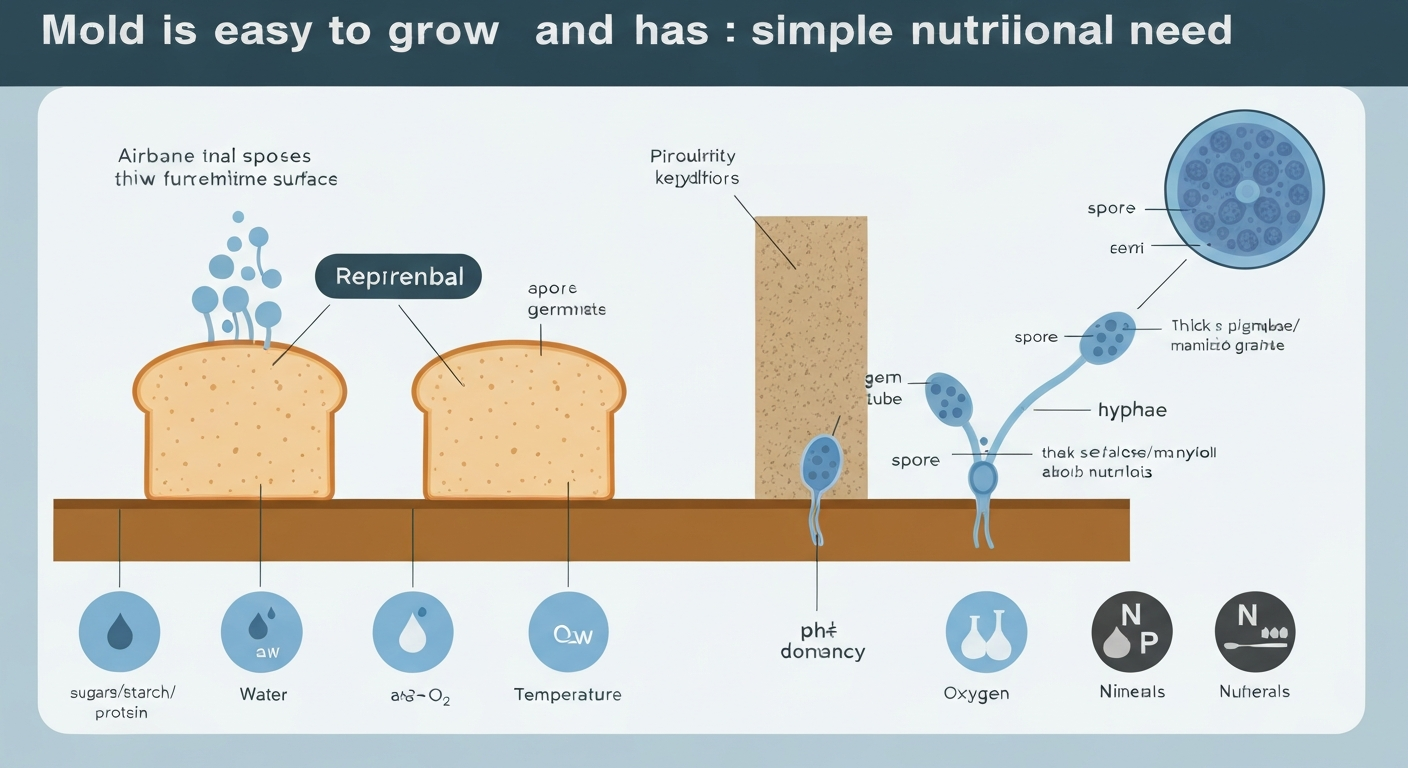
Structurally, spores are built for survival rather than active growth. They have thick, protective cell walls, often pigmented with melanin for UV resistance, and they accumulate internal storage compounds like trehalose and mannitol that protect cellular machinery against desiccation and temperature stress. This means a spore can remain dormant for extended periods, essentially paused, until it lands somewhere that offers the moisture and nutrients needed to trigger germination. See what do spores need to grow for a concise summary of the moisture, nutrient, and temperature cues that trigger spore germination. The EPA and CDC describe spores as the means by which molds disperse and initiate new colonies when they land on moist substrates.
How spores germinate: what actually happens biologically
Germination is the process by which a dormant spore activates and begins to grow into a new hypha. Think of it like a seed sprouting, but far faster and requiring far less. Research on Aspergillus species, among the most studied molds, shows that germination begins when a spore detects two key signals simultaneously: an increase in local water availability and the presence of accessible nutrients such as simple sugars, amino acids, or inorganic salts. The review 'Molecular Mechanisms of Conidial Germination in Aspergillus spp, Microbiology and Molecular Biology Reviews' summarizes these water- and nutrient-triggered activation steps and the subsequent molecular sequence of germination Molecular Mechanisms of Conidial Germination in Aspergillus spp — Microbiology and Molecular Biology Reviews. Water alone, at sufficient availability, can trigger germination in many species.
The molecular sequence of events unfolds quickly. Water uptake activates metabolic pathways that mobilize those stored trehalose and mannitol reserves, providing initial energy. The cell wall begins remodeling, the spore swells isotropically (uniformly in all directions), and then a germ tube emerges, the first visible sign of a new hypha. From that point, the hypha extends, branches, and begins secreting the extracellular enzymes that allow it to digest and colonize the substrate. Temperature and pH must also fall within permissive ranges for this process to proceed, but the nutrient and moisture triggers are the primary gatekeepers.
One detail worth highlighting for classroom discussions: some spores require additional cues to break dormancy. Certain heat-resistant ascospores need a high-temperature shock before they will germinate, even in ideal moisture conditions. This is a protective mechanism that prevents premature germination in the wrong environment. But for the common indoor and food-spoilage molds students are most likely to encounter, water and a permissive temperature are usually sufficient triggers.
The two core nutritional requirements: carbon and water
University-level mycology courses consistently identify carbon and water as the two primary limiting nutrients for mold growth under most real-world conditions. Here is why each is so fundamental.
Carbon: the energy and building-block source
Carbon is the molecular backbone of essentially all biological structures: proteins, cell membranes, DNA, and the hyphal walls themselves. It also serves as the primary energy source for fungal metabolism. What makes molds stand out is the sheer range of carbon sources they can exploit. Most common molds can metabolize simple sugars (glucose, fructose), more complex polysaccharides (starch, cellulose, hemicellulose), proteins, and lipids. They manage this through a large arsenal of extracellular enzymes called carbohydrate-active enzymes, or CAZymes, along with proteases and lipases. The review 'Lignocellulose degradation: An overview of fungi and fungal enzymes involved in lignocellulose degradation (PMC review)' documents that filamentous fungi secrete extensive extracellular CAZymes (cellulases, xylanases, lytic polysaccharide monooxygenases), proteases and lipases that depolymerize cellulose, hemicellulose, starch, proteins and lipids into soluble monomers for uptake. These enzymes are secreted outside the hyphae, break apart complex polymers in the substrate into small soluble molecules, and those molecules are then absorbed. This is why mold can digest wood, bread, leather, and cotton fabric. All of those materials contain organic carbon in forms the fungal enzyme system can unlock.
Water: the non-negotiable requirement
Water availability is measured scientifically as water activity (abbreviated aw), a scale from 0 to 1 where 1.0 represents pure water. Most common indoor molds (Aspergillus, Penicillium, Cladosporium) can grow at aw values of approximately 0.80 to 0.85 and above. Some xerophilic (dry-tolerant) species can grow at aw values as low as around 0.65 to 0.70 in extreme cases, though those are specialist organisms. For context, a fully dry material like a properly dehydrated food typically has an aw below 0.60, which explains why drying is an effective preservation method.
Water matters at every stage: it is the solvent for all enzymatic reactions, the medium through which nutrients are transported into hyphal cells, and the trigger for spore germination. Without sufficient water activity, enzymatic processes halt, cell membranes cannot function properly, and spores stay dormant. This is why controlling moisture is the single most effective strategy for preventing mold growth in buildings and food storage environments. The relationship between water and mold is not just important, it is the central biological constraint governing where and when mold appears.
A closer look at water activity thresholds across common mold genera
| Mold Genus / Species | Minimum a_w for Growth | Typical Context |
|---|---|---|
| Cladosporium spp. | ~0.85 | Common indoor air, surfaces |
| Penicillium spp. | ~0.80 | Food spoilage, building materials |
| Aspergillus niger | ~0.77 | Food, soil, indoor environments |
| Aspergillus flavus | ~0.78 | Grain, nuts, food commodities |
| Stachybotrys chartarum | ~0.95 | Persistently wet building materials |
| Xerophilic Aspergillus spp. | ~0.70–0.75 | Stored grains, dried foods |
| Xeromyces bisporus (extreme xerophile) | ~0.65 | Specialist, high-sugar substrates |
This table illustrates an important educational point: mold is not a monolith. Stachybotrys chartarum, the species often cited in water-damage contexts, actually requires persistently wet conditions (a_w near or above 0.95) and cannot compete well in merely damp environments. Penicillium and Aspergillus species, by contrast, can establish colonies at water activity levels common in improperly stored foods or buildings with moderate humidity problems.
Additional nutritional needs: nitrogen, minerals, and vitamins
Beyond carbon and water, molds require a nitrogen source, phosphorus, sulfur, major cations, and in some cases trace vitamins. Here is a classroom-friendly breakdown of why each matters and where molds typically obtain them.
- Nitrogen: Required for synthesizing amino acids, proteins, and nucleic acids. Molds obtain nitrogen from amino acids, ammonium salts, nitrates, or from degrading proteins in their substrate. A moldy piece of cheese, for example, provides nitrogen through its protein content.
- Phosphorus: Essential for energy molecules (ATP), nucleotides, and cell membranes (phospholipids). Molds access phosphorus from organic compounds in the substrate or inorganic phosphate salts.
- Sulfur: Needed for sulfur-containing amino acids like cysteine and methionine, and for several enzyme cofactors. Available from proteins or inorganic sulfate in the environment.
- Potassium, Magnesium, and Calcium: Major cations required for enzyme activation, membrane stability, and cell-wall synthesis. Present at trace levels in virtually all organic substrates.
- Iron, Zinc, Copper, Manganese, Molybdenum: Required in very small quantities (micronutrients) for specific enzymatic functions. Present in nearly all organic materials at sufficient concentrations.
- Vitamins: Some mold species require specific vitamins (such as thiamine or biotin) that they cannot synthesize themselves; many can synthesize all needed vitamins independently. Substrates like grain, wood pulp, and food typically supply any vitamins needed.
The key insight for students is that most organic substrates in everyday environments, food, wood, paper, fabric, contain all of these nutrients already. A mold landing on a piece of bread does not need to search for nitrogen or phosphorus. The bread provides carbon in its starch, nitrogen in its protein (gluten), and trace minerals throughout. This is the biological explanation behind the claim that mold has simple nutritional needs: the nutrients it requires are ubiquitous in the organic world it evolved to colonize.
The other environmental conditions mold depends on
Temperature
Most molds that students encounter in food-safety or indoor-air contexts are mesophilic, meaning they grow best across a moderate temperature range. Growth typically spans roughly 0 to 45 degrees Celsius depending on the species, with optimal rates occurring between about 20 and 35 degrees Celsius for most common genera. Aspergillus species often show rapid growth at 25 to 37 degrees Celsius, which is why they are relevant in both food storage and human health contexts (37 degrees Celsius is body temperature). Penicillium species frequently prefer slightly cooler conditions around 20 to 25 degrees Celsius, which is one reason they are prolific spoilers of refrigerated foods. Some species are psychrotolerant, meaning they can grow slowly even at near-freezing temperatures, and a small group of thermophilic (heat-loving) specialist fungi can grow at temperatures approaching 60 degrees Celsius.
pH tolerance
One of the most ecologically important characteristics of filamentous fungi is their tolerance for acidic conditions. Most molds grow best at a mildly acidic pH of around 5 to 6, but many species can grow across a pH range from roughly 2 to 9. This acid tolerance gives molds a significant competitive advantage over bacteria in low-pH environments. Bacteria are generally inhibited at pH values below about 4.5, which is why acidifying foods (pickling, fermenting) works so well as a bacterial preservation strategy. Molds are not deterred by acid in the same way, which is why fruit preserves, citrus fruits, and acidic beverages are still vulnerable to mold spoilage even when bacteria cannot establish themselves.
Oxygen requirements
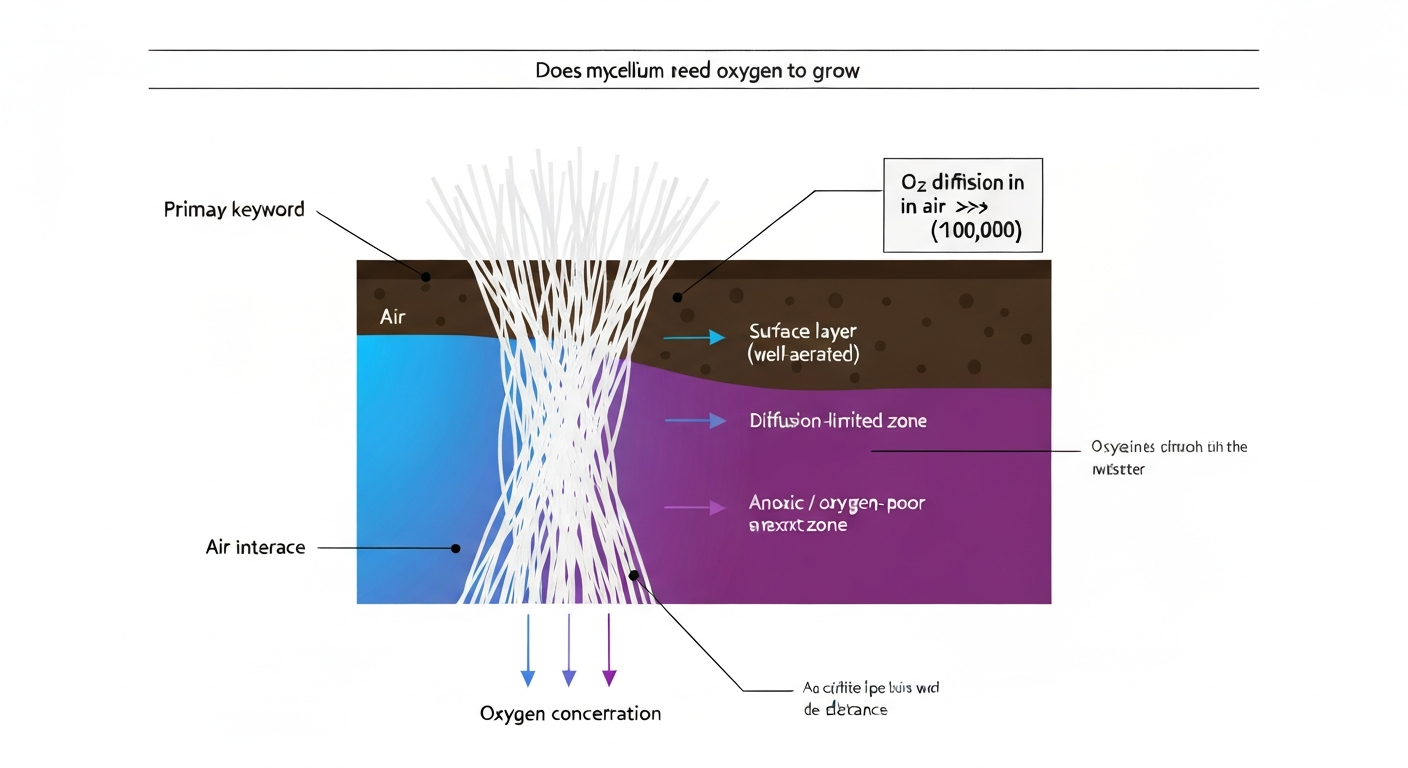
Most filamentous fungi are obligate aerobes, meaning they require molecular oxygen for vegetative (active) growth. Oxygen is used in cellular respiration to generate ATP and is also required for many biosynthetic reactions involving hyphal wall components and secondary metabolites. That said, many mold species can tolerate reduced oxygen concentrations (hypoxia) for a period and adjust their physiology accordingly. This is why modified atmosphere packaging for food, which reduces oxygen levels, slows mold growth but does not eliminate it entirely unless oxygen is nearly absent. Completely anaerobic conditions do stop filamentous mold growth, but achieving that in practical food or building contexts is rarely straightforward.
Light
Light plays a subtler role in mold biology than moisture or temperature, but it is worth understanding. For many fungal species, light tends to inhibit spore germination while simultaneously promoting the development of sporulating structures in mature colonies. Molds have photoreceptors and light-signaling pathways that help them distinguish between conditions favorable for vegetative growth versus conditions favorable for releasing spores. Practically, this means dark, damp environments like the back of a cupboard or a basement corner are particularly conducive to early colonial establishment, while well-lit and ventilated areas are somewhat less hospitable.
All the environmental factors together: why they work as a system
A common mistake in introductory biology is to treat moisture, temperature, pH, oxygen, and nutrients as independent checkboxes. In reality, these factors interact. A substrate might have sufficient water activity for Penicillium growth, but if the temperature is too low, growth will be negligible. A food might be acidic enough to suppress bacterial competitors, but if its water activity is above 0.80 and temperature is near 20 degrees Celsius, mold will colonize it efficiently. The reason mold appears so versatile and hardy is that its thresholds for each factor are individually modest, and the intersection of all permissive conditions describes a very large portion of the everyday environments humans inhabit. That is the deeper meaning behind the phrase: mold does not need much, and what it needs is almost always available.
Comparing common molds across key growth conditions
| Genus | Optimal Temp (°C) | Min. a_w | pH Tolerance | Common Substrates |
|---|---|---|---|---|
| Aspergillus | 25–37 | 0.77–0.80 | 2–9 (opt. ~5–6) | Grains, nuts, food, building materials |
| Penicillium | 20–25 | ~0.80 | 3–8 (opt. ~5–6) | Fruit, dairy, refrigerated food, paper |
| Cladosporium | 18–28 | ~0.85 | Wide range | Indoor surfaces, plants, soil |
| Rhizopus | 25–30 | ~0.90 | 4–7 | Bread, fruit, soft plant tissue |
| Stachybotrys | 22–26 | ~0.95+ | 5–8 | Wet cellulose (drywall, paper) |
Where mold commonly colonizes: surfaces, containers, and materials
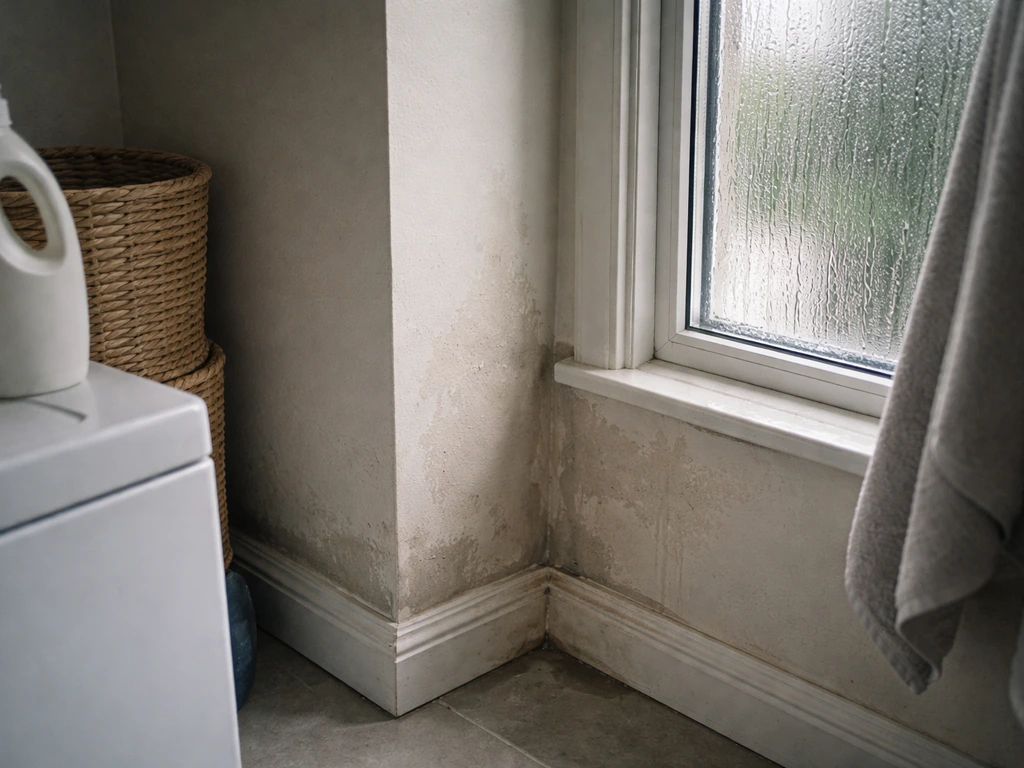
Molds colonize surfaces where moisture and organic carbon co-occur. In indoor environments, that means porous materials like drywall, wood framing, ceiling tiles, carpet, and paper products are high-risk substrates, particularly after water intrusion. Hard, non-porous surfaces are less hospitable not because they are chemically hostile to mold but because they retain less moisture and provide a thinner organic film for the fungus to exploit.
In food storage, the type of container matters significantly. For practical guidance on in what containers do spores grow, see our detailed explanation. Containers that are not airtight allow continued humidity exchange with the environment, keeping water activity at growth-permissive levels. Dense plastics, glass, and sealed containers reduce moisture exchange and slow or prevent mold establishment. Open or loosely covered containers, especially those holding high-moisture foods, create conditions where a_w remains in the permissive range. Porous containers (unglazed ceramics, natural fiber bags, cardboard) can absorb and retain moisture themselves, which creates an even more hospitable microenvironment at the food-container interface.
What this means for food safety and hygiene
Understanding mold biology through the lens of nutritional and environmental requirements shifts food safety from a set of arbitrary rules to a set of logical principles. Refrigeration works because it pushes temperature below the optimal range for most common molds (and bacteria), slowing enzymatic activity across the board. Drying, salting, and sugaring foods work because they reduce water activity below the growth threshold. Acidification works primarily against bacteria but is less reliable against molds given their pH tolerance. Sealed packaging works by limiting oxygen and, when combined with modified atmospheres, further suppresses aerobic fungal growth.
The most consistent principle across all of these strategies is water control. Because water activity is the single factor most directly tied to mold germination and growth, reducing available moisture is always part of an effective prevention approach. Buildings with adequate ventilation, low indoor humidity (ideally below 60% relative humidity), and prompt repair of water intrusion are far less likely to develop persistent mold problems than those where moisture sources go unaddressed. This is not a coincidence: it follows directly from the water-activity biology explained above.
A quick comparison: mold vs. bacteria nutritional needs
Students sometimes ask whether mold or bacteria is the 'easier' microorganism to grow. The answer depends on what you mean, but it is a useful comparison for building biological intuition.
| Characteristic | Common Molds (Filamentous Fungi) | Common Bacteria (e.g., Escherichia coli) |
|---|---|---|
| Primary carbon source | Very broad: sugars, cellulose, starch, proteins, lipids | Often narrower: simple sugars preferred by most species |
| Nitrogen source | Flexible: organic N, ammonium, nitrate | Flexible: organic N, ammonium, nitrate |
| Minimum water activity | ~0.65–0.85 depending on species | Most require a_w >0.90–0.95 |
| pH range | ~2–9 (acid-tolerant) | Most prefer near-neutral; fewer acid-tolerant |
| Oxygen requirement | Mostly aerobic (some hypoxia-tolerant) | Aerobic, anaerobic, or facultative depending on species |
| Temperature range | ~0–45 °C; mesophilic optima 20–35 °C | Wide variation; mesophilic optima 30–40 °C for many |
| Reproductive dispersal | Airborne spores: passive, ubiquitous | Binary fission: limited passive dispersal |
| Substrate range | Extremely broad; degrades complex polymers | Varies widely by species |
The comparison shows that molds are not universally 'easier' to grow than bacteria in every dimension, but their lower water-activity requirements, greater acid tolerance, and broader substrate range do make them more competitively successful across a wider variety of real-world environments. In contexts like acidic, low-moisture, organic-rich surfaces, molds often win the colonization race precisely because bacteria cannot tolerate those conditions.
Putting it together for the classroom
For students building toward a complete understanding of microbial ecology, the biology of mold is a wonderfully integrative topic. It connects nutritional biochemistry (how carbon, nitrogen, and minerals are metabolized), physiology (water activity, temperature, and pH effects on enzymes and membranes), reproductive biology (spore structure, dormancy, and germination), and ecology (competitive colonization of substrates). Each of those dimensions connects to related questions worth exploring further: what specific substances molds need to grow, what spores require to transition from dormancy to active germination, and what environmental conditions across the full spectrum of factors push growth from possible to likely.
The headline claim, that mold is easy to grow and has simple nutritional needs, holds up under biological scrutiny. It grows easily because its minimum requirements for moisture, temperature, pH, and nutrients describe a large fraction of organic surfaces in human environments. Its nutritional needs are simple because its enzyme systems can extract the carbon, nitrogen, and minerals it requires from almost any organic substrate it encounters. Understanding these principles is not just useful for passing a biology exam. It is the foundation for understanding food spoilage, building hygiene, human health risks from indoor mold, and the broader ecological role filamentous fungi play in decomposing organic matter across every ecosystem on Earth.
FAQ
What is "mold" and what are spores?
Mold is a common, informal name for filamentous fungi—eukaryotic organisms that grow as networks of hyphae and reproduce by producing microscopic spores. Spores are small, often airborne reproductive units produced in large numbers; they are adapted to survive dispersal and adverse conditions and will germinate into new hyphae when they land on a suitable, moist substrate (CDC; EPA/CDC MMWR). Sources: CDC "Mold"; CDC MMWR on mold prevention.
Why do people say "mold is easy to grow"?
The phrase reflects three evidence-based points: (1) mold spores are ubiquitous and easily airborne, so exposure to potential inoculum is constant; (2) many filamentous fungi have broad metabolic capabilities and can use many organic materials as carbon sources because they secrete extracellular enzymes that break down complex polymers into absorbable monomers; (3) most common indoor and food‑spoilage molds need only basic conditions—available moisture plus simple carbon and nitrogen sources and common macronutrients—to germinate and grow. Together these facts mean mold will readily colonize suitable damp organic surfaces (CDC; reviews on fungal CAZymes; mycology texts).
What are the primary nutritional needs of molds?
At an operational level the two primary limiting nutrients are: (1) a usable carbon source (organic compounds for energy and biomass) and (2) an assimilable nitrogen source (for proteins and nucleic acids). In addition molds require phosphorus, sulfur, major cations (K+, Mg2+, Ca2+), oxygen for aerobic metabolism, water, and trace micronutrients (Fe, Zn, Cu, Mn, etc.). Many species also benefit from vitamins or specific cofactors. (University mycology materials; microbial nutrition textbooks; OpenStax summary).
How can molds grow on so many different materials (paper, wood, food)?
Filamentous fungi secrete diverse extracellular enzymes (cellulases, proteases, lipases, pectinases, lytic oxidases) that break down cellulose, starch, proteins, lipids and other polymers into soluble sugars and amino acids the fungus can absorb. Genomic and enzymology studies (e.g., Aspergillus) document large repertoires of carbohydrate‑active enzymes (CAZymes), which is the mechanistic reason molds can exploit varied organic substrates. (PMC review on lignocellulose degradation; ASM genomics review of Aspergilli).
What environmental factors most strongly promote mold growth?
Key environmental controls are: - Moisture/Water availability: expressed as water activity (a_w). Many common indoor/food molds grow at a_w ≈ 0.80–0.85 and above; xerophilic species can grow at lower a_w. - Temperature: many common species are mesophilic with optima ~20–35 °C, though ranges vary by species. - pH: many molds tolerate mildly acidic conditions (optima ≈ pH 5–6) and some grow across a broad pH range. - Oxygen: most vegetative growth is aerobic, though some tolerate reduced oxygen. - Light: often influences sporulation and can inhibit or delay germination. (German UBA guidance on a_w; ISME Journal; mycology/food‑mycology reviews).
What is water activity (a_w) and why does it matter?
Water activity (a_w) measures the availability of free water for microbial processes (scale 0–1). It is a primary determinant of spore germination and hyphal growth. Common spoilage genera (Aspergillus, Penicillium, Cladosporium) typically require a_w ≈ 0.80–0.85 or higher; specialist xerophiles can grow below 0.70. Some species (e.g., Stachybotrys) need persistently wet conditions (high a_w). Germination and sustained growth often have different a_w limits. (UBA guidance; species fact sheets; ISME review).