Chaetomorpha (commonly called "chaeto") needs light in the PAR range of roughly 50–200 µmol photons per square metre per second, dissolved nitrate and phosphate as its main nutrient sources, a stable salinity around 33–36 ppt, a temperature between 18–26°C, a pH of 8.0–8.3, adequate bicarbonate as an inorganic carbon supply, and enough water movement to keep its filaments tumbling. Get those six things right and the algae grows quickly. Neglect any one of them and growth stalls, the thallus discolours, or the culture crashes entirely.
What Does Chaeto Need to Grow: Light, Nutrients, Water

Marcus Holloway
7 Aug 2026
Why chaeto belongs in a discussion about microbial growth conditions
This site usually focuses on bacteria, fungi, and other microorganisms, so it's fair to ask: why cover a macroalga? The answer is that Chaetomorpha is a multicellular photosynthetic organism whose growth is governed by exactly the same foundational principles that control every living thing we discuss here: energy source, water quality, temperature, nutrients, and gas exchange. Working through chaeto's requirements gives students a concrete, visually engaging model for understanding how environmental variables interact. It also naturally connects to related topics on this site, such as what yeast needs to grow, because both organisms share the core requirement for usable carbon and nitrogen, a hospitable temperature, and the right pH. If you understand chaeto, you understand a large piece of the logic behind microbial growth conditions in general.
What exactly is Chaetomorpha?
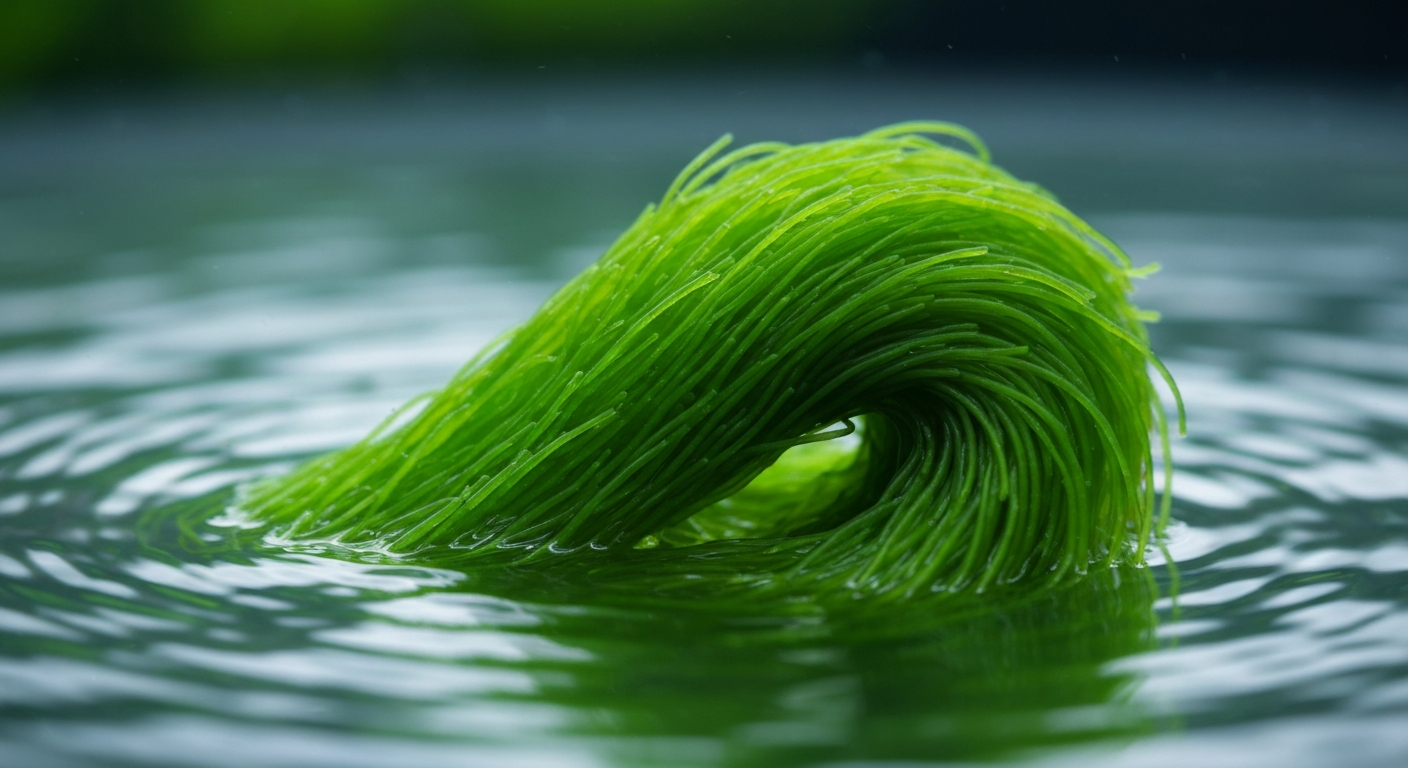
Chaetomorpha is a genus of filamentous green macroalgae placed in the family Cladophoraceae, within the class Ulvophyceae. If you have seen a loose, bright-green tangle of wire-like strands in a saltwater aquarium refugium or washed up on a temperate beach, you have almost certainly encountered it. The thalli (the body of the alga) are unbranched, multicellular filaments that grow by intercalary cell division, meaning cells along the length of the filament divide, not just at the tip. See Chaetomorpha, ScienceDirect Topics (morphology, habitat summary) for a concise morphology and habitat summary Chaetomorpha — ScienceDirect Topics (morphology, habitat summary). Some species attach to hard substrate using basal rhizoids; others float in free-drifting mats. In the wild, Chaetomorpha occupies a wide range of coastal habitats, from mid-intertidal rock pools and sheltered estuaries to subtidal beds, and it is well documented as a green-tide-forming species in eutrophied coastal systems. Species identification is notoriously conservative on morphology alone, and many taxa require molecular confirmation, so when a hobbyist says "chaeto" they are usually referring to a mix of closely related species rather than one clean biological unit.
Ecologically, Chaetomorpha plays a meaningful role as a primary producer and nutrient buffer. Dense beds fix carbon through photosynthesis, take up dissolved inorganic nitrogen and phosphorus from the water column, and provide shelter for small invertebrates and microorganisms. In eutrophied estuaries, unchecked growth can consume oxygen during nighttime respiration and decomposition, driving hypoxic events that stress fish and invertebrates. That dual role as both nutrient remover and potential oxygen depleter is central to understanding why every growth factor needs to be balanced rather than simply maximised.
The core physiology: how chaeto actually grows
Chaetomorpha grows through three interconnected physiological processes, and understanding them makes every subsequent requirement make sense rather than feel like an arbitrary checklist.
First, photosynthesis. Like all green plants and algae, chaeto uses chlorophyll a and b to capture light energy and fix dissolved inorganic carbon (mainly bicarbonate in seawater) into organic compounds. Those compounds are the structural building blocks for new cell walls, proteins, and storage carbohydrates. Without adequate light or inorganic carbon, the whole process stalls, no matter how rich the nutrient supply.
Second, osmoregulation. Chaeto lives in saline water, and every cell continuously manages the balance between intracellular solutes and the surrounding seawater. When salinity swings too far in either direction, water moves osmotically into or out of the cells, causing swelling, plasmolysis, or rupture. The alga tolerates a remarkably wide salinity range in nature, but there are still physiological limits, and stability matters as much as the absolute value.
Third, nutrient uptake. Chaeto absorbs dissolved inorganic ions directly from the water across its cell membranes, a process driven by concentration gradients and active transport proteins. This is why water chemistry is so important: the alga has no roots reaching into sediment, so if the water around it is depleted of nitrate, phosphate, iron, or bicarbonate, uptake simply cannot occur. Research on Chaetomorpha linum measured phosphate uptake rates as high as approximately 667 µg P per gram dry weight per hour, which illustrates just how quickly this genus can strip nutrients from the surrounding water when conditions are right.
Light: the non-negotiable energy driver
Light is the energy currency that powers everything else. Chaetomorpha uses photosynthetically active radiation (PAR), the band of light between roughly 400 and 700 nanometres, measured in micromoles of photons per square metre per second (µmol·m⁻²·s⁻¹). A useful way to think about PAR is as the "usable fraction" of the light spectrum: wavelengths outside that window pass straight through or are absorbed as heat rather than driving the photosynthetic machinery.
Intensity and saturation
Photosynthesis increases with light intensity up to a saturation point (often written as Ek or Ik). Beyond that point, adding more photons does not speed up carbon fixation and can actually cause photoinhibition, a kind of damage to the photosynthetic apparatus. For Chaetomorpha, light saturation values are species- and acclimation-dependent. Comparative work on related Ulvophyceae has measured saturation irradiances (Ek) in the range of roughly 37–61 µmol·m⁻²·s⁻¹ for some foliose green macroalgae under dim-adapted conditions, though field populations exposed to summer surface light encounter hundreds of µmol·m⁻²·s⁻¹. In practical aquarium settings, a commonly applied target range for robust chaeto growth in a refugium is 50–200 µmol·m⁻²·s⁻¹ measured at the algae surface, with many experienced hobbyists finding 80–150 µmol·m⁻²·s⁻¹ a reliable sweet spot.
Spectrum
Chlorophyll a and b absorb most strongly in the red (around 660–680 nm) and blue (around 430–450 nm) bands of the spectrum. A lamp that provides a balance of both will drive photosynthesis more efficiently per watt than a lamp biased toward green or yellow. In practice, full-spectrum LEDs and fluorescent lamps rated at 6500–10000 K colour temperature tend to deliver a usable spectrum. Monochromatic red-only lighting works (and some growers use it for energy efficiency) but does not replicate the full photosynthetic response.
Photoperiod
Chaeto does not photosynthesize in the dark, but it continues to respire around the clock, consuming oxygen and releasing CO2. Running the refugium light on a reverse photoperiod (on when the display tank lights are off) is a common aquarium technique precisely because it stabilises pH and dissolved oxygen: while the display tank's corals and fish are depleting oxygen at night, the chaeto is producing it. A photoperiod of 12–18 hours of light per day is commonly used. Running 24-hour continuous light is possible and some growers report faster growth, but it eliminates the natural dark phase and may not suit all biological communities in the same system.
Nutrients: nitrate, phosphate, and inorganic carbon
Nutrients are the raw materials chaeto incorporates into its own biomass. Think of light as the engine and nutrients as the fuel that the engine converts into new cells.
Nitrate (NO3-)
Nitrogen is the limiting macronutrient most often encountered in reef aquarium systems. Chaeto can use both nitrate and ammonium, but in a well-oxygenated refugium fed from a reef display, nitrate is typically the dominant form available. Research on Chaetomorpha linum found that nitrate uptake increased linearly with concentration (rather than saturating quickly), suggesting the alga is well-adapted to scavenging nitrogen across a wide range of concentrations. The critical tissue nitrogen concentration for C. linum is around 12 mg·g⁻¹ dry weight (about 1.2% DW). Below that threshold the alga is nitrogen-limited. For practical monitoring, a nitrate level of 2–20 mg·L⁻¹ in the water supports active growth in most systems; chaeto will strip nitrate efficiently, with experimental systems showing reduction to as low as approximately 1 mg·L⁻¹.
Phosphate (PO43-)
Phosphorus is used in ATP (the energy currency of cellular metabolism), DNA, RNA, and cell membranes. Chaeto's phosphate uptake is remarkably fast, with reported rates around 667 µg P per gram dry weight per hour under replete conditions. The critical tissue phosphorus concentration for C. linum is approximately 0.5 mg·g⁻¹ dry weight. When dissolved phosphate runs low, chaeto responds physiologically by upregulating alkaline phosphatase activity (APA), an enzyme that cleaves phosphate from dissolved organic molecules to supplement the depleted inorganic supply. A 2023 study reported that Chaetomorpha linum exposed to low dissolved phosphate upregulated alkaline phosphatase activity and scavenged dissolved organic phosphorus (Algal growth and alkaline phosphatase activity of ‘green tide’ Chaetomorpha linum in response to phosphorus stress, Journal of Marine Systems, 2023) Algal growth and alkaline phosphatase activity of ‘green tide’ Chaetomorpha linum in response to phosphorus stress (Journal of Marine Systems, 2023). This enzymatic response is a useful diagnostic signal: if your chaeto is producing a lot of APA (detectable in research settings through enzyme assays), it is phosphorus-stressed. In practical terms, maintaining dissolved phosphate at roughly 0.02–0.1 mg·L⁻¹ keeps growth active without the excessive phosphate loading that would encourage nuisance algae.
Inorganic carbon and bicarbonate
Carbon fixation requires a carbon source, and in seawater the dominant form of dissolved inorganic carbon (DIC) is bicarbonate (HCO3-), not dissolved CO2. Normal seawater DIC sits around 1.9–2.2 mmol·kg⁻¹. Experimental work using the anion transport inhibitor DIDS demonstrates that Chaetomorpha and other Ulvophyceae possess active bicarbonate uptake mechanisms (a carbon-concentrating mechanism, or CCM), allowing them to use bicarbonate directly rather than waiting for it to spontaneously convert to CO2. This is significant because in a densely packed refugium, CO2 can become locally depleted during peak photosynthesis, but bicarbonate remains abundant as long as alkalinity is maintained. Keeping total alkalinity (TA) in the 7–10 dKH range (approximately 2.5–3.6 meq·L⁻¹) ensures the inorganic carbon reservoir stays full.
| Nutrient | Form taken up | Practical target range in water | Deficiency sign |
|---|---|---|---|
| Nitrogen | Nitrate (NO3-), ammonium (NH4+) | 2–20 mg·L⁻¹ nitrate | Pale or yellow-green colour, slow growth |
| Phosphorus | Phosphate (PO43-) | 0.02–0.1 mg·L⁻¹ | Stunted growth, brittle filaments |
| Inorganic carbon | Bicarbonate (HCO3-), dissolved CO2 | DIC ~1.9–2.2 mmol·kg⁻¹ / TA 7–10 dKH | Slow growth despite adequate light and nutrients |
Micronutrients and trace elements: the often-overlooked limiting factors
Beyond the big three macronutrients, chaeto needs a suite of trace elements to run its enzymatic machinery. These are needed in tiny amounts, but "tiny" does not mean "optional." A useful analogy from classroom biology: vitamins in the human diet are required in milligram or microgram quantities, yet deficiency causes measurable disease. The same logic applies here.
- Iron (Fe): required for chlorophyll synthesis and electron transport in photosystem I. Iron deficiency is one of the most common causes of chlorosis (yellowing) in macroalgae in aquarium settings. Natural seawater contains iron at nanomolar concentrations, so even small depletions matter. Iron is often added in reef systems via trace element dosing or through live rock weathering.
- Manganese (Mn): a cofactor in the oxygen-evolving complex of photosystem II, the component that splits water to release oxygen. Without manganese, the light reactions of photosynthesis cannot proceed normally.
- Zinc (Zn): required for many enzymes including carbonic anhydrase, which catalyses the interconversion of CO2 and bicarbonate and is central to the carbon-concentrating mechanism.
- Copper (Cu): essential in plastocyanin, a photosynthetic electron carrier, but toxic at elevated concentrations. Many aquarists use copper-based medications that can harm or kill chaeto.
- Molybdenum (Mo): a cofactor for nitrate reductase, the enzyme that converts nitrate to ammonium inside the cell for incorporation into amino acids. Without molybdenum, the alga cannot process nitrate even if it is abundant.
- Boron, cobalt, and nickel are also required at trace levels for various enzymatic and structural roles.
In a natural seawater system or a reef aquarium using high-quality salt mix and regular water changes, trace elements are usually replenished passively. Problems arise in closed or heavily filtered systems where water changes are infrequent and skimming or activated carbon removes trace metals. If chaeto growth slows despite adequate light, nitrate, and phosphate, a trace element depletion (especially iron) is a reasonable first hypothesis. Standard reef trace element supplements provide iron and other metals at biologically relevant concentrations without risking toxicity when used at label dosing. Testing iron directly requires specialised colorimetric kits; practically, many aquarists monitor iron indirectly by watching chaeto colour: a healthy deep green colour suggests adequate iron, while yellowing or pale growth signals potential deficiency.
Water quality: the physical and chemical environment
Each water-quality parameter affects a specific physiological process. Understanding the link between measurement and mechanism makes it much easier to diagnose problems rather than guessing.
Salinity
Chaetomorpha shows genuinely impressive euryhaline (wide-salinity) tolerance. Field surveys and experimental studies have documented survival across a range from near-freshwater to hypersaline conditions in some populations, reflecting its estuarine ecology. For aquarium purposes, the standard marine target of 33–36 ppt (specific gravity 1.023–1.026) is well within the comfortable growth zone. Rapid swings in salinity are more damaging than absolute levels, because the cells need time to adjust their internal osmolyte concentrations. A slow transition of 2–3 ppt per day is far safer than a sudden change of 5 ppt in an hour.
Temperature
Natural Chaetomorpha habitats span a wide thermal range: seasonal field measurements in temperate systems record surface temperatures from roughly 2.7°C in winter to 25.8°C in summer, and tropical populations encounter even higher values. For practical aquarium growth, the commonly cited optimal range is 18–26°C. Within that window, enzymatic reaction rates are high, photosynthesis runs efficiently, and cellular repair keeps pace with any stress-induced damage. Below around 15°C growth slows noticeably; above about 28–30°C the alga begins to experience heat stress, photosynthetic pigments degrade, and crash risk rises. Stability again matters: a sudden 4°C spike is more harmful than running consistently at 27°C.
pH
Normal marine surface water pH sits at about 8.1–8.3. Chaeto both responds to and influences pH: during peak daytime photosynthesis, the alga consumes bicarbonate and raises local pH; during nighttime respiration, it releases CO2 and pH drops. In dense refugium setups, researchers have documented diurnal pH swings of 0.5 units or more driven entirely by macroalgal photosynthesis and respiration cycles. Running the refugium on a reverse photoperiod takes direct advantage of this biology, using chaeto's daytime photosynthesis to buffer the tank's nighttime pH drop. For the alga itself, a pH of 7.8–8.4 is generally tolerable, but persistent low pH (below 7.8) limits bicarbonate availability and compromises enzymatic function.
Dissolved oxygen (DO)
Chaeto is an aerobic organism. It produces oxygen during photosynthesis and consumes it during respiration. Adequate dissolved oxygen in the surrounding water is needed to support its own cellular respiration at night, and critically, the respiration of the entire microbial community living on and around the algal mat. The widely used stress threshold for marine organisms is approximately 4 mg·L⁻¹; hypoxia is defined at below 2–3 mg·L⁻¹. A dense chaeto mat in a poorly circulated refugium can create a localised oxygen debt at night when all photosynthesis stops and every cell is respiring simultaneously. This is one reason flow and tumbling are important: they refresh the oxygen supply to interior parts of the mass.
| Parameter | Target range for chaeto growth | What goes wrong outside the range |
|---|---|---|
| Salinity | 33–36 ppt | Rapid swings cause osmotic stress and cell damage |
| Temperature | 18–26°C | Below ~15°C: slow growth. Above ~28°C: heat stress, bleaching |
| pH | 8.0–8.3 | Below 7.8: bicarbonate depletion, enzyme inhibition |
| Dissolved oxygen | >5 mg·L⁻¹ | Below 4 mg·L⁻¹: stress; below 2–3 mg·L⁻¹: hypoxia |
| Total alkalinity | 7–10 dKH | Below 7: limited carbon reservoir for photosynthesis |
Flow, placement, and why chaeto needs to move
One of the most underappreciated requirements for chaeto growth is water movement. The alga has no vascular system to transport nutrients internally, so every cell on the exterior and interior of the filament mass depends on the surrounding water refreshing its supply of nitrate, phosphate, bicarbonate, and trace elements. When chaeto sits in still or low-flow water, a boundary layer of depleted water builds up around the filaments. Nutrients are consumed faster than they diffuse back in, and the cells at the centre of a dense ball become starved even if the bulk water chemistry looks ideal.
The practical solution is to ensure the algae tumbles slowly and continuously. In a refugium, a low-to-moderate return pump directing flow across the algae mass achieves this. The filaments should be in visible, gentle motion, not pressed hard against one corner. Chaeto growing as a free-floating mat in natural systems is similarly kept in motion by tidal and wave energy. The same physical logic explains why Chaetomorpha thrives in shallow, gently turbulent intertidal pools but struggles in deep stagnant basins despite similar chemistry.
Regarding attachment: in nature, some Chaetomorpha species anchor with rhizoids to rock or sediment, but the free-floating spherical or mat form used in most refugiums requires no substrate. Giving it a loose ball shape and ensuring the whole mass tumbles is more effective than wedging it against an inlet or a mesh. If attachment is desired for a classroom culture setup, coarse live rock rubble can serve as a substrate, but it is genuinely optional.
Biological interactions that shape growth
Chaeto does not grow in isolation. Several biological interactions can accelerate, limit, or crash a culture, and understanding them is as important as nailing the physical chemistry.
- Grazers: many herbivorous fish and invertebrates (tangs, sea urchins, turbo snails, limpets) eat chaeto readily. A refugium typically excludes grazers for this reason. In a display tank, chaeto will be consumed quickly.
- Protein skimming: skimmers strip dissolved organic compounds from the water, indirectly reducing the nutrient load available to chaeto. A well-skimmed system may need to be monitored carefully to ensure nitrate and phosphate do not drop below growth-supporting levels.
- Competing algae: nuisance microalgae (cyanobacteria films, turf algae, hair algae) compete with chaeto for light and nutrients. If competitors dominate, chaeto growth declines. Adequate light at the chaeto surface, rather than diffused through a mat of competing organisms, is important.
- Microbial community: the biofilm of bacteria and microorganisms living on chaeto filaments contributes to nutrient cycling within the mat. Under low-oxygen conditions, decomposition of dead chaeto tissue by anaerobic bacteria can produce hydrogen sulfide, causing a characteristic rotten-egg odour and potential system toxicity.
- Pathogens and bleaching: if chaeto begins to bleach white, the cause is usually a combination of photoinhibition, iron deficiency, or rapid temperature/salinity stress rather than a specific pathogen. Ruling out physical causes first is the recommended diagnostic approach.
Monitoring, diagnosing, and fixing common problems
Systematic monitoring is the most efficient troubleshooting strategy. Checking each variable against its target range narrows down the cause of a growth problem before making any changes.
| Symptom | Most likely cause | Diagnostic check | Fix |
|---|---|---|---|
| Slow or no growth | Insufficient light or nutrient depletion | Measure PAR at algae surface; test nitrate and phosphate | Increase light intensity or duration; reduce export elsewhere to allow nutrients to accumulate |
| Yellowing filaments | Nitrogen or iron deficiency | Test nitrate; assess iron (colour of thallus, trace element dosing history) | Add trace element supplement with iron; allow nitrate to rise to 2–5 mg·L⁻¹ |
| White bleached patches | Photoinhibition or temperature spike | Check light intensity; review temperature log | Reduce light intensity or distance; stabilise temperature below 26°C |
| Slimy or foul smell | Anaerobic decay in dense mat | Check DO and flow in refugium | Increase flow; break up large mass; remove dead/decaying portions |
| Explosive growth then crash | Nutrient boom-and-bust | Track nitrate and phosphate over time | Harvest regularly (30–50% of mass weekly) to prevent biomass exceeding the nutrient supply |
| No growth despite good chemistry | Competing algae blocking light or copper contamination | Inspect for hair algae or cyano films; check medication history | Remove competitors manually; replace water if copper-contaminated |
Chaeto vs yeast: what shared growth principles look like across organisms
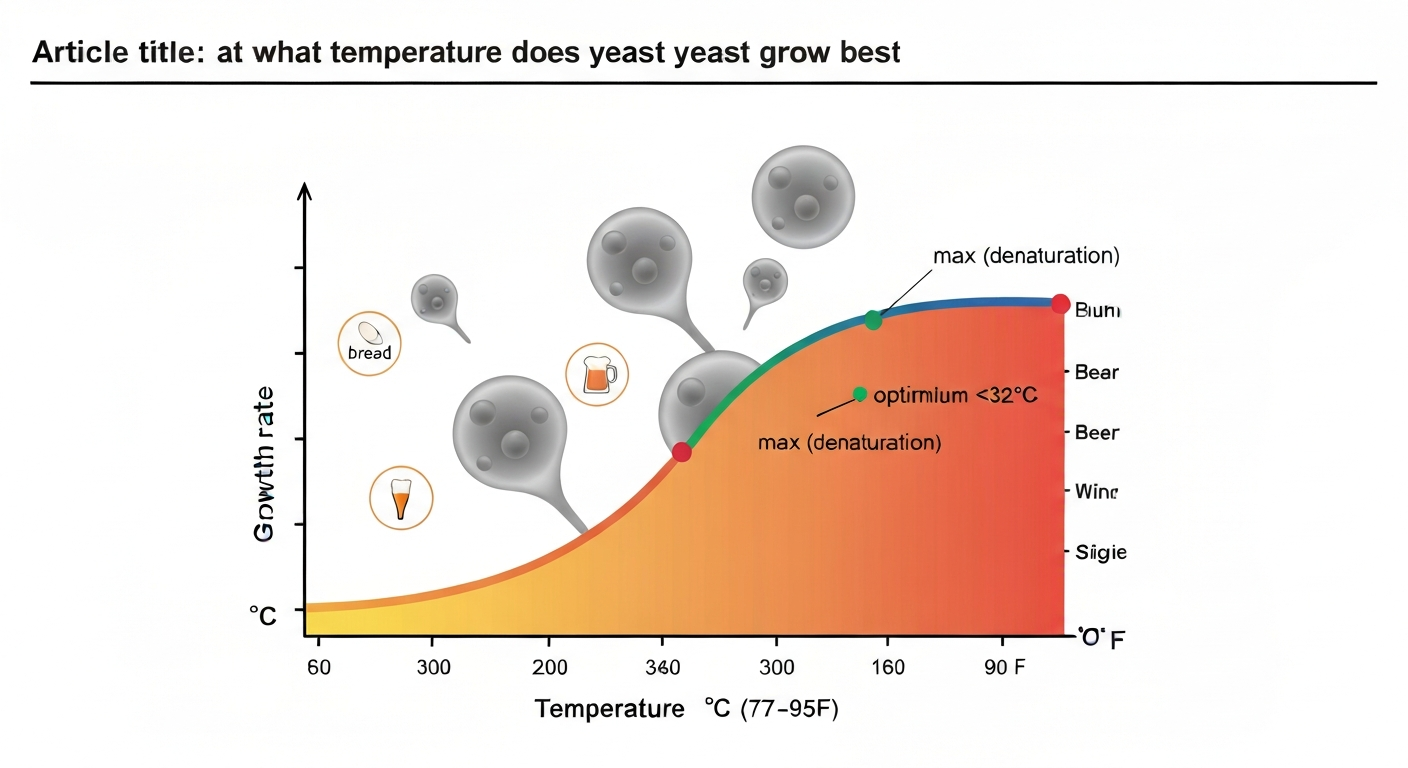
If you have explored articles on this site about what yeast needs to grow, you will notice the overlap immediately. For a clear summary of yeast requirements, see what 4 things does yeast need to grow. For a quick primer on yeast basics, see what 3 things are needed for yeast to grow. For specific guidance on yeast thermal preferences, see the linked article about at what temperature does yeast grow best. Both organisms require an energy source (light for chaeto, fermentable sugars for yeast), a nitrogen source (nitrate for chaeto, ammonium or amino acids for yeast), phosphorus, trace elements, water at a stable temperature, and a tolerable pH. Both are also sensitive to oxygen in ways that differ by metabolic mode: yeast switches between aerobic and anaerobic metabolism depending on oxygen availability, while chaeto is obligately aerobic and also an oxygen producer. The conceptual framework is identical even though the chemistry differs. This is not a coincidence: it reflects the universal biochemistry of cellular life. Nitrogen goes into amino acids and nucleic acids in both organisms; phosphorus goes into ATP and membranes in both; temperature controls enzyme kinetics in both; pH governs the charge state of proteins and the availability of dissolved molecules in both. Learning these principles through chaeto is a genuinely transferable skill.
A quick summary of everything chaeto needs
- Light: 50–200 µmol photons·m⁻²·s⁻¹ PAR at the algae surface; full spectrum (red + blue); 12–18-hour photoperiod.
- Nitrate: 2–20 mg·L⁻¹ in the water; critical tissue nitrogen ~12 mg·g⁻¹ dry weight.
- Phosphate: 0.02–0.1 mg·L⁻¹; rapid uptake up to ~667 µg P·g DW⁻¹·h⁻¹ under replete conditions.
- Inorganic carbon: total alkalinity 7–10 dKH; bicarbonate actively taken up via CCM.
- Trace elements: iron most commonly limiting; manganese, zinc, copper, and molybdenum also required.
- Salinity: 33–36 ppt; stability is as important as absolute value.
- Temperature: 18–26°C optimal; avoid sudden swings.
- pH: 8.0–8.3; maintained partly by the alkalinity buffer.
- Dissolved oxygen: keep above 5 mg·L⁻¹; avoid stagnant zones in the algae mass.
- Water movement: gentle but continuous tumbling to refresh the boundary layer around filaments.
FAQ
What is Chaetomorpha (chaeto) and where is it normally found?
Chaetomorpha is a genus of filamentous green macroalgae (family Cladophoraceae, Ulvophyceae). Thalli are unbranched multicellular filaments that form free‑floating tangles or attached mats with basal holdfasts. Ecologically it occupies intertidal to subtidal shallow waters, estuaries and sheltered pools. Species identification by morphology is conservative and many taxa require molecular confirmation.
What are the basic biological requirements Chaetomorpha shares with microbes/yeast?
Shared principles: an energy source (light for photosynthesis vs organic substrate for yeast), water as solvent, suitable temperature range for enzymatic activity, inorganic and organic nutrients (N, P, micronutrients), and adequate oxygen for metabolism (daytime O2 produced by photosynthesis, night-time respiration consumes O2). For Chaetomorpha the energy source is light and dissolved inorganic carbon; for yeast it is chemical energy (sugars).
What light conditions does Chaetomorpha need (intensity, spectrum, photoperiod, PAR)?
Provide moderate light, measured in PAR (photosynthetic active radiation). Typical classroom/aquarium targets: 50–250 µmol photons·m⁻2·s⁻1 depending on acclimation. Many Chaetomorpha ecotypes saturate at tens to a few hundred µmol·m⁻2·s⁻1 (species‑ and acclimation‑dependent). Spectrum: full‑spectrum white with blue (450–480 nm) and red (640–680 nm) content supports photosynthesis. Photoperiod: 10–14 hours light : 10–14 hours dark is common; avoid constant light because night respiration can deplete O2 and DIC. Use a PAR meter to measure irradiance at the algal surface and adjust distance/fixture accordingly.
Why do these light parameters matter biologically?
Light drives photosynthetic electron transport and carbon fixation. PAR and spectrum set the rate of photosynthesis (Pmax) and the light‑acclimation parameter Ek (saturation irradiance). Photoperiod determines daily carbon gain versus respiration; too little light limits growth, too much causes photoinhibition or excessive O2/pH swings and oxidative stress.
What inorganic carbon sources does Chaetomorpha use and how should they be managed?
Chaetomorpha can use dissolved CO2 and bicarbonate (HCO3−) via carbon concentrating mechanisms. Maintain a seawater‑like carbonate system (DIC and alkalinity) typical of coastal waters. For aquaria: target total alkalinity ~7–9 dKH (≈2.5–3.2 meq·L‑1) and avoid extreme, rapid pH swings. Monitor pH (target ~7.9–8.3 in seawater contexts) and alkalinity with test kits; ensure adequate water exchange or aeration to keep DIC available and avoid prolonged CO2 or O2 depletion at night.
What are Chaetomorpha's macronutrient needs (nitrogen and phosphorus) and measurable targets?
Chaetomorpha rapidly takes up inorganic nitrogen (nitrate NO3−, ammonium NH4+) and phosphate (PO4 3−). Practical aquarium/classroom ranges: nitrate 1–20 mg·L‑1 NO3− (ppm) depending on stocking and goals; phosphate 0.02–1.0 mg·L‑1 PO4 3−. Tissue critical concentrations (species dependent) are ~12 mg·g‑1 DW N and ~0.5 mg·g‑1 DW P for some Chaetomorpha. N:P uptake ratios can vary (reported ~6:1 in some trials). Use colorimetric test kits or handheld photometers for NO3− and PO4 3−; aim to avoid long‑term depletion (which induces alkaline phosphatase activity and P stress) and avoid extremely high nutrients that cause nuisance blooms.