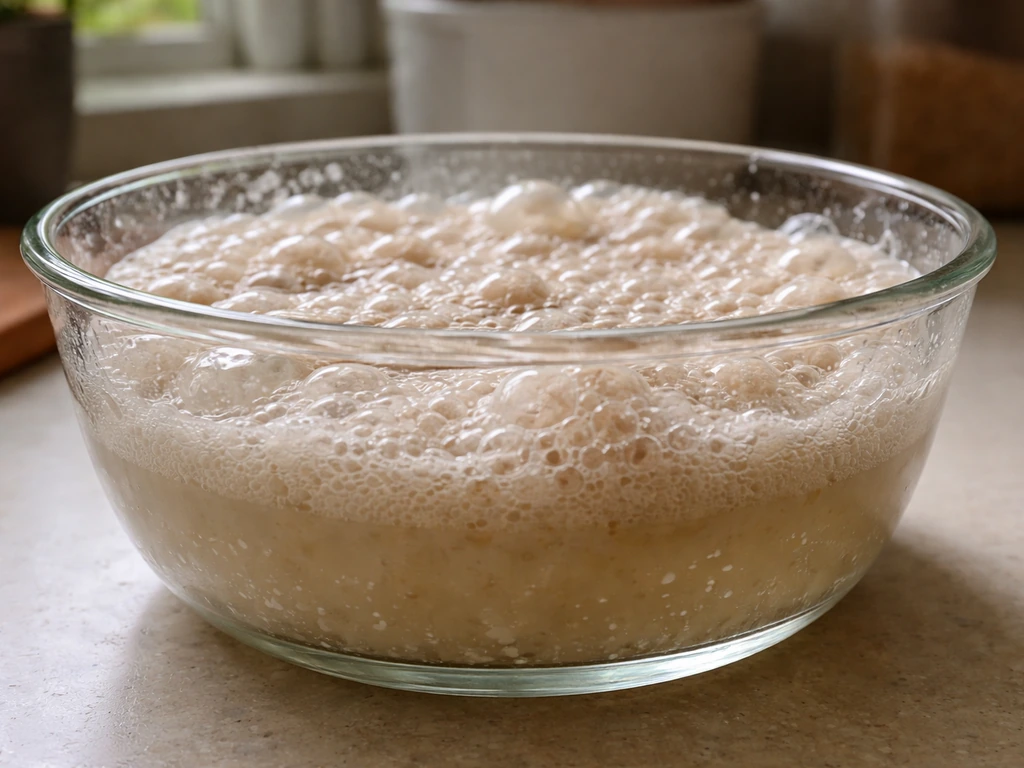
Yeast needs four things to grow: a source of fermentable sugar (food), adequate moisture and favorable osmotic conditions, the right temperature, and access to oxygen or at least tolerable anaerobic conditions depending on the job you need it to do. Get all four right and yeast is remarkably active. Let even one fall outside the acceptable range and growth stalls, fermentation slows, and your dough sits there doing nothing.
What 4 Things Yeast Needs to Grow and Ferment

Marcus Holloway
10 Jul 2026
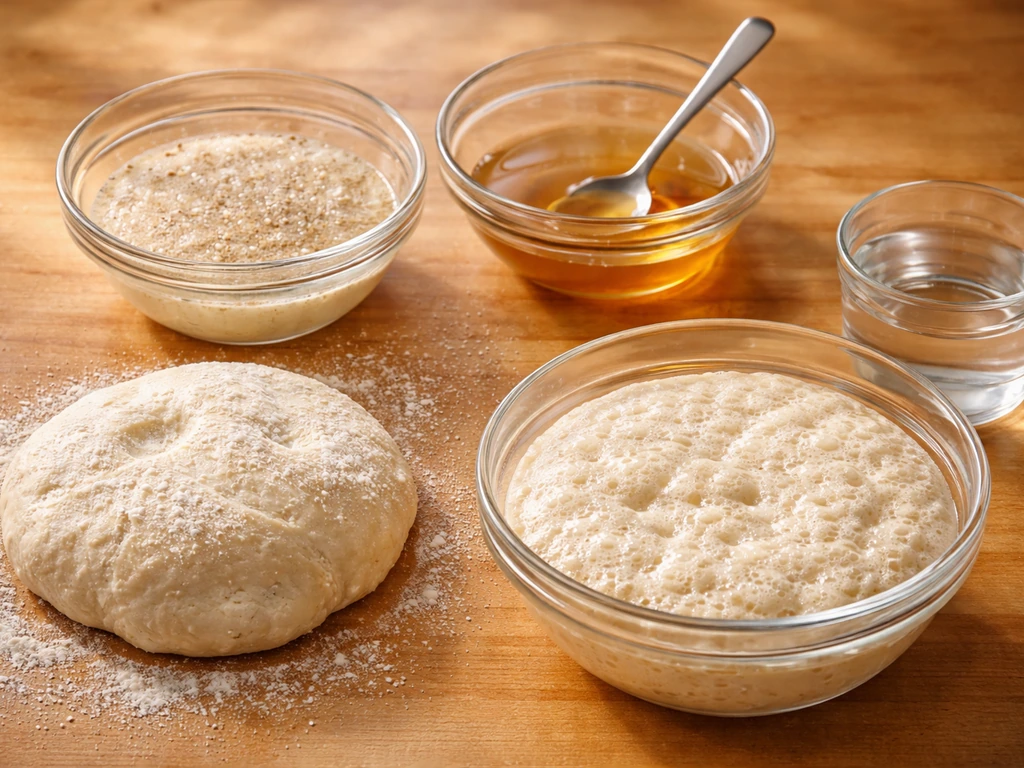
The 4 essential things yeast needs to grow
Yeast is a single-celled fungus, and like any living organism it has non-negotiable requirements. These four cover the biology: what it eats, the physical environment it lives in, the thermal conditions that control its enzyme activity, and the oxygen situation that determines which metabolic pathway it runs. Miss any one of them and you are not giving yeast a chance to grow.
- Fermentable sugars (food/energy source)
- Moisture and favorable osmotic pressure
- Warmth within the correct temperature range
- Oxygen availability (aerobic or anaerobic conditions)
Each of these does a specific biological job. Sugar provides the carbon and energy yeast metabolism runs on. Moisture keeps the cell membrane functional and lets nutrients and waste move in and out. Temperature governs the speed of every enzyme reaction inside the cell. And oxygen determines whether yeast respires fully and grows fast, or shifts into fermentation mode and produces the CO2 that makes bread rise and the ethanol that makes fermented drinks what they are. The rest of this article breaks each one down in practical, usable detail.
Temperature and yeast activity
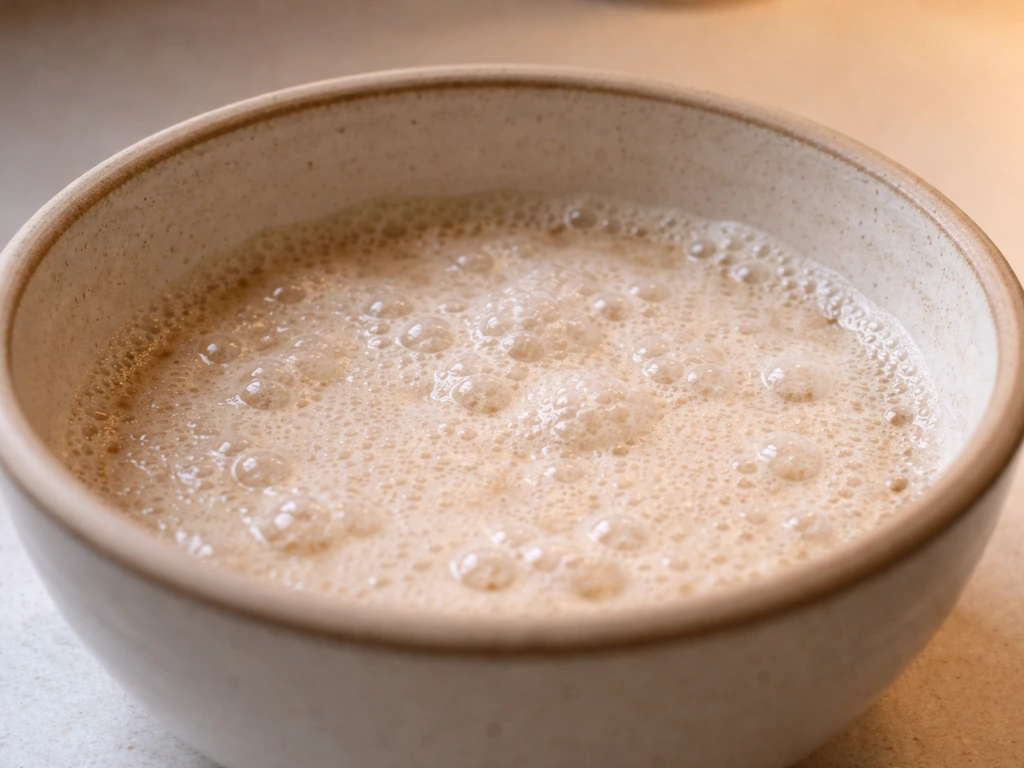
Temperature is the single easiest variable to measure and one of the most common reasons yeast underperforms. Yeast is most active between roughly 25°C and 35°C (77°F to 95°F). In that range, its enzymes work at close to peak efficiency, cell division is fast, and fermentation gas production is strong. Drop below about 10°C (50°F) and metabolic activity becomes very slow. The yeast does not die, it just barely functions, which is exactly why refrigeration is used to retard dough or store yeast cultures without killing them.
Heat is the more dangerous end. Water above about 43°C (110°F) starts to damage yeast cells, and by 60°C (140°F) the cells are dead. This is why the classic baking instruction says to proof active dry yeast in warm, not hot, water. If you cannot comfortably hold your hand in the water, it is probably too hot for yeast too. A quick thermometer check before you add yeast is one of the most reliable habits you can build in the kitchen or the classroom.
It is also worth noting that temperature interacts with all the other factors. Cold water slows yeast even if sugar and moisture are perfect. A well-hydrated, sugar-rich dough at 10°C will still barely rise because the enzyme kinetics simply will not support rapid activity at that temperature. This is why understanding these four needs as an interconnected system matters more than memorizing individual numbers.
What yeast actually eats
Yeast's primary fuel is fermentable sugars, specifically simple sugars like glucose and fructose that it can metabolize directly, as well as sucrose and maltose that it breaks down with enzymes first. In a bread dough, these sugars come from two places: any sugar added directly to the recipe, and the natural sugars released from starch in the flour as amylase enzymes (present in the flour itself) break down starches during fermentation. This is why lean doughs with no added sugar can still rise, just more slowly.
But sugar is not the whole nutritional picture. Yeast also needs nitrogen, vitamins, and minerals to sustain healthy cell growth and strong fermentation performance. Nitrogen, sourced from amino acids in the dough environment, supports yeast protein synthesis and cell replication. Wheat flour provides a reasonable baseline of these nutrients, which is one reason flour-based fermentations can work without much supplementation. In more stripped-down fermentation environments (like a simple sugar wash), adding yeast nutrients makes a real difference to performance because those co-factors are otherwise missing.
The practical takeaway: starvation is a real cause of sluggish fermentation. If yeast has no fermentable sugar to consume, it cannot produce CO2, it cannot grow, and it cannot do anything useful. This is a different problem from temperature or moisture, and it has a different fix.
Moisture, hydration, and osmotic pressure
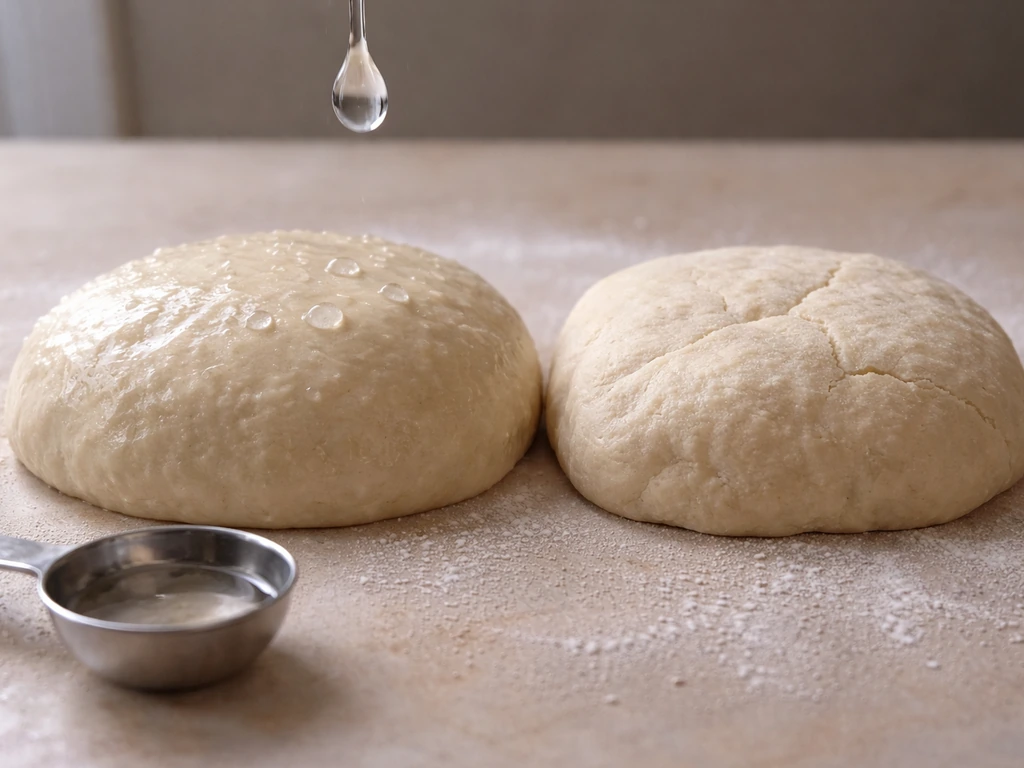
Yeast cells are surrounded by a membrane that relies on water to function. Intracellular chemistry, nutrient uptake, and waste removal all require adequate hydration. In bread dough, yeast lives in a semi-solid, water-containing matrix, and as long as the dough is properly hydrated, the yeast has the aqueous environment it needs. Dry storage conditions (like storing instant yeast in a sealed, dry packet) essentially put yeast into a dormant state. Reintroduce water and activity resumes.
Osmotic pressure is the more nuanced side of this requirement. When the concentration of dissolved substances (salts, sugars) outside the yeast cell is very high, water is drawn out of the cell by osmosis, causing stress and slowing or stopping growth. This is the biological reason that salt and high sugar concentrations inhibit yeast. Salt in bread dough is deliberately kept below about 2% of flour weight because higher concentrations meaningfully suppress yeast activity. Similarly, very high sugar concentrations (like in a heavily sweetened dough or a high-gravity fermentation) create osmotic stress that slows fermentation. Osmotolerant yeast strains exist precisely because regular baker's yeast struggles in these conditions.
The practical warning here is to not add salt directly onto active yeast before mixing, and to balance sugar levels with yeast quantity and strain when working with sweet or enriched recipes.
Aerobic vs. anaerobic growth: does yeast need oxygen?
This is where yeast gets genuinely interesting from a biology standpoint. Yeast is what microbiologists call a facultative anaerobe. When oxygen is available, it can carry out aerobic respiration, consuming sugar and oxygen together to produce energy, CO2, and water. This pathway is more energy-efficient and supports faster cell growth. When oxygen is absent or limited, yeast shifts to fermentation, breaking down sugar to produce energy along with CO2 and ethanol as waste products. That shift is the foundation of both bread-making and alcoholic fermentation.
For bread baking, this distinction is mostly academic in practice. Dough is a low-oxygen environment by the time fermentation is underway, and the CO2 from fermentation is what creates the bubbles that make bread light and airy. For brewing and winemaking, controlling oxygen carefully at different stages is very important because oxygen early in fermentation supports yeast growth (pitching and initial growth phase), while oxygen later on can produce off-flavors.
One important nuance: while yeast can ferment without oxygen, most strains of Saccharomyces cerevisiae (the workhorse of baking and brewing) cannot sustain growth under completely strict anaerobic conditions indefinitely. Completely airless environments eventually limit growth, even though fermentation continues for a while. In real-world applications, bread dough and brewing vessels are not perfectly anaerobic anyway, so this rarely becomes a hard barrier.
| Condition | Yeast Pathway | Products | Practical Application |
|---|---|---|---|
| Oxygen present | Aerobic respiration | CO2 + water + energy | Early yeast propagation, fast cell growth |
| Oxygen absent or limited | Fermentation | CO2 + ethanol + energy | Bread rising, brewing, winemaking |
| Strictly anaerobic (no oxygen at all) | Fermentation slows/stalls over time | Minimal output | Not a practical target for most uses |
Why your yeast isn't rising: a quick troubleshooting checklist
When yeast fails to perform, it is almost always one of these four factors. Running through them systematically is faster than guessing and remixing a whole batch.
Check 1: Water temperature
Measure the water or liquid you are using before adding yeast. It should be between 35°C and 43°C (95°F to 110°F) for active dry yeast proofing. Below 35°C and activity will be sluggish. Above 43°C and you may have killed the cells. If you are already in a mixed dough, consider the ambient temperature too. Dough fermenting in a cold kitchen below 20°C (68°F) will rise very slowly. A warmer spot or a slightly warm oven (off, door cracked) fixes this.
Check 2: Fermentable sugar
Does your recipe include sugar or flour? A dough with neither gives yeast nothing to eat. If you are making a lean dough, it needs enough flour for the amylase enzymes to release sugars from starch. Adding even a small amount of sugar (half a teaspoon per cup of flour) can jumpstart a slow fermentation. If you are testing yeast viability outside dough, always add a pinch of sugar to the warm water. If it foams within 10 minutes, yeast is alive and active.
Check 3: Hydration and salt levels
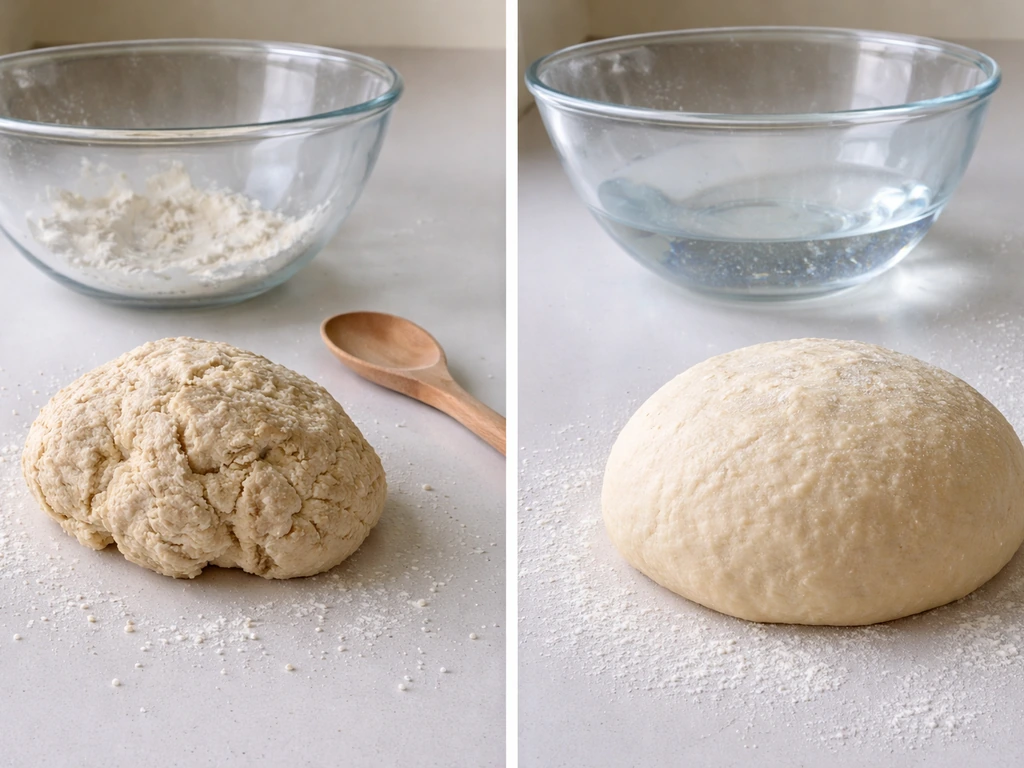
Is the dough or environment very dry, very salty, or very sweet? High salt concentrations placed in direct contact with yeast before mixing are a common mistake. Always add salt separately from yeast during dough mixing. If you are troubleshooting a high-sugar recipe that ferments slowly, try reducing sugar by 10 to 15% or use an osmotolerant yeast strain. Dry instant yeast stored in a humid environment may also have partially hydrated and then died in the packet. Store it sealed in the freezer once opened.
Check 4: Oxygen situation
For most bread-baking scenarios, oxygen is not the limiting factor. Dough naturally transitions to a low-oxygen fermentation environment, which is exactly what you want. If you are working on a brewing project and fermentation has stalled early (not at the end), giving the vessel a gentle stir to add a small amount of oxygen can help restart stuck fermentation by supporting yeast cell health. At the same time, do not over-oxygenate a fermentation that is already going well or you risk promoting spoilage organisms and off-flavors. In other words, chaeto generally needs the right light, stable nutrients, and proper flow to grow consistently light, nutrients, and flow.
Quick diagnosis table
| Symptom | Most Likely Cause | Quick Fix |
|---|---|---|
| Yeast foams in water but dough won't rise | Cold dough temperature | Move dough to a warmer spot (25-30°C) |
| Yeast doesn't foam in proofing water | Dead yeast or water too hot/cold | Test with fresh yeast in 38°C water + pinch of sugar |
| Fermentation starts then stalls | Sugar depleted or osmotic stress | Check sugar content; reduce salt or add small sugar boost |
| Very slow but consistent rise | Low temperature or low sugar | Raise ambient temp; add small amount of sugar to recipe |
| Dense crumb, no bubbles | Yeast killed by heat or insufficient hydration | Check water temp; ensure dough is properly hydrated |
Putting it all together
Yeast is not fragile, but it is specific. The four things it needs, fermentable sugars, moisture and reasonable osmotic conditions, the right temperature, and an appropriate oxygen environment, each affect a different part of its biology. ASBE’s ingredient overview of yeast also summarizes these needs as fermentable sugars (from flour and/or added sugars plus amylase activity), proper hydration, suitable temperature, and osmotic pressure from salt and sugar that slows yeast activity blank" rel="noopener noreferrer">fermentable sugars (from flour and/or added sugars and amylase activity), moisture and hydration conditions, temperature for activity, and osmotic pressure effects from salt and sugar. Temperature controls enzyme speed. Sugar provides the energy and carbon source for metabolism. Moisture and low osmotic stress keep the cell membrane functional and allow nutrient exchange. Oxygen determines the metabolic pathway yeast runs and how efficiently it grows. If you want to go deeper on any of these individually, the biology behind optimal temperature ranges and the full list of yeast growth conditions are worth exploring further. Once you understand how these four factors interact, diagnosing a sluggish fermentation or a failed proof becomes a straightforward process of elimination rather than a frustrating mystery. Yeast needs these same growth requirements whether you're baking bread or running a fermentation experiment these four factors.
FAQ
If my yeast is expired or has been stored warm, can I still use it?
Not necessarily. Yeast can “wake up” when hydration is restored, but if the yeast spent a long time in heat or high humidity before you used it, the cells may already be damaged. A practical check is to proof it in warm liquid with a pinch of sugar and wait for foam within about 10 minutes, which indicates the cells are metabolizing rather than just surviving.
Why does my dough fail even though the temperature and proofing time seem right?
For most baking, do not add yeast directly onto salt in a concentrated spot. Salt inhibits yeast by increasing osmotic stress, so combine ingredients so salt is distributed through the dough, or add salt after the yeast has been mixed in with flour and water.
How do I know whether my problem is the water temperature or the kitchen temperature?
Ambient room temperature matters, because dough temperature is what yeast actually experiences. If your kitchen is cold, use warmer liquids or provide a mild proofing environment (for example, a turned-off oven with the light on), since enzyme activity can be far slower below about 20°C (68°F) even when your recipe and timing are correct.
Can yeast grow in water alone or without sugar?
If there is truly no fermentable sugar, yeast cannot generate enough CO2 quickly to raise dough. In doughs made only from flour and water, fermentation still works because flour enzymes break down starch into sugars, but it will be slower than in recipes with added sugar. If you are troubleshooting a very lean recipe, increasing fermentation time often helps more than increasing yeast.
Should I just add more yeast when fermentation is slow?
More yeast can help only up to a point. If the issue is too hot, too salty, or too dry, extra yeast will not compensate because the limiting factor is biological stress or enzyme damage. When troubleshooting, change one variable at a time, then compare rise rate and final dough texture to identify which of the four factors is failing first.
Do I need to add air to dough or beer to help yeast?
Oxygen is usually not the main limiter in bread because dough becomes low-oxygen as it mixes and ferments. In brewing, oxygen management is more important, especially early on for yeast health. If fermentation stalls early in a brew, a gentle stir can reintroduce a small amount of oxygen, but avoid doing it repeatedly if the fermentation is already proceeding normally.
What should I change in a high-sugar or sweet dough that ferments slowly?
Salt and sugar both raise osmotic pressure, but they interact differently depending on concentration. If your recipe is sweet or enriched, you can reduce sugar by roughly 10 to 15% or switch to an osmotolerant yeast strain to improve performance without changing temperature or hydration.
How can I tell if hydration is the problem rather than yeast viability?
Dough that is overly dry prevents good hydration, which can make yeast activity sluggish even if the temperature is perfect. If the dough feels stiff and doesn’t hold together well, adjust with small additions of water and recheck before assuming yeast is dead, because hydration affects nutrient transport and membrane function.
What water temperature should I use to proof active dry yeast?
For active dry yeast proofing, a common rule is to use water roughly in the 35°C to 43°C (95°F to 110°F) range. Below about 35°C activity will be sluggish, above about 43°C you risk reducing viable cells. If you skip proofing, you still need the dough’s effective temperature to land near the workable range for your recipe and room conditions.
My proof did not foam, does that always mean my yeast is dead?
A lack of foam in the proofing test suggests non-viable yeast, but it can also happen if the liquid was too cold, too hot, or too salty, or if you forgot the sugar pinch. If the test fails, repeat once with fresh warm liquid plus a pinch of sugar, and keep salt out of the proofing mixture to isolate yeast health.