Yes, bath bombs can grow mold, though it happens less often than you might expect and usually only under specific conditions. The fizzing chemistry in a bath bomb (sodium bicarbonate and citric acid) creates an alkaline-then-acidic environment that discourages many microbes, but the oils, starches, butters, and botanical ingredients inside give mold plenty to feed on once moisture enters the picture.
Can Bath Bombs Grow Mold? Causes, Signs, and Fixes

Marcus Holloway
22 May 2026
For example, LUSH’s “Glitter Bomb” ingredient list includes sodium bicarbonate and citric acid Glitter Bomb lists Sodium Bicarbonate and Citric Acid among ingredients. Lush-style bath bombs are a common example: many are marketed as self-preserving with zero synthetic preservatives, which means the product relies on low water content and careful storage to stay safe rather than a chemical preservative system.
If those conditions break down, mold is a real possibility.
Why bath bombs can host mold: the microbiology behind it
Mold does not appear randomly. It needs a specific set of conditions to grow, and understanding those conditions explains both why bath bombs are usually safe and exactly when they become vulnerable. Think of it as a checklist: mold needs to tick most of these boxes before it can establish itself.
Moisture and water activity
This is the single biggest factor. Scientists measure moisture availability not just as a percentage of water content but as water activity (aw), a scale from 0 to 1 that reflects how available water molecules are for microbial use. The FDA notes that most foods have a water activity above 0. 95, which is sufficient to support bacteria, yeasts, and mold.
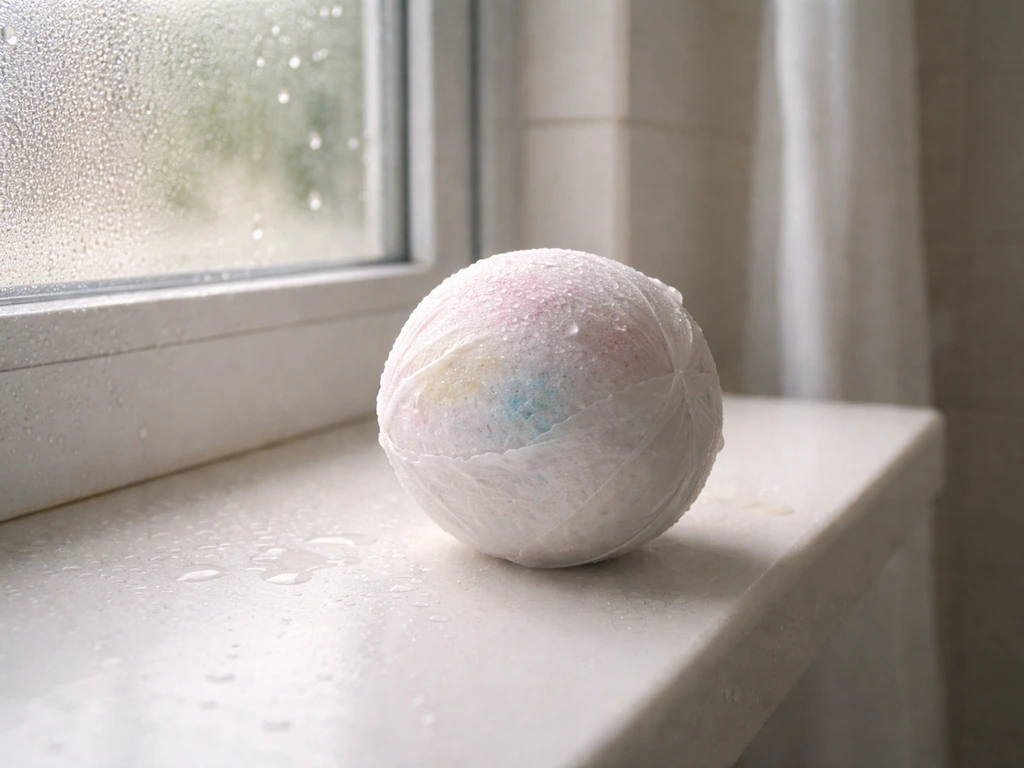
A dry, freshly made bath bomb has very low water activity, which is exactly why the ingredients can sit on a shelf without growing anything. The moment moisture enters, either from steam in a humid bathroom, wet hands touching the surface, or water splash during bathing, water activity rises and the dormancy barrier breaks. A bath bomb sitting on the edge of a tub or in a steamy shower room is essentially being primed for mold every single day.
pH: the acid-alkaline balance
Sodium bicarbonate is alkaline and citric acid is, well, acidic. Together they create a reactive system. In a dry bomb, this chemistry is locked in place. Once water enters, that neutralization reaction starts slowly, shifting the local pH. Most mold species prefer a slightly acidic environment (roughly pH 4 to 6), so a very alkaline bath bomb has some natural resistance. But as the bomb degrades, that protective alkalinity decreases, and the pH can drift into a range more hospitable to fungal growth. This is one reason older, partially used, or humidity-damaged bath bombs are more at risk than fresh, intact ones.
Nutrients from ingredients
Mold needs a carbon source to grow, and bath bombs are generous with nutrients. Oils and butters provide fatty acids. Corn starch (found in some formulas including certain Lush products) is essentially a carbohydrate buffet for fungi. Botanical colorants, flower petals, and herbal additives supply organic matter that mold species have evolved specifically to break down. The more complex and natural the ingredient list, the more potential food sources are present for opportunistic microbes.
Oxygen, temperature, and surface contact
Nearly all common mold species found in bathrooms are aerobic, meaning they need oxygen. The surface of a bath bomb is fully exposed, so oxygen is never a limiting factor here the way it might be in a sealed, vacuum-packed food product. Temperature matters too: bathrooms tend to hover in the 20 to 30 degrees Celsius range, which sits squarely in the optimal growth zone for most household mold species. Combine warm air, humidity from showers, oxygen exposure, and a nutrient-rich surface, and you have almost ideal mold conditions the moment water activity increases enough to unlock growth.
The self-preserving question with Lush-style bombs
Lush describes some bath products as self-preserving, staying fresh without added synthetic preservatives. That is not marketing spin: the low water activity of a dry bomb really does inhibit microbial growth effectively, the same principle that keeps dry salt or sugar shelf-stable for years. But self-preserving also means the product has no chemical backup plan if storage conditions slip. Once humidity or water contact pushes water activity high enough, there is nothing to stop mold from taking hold. This is fundamentally different from a product with a broad-spectrum preservative system. Knowing this helps you understand the product, not fear it, but it does mean storage discipline matters more, not less.
Is that spot actually mold? How to tell the difference
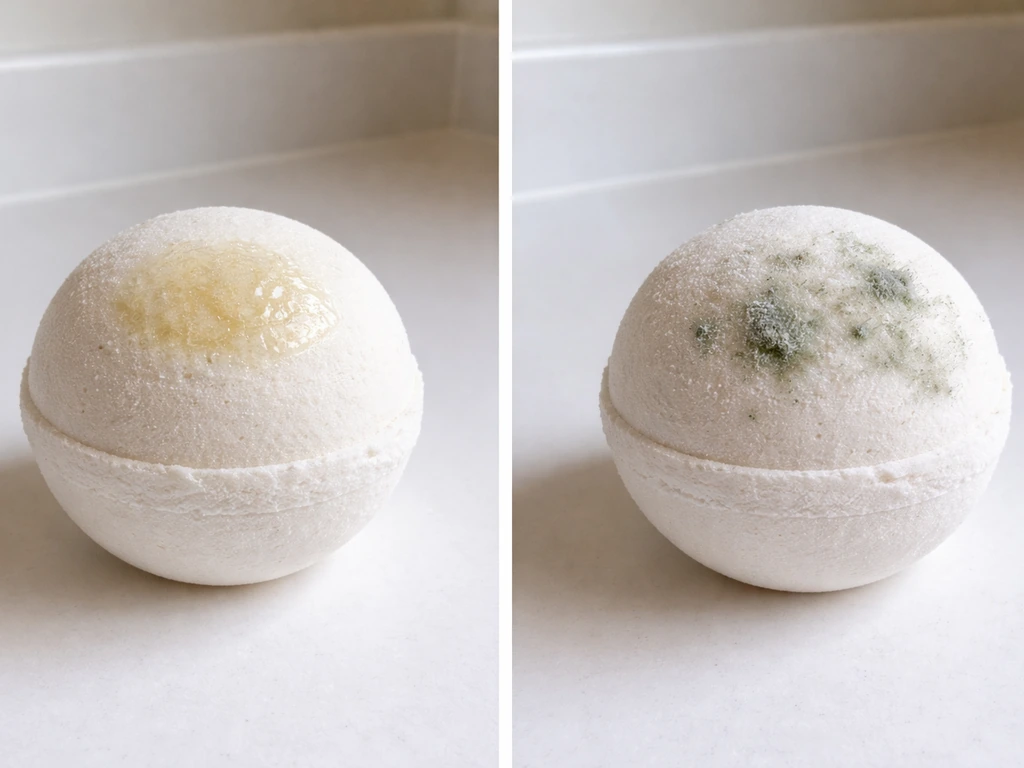
Not every discoloration on a bath bomb is mold, and it is worth checking before you panic. Several completely harmless changes look suspicious at first glance.
| What you see | Most likely cause | Mold? |
|---|---|---|
| Shiny or greasy patch on the surface | Oil or butter migrating to the surface as temperature changes | No |
| White or gray powdery film | Sodium bicarbonate or salt crystallizing as humidity fluctuates | Unlikely, but check for fuzz |
| Color change or fading | Dye degradation from UV light or humidity exposure | No |
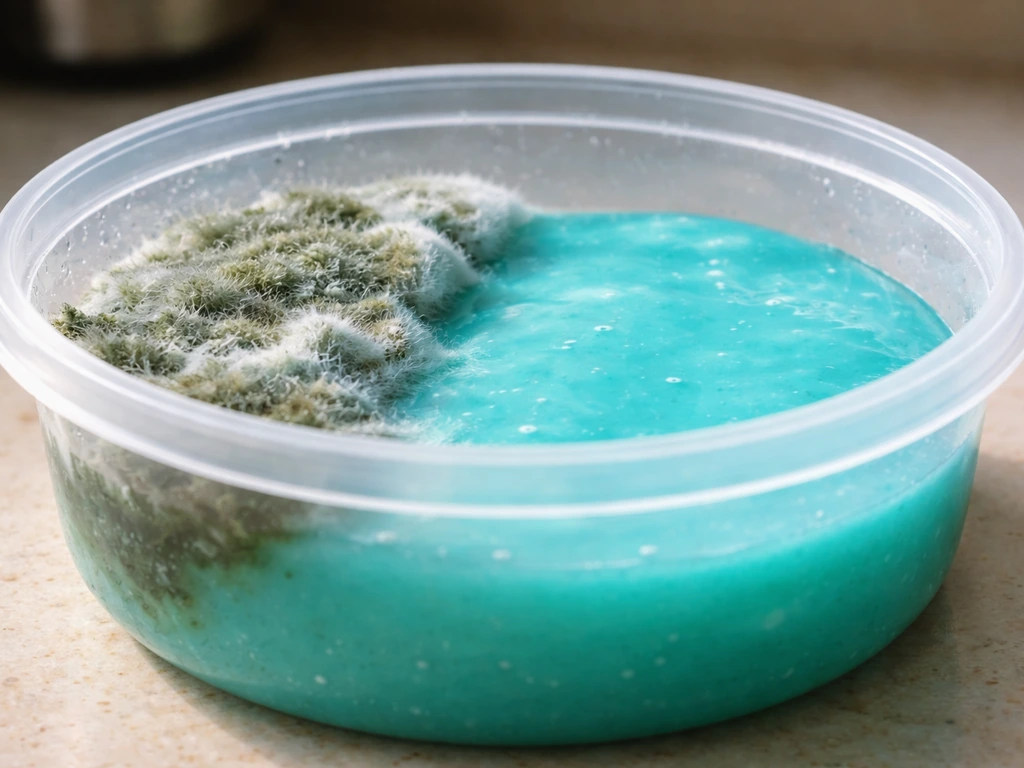
| Small fuzzy spots (white, green, black, or gray) | Mold colony establishing on the surface | Very likely yes |
| Black or dark specks throughout | Intentional colorant, glitter, or botanical inclusion (check original product) | Usually no, but compare to original |
| Musty or earthy smell | Early microbial activity even without visible growth | Possible yes, treat with caution |
The key distinguishing feature of real mold is texture. Oil sheen is smooth and shiny. Salt crystals are angular and dry. Mold is fuzzy, powdery-in-a-soft-way, or cottony, and it tends to grow in localized patches rather than uniformly across a surface. If you see a spot, try looking at it in good lighting from an angle. Flat and shiny means chemistry; raised and fuzzy means biology. A musty smell without visible growth is also worth taking seriously, especially with organic-ingredient bombs, because mold can establish below the surface before it becomes visible.
What to do when you find mold on a bath bomb
If you spot what looks like genuine mold, the right move is to stop using the product immediately. There is no safe way to remove mold from a porous item like a bath bomb and continue using it: the mycelium (the root-like structure of the mold colony) penetrates below the surface, so what you see on the outside is only part of the growth. Cutting off the visible spot does not make the rest safe.
Safe disposal
Wrap the bath bomb in a bag or paper before discarding it to avoid spreading spores in your bathroom. Throw it in an outdoor bin if possible. Do not attempt to dissolve it in your bath water once mold is confirmed: you would be introducing a concentrated dose of spores and mycelium directly into water you are sitting in, which is not a risk worth taking, especially for anyone with respiratory sensitivities, asthma, or compromised immunity.
Cleaning the storage area and the tub
After discarding the bath bomb, clean any surface it was sitting on. The CDC recommends a dilution of 1 cup of household liquid bleach per 1 gallon of water for cleaning mold from hard, non-porous surfaces. Apply the solution, let it sit for a few minutes, then wipe and rinse thoroughly. It is worth noting that [the EPA explicitly discourages using bleach as a routine or default mold cleanup method](https://www.
epa. gov/mold/should-i-use-bleach-clean-mold), but for a targeted, one-time cleanup of a hard bathroom surface (a tile shelf, a ceramic dish, the edge of a tub), it is a practical and effective option. If the bath bomb was stored in a container, clean that container with the same dilution or replace it if it is porous or cracked. Dry everything completely before putting anything back.
Light spotting versus heavy fuzzy growth
If you caught it early and see only one or two small spots, the cleanup is simple: discard the bomb, wipe the shelf, move on. If you find heavy growth across the bomb or inside a storage container, or if you find mold on multiple products in the same space, that signals a broader humidity or ventilation problem in your bathroom that needs addressing separately. In that case, check whether other items in the same area show signs too.
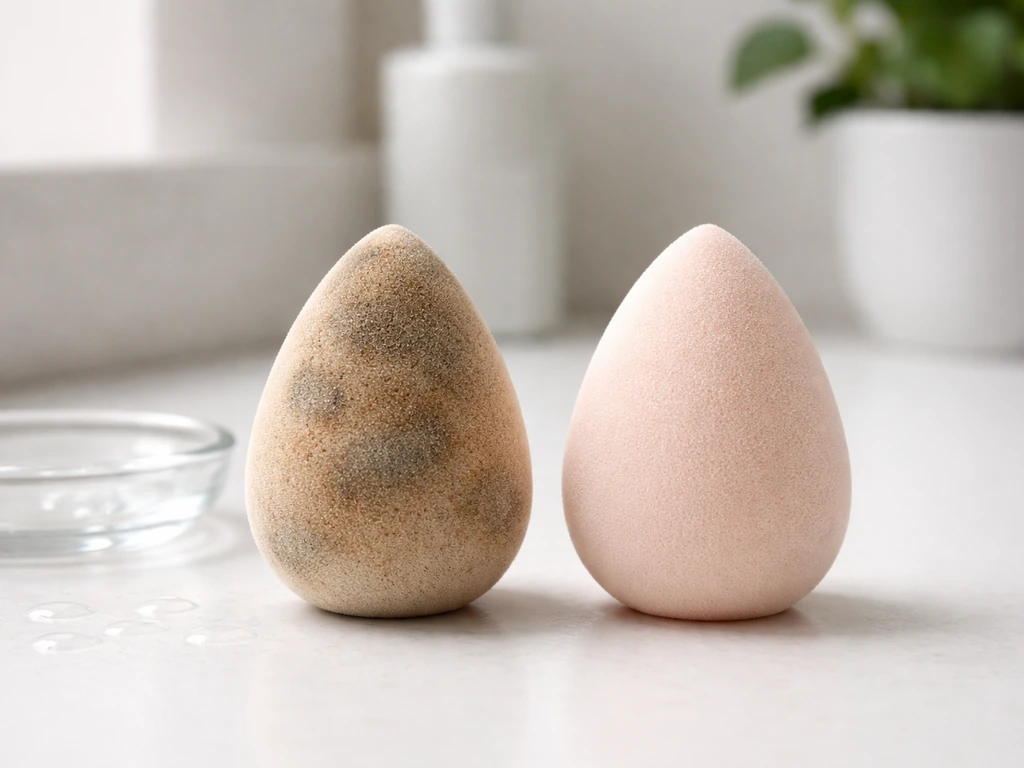
Mold tends to behave consistently: if conditions are right in that spot, everything there is at risk. Other personal care items left in humid conditions, from beauty blenders to organic-ingredient products, can face the same problem. Beauty blenders can also develop mold when moisture gets trapped in the sponge and it is not dried properly.
How to store bath bombs so mold never starts
Prevention is straightforward once you understand the biology. You are just trying to keep water activity low by cutting off every route moisture can use to reach the product.
- Store bath bombs outside the bathroom whenever possible. A bedroom drawer, a linen closet shelf, or any room without regular steam exposure keeps humidity consistently low.
- If you must store them in the bathroom, keep them in an airtight container. Airtight means sealed, not just covered. Humidity from a single shower cycle can penetrate a loosely lidded box.
- Never touch a bath bomb with wet hands. The water from your hands raises the local water activity on the surface instantly, creating a small but real growth window.
- Keep bath bombs spaced apart, not stacked. Stacking traps moisture between surfaces and reduces air circulation, both of which favor microbial establishment.
- Avoid storing them near the shower, bathtub, or sink where water splash is common.
- Use bath bombs within the recommended shelf window. Lush and similar brands often note that products are best used fresh. A bomb sitting for 6 to 12 months in humid conditions is a very different risk profile from one used within a few weeks of purchase.
- If a bath bomb came individually wrapped, keep it in that wrapper until you use it. The packaging is not decorative: it is a moisture barrier.
It also helps to think about your bathroom ventilation more broadly. Mold in bathrooms is fundamentally a building science problem: spores are everywhere, all the time, but they only grow where conditions stay wet long enough. Running an exhaust fan during and for 15 to 20 minutes after every shower significantly reduces ambient humidity. This protects your bath bombs the same way it protects your grout, your towels, and anything else porous stored in that space.
When to actually worry: health risks and ongoing contamination
For most healthy adults, discovering mold on one bath bomb is a nuisance, not a health emergency. Discard the product, clean the surface, and fix your storage setup. That is the full response needed in most cases. Can books grow mold in the same way, once moisture and the right conditions let spores wake up and start feeding the full response needed in most cases. But there are situations where mold in a bathroom deserves more attention.
Mold exposure can irritate the eyes, skin, nose, throat, and lungs. For people with asthma, respiratory conditions, or mold allergies, even modest exposure can aggravate symptoms and trigger difficulty breathing, skin rashes, or persistent coughing. If someone in your household has these sensitivities and you are finding mold repeatedly across multiple bathroom items, that is a signal to address the underlying humidity problem, not just the individual products. Persistent mold in a bathroom, on grout, caulk, or anywhere that stays wet regularly, produces ongoing spore release into the air and is a different category of problem than a single moldy bath bomb.
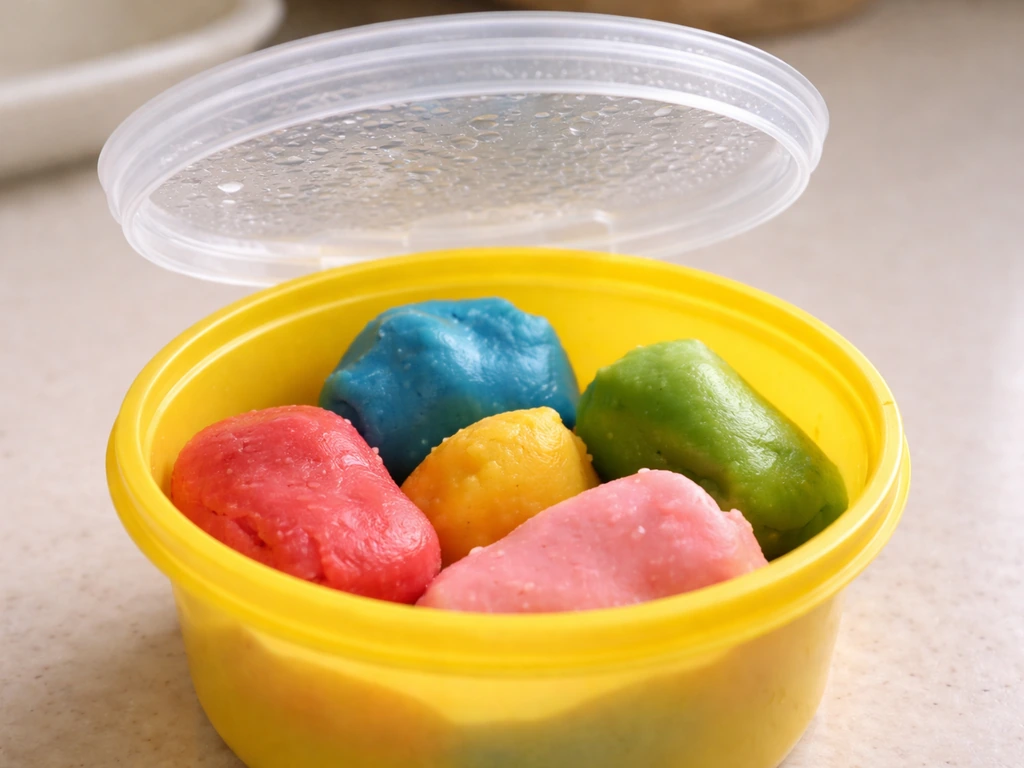
One important concept here is the difference between dormancy and active growth. Mold spores are always present in indoor air: they are dormant and harmless until conditions allow germination and growth. A bath bomb in a dry, sealed container is surrounded by spores that are doing nothing because water activity is too low to support them. This is not contamination; it is normal indoor air. The biology only becomes a problem when you introduce sustained moisture. This is the same principle that explains why dry salt, dry books, and dry play-doh resist mold while their wet or humid counterparts do not. The microbe has not changed; only the conditions have.
If you are cleaning up a larger mold situation in the bathroom (beyond just the bath bomb), wear gloves and consider a simple dust mask to avoid inhaling spores during cleanup. For anything larger than roughly 10 square feet of surface mold, the CDC and EPA recommend consulting a professional rather than handling it yourself. A single moldy bath bomb does not come close to that threshold, but it is worth knowing where the line is.
FAQ
If I just smell something musty, but I don’t see mold, should I still throw the bath bomb away?
They can, but the timing is different. A moldy bath bomb usually shows visible fuzzy or cottony growth after moisture raises water activity on the surface. If you only notice a strong musty odor with no fuzz, treat it as suspect and discard it rather than trying to “air it out,” because mold can be developing below the visible area in porous, ingredient-rich products.
Can I use the bath bomb in the bath anyway, or at least dissolve it to kill the mold?
Once mold is confirmed, you should not “sanitize in the bath” by dissolving it. The spore and mycelium material is already embedded in a porous matrix, so running it through bath water can release concentrated spores into the same water you are breathing and rinsing your body with. The safer option is to discard it and clean the area it touched.
Does a damaged or partially used bath bomb have a higher chance of mold?
Cracks, chipped edges, and soft spots increase risk because they let moisture reach deeper layers more easily. Even if the rest looks intact, damage can raise local water activity after a few uses or when stored near splashes. Store intact bombs in a dry, sealed container, and discard any that are visibly breaking down or shedding powdery residue that you can’t wipe off cleanly.
Can mold grow inside a closed container, even if the bath bomb is “not being used”?
Yes. If the bath bomb is stored with a lid but the container gets repeatedly wet or sits in a humid area, the container can trap moisture and allow mold to establish inside or on the inner surface. Plastic bags can also trap humidity if the bag holds any dampness. Use a fully dry container, keep it in the coolest driest spot in the home, and make sure the container is not cracked or porous.
How do I know whether this is an isolated bath bomb problem or a bigger bathroom ventilation issue?
After you discard one moldy bath bomb, check for pattern clues: if mold appears on multiple products in the same corner or on the same shelf, the issue is likely bathroom humidity or ventilation, not just one bad bomb. If you see repeated growth on other porous items, prioritize improving ventilation and drying routines before buying replacements, because fresh bombs will be exposed to the same moisture conditions.
Is moldy bath bomb cleanup riskier for people with asthma or immune issues?
Yes, especially if anyone in the household has asthma, active mold allergy, or immune suppression. For those situations, avoid breathing dust during cleanup, consider stepping out of the area while surfaces are treated and dried, and treat recurring growth as a health and moisture-control priority rather than a one-time nuisance.
Where in the bathroom should I avoid storing bath bombs to reduce the risk of mold?
Mold often appears where humidity lingers. If your bath bombs are stored near the shower, on the tub rim, in a bathroom cabinet with poor airflow, or on a shelf that gets condensation, they get moisture contact more often. Move them to a dry location outside the immediate splash and steam zone, and use an exhaust fan to reduce the overall ambient humidity.
Is bleach cleaning enough, or do I need to replace anything after mold is found?
If you do a bleach-based clean on hard, non-porous bathroom surfaces, ensure good ventilation and allow the surface to fully rinse and dry. Also do not assume bleach will “fix” porous items like cracked holders, sponges, or textured storage trays. Replace porous containers or liners that got contaminated, because they can keep moisture and spores even after surface wiping.
Can I keep using other bath products stored nearby, or should I discard everything in that area?
Generally, you should discard the bath bomb, but you can keep using other products if they are visibly clean, dry, and stored separately in a way that prevents moisture contact. If other bath items show fuzzy spots, musty odor, or increased softness, discard them too. When in doubt, treat it as a storage-environment issue and reduce humidity exposure for the remaining items.