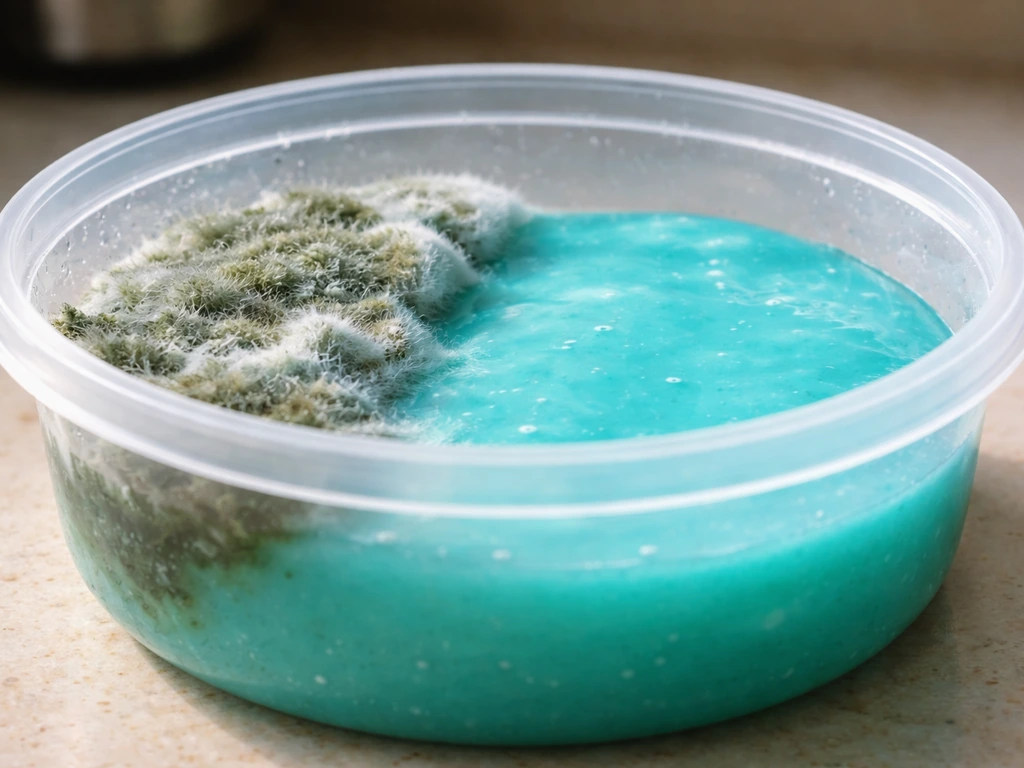
Yes, slime can grow mold. It happens more often than most people expect, especially with DIY recipes that use glue, lotion, or food-based add-ins. The good news is that mold on slime follows the same predictable rules as mold anywhere else: it needs moisture, nutrients, the right temperature, and oxygen. Once you understand those conditions, you can spot the problem early, decide whether to clean or toss the slime, and set up habits that keep new batches fresh a lot longer.
Can Slime Grow Mold? How to Spot and Prevent It

Marcus Holloway
2 May 2026
What slime actually is, and why mold is even on the table
Most slime is a water-based polymer system. The classic DIY version mixes PVA glue (polyvinyl alcohol) with a borate cross-linker like borax or contact lens solution. Store-bought slimes use similar polymer chemistry, sometimes with added preservatives. Beyond the base, people routinely stir in extras: shaving cream, hand lotion, clay, food coloring, glitter, foam beads, and even scented oils. Each addition can change the nutrient profile of the slime, its water content, and its pH, all of which affect how hospitable it is to mold.
Mold is a type of fungus that spreads via microscopic spores floating in the air around us at all times. Those spores are landing on your slime every time it is open. Whether they actually germinate and grow into visible mold colonies depends entirely on whether the conditions inside the slime are favorable. Understanding those conditions is the whole game.
The five conditions mold needs, mapped to what is in slime
Mold, like any living organism, has a checklist it needs to grow. Let's go through each factor and see how typical slime stacks up.
Moisture and water activity
This is the biggest one. The USDA identifies water activity (abbreviated a_w) as the key measure for predicting whether mold, bacteria, or yeast can grow in a material. Water activity measures how much water is actually available to microorganisms, not just how much total water is present. Slime is roughly 30 to 60 percent water depending on the recipe, and a large portion of that water is free and unbound, giving it a relatively high water activity. That is precisely the range where most mold species thrive. Fluffy slime and butter slime recipes that incorporate shaving cream or lotion add even more moisture to the system.
Nutrients
Plain PVA glue is not exactly a five-star meal for mold, but it does contain organic polymer chains that some fungi can slowly degrade. The real nutrient boost comes from additives. Lotion and shaving cream contain fatty acids and surfactants. Food coloring often contains sugars or organic dyes. Clay and foam beads can introduce organic particulates. Any food-based mix-in, like sprinkles, biodegradable glitter, or scented extracts, adds directly to the nutrient load. The more organic material in your slime, the better a mold habitat it becomes.
Temperature
Most common household mold species grow well between about 60 and 80 degrees Fahrenheit (15 to 27 degrees Celsius), which is exactly the range of a typical living room, classroom, or bedroom where slime is stored. Storing slime in a cooler environment, like a refrigerator, slows mold growth significantly but does not stop it entirely. Mold does not grow well below 40 degrees Fahrenheit (4 degrees Celsius), which is why refrigeration is worth considering for slime you want to keep longer.
pH
Most mold species prefer a mildly acidic to neutral pH, roughly 4 to 7. Classic borax-based slime is moderately alkaline, which actually creates a somewhat less favorable environment for mold. This is part of why borax slime tends to last longer than recipes that skip the borax or use acidic activators. However, as slime ages and gets handled repeatedly, contaminants from hands, tools, and the environment gradually shift the pH toward a more mold-friendly zone.
Oxygen
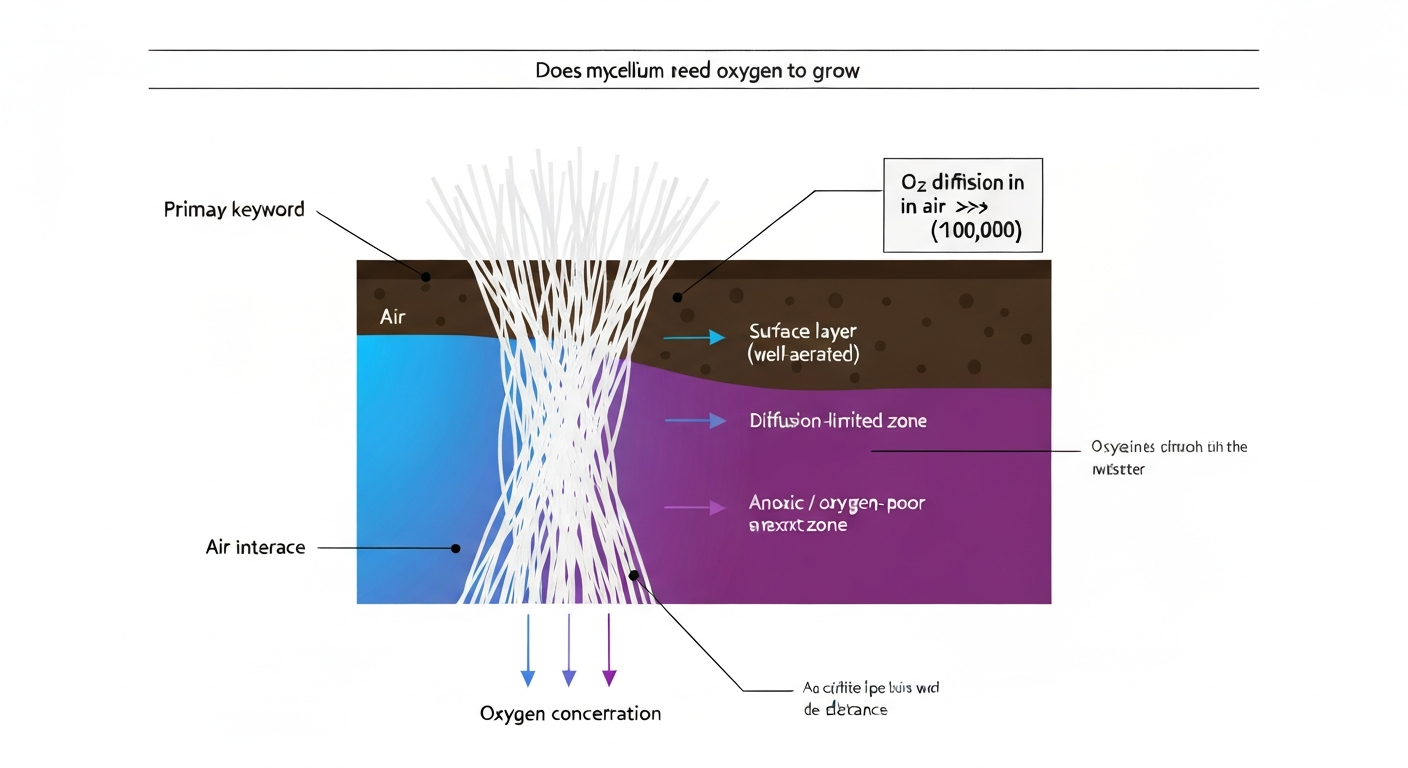
Almost all common household mold species are aerobic, meaning they need oxygen to grow. Slime stored in a sealed container is not oxygen-free, but it does limit the fresh airflow that mold benefits from. Leaving slime out in open air, or in a loosely lidded container, exposes it to more oxygen and more incoming spores simultaneously. This is a double problem that accelerates colonization.
| Growth Condition | What Mold Needs | What Typical Slime Provides | Risk Level |
|---|---|---|---|
| Moisture (water activity) | High a_w (above ~0.70) | High, especially with lotion or shaving cream | High |
| Nutrients | Organic carbon sources | Moderate (glue base), higher with additives | Moderate to High |
| Temperature | 60 to 80°F (15 to 27°C) | Room temperature storage matches perfectly | High |
| pH | Mildly acidic to neutral (4 to 7) | Alkaline if borax-based; shifts with contamination | Low to Moderate |
| Oxygen | Aerobic environment | Present unless tightly sealed | Moderate |
How to tell if your slime actually has mold
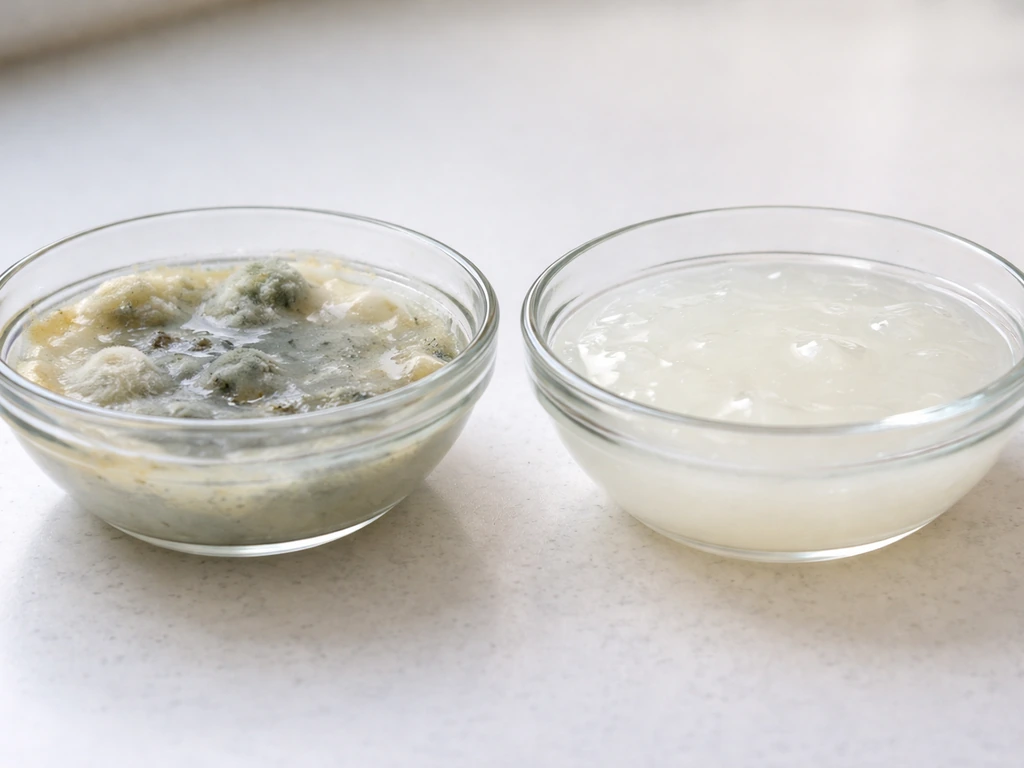
The CDC and NIOSH note that thorough visual inspections combined with checking for musty odors are among the most reliable ways to detect mold, and that holds true for slime just as well as for walls or food. Here is what to look for:
- Fuzzy or powdery surface growth: This is the most definitive sign. Mold colonies are three-dimensional and fuzzy or chalky in texture, not flat like pigment. If you see raised, textured growth, that is mold.
- Spots with color that seems to come from within: Mold can appear white, gray, green, black, or even pink or orange depending on the species. Spots that look like they originate from a central point and branch outward are suspicious.
- Musty or sour smell: Fresh slime smells like its ingredients. A musty, earthy, or sour odor that was not there before is a strong indicator of microbial activity, even before visible colonies form.
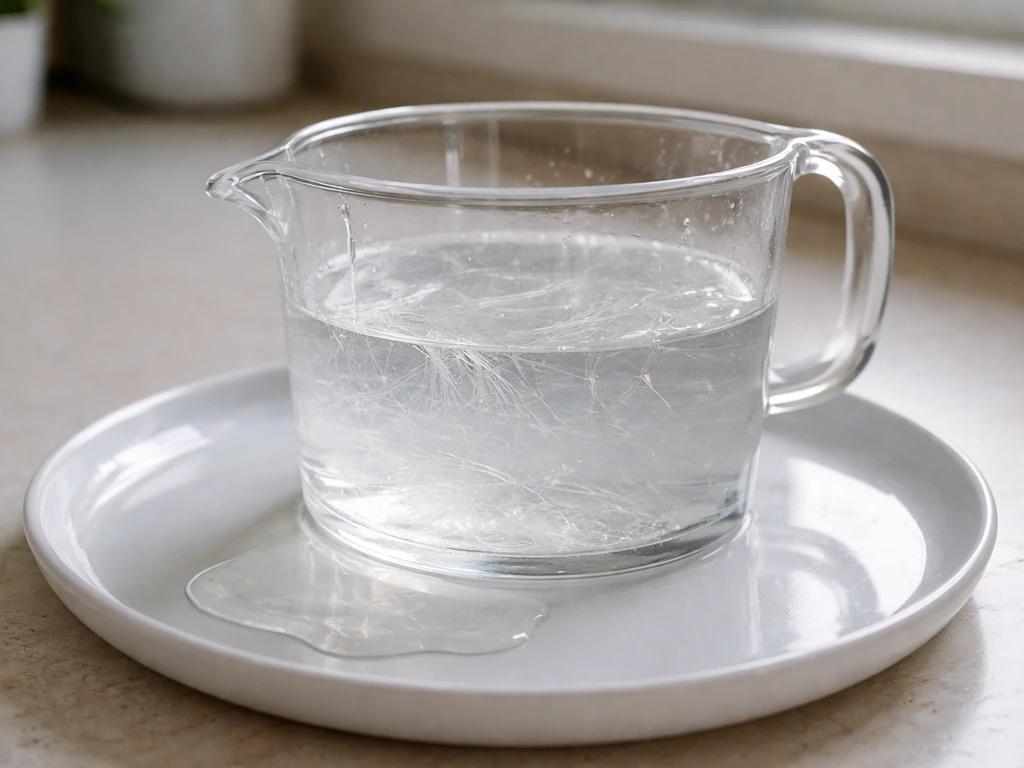
- Slimy or unusually wet patches: If one area of the slime has become noticeably wetter or more liquid than the rest, it could indicate microbial breakdown of the polymer structure.
- Texture changes in localized areas: Mold does not affect the entire batch at once. Localized softening, gumminess, or stickiness in one spot while the rest feels normal is worth investigating.
It is worth distinguishing real mold from a few common look-alikes. Slime that has simply dried out will pull away from the container and feel stiff or crumbly. Color bleed from dyes is flat and uniform, not fuzzy or spotty. Separation of the activator from the polymer base looks like a wet layer pooling underneath the slime, not surface growth. If you are genuinely unsure, the smell test is your best secondary check. Mold has a characteristic musty odor that separated or dried-out slime does not produce.
Why mold shows up: the most common triggers
Mold does not appear randomly. Something in the slime's environment tipped the conditions in mold's favor. These are the triggers I see come up most consistently:
- Excess water at mixing: Adding too much water when making slime, or thinning it out with water when it gets stiff, raises the overall water activity dramatically. More free water means more opportunity for mold.
- Humid storage: Slime stored in a bathroom, basement, or anywhere with ambient humidity above 60 to 70 percent absorbs moisture from the air over time, even in a closed container.
- Non-sterile tools and containers: Hands, spoons, bowls, and storage containers carry bacteria and mold spores. Mixing slime with unwashed hands or reusing a contaminated container introduces a starting colony before you even finish making the batch.
- Organic mix-ins: Anything biodegradable you stir in, such as real flowers, food items, biodegradable glitter, or natural extracts, brings its own microbial load and nutrients.
- Prolonged storage at room temperature: Even well-made slime breaks down over weeks. Most DIY slime without preservatives has a realistic shelf life of two to three weeks at room temperature before mold risk climbs significantly.
- Leaving slime open between uses: Every minute slime sits exposed to open air, more spores land on it. Leaving it out overnight or for a full day is one of the fastest ways to invite mold.
When you find mold: how to stop it from spreading
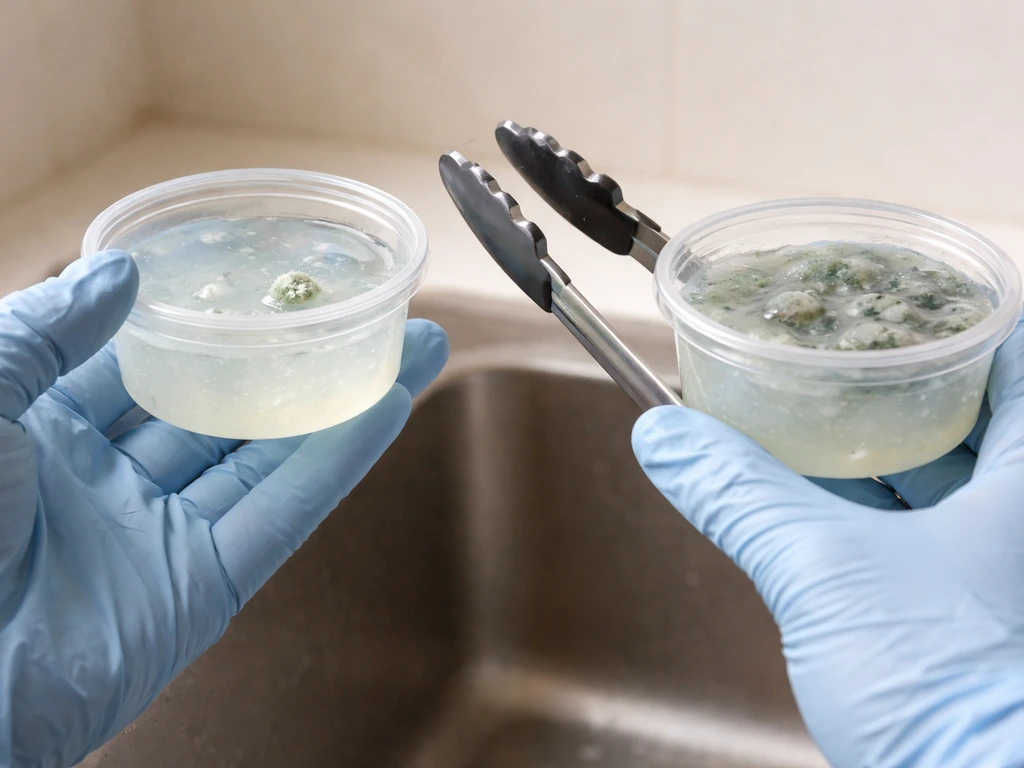
The first question is whether to try saving the slime or just discard it. Honestly, in most cases, the right move is to discard it. To minimize spread of mold spores, EPA guidance emphasizes packaging mold-contaminated materials in sealed bags before removal. Slime is porous and soft, and the EPA notes that mold growth can occur in hidden spaces and crevices of porous materials where it is not visible. Unlike a hard countertop, you cannot scrub the interior of a slime batch. If you can see mold colonies on slime, there is a strong chance the growth extends deeper than the surface.
The exception would be if you catch mold extremely early, as in a single tiny spot on an otherwise firm, fresh batch that has not had time to penetrate deeply. Even then, the cleanup is as much about containing the risk as it is about saving the slime.
Disposing of moldy slime safely
- Do not handle moldy slime with bare hands. Wear disposable gloves, especially if you have any respiratory sensitivity or allergies.
- Place the slime and its container directly into a plastic bag and seal it before removing it from the area. The EPA recommends packaging mold-contaminated materials in sealed bags before removal to minimize dispersal of spores.
- Dispose of the sealed bag in an outdoor trash bin.
- Do not shake or squeeze the slime in a way that could release spores into the air before bagging it.
Cleaning the container and surfaces
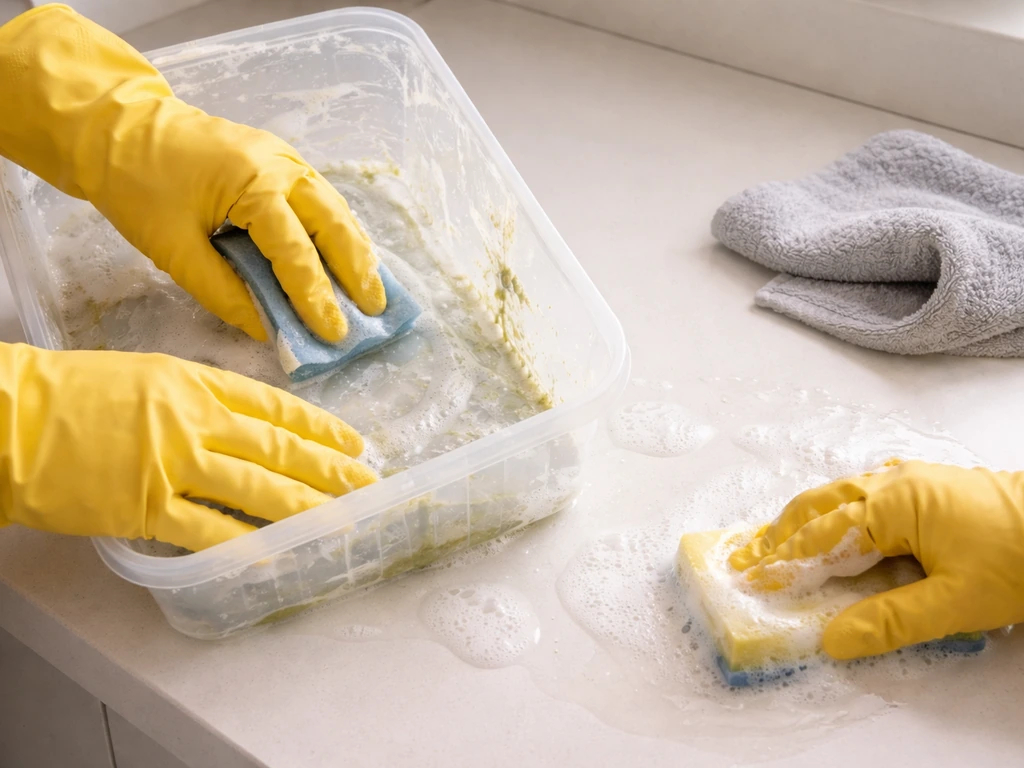
Once the slime is bagged and gone, clean the container it lived in. The EPA advises scrubbing mold off hard surfaces with detergent and water, then drying completely. For containers you want to disinfect more thoroughly, the CDC recommends a bleach solution of no more than 1 cup (8 ounces) of household laundry bleach in 1 gallon of water. Apply it to the container, let it sit for a few minutes, then rinse and dry completely. One critical safety note from the CDC: never mix bleach with other household cleaners or disinfectants. Use bleach alone in its diluted water solution.
Clean any surface where the moldy slime sat, including tabletops, shelves, or drawers. Mold spores are everywhere in the background environment, and the EPA confirms there is no practical way to eliminate all indoor spores entirely. What you are doing by cleaning is removing the heavy concentration of spores and nutrients that could re-seed a new batch of slime.
How to store and handle slime so mold does not come back
The EPA's core principle for mold control applies directly here: controlling moisture is the key to controlling mold growth. Everything else in your prevention strategy builds from that one principle.
- Use airtight containers: Limiting oxygen slows mold growth and prevents new spores from landing on the slime between uses. Airtight snap-lid containers or resealable zip bags with the air pressed out are both good choices.
- Refrigerate for longer storage: Mold growth slows dramatically below 40 degrees Fahrenheit. If you want slime to last more than two weeks, refrigeration is the most effective single step you can take.
- Wash hands before handling: This is the simplest, most overlooked prevention step. Hands carry both mold spores and bacteria that act as nutrients. Clean hands mean far fewer contaminants introduced per use.
- Dry slime slightly after play: If slime feels wetter than usual after a long play session, spread it on a clean surface for five to ten minutes to let surface moisture evaporate before sealing it back up.
- Avoid food-based additives: Sprinkles, real glitter made from plant cellulose, sugar-based colorants, and any actual food items dramatically increase the nutrient load. Synthetic additives like polyester glitter or synthetic pigments are much less mold-friendly.
- Use clean tools every time: Spoons, molds, or cutters should be washed before contact with slime. Reusing a tool that touched moldy slime without cleaning it first seeds the new batch immediately.
- Set a reasonable expiration: Even with good storage, DIY slime made without preservatives should be replaced every three to four weeks. Label containers with the make date so you are not guessing.
- Store in a cool, dry location: Avoid bathrooms, basements, or anywhere with high ambient humidity. A drawer in a climate-controlled room is much better than a bathroom counter.
Recipe choices that reduce mold risk
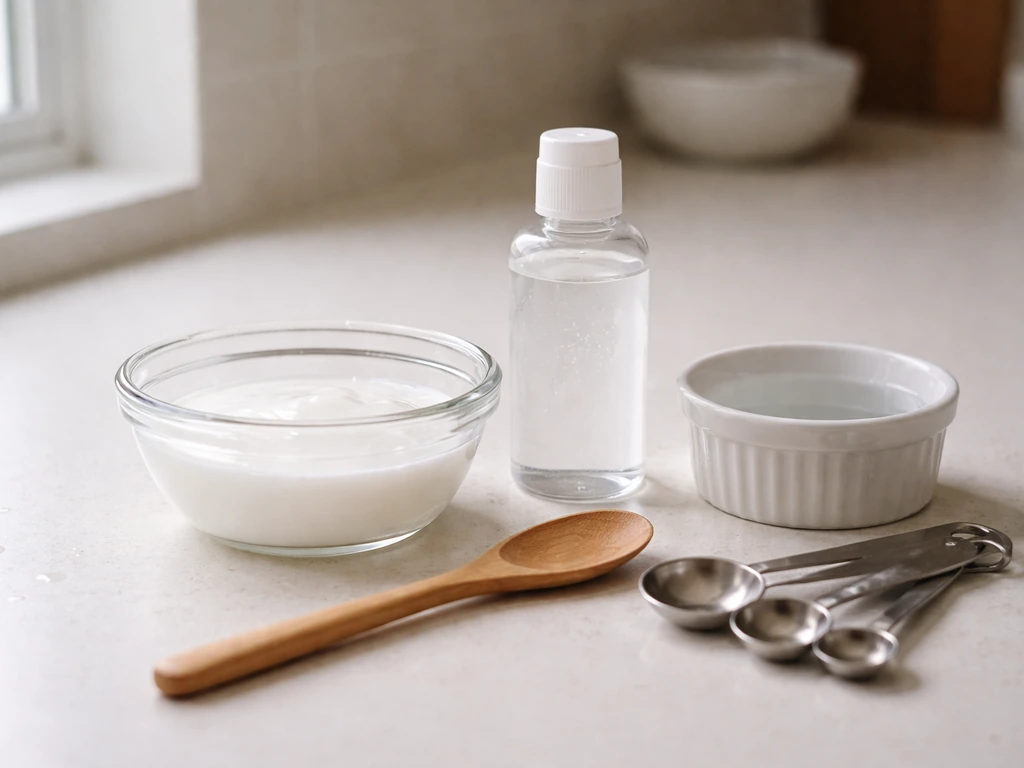
Not all slime formulas are equally mold-prone. Borax-based slime sits at a higher pH and tends to resist mold better than recipes using baking soda or contact lens solution alone as the activator. Slime made with higher activator concentrations is firmer and has less free water available, which lowers its water activity and makes it a harder environment for mold to colonize. Clear glue slime with minimal additives also tends to last longer than opaque, lotion-heavy, or foam-based varieties. If repeated mold problems are frustrating you, simplifying the recipe is worth trying before adding a preservative.
It is worth noting that similar moisture-and-nutrient logic applies to other commonly handled materials people keep around the house. Play-Doh, for instance, raises very similar questions because it is also a water-based, organic-containing material handled repeatedly by hands. Can play-doh grow mold too, especially when it is kept warm, moist, or repeatedly handled with hands? The underlying microbiology is nearly identical: the risk scales with moisture content, contamination frequency, and storage conditions. Understanding the principles here gives you a framework you can apply across many contexts.
The bottom line is that mold on slime is a real possibility, not a myth, and it is driven by the same fundamental microbial growth principles that govern mold anywhere. If you are also wondering about beauty blenders, yes, the same moisture-and-contamination rules apply, and they can grow mold too can beauty blenders grow mold. High moisture, warm temperatures, available nutrients, and consistent oxygen exposure all push slime toward becoming a mold habitat. Once you see the signs, namely fuzzy spots, unusual odors, or localized texture changes, the safest move is to seal and discard. Then clean the container, wash your hands, and start fresh with better storage habits. Mold is predictable, and that predictability is your advantage. Bath bombs are also prone to mold when they are exposed to moisture and humidity, which can make them look fuzzy or develop musty odors over time slime.
FAQ
Can I cut off the moldy part and keep the rest of the slime?
If you find mold, seal the slime in a trash bag before handling it further. Then discard it rather than trying to “harvest” clean-looking pieces, because mold can spread into the slime’s softer interior where you cannot see it. This is especially important for fluffy, butter, and lotion-heavy batches that hold more free water.
Does putting slime in the fridge completely prevent mold?
Refrigeration helps slow growth, but it does not stop it entirely. For best results, keep slime in an airtight container, minimize how often you open it, and store it colder than room temperature consistently (for example, in the back of the fridge where temperatures fluctuate less).
Can slime grow mold even if I used no food coloring or sprinkles?
Yes, mold can develop even if you never add food items. Any organic add-in, including lotion, shaving cream, glitter labeled as biodegradable, scented oils, clay, or foam beads, can increase nutrients available to fungi. Even plain glue bases can be slowly broken down by certain molds.
What if my slime smells musty but there is no visible fuzzy mold?
No. Musty odor plus visible fuzzy growth is the usual combination, but you can also have a “hidden” problem if the slime has a musty smell without obvious spots. For safety, treat strong musty odor as a discard signal even if the texture change is subtle.
Does it matter whether I use clean hands and tools every time I play with slime?
Use the one you plan to use repeatedly. For example, have a dedicated container for each batch, and use clean hands or tools every time you touch it. If slime is mixed in one jar and then repeatedly shared among kids or surfaces, contamination builds up faster than mold-prevention steps can offset.
How can I tell mold from activator separation in slime?
Swollen or separated activator layers usually point to formula instability rather than mold, but the difference is time and smell. Separation from activator pooling is typically uniform and not fuzzy, while mold often appears as spotty, filament-like growth and may develop a musty odor.
Is cleaning slime enough if it only looks slightly affected?
If a batch is near a soft, porous texture (fluffy, butter, or lotion-heavy), cleaning is not a reliable way to restore safety. A better approach is to discard the slime and focus on preventing the next batch, because porous materials can trap growth that won’t be fully removed.
What’s the safest way to disinfect containers after moldy slime?
Do not mix cleaners to “boost” cleaning power. If you use bleach, keep it to diluted bleach in water, apply to the container surface, let it sit briefly, then rinse thoroughly and dry completely. Also wash hands afterward and avoid touching your face while cleaning.