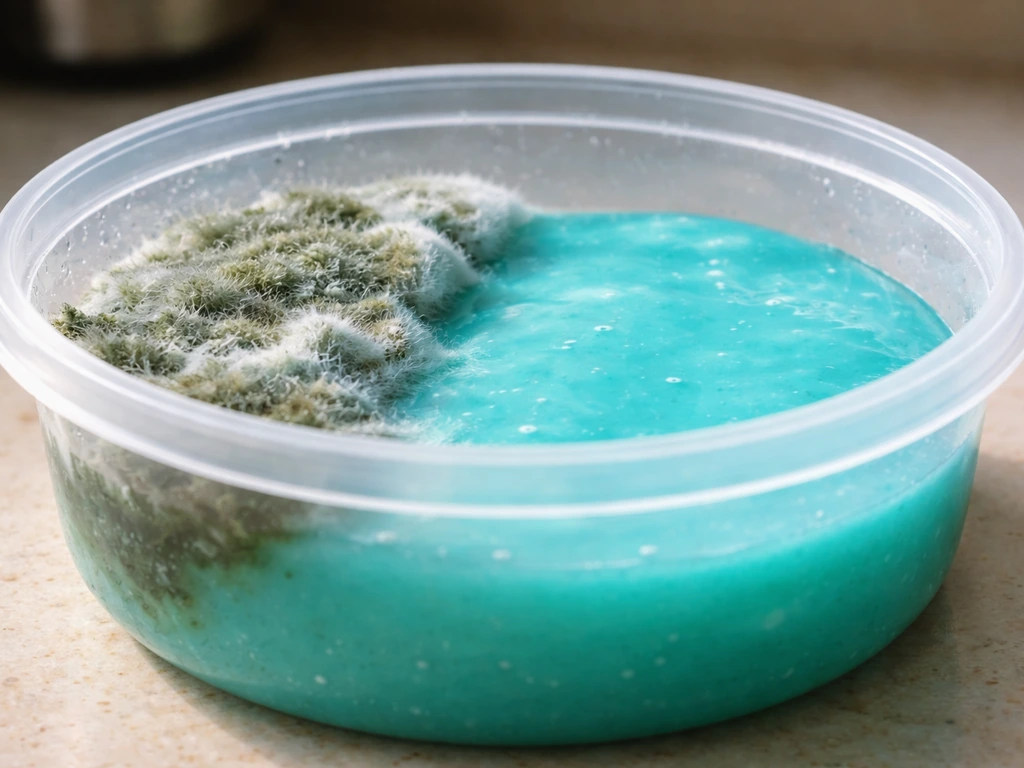
Yes, Play-Doh can absolutely grow mold. It is made primarily from water, salt, and flour, and that combination gives mold almost everything it needs to get started. The salt acts as a mild preservative and the borax listed in Hasbro's 2004 US patent is included specifically to inhibit mold development, but neither ingredient makes the dough permanently mold-proof. Leave Play-Doh open, expose it to moisture, let it sit in a warm room, and mold will find a way in, especially if small hands have introduced organic debris like food particles or skin cells into the mix.
Can Play-Doh Grow Mold? When It Happens and What to Do

Marcus Holloway
6 May 2026
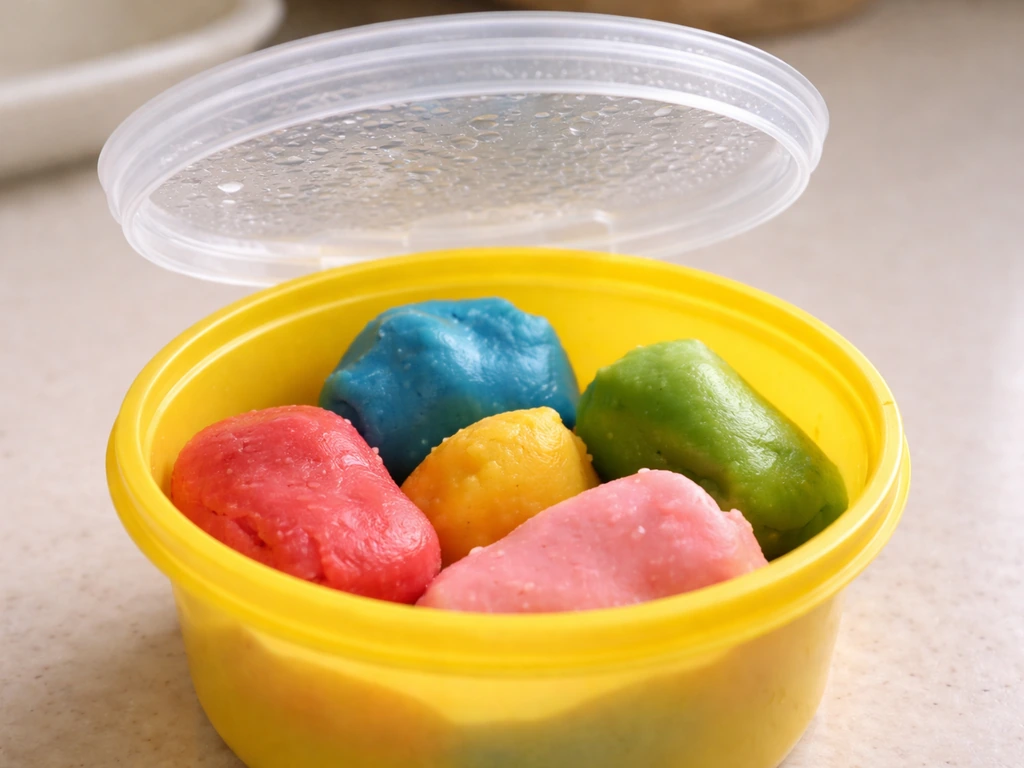
Why mold grows on dough-like materials in the first place
Mold is a fungus, and like any living organism it needs a specific set of conditions to grow. Understanding those conditions is the key to understanding why Play-Doh is vulnerable and what you can actually do about it. The four main factors are moisture, nutrients, temperature, and oxygen.
Moisture and water activity
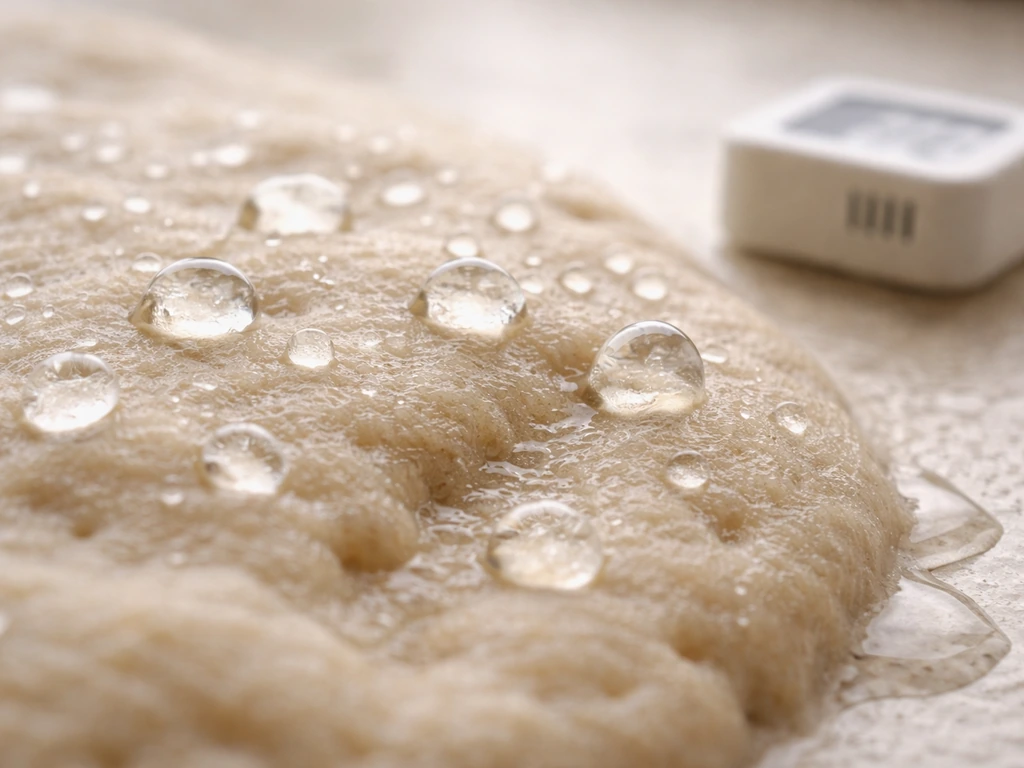
Moisture is the single biggest driver. Scientists measure moisture availability using a value called water activity (a_w), which runs from 0 (bone dry) to 1.0 (pure water). Most common molds can grow at water activity values as low as around 0.65, and fresh Play-Doh sits well above that threshold. The dough is intentionally soft and pliable, which means it holds enough free water to support fungal growth without any help. When the container is left open, ambient humidity can push water activity even higher, accelerating the problem.
Nutrients
Flour is essentially a package of carbohydrates and proteins. To a mold spore, that is a buffet. Common indoor mold genera like Penicillium, Cladosporium, Aspergillus, and Alternaria are generalist feeders that can break down starchy, organic substrates with ease. Every time a child handles Play-Doh and then mixes in crumbs, saliva, or skin oils, the nutrient profile improves further from the mold's perspective.
Temperature
Most household and classroom molds thrive between roughly 15°C and 35°C (about 60°F to 95°F), which maps almost exactly onto typical indoor temperatures. There is no realistic 'too warm' scenario in a normal home that would protect your Play-Doh. Refrigeration slows growth significantly but does not stop it entirely.
Oxygen
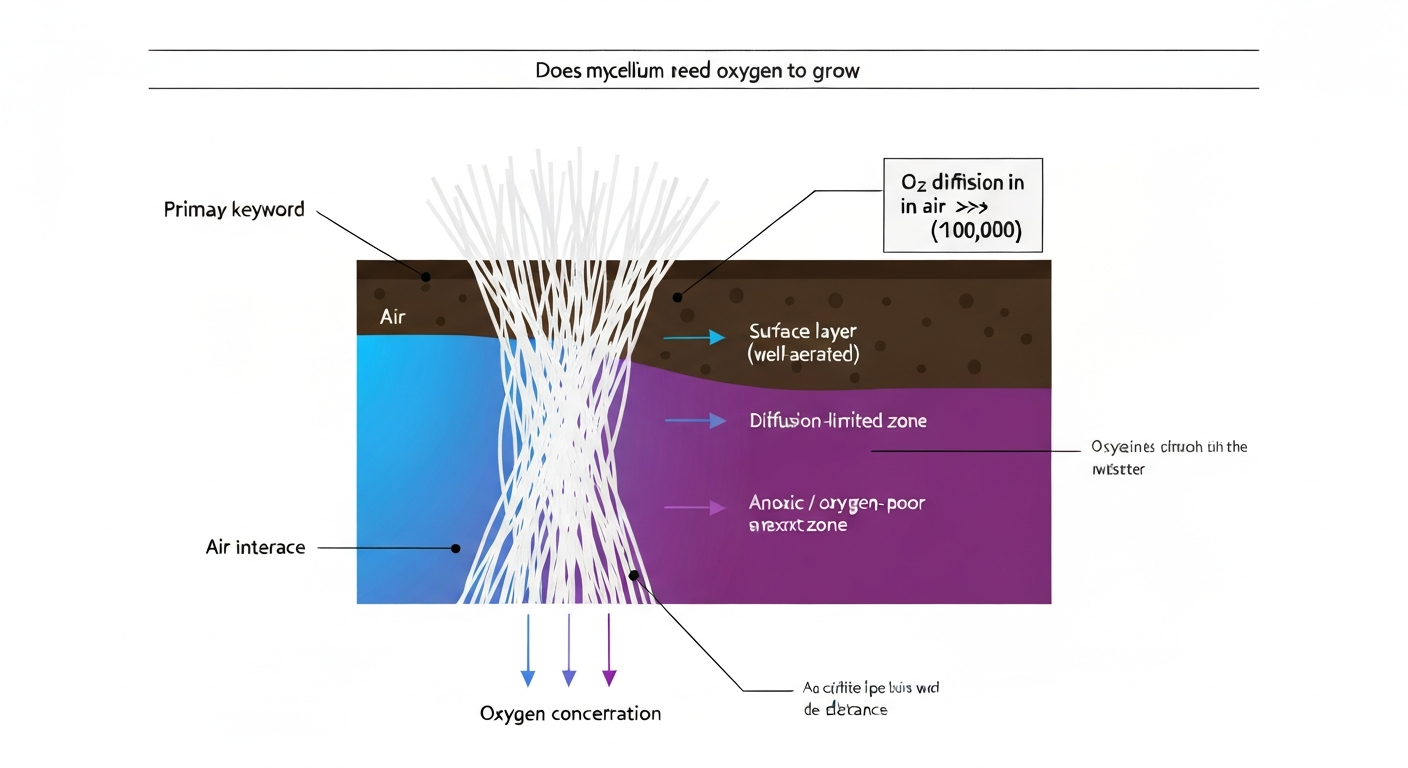
Most mold species are aerobic, meaning they need oxygen to grow. Play-Doh sitting in an open container or loosely sealed tub is constantly exposed to air. Even in a sealed container, the headspace contains enough oxygen to support early mold colonization. This is one reason airtight storage matters so much, it limits the available oxygen and slows the process significantly.
What mold on Play-Doh looks and smells like
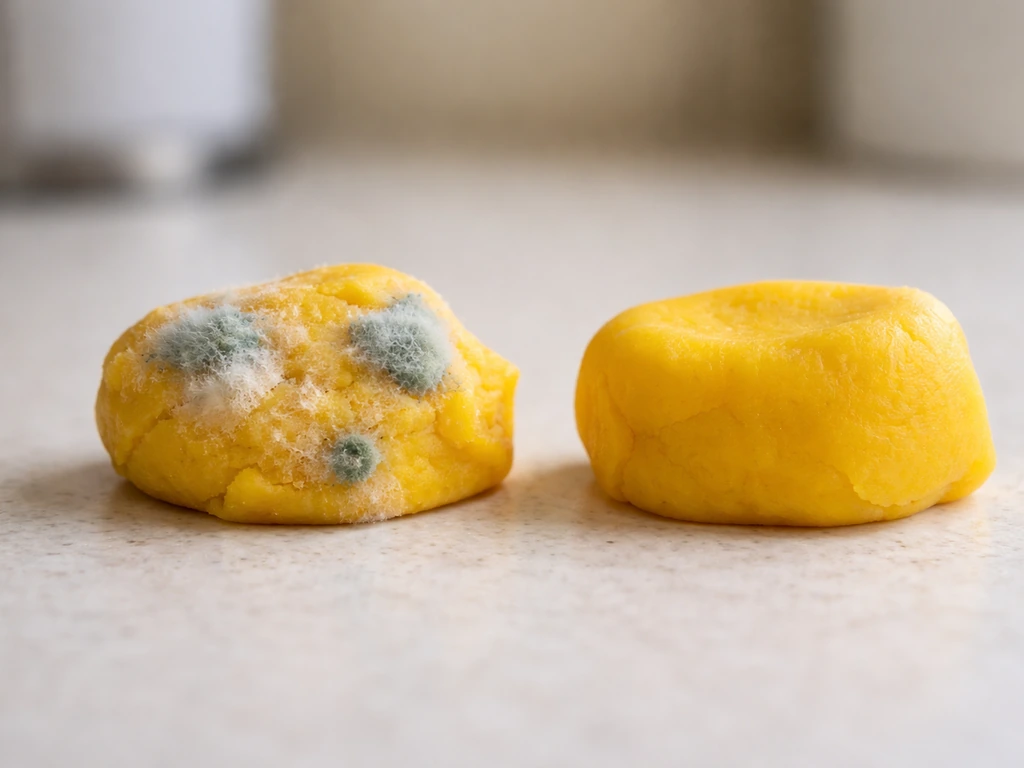
Mold on Play-Doh is usually pretty easy to spot once you know what to look for. The challenge is that it can sometimes be mistaken for dried salt deposits or color changes in the dough, so it helps to assess a few characteristics together.
- Fuzzy or powdery patches on the surface: unlike the smooth texture of fresh dough, mold growth tends to look raised and fuzzy, or dusty and powdery. It may be white, gray, green, blue-green, or black depending on the species.
- Color that does not match the dough: white specks on brightly colored dough are a red flag. Salt crystals are also white, but they are flat and crystalline rather than fuzzy.
- Musty or sour smell: healthy Play-Doh has a faint, neutral, slightly salty smell. Mold produces volatile organic compounds that create a musty, earthy, or sour odor. If the dough smells off, treat it as contaminated.
- Discoloration throughout the dough: in advanced cases, mold can grow inside the dough mass, not just on the surface. You may see streaks or patches of unusual color when you pull the dough apart.
- Slimy texture: this usually indicates bacterial growth alongside or instead of mold, and is equally a reason to discard the dough.
On the question of safety: do not handle visibly moldy Play-Doh with bare hands. The CDC advises avoiding direct skin contact with mold and moldy materials during cleanup, and that applies here too. Use gloves when disposing of it, and keep it away from children and pets until you have dealt with it. Mold spores become airborne easily when disturbed, which is why you should not shake or crumble moldy dough over an open surface.
Discard or salvage? How to make the call
Play-Doh is a porous, absorbent material, and that changes the calculus compared to cleaning mold off a hard surface like a countertop. The EPA is direct about this: absorbent or porous materials that become moldy often have to be thrown away because it may not be possible to restore them to their original clean condition. The CDC similarly recommends discarding soft items and toys that cannot be cleaned and dried quickly after mold exposure.
Here is the practical decision tree:
- Surface-only fuzz on a small area, dough still smells fine: you could theoretically cut away the affected section with a generous margin (at least a centimeter around the visible growth) and assess the interior. If the interior looks and smells normal, some people choose to continue using it. That said, mold hyphae (the root-like threads mold sends into its food source) penetrate deeper than the surface patch you can see, so there is real uncertainty about what is left behind.
- Mold visible on multiple spots, or throughout the interior: discard the entire batch. Do not try to salvage it.
- Off smell with no visible mold: also discard. An off smell usually means microbial activity is already well underway even if you cannot see it yet.
- Any mold exposure involving a child with a mold allergy, asthma, or a compromised immune system: discard immediately without attempting salvage.
How to clean up after moldy Play-Doh
Once you have decided to throw out the dough, contain it properly before cleaning the surfaces it touched. Seal the moldy Play-Doh in a plastic bag before putting it in the trash, this limits spore dispersal. Then clean any hard surfaces (containers, table, tools) that the dough contacted. Wash plastic containers and tools with hot soapy water, rinse, and allow them to dry completely before reuse.
For tabletops and non-porous mats, a diluted solution of dish soap and water is effective. If you see residual mold staining on a hard surface that soap does not lift, a small amount of diluted household bleach (about 1 cup per gallon of water) can be used on non-porous, colorfast surfaces. The EPA advises against routine use of strong chemical biocides for everyday household mold cleanup, so keep it proportionate. Wash your hands thoroughly after handling any mold-contaminated items.
How to stop mold from forming on Play-Doh
Prevention is far easier than cleanup. The interventions all trace back to the same biology: remove one or more of the conditions mold needs, and it cannot establish itself.
| Risk Factor | What Goes Wrong | What to Do Instead |
|---|---|---|
| Open-air storage | Water activity stays high, oxygen flows freely, spores land on the surface | Seal dough tightly in its original container or an airtight zip bag immediately after use |
| Warm room temperatures | Mold growth rate increases in typical indoor warmth | Store in a cool, dry location; refrigerating extends freshness but allow it to reach room temp before use |
| Dirty hands / food contamination | Organic debris introduced into the dough adds nutrients and microbial load | Wash hands before and after play; keep food away from the play area |
| Mixing colors in the same container | Residue from one batch can carry contamination to a fresh one | Store each color in its own sealed container |
| Adding water to 'refresh' dried dough | Adding unsterile water raises water activity and introduces new microbes | Use only a tiny drop of clean water if needed, knead it in fully, and re-seal immediately |
Best storage practices to keep Play-Doh mold-free going forward
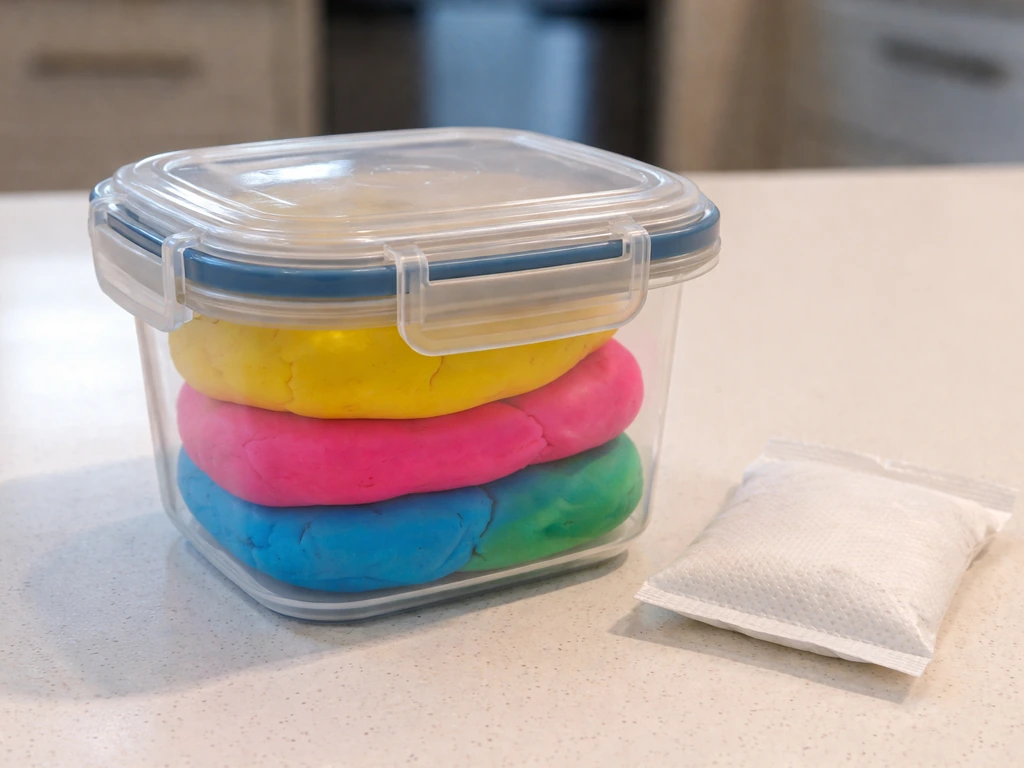
The single most effective habit is immediate, airtight sealing after every use. If you are curious whether bath bombs can also grow mold, it comes down to moisture and how long they stay damp after use can bath bombs grow mold. Mold spores are always present in indoor air; they are just waiting for the right surface to land on. Take away the open container and you take away the easiest point of entry. Beyond that, a few consistent habits make a big difference over time.
- Close containers the moment play stops, not at the end of the session or when you get around to it.
- Check dough before each use for early signs of mold: small fuzzy patches or off smells are easier to act on early than after the whole batch is affected.
- Do not add food coloring, glitter, or other non-Play-Doh materials to the dough unless you are prepared to discard it sooner than you otherwise would. Foreign materials introduce nutrients and microbes.
- In classrooms, assign each student or group their own clearly labeled portion to reduce cross-contamination between users.
- Replace old or frequently-used dough on a regular schedule rather than waiting for visible mold. Dough that has been handled extensively by multiple children over weeks is significantly more contaminated even when it looks fine.
- If you store dough in the refrigerator, use a separate shelf away from food to avoid any potential cross-contamination, and always seal it in a dedicated bag or container.
The underlying biology here is the same whether you are thinking about Play-Doh, homemade slime, or any other moist, nutrient-rich material left in a warm room. That same mold-growth risk can apply to can beauty blenders too, especially when they stay damp Play-Doh. Mold is opportunistic, and it operates by the same rules in every context: give it moisture, nutrients, warmth, and air, and it will grow. Take those away systematically, and you stay in control. These same prevention ideas apply broadly too, including how to keep can books from growing mold Take those away systematically.
FAQ
Can I salvage Play-Doh that looks a little off, like a light film or residue?
It depends on whether the dough is just a little dried-looking residue or visibly fuzzy, speckled, or changing color in active patches. If any growth looks “alive” (hairy, cottony, dot-like colonies) treat it as mold and discard it, because porous dough cannot be reliably cleaned back to a safe state.
If I refrigerated the Play-Doh, can it still grow mold later?
Yes. Even though refrigeration slows growth, it does not eliminate moisture and nutrients in the dough, and mold can resume once the dough returns to room temperature. If you notice any mold even while refrigerated, still discard it.
What should I do if moldy Play-Doh touched a fabric mat, rug, or other porous surface?
Use the play surface and cleanup method you already planned for hard, non-porous items, but with extra caution. Wear gloves, avoid brushing or shaking, bag the contaminated dough, and do not attempt to “scrub out” mold from porous mats or rugs. If the material can be washed and dried quickly and completely, laundering is more reliable than wiping.
Can dried-out Play-Doh be “reactivated” safely if I do not see obvious mold?
If it is only mildly stale (drying out) and there is no visible growth, you can often refresh it for play by rehydrating slightly and kneading thoroughly, then monitor for new spotting. If you see any mold indicators, do not try to revive it, discard instead.
Is a regular snap-lid container enough, or does it need to be truly airtight?
Airtight storage helps most, but it must be airtight in practice. Tubs with loose lids, containers that are not fully sealed, or repeatedly opened storage will still allow enough oxygen and moisture movement for slow colonization.
Can I rinse moldy Play-Doh down the sink or toilet to get rid of it?
Avoid it. Washing moldy Play-Doh in a sink or toilet can spread spores and may clog plumbing with flour residue. Seal the dough in a bag before disposal, then clean your trash area or bin. If any dough bits got loose, wipe up gently rather than spraying water that can aerosolize spores.
If mold touched a tool or rolling pin, do I need to throw those away too?
Yes, but prevent cross-contamination. Don gloves, bag the dough, then clean tools and containers before using them again. Wash any hands, and do not touch clean items like lunch bags, phones, or other toys until you have completed cleanup.
How dangerous is mold on Play-Doh for children or people with allergies?
The main risk is skin and respiratory irritation from spores, not “poisoning.” Still, if anyone develops persistent coughing, wheezing, eye irritation, or a worsening allergic condition after exposure, seek medical advice, especially for people with asthma or compromised immune systems.
Can I use diluted bleach for cleanup, and are there any mix or safety mistakes to avoid?
If you clean with bleach, do not mix it with other cleaners like ammonia or acids. Also, use it sparingly on colorfast, non-porous surfaces only, then rinse and dry completely to reduce lingering odor and residue.