Foods that allow microorganisms to grow are not called parasites. That term is a mix-up worth clearing up right away, because it changes how you think about food safety entirely. Foods that support microbial growth are correctly called TCS foods, short for Time/Temperature Control for Safety foods, a term used by the FDA and food safety professionals everywhere. These are foods that, under the wrong conditions, let bacteria, molds, and yeasts multiply to dangerous levels. Parasites are something different, and understanding that difference actually helps you protect yourself better.
Foods That Allow Microorganisms to Grow Are Not Parasites

Marcus Holloway
4 Jun 2026
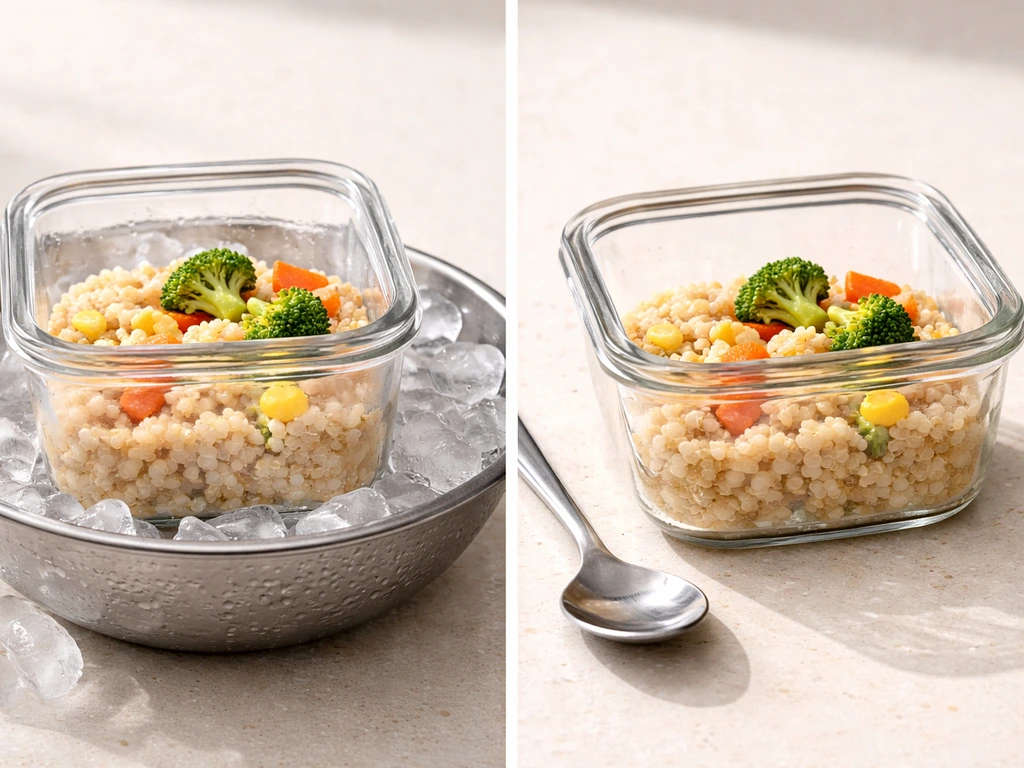
Parasites vs. contaminated foods: clearing up a common mix-up
A parasite, by definition, is an organism that lives on or inside a host organism and gets its food and survival resources at that host's expense. Think of tapeworms living in a human gut, or Giardia hitching a ride in contaminated water. The CDC specifically categorizes parasites like Toxoplasma, Trichinella, Cryptosporidium, and Cyclospora as causes of foodborne illness, but these are different organisms from the bacteria and fungi that grow and multiply inside food itself.
When bacteria like Salmonella multiply in a bowl of chicken left on the counter, they are not parasites. They are free-living microorganisms using the food itself as their growth medium. They do not need a living host to survive. They just need nutrients, moisture, the right temperature, and time. That is a fundamentally different biological relationship than what a parasite has with its host. Mixing up these two concepts can lead to real confusion about how food spoilage and foodborne illness actually happen.
So if someone tells you that foods supporting microbial growth are called parasites, that is incorrect. In the same way, remember that food that allow microorganisms to grow are called TCS foods, not parasites. The correct terms are TCS foods or, in older literature, potentially hazardous foods. These are foods whose properties create ideal conditions for microbes to thrive, which is the real problem food safety rules are designed to address.
What it actually means for microbes to grow in food
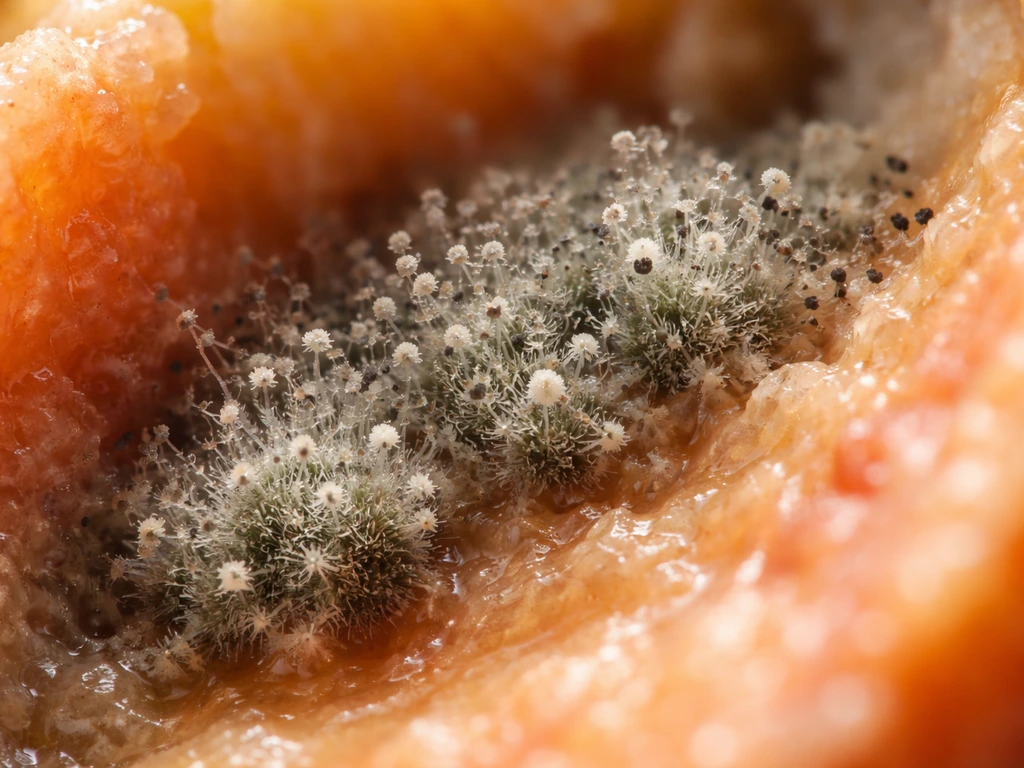
Microbial growth in food means that bacteria, molds, or yeasts are actively reproducing inside or on the surface of your food. Bacteria can double their population in as little as 20 minutes under ideal conditions, so a small contamination event can turn into a serious hazard surprisingly fast. This is not spoilage in the vague sense of something going stale. It is a biological process where microorganisms are consuming food nutrients, producing waste products, and in some cases generating toxins that can make you very sick even after the microbes themselves are destroyed.
The reason this matters is that growth is not random. Microbes grow when the environment gives them what they need. Control those environmental conditions, and you control microbial growth. That is the entire logic behind refrigeration, cooking temperatures, and expiration dates. It is also why understanding the conditions for growth is more useful than just memorizing a list of dangerous foods.
Foods that commonly support microbial growth
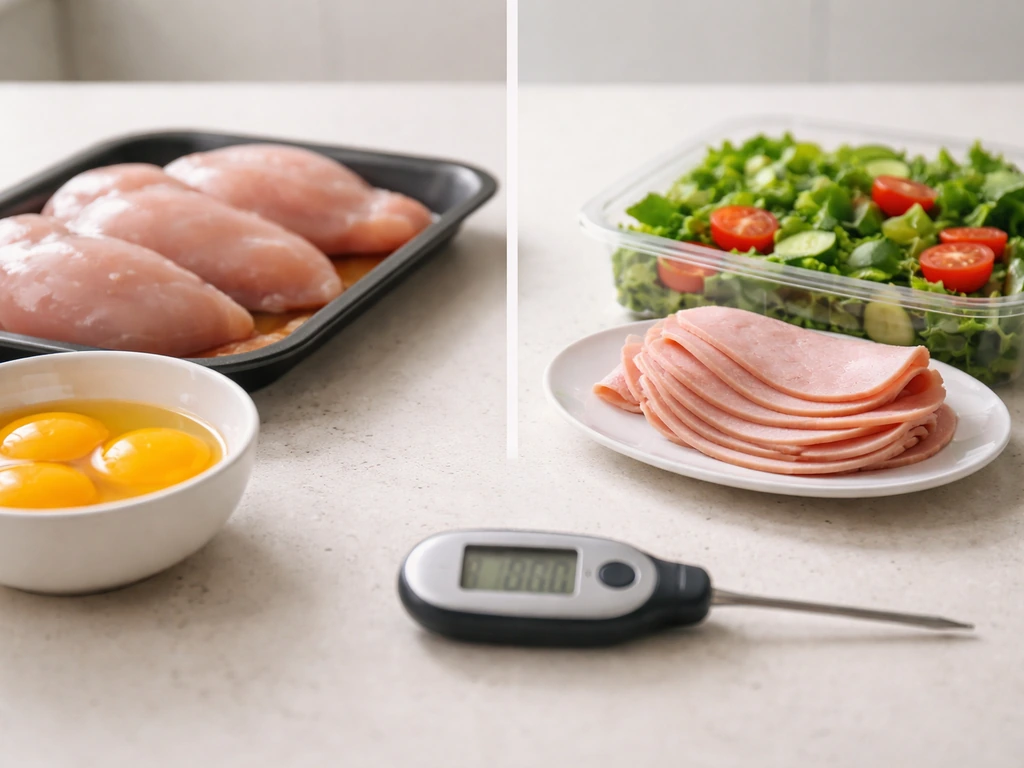
Not all foods are equally hospitable to microorganisms. TCS foods tend to share certain characteristics: they are high in protein or carbohydrates, they contain significant moisture, and they often have a near-neutral pH. These are the foods that require careful time and temperature management to stay safe.
- Raw and cooked meat, poultry, and seafood
- Eggs and egg-based dishes (custards, quiches, mayonnaise-based salads)
- Dairy products: milk, soft cheeses, cream, yogurt
- Cooked rice, pasta, beans, and potatoes
- Cut or peeled fruits and vegetables (melons, leafy greens, tomatoes)
- Tofu and other soy-protein foods
- Sprouts and raw seed sprouts
- Cooked plant foods like garlic-in-oil mixtures
You will notice that both raw and cooked versions of many foods appear on this list. Cooking can destroy the original microbes, but it does not make food immune to future contamination. A fully cooked chicken breast left at room temperature can become just as dangerous as a raw one, sometimes faster, because cooking changes the food's structure in ways that can make nutrients even more accessible to microbes.
It is worth noting that which specific foods allow pathogens to grow most readily, and what properties of those foods enable that growth so rapidly, are questions closely related to this one. The short version is that high-protein, high-moisture foods in the neutral pH range are consistently the biggest concern across all microbiology and food safety frameworks.
The five conditions that determine whether microbes will grow
Food scientists and microbiologists use a framework of interconnected factors to predict microbial growth. None of these factors work in isolation. A food might have ideal moisture but an inhospitable pH, which would limit growth significantly. Understanding them together gives you a much more accurate picture than looking at any one factor alone.
Temperature
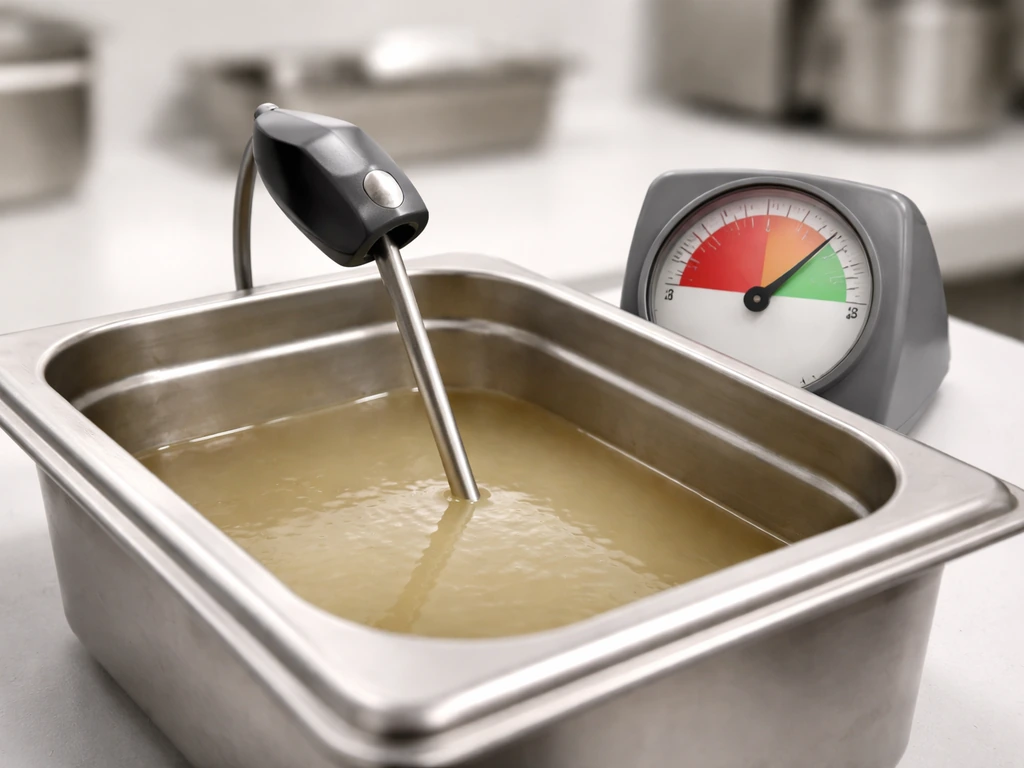
This is the most controllable factor and the one food safety rules focus on most heavily. The USDA FSIS defines the temperature danger zone as 40°F to 140°F (4°C to 60°C). Inside this range, bacteria grow most rapidly. Below 40°F, growth slows dramatically but does not stop entirely for all organisms. Above 140°F, most pathogens are destroyed. The goal of refrigeration, freezing, and cooking is simply to keep food outside the danger zone as much as possible.
Moisture (water activity)
Microbes need available water to grow, and food scientists measure this using a value called water activity (abbreviated aw), which runs on a scale from 0 to 1. Pure water has an aw of 1.0. The FDA notes that most fresh foods have a water activity above 0.95, which is more than enough to support bacteria, yeasts, and molds. An aw of 0.80 means the vapor pressure of the food is 80% of pure water, which is still enough to support mold and yeast growth but may limit some bacterial species. A water activity (aw) value of 0.80 means the vapor pressure is 80% of pure water, and the FDA notes that foods with most aw above 0.95 can support microbial growth blank" rel="noopener noreferrer">an aw of 0.80 means the vapor pressure of the food is 80% of pure water. Foods like dried beans, crackers, and jerky are shelf-stable partly because their water activity is low enough to deny microbes the moisture they need to reproduce.
pH (acidity)
pH measures how acidic or alkaline a food is on a scale of 0 to 14, with 7 being neutral. Most bacteria grow best in the near-neutral range of 6.5 to 7.5. Highly acidic foods (pH below 4.6, like vinegar-pickled vegetables or lemon juice) create an environment that most harmful bacteria cannot tolerate. This is why pickling and fermentation work so well as preservation methods. Molds and yeasts are more acid-tolerant than bacteria, which is why you can still see mold on acidic foods like fruit.
Oxygen availability
Different microorganisms have different oxygen requirements. Aerobic bacteria need oxygen to grow, while anaerobic bacteria thrive without it and can actually be killed by oxygen. This is why vacuum-sealed and reduced-oxygen packaging can create new hazards even while eliminating others. Clostridium botulinum, the bacterium behind botulism, grows best in low-oxygen environments, which is why the FDA specifically addresses controlling it in reduced-oxygen packaged foods. Removing oxygen from packaging does not make food unconditionally safe.
Nutrients
Like any living thing, microorganisms need food to grow. They use proteins, carbohydrates, fats, vitamins, and minerals from the food they contaminate. Foods rich in protein and carbohydrates, like meat, eggs, dairy, and cooked starches, are essentially a buffet for microbes. This is why the TCS food list skews so heavily toward protein- and carbohydrate-rich items. Low-nutrient foods like sugar or salt, in high enough concentrations, actually inhibit microbial growth by drawing water out of microbial cells through osmosis.
| Factor | Supports Growth | Limits or Stops Growth |
|---|---|---|
| Temperature | 40°F–140°F (4°C–60°C) | Below 40°F or above 140°F |
| Water activity (aw) | Above 0.95 for most bacteria | Below 0.85 for most pathogens |
| pH | 6.5–7.5 (near neutral) | Below 4.6 (high acid) or above 9.0 |
| Oxygen | Present for aerobic microbes; absent for anaerobic | Depends on the specific organism |
| Nutrients | High protein and carbohydrate content | Very low nutrient availability; high salt or sugar |
How to prevent microbial growth in food
Prevention is built around denying microbes the conditions they need. These are not complicated rules, but they require consistency to work.
Refrigerate and freeze on time
The FDA and USDA both state the same rule: refrigerate perishable foods within 2 hours of cooking or purchasing. If the ambient air temperature is above 90°F, that window shrinks to 1 hour. Your refrigerator should stay at or below 40°F, and your freezer at 0°F. Freezing stops microbial growth almost completely, though it does not destroy all microbes. They can resume growing once the food thaws, which is why thawing safely (in the refrigerator, under cold running water, or in the microwave if you are cooking immediately) matters.
Cook to safe internal temperatures
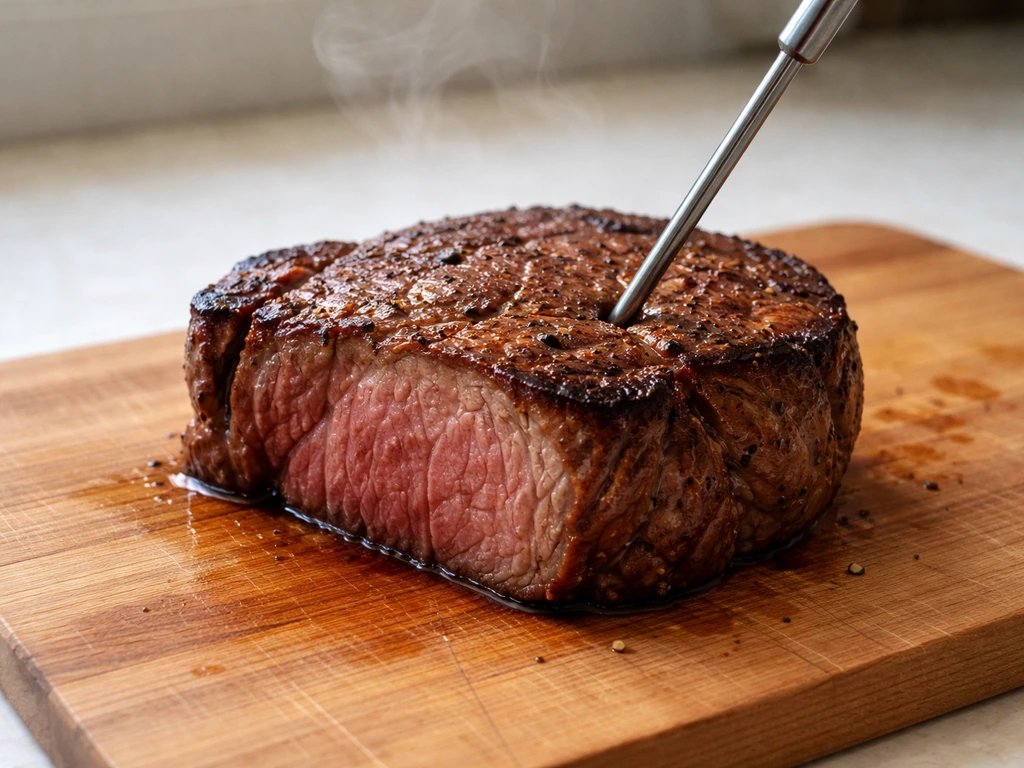
Cooking to the right internal temperature destroys the pathogens that cause foodborne illness. Use a food thermometer, not appearance or texture, to verify doneness. When reheating leftovers, the USDA FSIS says they need to reach 165°F measured in multiple spots, including the thickest part. For microwave reheating specifically, covering the food and stirring or rotating it halfway through ensures even heating and eliminates cold spots where pathogens could survive.
Cool cooked food quickly
One underappreciated step is cooling hot food properly before refrigerating. The FDA Food Code recommends getting cooked TCS foods from 135°F down to 70°F within 2 hours, then from 70°F down to 41°F or below within a total of 6 hours. Leaving a large pot of soup on the stove to cool at room temperature for hours before refrigerating is a classic mistake that allows bacteria to multiply during that slow cooling period. Dividing food into shallow containers speeds up cooling significantly.
Avoid cross-contamination
Cross-contamination happens when pathogens from one food (often raw meat or poultry) transfer to another food, surface, or utensil. Use separate cutting boards for raw proteins and ready-to-eat foods. Wash hands thoroughly with soap and water before and after handling raw foods, and before eating. Wash and sanitize surfaces and utensils that have contacted raw meat before using them for anything else.
Know the 2-hour rule for leftovers
Leftovers left at room temperature for more than 2 hours should be discarded. This is a firm rule, not a guideline with wiggle room. Bacteria can multiply to dangerous levels within that window. Refrigerated leftovers are generally safe for 3 to 4 days. Beyond that, the risk of spoilage and pathogen growth increases even in the refrigerator.
How to tell when food is unsafe and what to do about it
Here is the difficult reality: you cannot always tell whether food is unsafe by looking at it or smelling it. The FDA explicitly notes that some unsafe foods look and smell completely normal. This is sometimes called the invisibility problem in food safety education, and it is why rules about time and temperature are non-negotiable rather than advisory.
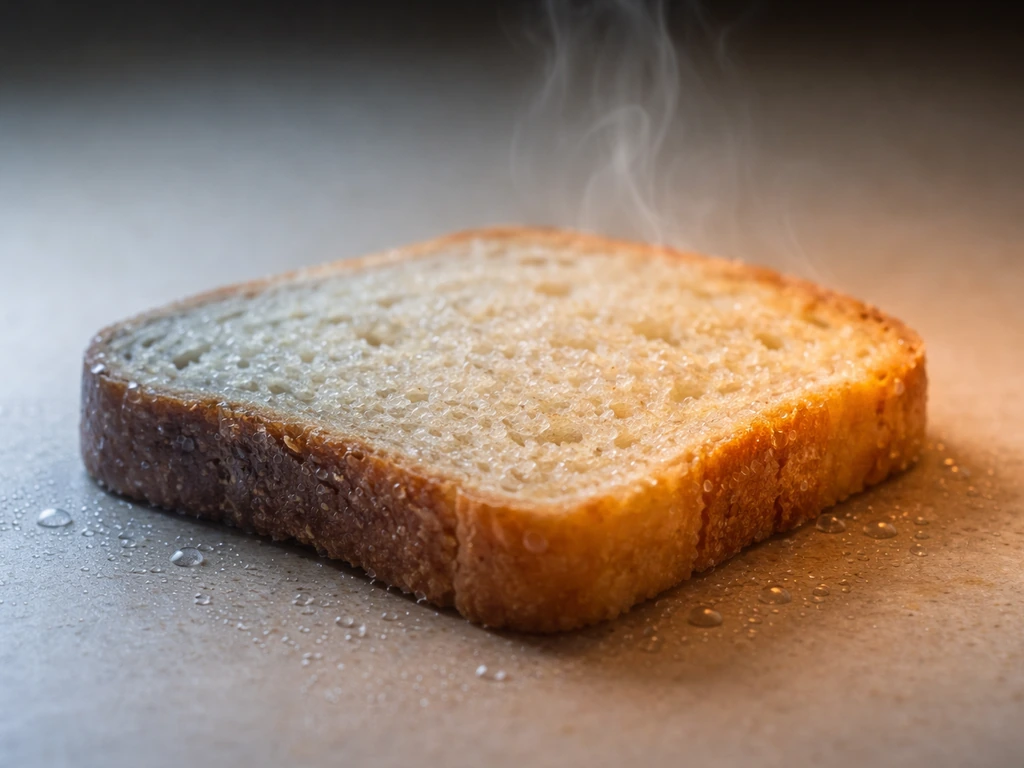
That said, there are visible and sensory signs that should always prompt you to discard food without tasting it. The USDA FSIS is clear that food covered with mold should be discarded, with one exception: hard cheeses like Gorgonzola or Stilton, where you can cut off at least 1 inch around and below the mold spot and use the rest. For soft cheeses, yogurt, soft fruits, cooked leftovers, bread, and any other porous food, mold contamination runs deeper than the surface you can see, and the whole item should go.
The FDA also advises against using products that are discolored, have off odors, or that spurt liquid or foam when opened. Canned goods with swollen, dented, or compromised seams are a serious warning sign and should never be tasted to evaluate safety.
A practical decision checklist
- Was the food left out for more than 2 hours (or 1 hour above 90°F)? Discard it.
- Does it show visible mold, sliminess, unusual discoloration, or off odors? Discard it (unless it is a hard cheese, in which case cut a wide margin).
- Is a can or package swollen, leaking, or have a damaged seal? Discard it without opening.
- Have refrigerated leftovers been stored for more than 4 days? Discard them.
- Did you thaw meat on the counter at room temperature? It may have been in the danger zone too long. When in doubt, throw it out.
- If the food looks and smells fine but you are uncertain about its time/temperature history, err on the side of caution. Food poisoning is not worth the gamble.
The phrase you will hear in food safety education is: when in doubt, throw it out. It sounds like an oversimplification, but it is genuinely the right call when you do not have reliable information about a food's history. Understanding the conditions that allow microbial growth, which comes back to temperature, moisture, pH, oxygen, and nutrients, gives you the reasoning framework to make smarter decisions rather than just following rules you do not understand.
FAQ
Does freezing kill microorganisms in TCS foods?
Freezing mostly stops microbial growth, it does not reliably eliminate all microbes. After thawing, surviving microbes can resume multiplying, so thaw TCS foods in the refrigerator (or using a method that keeps them cold) and follow the same time limits as if they were freshly prepared.
If I accidentally left a TCS food out, can I just reheat it?
Reheating can kill many pathogens, but it may not remove toxins that some microbes produce while the food warms. If the item was above 40°F for more than 2 hours (or 1 hour above 90°F), discarding is the safest choice rather than relying on reheating.
What’s the safest way to cool soup or stew in containers?
Use shallow containers, keep them uncovered until steam subsides, then cover and refrigerate. Also avoid stacking containers tightly, because limited airflow slows heat removal and can leave parts of the food in the danger zone longer than the cooling rules allow.
Can I taste food to decide if it’s unsafe?
No, tasting is not a safe test. Some harmful contamination does not create noticeable taste or smell, and mold or bacterial growth in porous foods can involve deeper contamination. If you are unsure, discard or follow a strict guidance approach based on your specific food type.
Are homemade canned or jarred foods treated differently than store-bought TCS foods?
Yes. Low-acid home-canned foods need validated pressure canning, because reduced oxygen inside jars can support botulinum toxin formation if processing is wrong. Do not rely on “looks fine” checks, use tested processing methods, and discard jars that show bulging, leaking, or compromised seals.
Does antimicrobial or “natural preservative” labeling mean a food is not a TCS food?
Not necessarily. Preservatives can slow growth, but they do not automatically remove the need for time and temperature control. If a product requires refrigeration after opening or indicates time limits, treat it as TCS and store it correctly.
How do I handle TCS foods when power goes out?
Check how long the outage lasted and the temperature inside the fridge. If the refrigerator temperature stays above 40°F for more than about 2 hours, perishable TCS items are generally unsafe and should be discarded. Freezer items might stay safe longer if the freezer remains closed, but you still need temperature-based judgment.
Do “no growth at room temperature” rules apply to all microorganisms?
They apply differently. Some organisms grow slowly at refrigeration temperatures, and freezing does not destroy everything. That is why safe handling depends on time-temperature exposure, not on assuming “cold means zero risk.”