Yes, you can grow your own yeast, and it is genuinely one of the more accessible microbiology experiments you can do at home or in a classroom. Saccharomyces cerevisiae, the species behind most bread and beer, thrives in simple sugar solutions at room temperature, produces visible carbon dioxide within hours, and can be captured from the environment using nothing more than flour and water. The key is understanding the biological conditions it needs: a fermentable carbon source, a warm and mildly acidic environment, sufficient moisture, and a usable nitrogen source. Get those right, and yeast grows reliably. Get them wrong, and something else grows instead.
Can I Grow My Own Yeast? Safe Classroom & Kitchen Guide

Marcus Holloway
18 Jul 2026
What yeast actually are and how they reproduce
Yeast are unicellular fungi, not bacteria. That distinction matters biologically. Unlike bacteria, which are prokaryotes with no membrane-bound nucleus, yeast cells are eukaryotes: they have a true nucleus, mitochondria, and a cell wall made largely of glucans and chitin. S. cerevisiae is one of the most studied eukaryotes in all of science precisely because its cell biology shares a surprising amount with human cells, making it a model organism for understanding everything from gene regulation to aging.
Under normal, nutrient-rich conditions, yeast reproduce asexually by budding. A small outgrowth forms on the parent cell, grows, and eventually pinches off as a genetically identical daughter cell. You can actually watch this happen under a basic light microscope, which makes yeast an excellent classroom subject. Budding is fast when conditions are good, with laboratory strains of S. cerevisiae doubling roughly every 90 to 120 minutes in rich media at their optimal temperature of around 28 to 30 degrees Celsius.
When nutrients run low or conditions become stressful, yeast can switch strategies. Haploid cells of opposite mating types fuse to form diploid cells, which can then undergo meiosis (sporulation) and produce ascospores packaged in groups of four called tetrads. These spores are more stress-resistant than vegetative cells and can wait out unfavourable conditions. For most kitchen and classroom purposes, you will never see sporulation because conditions remain rich enough to favour continuous budding. But it is worth knowing the full life cycle exists, because it explains how wild yeast populations survive in harsh outdoor environments between active growth periods.
The biological conditions yeast need to grow
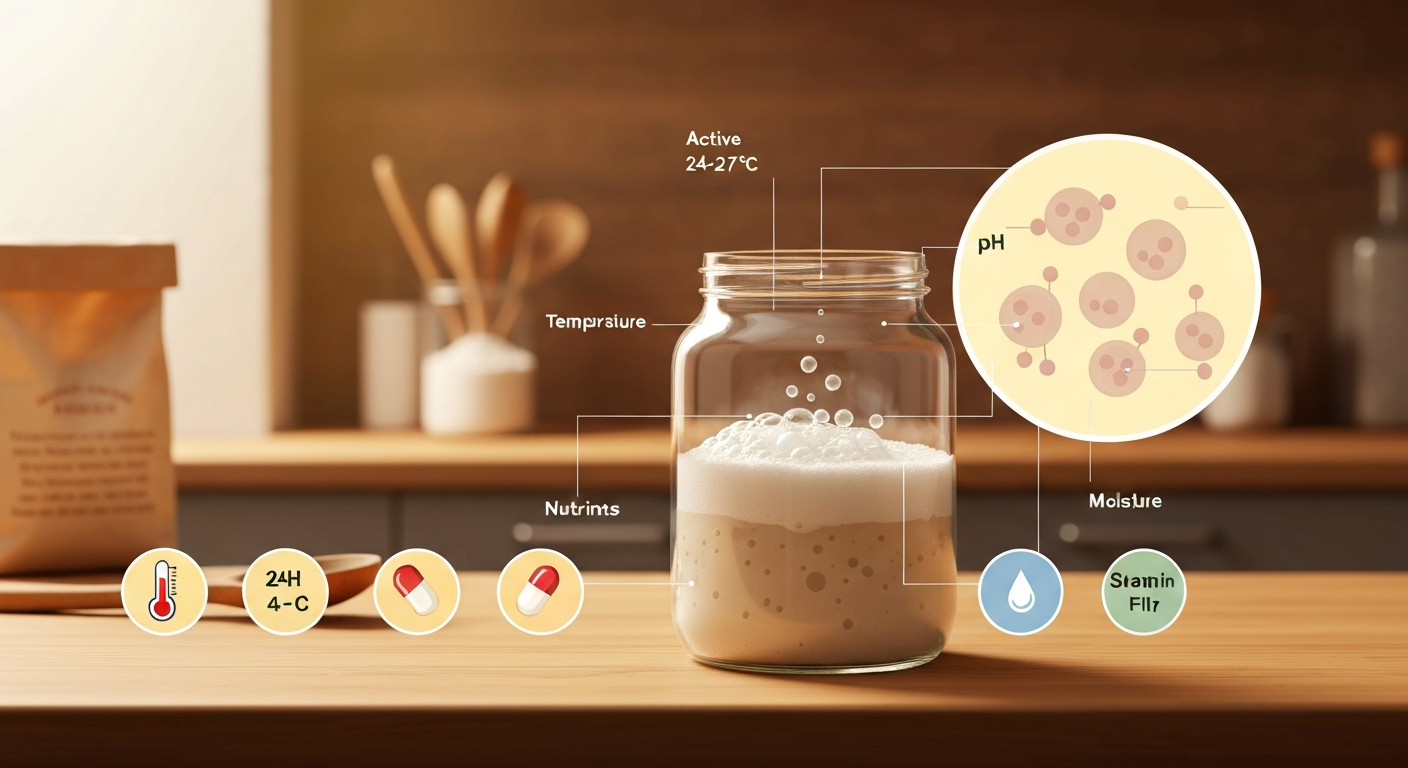
Yeast growth is not controlled by a single factor in isolation. Temperature, pH, water availability, nutrients, and oxygen all interact, and understanding how they connect gives you much more predictive power than memorising a single checklist. Think of each condition as a dial that can accelerate, slow, or completely halt growth depending on where it is set.
Temperature
Most S. cerevisiae strains used in baking and ale brewing grow at a minimum around 4 to 10 degrees Celsius (very slowly), reach their optimum at 25 to 30 degrees Celsius, and hit their maximum tolerable temperature somewhere around 37 to 40 degrees Celsius depending on strain. Lager yeast (Saccharomyces pastorianus) is adapted to cool fermentation at 8 to 12 degrees Celsius. This is why a warm kitchen speeds up bread rising while refrigeration slows it to a crawl, but does not kill the yeast. Temperatures above about 50 degrees Celsius will denature proteins and kill most strains outright, which is why baked bread contains no living yeast.
pH
Yeast prefer a mildly acidic environment. The typical optimal pH range for S. cerevisiae is roughly 4 to 6. This is part of why sourdough starters work so well: as lactic acid bacteria in the dough produce lactic and acetic acids, the pH drops toward 4 or below, creating conditions that favour acid-tolerant yeast and bacteria while suppressing many unwanted contaminants. A review reports many sourdoughs stabilize at pH ≤4, where acid‑tolerant lactic acid bacteria dominate and drive microbial succession. Neutral or alkaline conditions (pH above 7) generally slow yeast growth and can allow competing organisms to take over.
Water activity
Water activity (abbreviated aw) is a measure of how much free water is available for biological reactions, on a scale from 0 to 1. Most Saccharomyces yeasts need relatively high water availability, with a minimum aw of around 0.88 to 0.90. This is why heavily sugared or salted environments (jams, brines, dried foods) inhibit most common yeasts. Specialised osmophilic yeasts such as Zygosaccharomyces species can survive at much lower water activity, down to around 0.80 to 0.85 or even lower in extreme cases, which is why you sometimes see spoilage in high-sugar products even when they seem shelf-stable.
Nutrients
Yeast need four main categories of nutrients: a fermentable carbon source (glucose, fructose, sucrose, or maltose are all usable), assimilable nitrogen (free amino acids or ammonium), vitamins (particularly biotin, vitamin B7, which is required for many enzymatic reactions and whose absence slows or stops growth), and minerals including magnesium and zinc. Complex food substrates like flour, wort, or fruit juice typically supply all of these naturally. Biotin limitation is worth knowing about in classroom experiments using very simple sugar solutions, since it can cause unexpectedly sluggish growth that looks like a temperature or pH problem.
Aerobic vs anaerobic growth and the four phases of a yeast culture
One of the most interesting things about yeast is that they are facultative anaerobes: they can grow with or without oxygen, but they behave quite differently depending on which condition they are in. Understanding this is central to understanding why yeast produce CO2 in bread versus ethanol in beer, and it connects directly to the question of whether yeast grow faster in aerobic or anaerobic conditions. For a concise answer, see does yeast grow faster in an aerobic or anaerobic environment.
When oxygen is available and glucose concentrations are low, yeast respire aerobically, fully oxidising sugars to carbon dioxide and water. This is metabolically efficient and produces substantially more biomass per gram of sugar (up to around 0.4 to 0.5 g of yeast biomass per gram of sugar). When glucose is abundant, however, something unusual happens. Even with oxygen present, S. cerevisiae switches to fermentation and produces ethanol and CO2 instead. This is the Crabtree effect, and it is the reason yeast ferment beer even when the vessel is not perfectly sealed. Once the glucose is depleted, yeast can then switch back to consuming the ethanol aerobically, a switch visible in culture as a diauxic shift. Under strongly fermentative or anaerobic conditions, biomass yield drops sharply to roughly 0.1 g per gram of sugar, because most of the carbon goes into ethanol rather than new cell material.
Any yeast culture (or starter you grow at home) moves through four predictable growth phases. During the lag phase, yeast are adapting to their environment, synthesising enzymes and adjusting their metabolism. No obvious increase in numbers occurs yet, which is why a sourdough starter or a freshly mixed dough seems quiet for the first hour or two. The exponential (log) phase follows, during which yeast divide rapidly by budding and population numbers increase geometrically. This is when visible CO2 production, dough rising, and froth on a sugar solution all become apparent. Eventually nutrients deplete and waste products accumulate, bringing on the stationary phase, where growth and death rates roughly balance. Finally, the death phase sets in as energy reserves run out and toxic byproducts (including ethanol in fermentation) accumulate. In bread dough, the kill happens in the oven; in a beer ferment, the yeast gradually flocculate and settle.
Lab media vs kitchen environments: what will actually support yeast
A common point of confusion in classroom microbiology is assuming that any growth medium will support any microorganism. That is not how it works. Media are formulated with specific organisms and purposes in mind, and the mismatch between what a medium provides and what a microorganism needs tells you a great deal about both.
| Medium / Substrate | Key composition | pH | Supports yeast growth? | Notes |
|---|---|---|---|---|
| YPD (Yeast Extract Peptone Dextrose) | 1% yeast extract, 2% peptone, 2% dextrose | ~6.5 | Yes, strongly | Rich, non-selective; standard lab medium for S. cerevisiae |
| Sabouraud Dextrose Agar (SDA) | Peptone + 4% dextrose, acidified | ~5.6 | Yes | Selective for fungi; low pH suppresses many bacteria |
| Nutrient Agar / Nutrient Broth | Beef extract + peptone; no added dextrose | ~6.8–7.2 | Weakly, if at all | Primarily designed for bacteria; yeast can colonise but grow poorly |
| MacConkey Agar | Bile salts, crystal violet, lactose, neutral red | ~7.1 | No (typically) | Selective/differential for Gram-negative bacteria; bile salts and crystal violet inhibit fungi |
| Bread dough | Starch (hydrolysed to glucose/maltose), water, protein | ~5.5–6.0 | Yes | Classic substrate; CO2 inflation visible within hours at warm temperature |
| Wort (brewing) | Maltose, maltotriose, glucose, amino nitrogen, minerals | ~5.2–5.4 | Yes, strongly | Near-ideal natural medium; may need nitrogen supplementation in high-gravity versions |
| Simple sugar solution | Sucrose or glucose in water | Variable | Yes, but variably | Works if pH adjusted and nitrogen/vitamins present; deficiencies slow growth |
The contrast between Sabouraud and MacConkey agar is particularly instructive. Sabouraud is specifically acidified and enriched with dextrose to favour fungi like yeast, making it the go-to medium in clinical and food microbiology when isolating Candida or Saccharomyces from a sample. MacConkey, by contrast, contains bile salts and crystal violet that are selectively toxic to Gram-positive bacteria and to most eukaryotes, including yeast. If you plated yeast onto MacConkey, you would expect little to no growth, which tells you something important: the chemical environment of a medium can completely override the organism's nutritional capabilities. The question of whether yeast will grow on nutrient agar versus MacConkey versus Sabouraud is really a question about which chemical conditions permit eukaryotic growth, and that principle extends far beyond yeast.
Kitchen substrates are messier and more variable than lab media, but many of them naturally hit the right conditions. Wort from mashed grain is close to an ideal natural yeast medium: it is rich in maltose and glucose, contains free amino nitrogen from malted grain proteins, provides B-vitamins, and has a slightly acidic pH around 5.2 to 5.4 from the mashing process. Bread dough is similarly well-suited because amylase enzymes in flour (and added malt) break starch down into fermentable sugars, and the gluten network traps CO2 bubbles to produce rise. blank" rel="noopener noreferrer">Gas cells in bread dough (academic thesis/review of yeast activity in dough) form when amylases hydrolyse starch to fermentable sugars that Saccharomyces and other yeasts metabolise, producing CO2 that inflates the gluten network. Plain sugar solutions in water work in a pinch but are the poorest of these substrates, because dissolved sucrose alone provides carbon but virtually no nitrogen, biotin, or minerals.
Wild capture and food-based starters: sourdough, natural cultures, and the apple cider vinegar myth
Capturing wild yeast is genuinely possible and has been practiced for thousands of years before commercial yeast was isolated. The basic principle is that S. cerevisiae and related wild yeasts exist on grain surfaces, fruit skins, and in the air, and a mixture of flour and water at the right temperature selectively enriches for acid-tolerant yeasts and lactic acid bacteria over time. A sourdough starter is a perfect example of this. Over repeated feedings, the lactic acid bacteria produce organic acids that lower the pH and inhibit most bacterial contaminants, while both wild yeasts and LAB that thrive in that acidic, moist, carbohydrate-rich environment come to dominate. Research on sourdough starter microbiomes has found that they typically harbour a mix of S. cerevisiae alongside non-Saccharomyces species, all interacting with Lactobacillus and other LAB populations whose balance determines the final flavour, acidity, and leavening power.
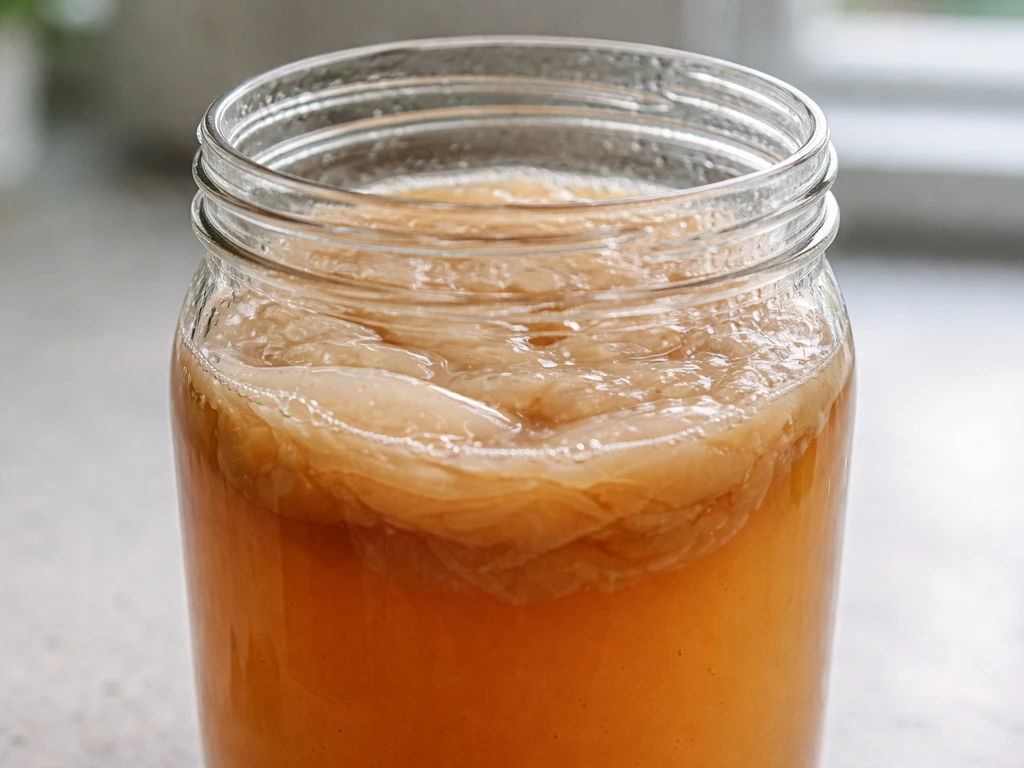
Apple cider vinegar is a completely different story, and it is one of the more persistent myths in fermentation circles. The 'mother' in raw apple cider vinegar is a biofilm composed primarily of acetic acid bacteria, not yeast, and not a SCOBY in the technical sense. A SCOBY (symbiotic culture of bacteria and yeast) is specifically the cellulose-based structure associated with kombucha production. Acetic acid bacteria produce acetic acid (vinegar) aerobically by oxidising ethanol, and they thrive in the high-acid environment that apple cider vinegar creates. Trying to grow a kombucha-style SCOBY from apple cider vinegar does not work reliably because the microbial community, the acidity, and the carbon substrate are all wrong for building a yeast-bacteria cellulose matrix. If you want a SCOBY, you need a kombucha starter that contains both Acetobacter species and compatible yeast, not a vinegar mother.
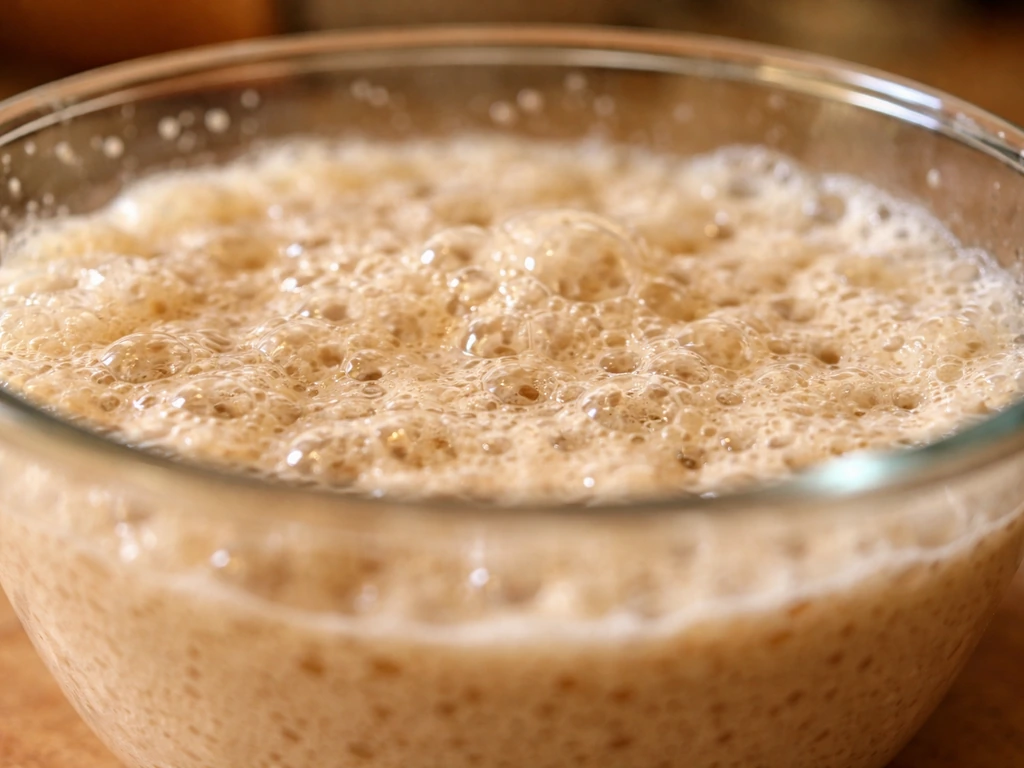
For classroom wild-capture experiments, the most reliable and educationally rich option is a flour-and-water starter. Equal parts flour and water by weight, kept at around 24 to 27 degrees Celsius, fed daily by discarding half and adding fresh flour and water, will typically show active bubbling within 3 to 7 days. The science question to ask is why: what conditions does this mixture provide that favour yeast and LAB over pathogens? The answer covers pH shift, moisture, carbon source, and competitive exclusion, all core microbiological principles.
Safe classroom observation, contamination risks, and troubleshooting
Growing yeast in a classroom setting is low-risk, but it is not zero-risk, and knowing what can go wrong makes you a better experimenter and a safer one. S. cerevisiae itself is classified as a biosafety level 1 organism and is not considered a pathogen for healthy individuals. The real risk in open-vessel yeast cultivation is not the yeast itself but the other organisms that might grow alongside it.
Setting up safe observations
- Use clean, washed equipment. Residual soap or bleach can inhibit yeast, but dirty equipment introduces competing bacteria and mould.
- Observe at room temperature (24 to 28 degrees Celsius) for active, safe growth. Avoid incubating near body temperature (37 degrees Celsius) without supervision, as this can favour opportunistic organisms.
- Label all containers with date, substrate type, and temperature to track variables systematically.
- A simple balloon-over-a-bottle setup trapping CO2 from a sugar-yeast-water mixture is an effective, fully closed-vessel experiment requiring no microscopy equipment.
- For microscopy, a small drop of liquid from a sugar-yeast solution on a glass slide with a coverslip lets students observe budding cells safely without any aerosol risk.
Common contamination signs and what they mean
The most common contaminant in home and classroom yeast cultures is mould, visible as fuzzy surface growth in colours ranging from white to green to black. Mould indicates that the surface was exposed to spores (always present in air) and that conditions favoured their germination, usually too much surface area exposed to air, too low a carbon-to-nitrogen ratio, or insufficient acidification. Discard mouldy cultures rather than scooping the mould off; the mycelium penetrates further than the visible surface suggests.
Pink or orange slime suggests bacterial contamination, often from lactic acid bacteria or, less commonly, from organisms introduced by unwashed hands or equipment. A sour smell in a sourdough-type starter is expected and normal (that is your LAB producing acids). An unpleasant putrid or cheese-like smell suggests protein-fermenting bacteria rather than yeast, which points to a nitrogen-rich substrate being colonised by the wrong organisms, often because the pH never dropped enough to protect the culture.
Troubleshooting slow or failed growth
| Problem | Likely cause | What to check or change |
|---|---|---|
| No CO2 production / no rise | Temperature too low, or yeast dead | Confirm temperature is 24–30°C; use fresh yeast |
| Very slow growth | Insufficient nutrients or biotin deficiency | Switch to a richer substrate (flour, wort) rather than plain sugar water |
| Rapid contamination with mould | Too much air exposure or neutral pH | Cover culture loosely; ensure substrate is slightly acidic (pH 5–6) |
| Sour smell without CO2 / rise | LAB dominating over yeast | Normal in sourdough; add more flour and ensure yeast inoculum is sufficient |
| No growth on lab media | Wrong medium selected (e.g., MacConkey) | Switch to Sabouraud or YPD for yeast isolation |
| Ethanol smell but no visible growth | Fermentation without significant biomass increase | Expected under Crabtree / high-sugar anaerobic conditions; normal outcome |
Quick answers to related yeast and microbiology questions
Several questions come up repeatedly when studying yeast growth, and giving each a direct, science-grounded answer helps tie the principles together rather than treating them as separate topics.
How does yeast grow?
Yeast grow primarily by budding: a daughter cell forms as an outgrowth of the parent, grows, and separates. See the short answer "how does yeast grow" for a concise overview of yeast reproduction and growth phases. Population increase follows the standard four-phase curve (lag, exponential, stationary, death). Under nutrient limitation, yeast can also mate and sporulate, producing stress-resistant ascospores.
Does yeast need oxygen to grow?
No, yeast do not need oxygen to grow; they are facultative anaerobes. Oxygen shifts their metabolism toward respiration (higher biomass, less ethanol), but they can complete their life cycle through fermentation alone. The Crabtree effect means that even with oxygen present, high glucose concentrations push S. cerevisiae into fermentative metabolism.
Does yeast grow faster in aerobic or anaerobic conditions?
Aerobic conditions generally support faster biomass accumulation and higher cell density because respiration extracts far more ATP per glucose molecule than fermentation does. Under fermentative (anaerobic or high-glucose aerobic) conditions, carbon is diverted to ethanol and CO2, reducing the yield of new cell mass to roughly 0.1 g per gram of sugar versus up to 0.4 to 0.5 g per gram aerobically.
Will yeast grow on nutrient agar?
Yeast can form visible colonies on nutrient agar, but the medium is not designed for them and growth is often weak and slow. Nutrient agar lacks the high dextrose content that yeast prefer, and its near-neutral pH does not selectively suppress competing bacteria the way Sabouraud Dextrose Agar does. For reliable yeast cultivation in a lab, Sabouraud or YPD agar is the right choice. For a concise answer and practical tips about whether yeast will grow on nutrient agar, see will yeast grow on nutrient agar.
Does yeast grow on MacConkey agar?
Generally no. MacConkey agar contains bile salts and crystal violet, both of which are inhibitory to Gram-positive bacteria and to eukaryotes including yeast. It is a selective medium specifically designed to isolate Gram-negative enteric bacteria. Some formulations even include cycloheximide to actively suppress fungal growth. Yeast plated onto MacConkey would be expected to show little to no growth. For a concise answer and practical details, see does yeast grow on MacConkey agar.
Can apple cider vinegar grow a SCOBY?
No, not reliably. Apple cider vinegar contains a vinegar mother made of acetic acid bacteria, which is a completely different community from the yeast-and-bacteria cellulose matrix of a kombucha SCOBY. The high acidity and acetic acid content of vinegar are actually hostile to the yeast species needed for kombucha fermentation. Starting a genuine SCOBY requires a kombucha starter culture, not a vinegar-based product. See can apple cider vinegar grow a scoby for a focused explanation of why vinegar mothers and kombucha SCOBYs are not interchangeable.
Can all microorganisms grow in nutrient broth and media?
No. Nutrient broth and nutrient agar are general-purpose media formulated primarily for heterotrophic bacteria with moderate nutritional requirements. Obligate autotrophs (which need CO2 as their carbon source), fastidious organisms (which need specific vitamins or blood factors), anaerobes sensitive to oxygen exposure, and eukaryotes like yeast or moulds all have requirements that standard nutrient broth may not meet. See the related question "Can all microorganisms grow in nutrient broth and media" for a concise summary of which organisms need specialized or selective media. Media selectivity is not a quirk of laboratory practice; it reflects the genuine diversity of microbial nutritional strategies.
FAQ
Can I grow my own yeast — short answer?
Yes. Common baker’s/brewer’s yeast (Saccharomyces cerevisiae) and many wild yeasts can be grown at home or in classrooms for educational, baking, or brewing demonstrations using safe, food‑grade substrates (dough, wort, sugar solutions, or a sourdough starter). Use non‑sterile, low‑risk methods (sourdough, commercial yeast rehydration, bread dough rise) rather than attempting laboratory culturing that requires sterile technique and hazard controls.
What are yeasts and how do they reproduce?
Yeasts are unicellular fungi; S. cerevisiae is a model baker’s/brewer’s species. They are eukaryotic cells with a cell wall, nucleus and mitochondria. The most common asexual reproduction is budding (one cell forms a small daughter cell); under certain conditions haploid cells can mate to form diploids and, when starved, diploids can undergo meiosis and form resistant spores (ascospores). Budding and cell size changes are visible with a basic light microscope.
What are the complete biological growth requirements for yeast?
Essential requirements: liquid water/high water activity (most S. cerevisiae need a_w ≈0.88–0.90 or higher), an accessible carbon source (glucose, fructose, maltose, sucrose), assimilable nitrogen (amino acids or ammonium), vitamins (notably biotin for many strains) and minerals (Mg2+, Zn2+). Temperature: slow growth near refrigeration (4–10°C), optimal commonly ~25–30°C for many baker’s/ale strains; some strains tolerate 8–12°C (lagers) or up to 37–40°C (strain‑dependent). pH: mildly acidic to near‑neutral typical (≈pH 4–6); many sourdough environments go lower, favoring acid‑tolerant species. Oxygen: facultative – oxygen supports respiration and biomass growth, while high sugar can trigger fermentation (ethanol + CO2) even with oxygen present (Crabtree effect).
How does oxygen affect yeast growth and products (aerobic vs anaerobic)?
Yeasts are facultative anaerobes. With oxygen available they can respire, producing more biomass per sugar and fewer fermentation products; without oxygen (or in high‑glucose Crabtree conditions) they ferment, producing ethanol and CO2. Aerobic conditions favor faster biomass accumulation and less ethanol; anaerobic/fermentative conditions favor CO2 for leavening and ethanol for brewing. Oxygen also affects the growth rate, stress resistance and nutrient needs (e.g., sterol synthesis requires oxygen).
What are yeast growth phases?
Yeast population growth typically follows four phases: lag (cells adapt to new medium, little division), exponential/log (rapid, constant‑rate division with shortest doubling time), stationary (nutrients limit growth—division slows; stress responses and secondary metabolism increase), and death (population declines as resources and viability drop). Doubling times depend on medium and temperature (minutes–hours).
How do laboratory media compare with kitchen environments for supporting yeast?
Lab media: YPD (yeast extract, peptone, dextrose) is rich and non‑selective — excellent for S. cerevisiae growth. Sabouraud Dextrose Agar (SDA) is peptone + dextrose, acidified to favour fungi over many bacteria. Nutrient agar/broth is bacterial‑oriented and less optimal for yeasts. MacConkey is selective for Gram‑negative bacteria and usually suppresses yeasts. Kitchen substrates: bread dough supplies starch (broken down to sugars), water and nutrients for bread yeasts; wort (brewing) supplies maltose, amino nitrogen, minerals and vitamins suitable for brewer’s yeasts; simple sugar solutions support some growth but may select for osmophilic spoilage yeasts in high‑sugar syrups. In practice, food substrates give the nutrients yeasts need and are the safe, practical choice for classroom demonstrations.