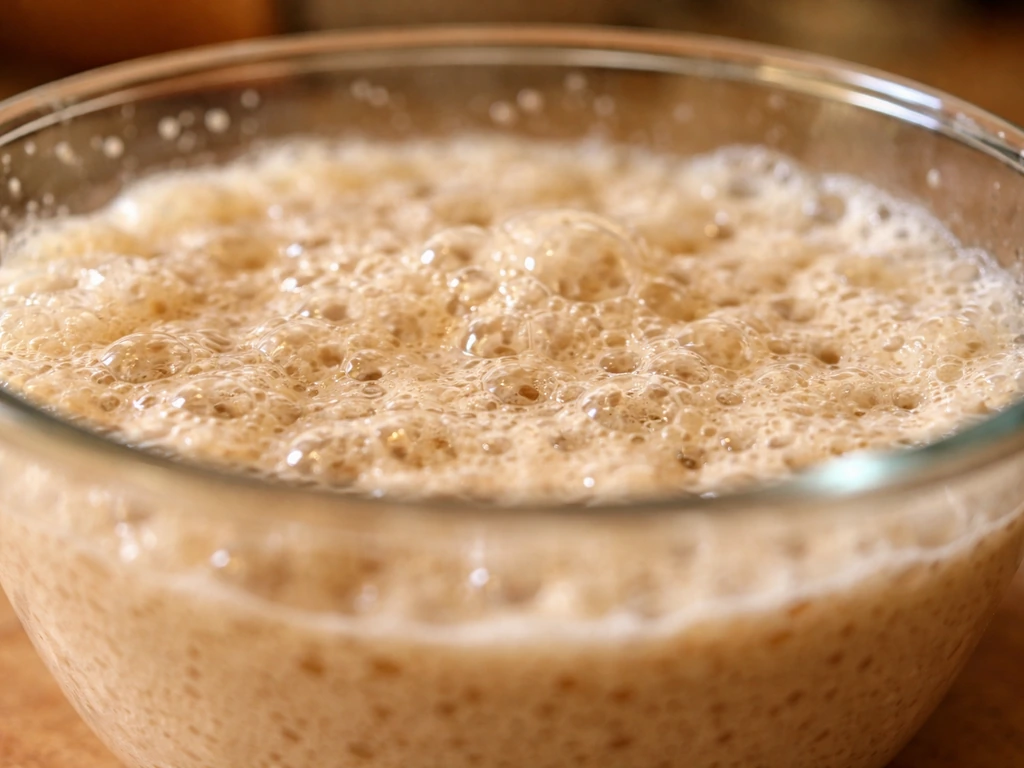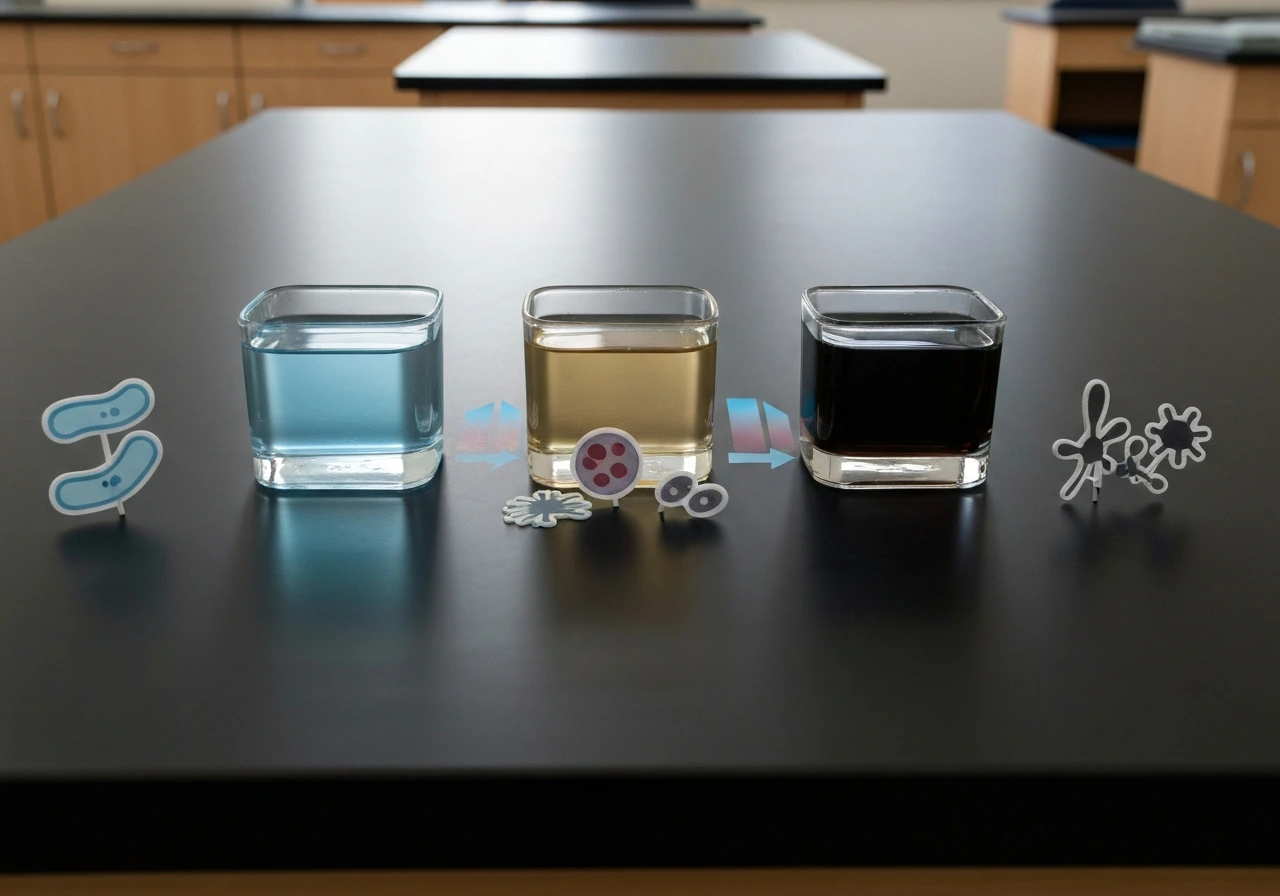
Apple cider vinegar can theoretically support SCOBY formation, but only under a very specific set of conditions that most bottles of ACV simply cannot provide on their own. Raw, unfiltered ACV with live mother cultures contains the right bacteria (acetic acid bacteria), but it lacks the fermentable sugars that yeast need to kick off the fermentation cycle a SCOBY depends on. Pasteurized or filtered ACV lacks both. So the honest answer is: ACV alone almost certainly won't grow a true SCOBY, but it can be part of the picture if you add the missing pieces intentionally.
Can Apple Cider Vinegar Grow a SCOBY? Conditions and Next Steps

Marcus Holloway
27 Jun 2026
What a SCOBY actually needs to form
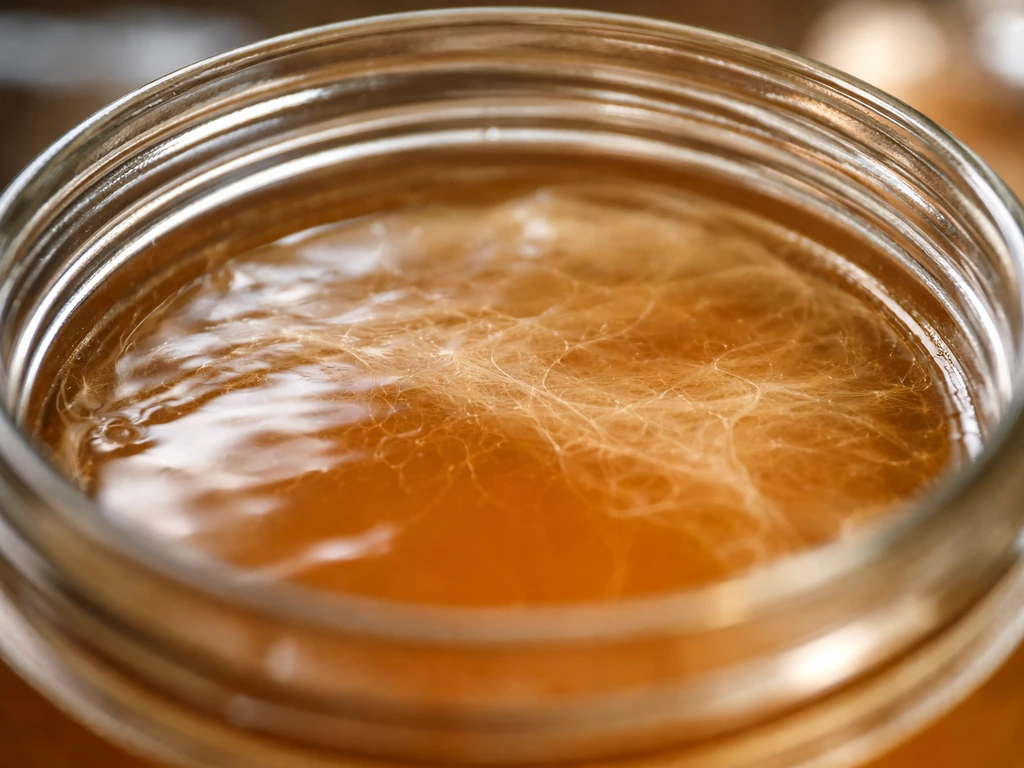
A SCOBY, which stands for Symbiotic Culture Of Bacteria and Yeast, is not just a blob of slime. It's a structured bacterial cellulose biofilm produced primarily by acetic acid bacteria (AAB), genera like Komagataeibacter and Gluconacetobacter, working in tandem with osmophilic (sugar-loving) yeast. Each partner in this relationship has its own environmental requirements, and all of them have to be satisfied at the same time for a SCOBY to actually form. Yeast can grow on selective media such as MacConkey agar, but it depends on what nutrients and conditions are present.
Here's what the culture needs, broken down by the core microbial growth conditions: Yeast typically grow on nutrient agar only when the medium has enough nutrients and moisture for yeast to metabolize and divide.
- Living microbes: Both viable AAB and viable yeast must be present. No live organisms, no SCOBY.
- Fermentable sugars (nutrients): Yeast consume sugar to produce ethanol and CO2. The AAB then oxidize that ethanol into acetic acid. Without an initial sugar source, the whole metabolic chain stalls at step one.
- pH in a workable range: The culture tolerates acidity well (kombucha environments typically run pH 2.5–3.5 at maturity), but the starting pH matters. Too acidic from the outset and microbial activity is inhibited before the culture establishes itself.
- Oxygen access at the surface: AAB are obligately aerobic, meaning they require oxygen as a terminal electron acceptor. Pellicle/SCOBY formation happens right at the liquid surface where oxygen is available. Sealing the container tightly will stop SCOBY formation.
- Temperature between roughly 20–30°C (68–86°F): Yeast in the kombucha community perform best in this range. Below it, everything slows dramatically. Above 35°C, you risk killing off the culture.
- Moisture and a static (undisturbed) surface: The cellulose matrix needs a calm, undisturbed liquid surface to polymerize and thicken into a coherent pellicle. Agitating the vessel repeatedly disrupts formation.
Think of it as a relay race. Yeast run the first leg, converting sugar to alcohol. In general, yeast tends to grow faster in aerobic conditions because it can generate energy more efficiently, but the overall SCOBY process still depends on the combined action of yeast and acetic acid bacteria Yeast run the first leg. AAB run the second leg, converting that alcohol to acetic acid while simultaneously building the cellulose pellicle at the oxygen-rich surface. Pull one runner out and the baton never gets passed.
What's in apple cider vinegar that helps (and what works against you)
Apple cider vinegar is the product of a two-stage fermentation. First, apple juice sugars are fermented by yeast into hard cider, then AAB convert that alcohol into acetic acid. By the time it's sitting in your pantry, the fermentable sugars are largely gone, the alcohol has been oxidized away, and what remains is mostly water, acetic acid (roughly 5–6%), trace organic acids, and some minerals. That's a problem for SCOBY formation in two big ways.
First, there's almost no fermentable sugar left. Yeast have nothing to metabolize. Without ethanol production from yeast, AAB have no ethanol to oxidize, and without that metabolic activity, there's no driving force behind cellulose pellicle construction. Second, the existing acidity (pH typically around 2.5–3.0 in commercial ACV) is at the lower end of what even an established culture handles comfortably. A brand-new, fragile nascent culture trying to establish itself in that environment faces an uphill battle before it's even had a chance to grow.
On the positive side, the acetic acid environment does one useful thing: it discourages contaminating mold and unwanted bacteria. This is the same reason a small amount of finished kombucha is used to acidify a new batch at the start. ACV's acidity provides that same protective low-pH head start, which is why some brewers use a splash of ACV as a starter acidifier when they're building a new kombucha batch from scratch. But that's a supporting role, not the starring one.
Raw and unfiltered vs pasteurized: does it matter?
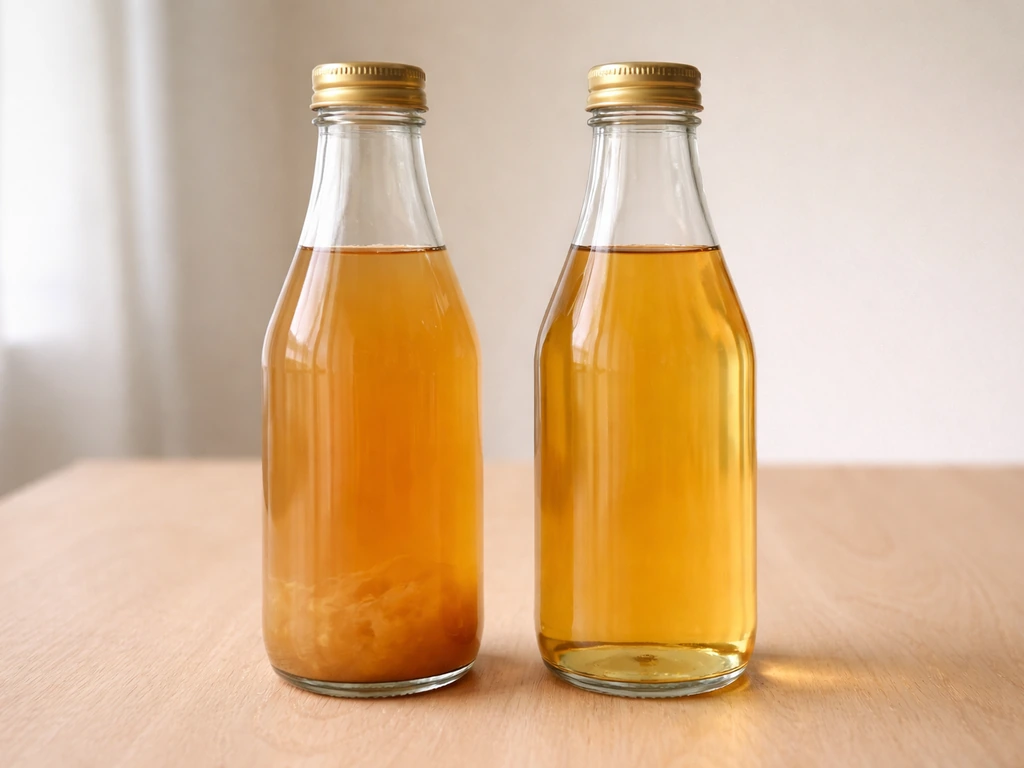
Yes, it matters enormously, and this is where most of the confusion around this question originates. The cloudy, web-like sediment you see in raw, unfiltered ACV (like Bragg's) is called the 'mother.' That mother is a real, live bacterial cellulose pellicle containing viable AAB. Those bacteria are genuinely capable of forming a new pellicle if given the right conditions. So raw ACV does contain the bacterial half of the SCOBY equation.
Pasteurized and filtered ACV is a completely different story. Pasteurization kills the bacteria. Filtration removes them physically. A clear, shelf-stable bottle of ACV is essentially a sterile acidic liquid with no living organisms capable of forming anything. Pouring it into a jar and hoping something grows is like planting a cooked seed and expecting a tree.
| Type of ACV | Live AAB present? | Live yeast present? | Fermentable sugar present? | Can support SCOBY formation? |
|---|---|---|---|---|
| Raw, unfiltered (with mother) | Yes | Possibly trace amounts | No (depleted) | Possibly, with added sugar and yeast |
| Pasteurized, filtered (clear) | No | No | No | No |
Even with raw ACV, you still need to address the sugar deficit. The bacteria are present, but they have nothing to work with. Yeast also have their own requirements for growth, including whether they need oxygen to multiply does yeast need oxygen to grow. If you add a viable yeast source and dissolved sugar to raw ACV, you're now creating conditions much closer to a proper kombucha starter environment. At that point, the ACV mother bacteria could potentially contribute to a growing pellicle.
What you'll actually see: SCOBY vs pellicle vs mold
This is one of the most practically useful things to understand, because not everything that grows on top of your liquid is a SCOBY, and not everything that looks alarming is mold. Here's how to read what you're seeing.
A genuine SCOBY or pellicle
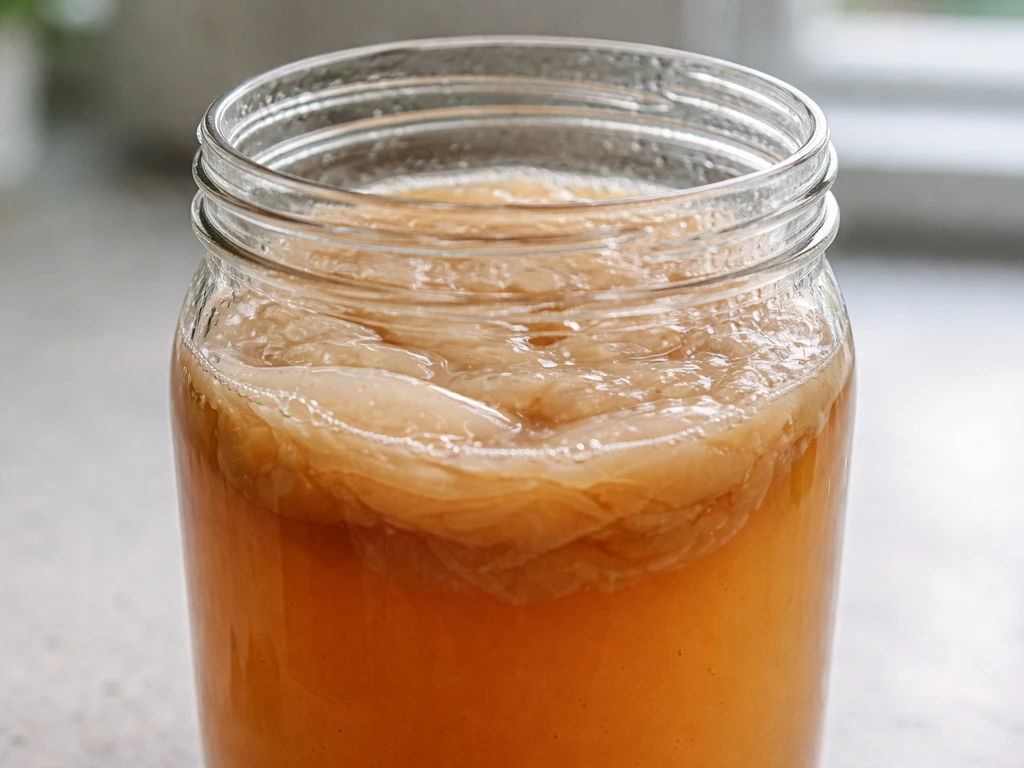
A true SCOBY is a pale tan to cream-colored rubbery disc that forms on the surface of the liquid. It's firm enough to hold its shape when lifted, and it floats because it's a cellulose matrix filled with gas pockets. The color can range from off-white to light brown (from tea tannins). It's smooth on the bottom surface (the side touching the liquid) and slightly rougher or fibrous on top. Smell should be acidic, vinegary, or mildly yeasty. No fuzz. No bright colors.
Surface biofilm or thin pellicle
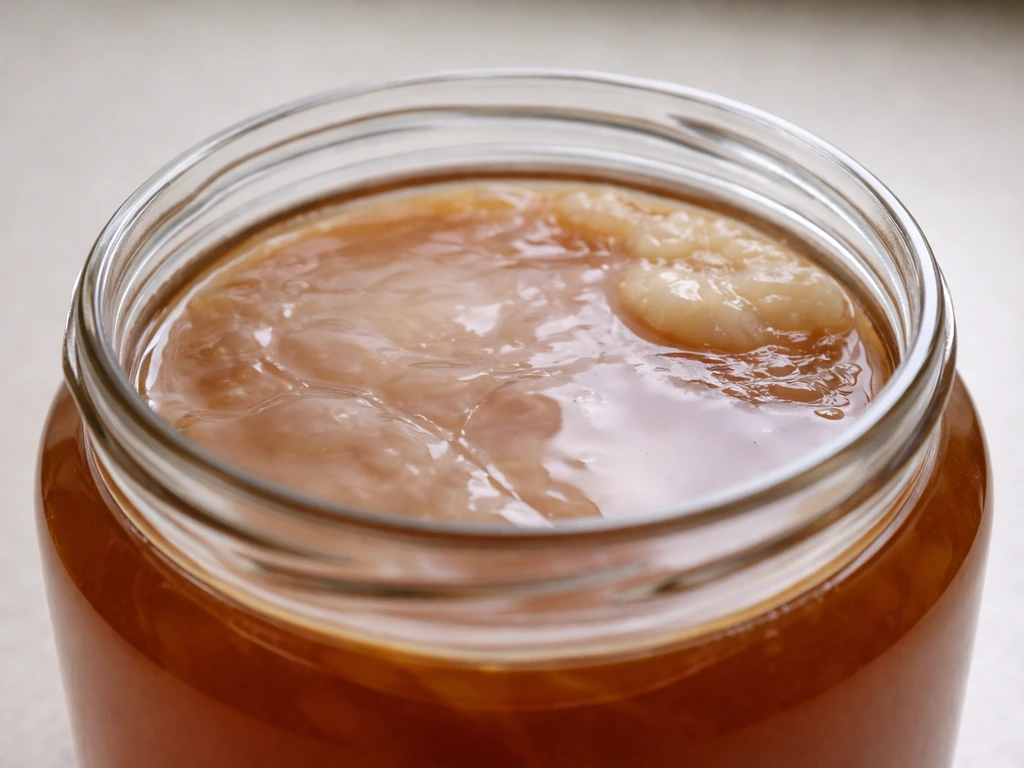
In the early stages, or when conditions are only partially met, you might see a thin, translucent, slightly slimy film on the surface. This is the beginning of a pellicle and is perfectly normal and safe. It may look wispy or like a thin skin of plastic wrap. Over days it will either thicken into a proper SCOBY (if conditions are right) or remain thin and eventually sink (if they aren't). This is still a sign that some AAB activity is happening, which is encouraging.
Mold
Mold is fuzzy, dry, and often colored: green, black, blue, pink, or orange. It grows on the surface and looks visually distinct from any cellulose film. If you see fuzzy growth of any color that isn't white or very pale tan, that's mold. Discard everything immediately, clean the vessel thoroughly, and start over. Mold on a ferment cannot be skimmed off and used anyway; mycotoxins can permeate the liquid even before you see extensive growth.
How to test your vinegar today and check conditions
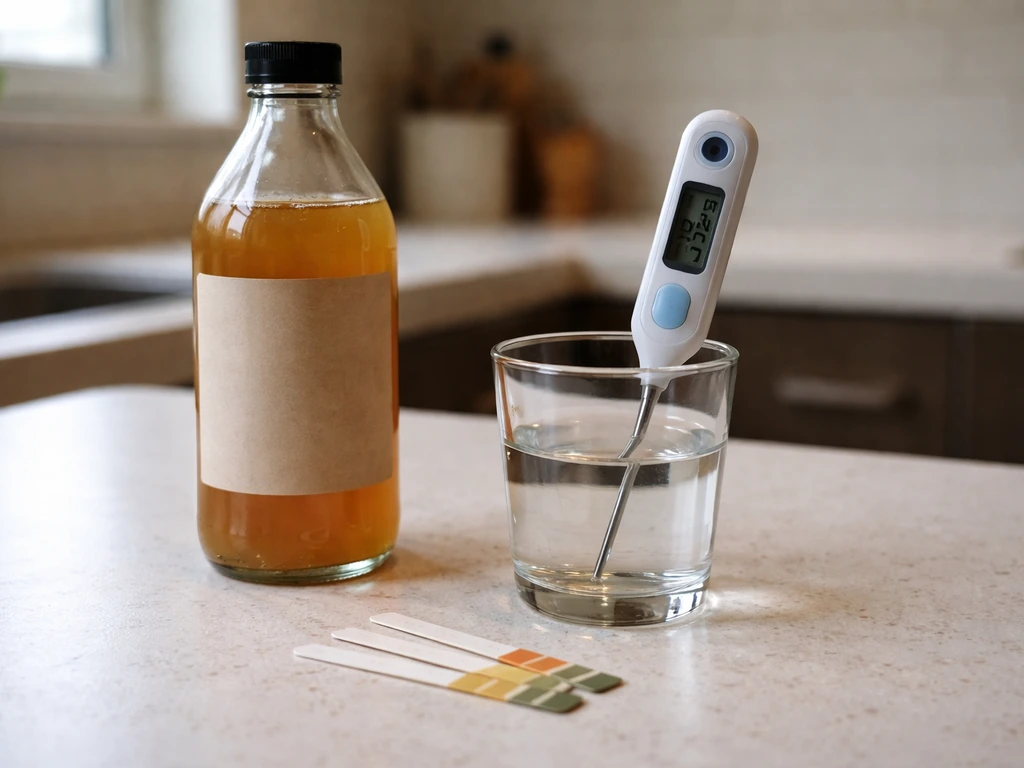
Before you set anything up, run through this quick checklist so you know what you're actually working with and what your real chances are.
- Check the bottle: Is it raw and unfiltered? Look for 'with the mother,' cloudiness, or sediment. If it's clear and filtered, stop here. Filtered ACV cannot grow a SCOBY.
- Measure or estimate pH: Litmus paper or a cheap pH strip works fine. Commercial ACV runs around pH 2.5–3.0. This is usable as a starter acidifier, but it's not a growth medium on its own.
- Check your room temperature: Aim for 20–30°C (68–86°F). If your kitchen runs below 18°C consistently, microbial activity will be too slow to establish a culture before contamination takes hold.
- Assess your oxygen setup: You need airflow but not direct exposure to contaminants. A cloth cover held by a rubber band over your jar (not a sealed lid) is correct. A sealed container will suffocate your AAB.
- Confirm sugar availability: If you're attempting to grow something using ACV as a base, you need to add a fermentable sugar source. Plain white cane sugar dissolved in cooled tea is the standard starting medium for kombucha.
- Source living yeast: The yeast component does not reliably survive in ACV. You need to introduce it, either via a SCOBY from a reliable source, a kombucha starter liquid, or even a small amount of unflavored commercial raw kombucha.
If ACV can't do it alone: how to start a SCOBY more reliably
The most reliable way to grow a SCOBY from scratch isn't to rely on ACV at all. If your real question is whether you can grow yeast on its own at home, the short answer is also about having the right food source and conditions grow a SCOBY from scratch.
It's to get a bottle of raw, unflavored, unpasteurized commercial kombucha (check that it contains live cultures) and use that as your starter liquid in a proper sweet tea medium. That bottle contains viable AAB, viable yeast, the right metabolic byproducts, and it's already at the right pH.
Pour it into a jar of cooled sweet tea (1–2 tablespoons of sugar per cup of tea is a reasonable starting ratio), cover with cloth, and leave it at room temperature for 1–4 weeks. A pellicle will typically start forming within 5–10 days if conditions are right.
If you want to use your raw ACV, the most sensible approach is to use it as a small acidifying addition alongside a proper kombucha starter. Add 2–3 tablespoons of raw ACV to your sweet tea along with your kombucha starter liquid. The ACV contributes some AAB and helps drop the pH to a range that discourages unwanted contamination at the outset. It's a supporting ingredient, not the main event.
Understanding why this works connects to broader principles of microbial growth. The blank" rel="noopener noreferrer">yeast in kombucha are facultative, meaning they can operate with or without oxygen, and are responsible for the initial alcoholic fermentation. In other words, when you understand how yeast grows in a fermentation, you can choose starter conditions that encourage the alcohol-producing step that a SCOBY depends on. The AAB are strictly aerobic, which is why the pellicle forms at the surface where oxygen concentration is highest. These oxygen dynamics, discussed in depth when looking at how yeast use or don't use oxygen across different fermentation contexts, are exactly what shape the SCOBY's structure.
Risks, food safety, and when to throw it out
Home fermentation involving ACV or kombucha starters is generally low-risk precisely because the acidic environment (low pH) is inhospitable to most human pathogens. Not all microorganisms can grow in nutrient broth and media, because each species has its own specific nutritional needs and environmental tolerances acidic environment (low pH) is inhospitable. That said, low risk doesn't mean no risk, and there are clear lines you should not cross.
- Discard immediately if you see any fuzzy, colored growth (mold). Green, black, pink, or orange fuzzy patches are mold and cannot be remediated.
- Discard if there is an off smell that isn't vinegary or mildly yeasty. A putrid, rotten, or fecal odor suggests contamination with unwanted bacteria, not AAB.
- Do not attempt fermentation in metal containers. Acetic acid reacts with many metals and can leach harmful compounds. Use glass.
- Keep everything clean. Wash hands, jars, and utensils thoroughly before handling your ferment. Residual soap or detergent can inhibit microbial growth, so rinse well.
- Do not use sweetened or flavored ACV as a base. Added ingredients introduce unpredictable variables and can encourage unwanted microbial growth.
- If you have immune system concerns or a compromised health status, consult a healthcare provider before consuming home ferments. Even well-made kombucha can carry very low levels of alcohol and organic acids that some individuals should avoid.
The fundamental principle that protects you in this process is pH. Once the ferment acidifies properly below pH 3.5, most dangerous pathogens cannot survive. This is why the early stage, before a new culture establishes and acidifies the medium, is the window of highest risk. Using a reliable starter liquid that immediately acidifies your medium is not just about faster SCOBY growth. It's the primary food safety step in this entire process.
FAQ
How can I tell whether the “mother” sediment in raw ACV is actually viable for making a pellicle?
Look for sediment that is still uniformly suspended (not just settled like dried flakes) and a strong, fresh vinegar aroma. If the bottle is very old or has been kept warm for long periods, viability can drop, so your best sign will be activity in a sugar-containing starter setup (a thin film that thickens rather than just an inert skin).
If I want to try using raw ACV, how much should I add, and what’s the biggest mistake to avoid?
Use small amounts of raw ACV as an acidifier (for example, a couple of tablespoons in your sweet tea alongside an actual kombucha starter). The most common mistake is relying on ACV alone, because it leaves you without yeast activity and fermentable sugars to drive the first fermentation leg.
Can I use pasteurized or “filtered” ACV and somehow bring it back to life?
No, pasteurization and filtration remove or kill the organisms you would need. You can still make an acidic drink, but you cannot “revive” the missing bacteria or yeast just by adding sugar or oxygen.
What should I do if a film forms but it never thickens into a proper SCOBY?
Treat it as partial or failing fermentation. Common causes are too little sugar, insufficient starter microbes, or poor oxygen access at the surface (for example, jar covered in plastic wrap instead of breathable cloth). If it stays thin and then sinks without vinegary yeasty signs over several days, start over with a proven starter liquid.
Is it safe to skim and reuse material if I see a small amount of off-color growth?
If you see fuzzy growth that is green, black, blue, pink, or orange, discard everything. SCOBY-like films cannot be safely separated from mold because contaminants can be embedded in the liquid or pellicle matrix, not just on the surface.
Does a SCOBY always form on top, or can it grow elsewhere in the jar?
Typically it forms at the oxygen-rich surface where the aerobic acetic acid bacteria operate. If the culture is under solid liquid cover (for example, jar is overfilled so the top surface area is limited) you may see slower or irregular pellicle formation, including thinner films or patchy growth.
Will adding more ACV make a SCOBY grow faster?
Usually it slows or prevents growth once the acidity becomes too harsh for a new culture to establish. Using excessive ACV can extend the lag phase, increasing the chance that the starter never gains traction before the environment becomes hostile. Use it as a supporting acid, not the main fermentation engine.
What temperature range works best for SCOBY formation when using an ACV starter addition?
Aim for stable room-temperature conditions rather than cold spots. Cooler temps slow yeast first-stage activity, which then starves the acetic acid bacteria. If your kitchen varies a lot, growth can be inconsistent, even if your starter liquid is otherwise correct.
Can I grow a SCOBY without adding any kombucha starter, just sugar and raw ACV?
You can sometimes get minimal activity, but it’s unreliable because raw ACV may not contain enough viable yeast and the system still needs both partners to complete the relay. The more reliable path is using a live kombucha starter liquid that already contains the needed microbial community.
When is the right time to start feeding the batch or transferring to a new jar?
Wait until you see consistent pellicle formation and the liquid develops a clear vinegary, mildly yeasty scent. Early transfers before stable acidification (before the medium drops below a safe acidity level) raise the risk window because unwanted microbes have more room to grow before the culture establishes itself.