Slime grows mold because it provides nearly everything a fungus or bacterium needs to thrive: moisture, a carbon-rich polymer matrix, nutrients from added ingredients, and a surface that traps airborne spores every time you open the container. The biology is the same whether you are looking at cookies left on the counter or a batch of homemade PVA glue slime sitting on a classroom shelf. Once water activity is high enough and a food source is present, microbes move in.
Why Did My Slime Grow Mold? Simple Microbiology & Safety

Marcus Holloway
9 Aug 2026
Quick summary: why slime sometimes grows mold
Homemade slime is essentially a hydrated polymer gel, and that gel is a surprisingly good home for fungi and bacteria. The base ingredient in most recipes, polyvinyl alcohol (PVA) from white school glue, can actually be broken down by both bacterial and fungal strains under aqueous conditions, meaning the slime itself can serve as a nutrient source. Add in a few drops of lotion, a spoonful of cornstarch, or contact with unwashed hands, and you have raised the stakes considerably. Mold spores are everywhere in indoor air; they are just waiting for the right conditions. Slime, sitting in a warm room inside a loosely covered container, frequently gives them exactly what they need.
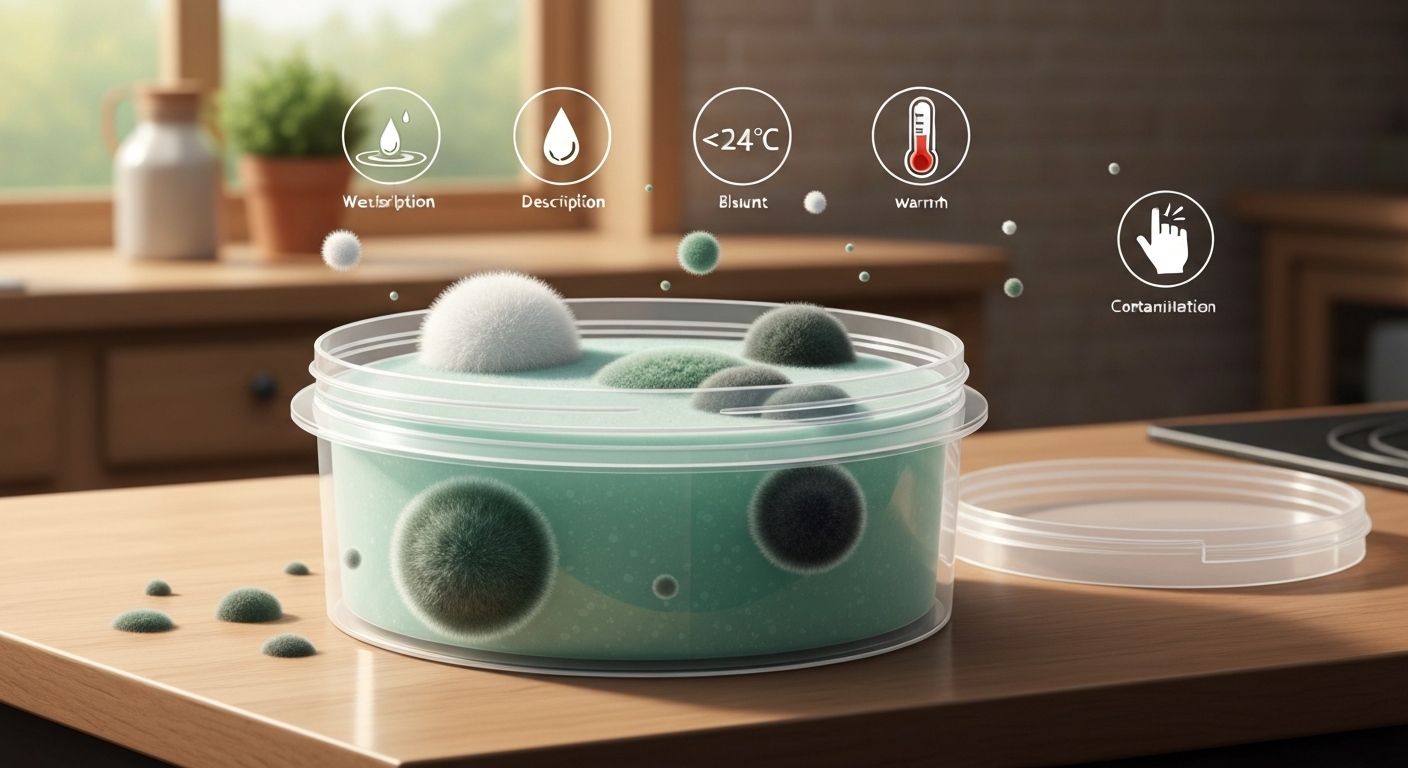
- High water content raises water activity (a_w) into the range fungi need to germinate and grow (roughly 0.75 to 0.90 for most common indoor molds)
- Organic additives like flour, lotion, food coloring dyes, and glitter glue supply carbon and energy sources
- PVA polymer itself is biodegradable and can be metabolized by certain bacteria and fungi
- Activators like borax provide only modest antimicrobial protection and are not a reliable long-term preservative
- Indoor air deposits spores onto exposed slime surfaces during play and storage
- Warm room temperatures (20–30°C) overlap directly with the optimal growth range of common indoor molds like Penicillium and Cladosporium
The biology of microbial growth in slime
To understand why slime grows mold, you need to think about the five conditions that control microbial growth: moisture, temperature, pH, oxygen availability, and nutrients. These factors do not work in isolation. They interact, and when several are favorable at the same time, microbial growth accelerates fast. Slime checks most of these boxes by default.
Moisture: the most critical factor
Scientists measure moisture availability for microbes as water activity (aw), a scale from 0 (bone dry) to 1.0 (pure water). Most bacteria need aw above 0.91 to grow well, but fungi are much more tolerant of dryness. Common indoor molds like Cladosporium and Penicillium can grow at a_w as low as 0.75 to 0.80, and some xerophilic (dry-tolerant) species push that boundary down to around 0.58 to 0.65. Freshly made slime typically sits well above 0.90, which is permissive for both fungi and bacteria. Even slime that feels tacky rather than wet can retain enough surface moisture to support mold germination.
Temperature: room conditions are ideal for molds
Most Penicillium and Cladosporium species, the same genera that show up on damp walls and forgotten bread, grow best between 20°C and 30°C. Aspergillus species commonly tolerate up to 30 to 35°C. A classroom or kitchen sits right in that range. Refrigerating slime slows growth considerably, but some cold-tolerant species can still make progress at refrigerator temperatures, so it is not a perfect solution.
pH: slightly acidic is actually preferred
Many people assume that adding boric acid or borax to slime makes it inhospitable to microbes because those chemicals are antimicrobial at high concentrations. The reality is more nuanced. The borate activator brings the mixture's pH into the mildly alkaline range during mixing, but the finished slime often drifts back toward neutral or slightly acidic as it absorbs CO2 from the air and as biological activity begins. The optimum fungal growth pH is close to 5, but most common indoor molds tolerate a wide pH range. The modest antifungal activity of borates is real but not sufficient to protect slime across days and weeks of use, especially as concentrations are diluted through the gel matrix.
Oxygen: aerobic molds dominate, but bacteria are flexible
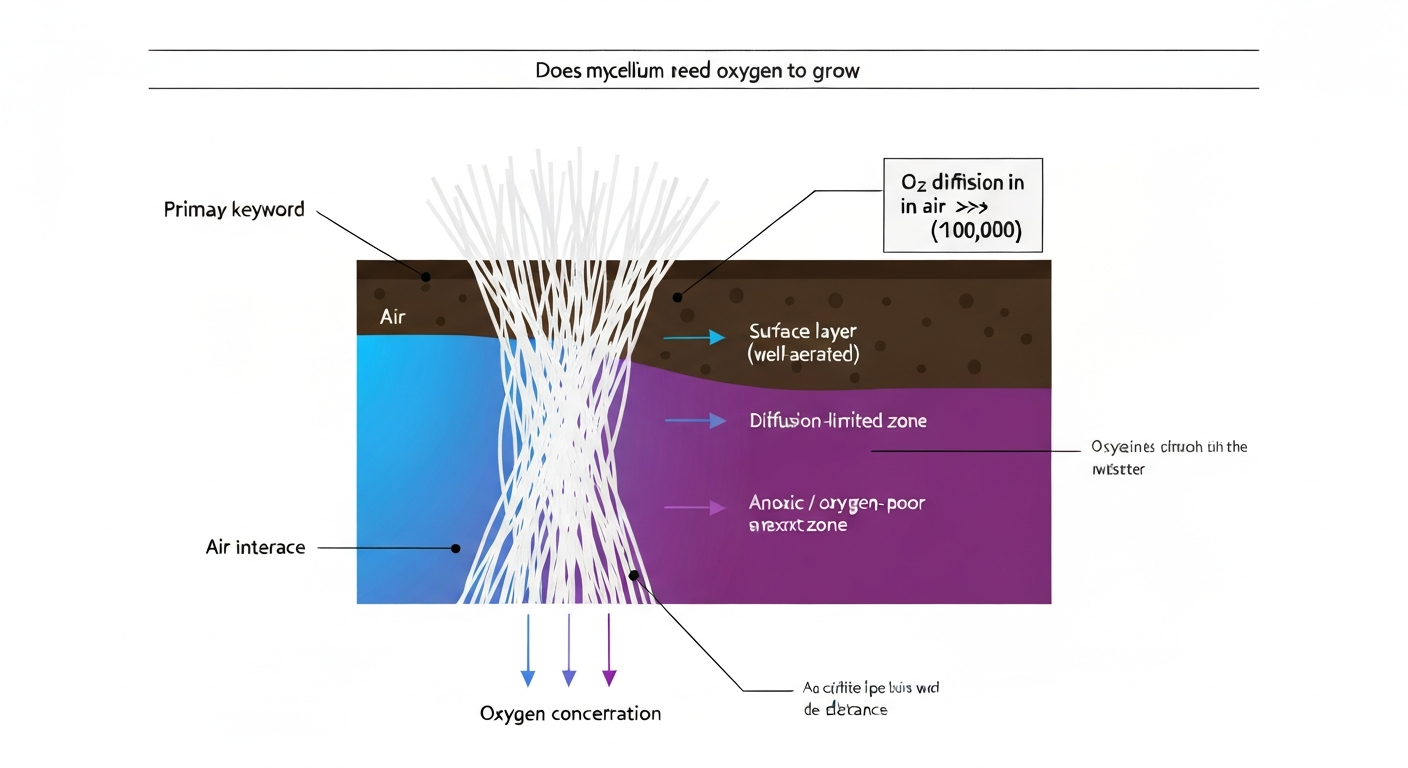
Most common indoor molds are aerobic, meaning they need oxygen to grow. This is why you typically see mold on the surface of slime first rather than deep inside the gel. Bacteria are more flexible: some are aerobic, some anaerobic, and many (called facultative anaerobes) can work with or without oxygen. If slime is sealed in an airtight container, bacterial activity can continue in the interior while surface mold slows down for want of air. In practice, containers are rarely perfectly sealed during play, so oxygen is seldom the limiting factor.
Nutrients: more than you might expect
The PVA polymer in white glue is not just an inert carrier. Multiple bacterial and fungal strains have been documented degrading PVA under aqueous conditions, using it as a primary carbon source. This means slime is literally food for certain microbes, even before you add anything extra. Once you factor in skin cells, lotion residue, food-grade starch, or sugars that many recipes call for, the nutritional profile of slime for microorganisms becomes quite generous.
Preservative failure: why activators are not a lasting defense
Some commercial slimes include preservatives, and some DIY recipes use contact lens solution (which contains low-concentration biocides like PHMB at roughly 0.0001% or polyquaternium-1 at 0.0001 to 0.001%) as an activator. These biocides are formulated to disinfect hard contact lenses, not to act as long-term preservatives in a polymer gel. In formulation science, this phenomenon is called preservative failure: an effective compound can partition into oil phases, bind to polymer chains, get adsorbed into the gel matrix, or simply get diluted below its minimum inhibitory concentration. A slime recipe that worked fine for a week can fail later because the preservative effectiveness has dropped off while the microbial load has had time to build.
How contamination actually gets into slime
There is no single contamination event that kicks off mold growth in slime. It is usually a combination of routes, each adding to a cumulative microbial load until conditions tip in the microbes' favor.
Hands: the primary vector
Human skin carries a resident community of bacteria, most notably coagulase-negative Staphylococcus species and, in some cases, Staphylococcus aureus. Quantitative hand-to-surface transfer experiments show transfer efficiencies ranging from a few percent up to over 50%, depending on the material and how much pressure or contact time is involved. Slime, which wraps around fingers and is kneaded repeatedly, offers a lot of contact opportunity. Every play session with unwashed hands deposits skin flora, environmental bacteria, and whatever microbial hitchhikers the hands have picked up.
Utensils and shared containers
Bowls, spoons, and measuring cups used for food and then used for slime without cleaning carry over both organic residue and microorganisms. Microbiological surveys of playroom and classroom surfaces consistently recover Bacillus spore-formers, Pseudomonas, and Enterobacteriaceae alongside Staphylococcus species. Plastic toys and containers are frequently culture-positive. A shared classroom slime container that multiple children dip into without hand-washing is essentially a continual inoculation experiment.
Ingredients and additives
Airborne spore deposition is unavoidable during the mixing process. Mold spores from genera like Cladosporium, Penicillium, Aspergillus, Alternaria, and in water-damaged environments Stachybotrys, are always present in indoor air. Any ingredient left open on a counter picks up spores. Beyond airborne contamination, certain ingredients bring their own microbial baggage. Raw flour, for example, is known to carry environmental bacteria including Bacillus and occasionally Salmonella, which is why food safety agencies advise against eating raw flour-based dough and why adding raw flour to play slime increases contamination risk.
How ingredient choices affect mold risk
Not all slime recipes carry equal risk. The ingredients you choose directly affect water activity, available nutrients, and the presence of any natural antimicrobial activity. Here is how common choices stack up.
| Ingredient | Effect on Mold Risk | Why |
|---|---|---|
| PVA white glue (plain) | Moderate baseline risk | PVA polymer is biodegradable and supports microbial growth under wet conditions |
| Borax or boric acid activator | Slight reduction, temporary | Has modest antifungal/antibacterial activity but is diluted in the gel matrix and not a reliable long-term preservative |
| Contact lens solution activator | Slight reduction, temporary | Contains biocides (PHMB, polyquaternium-1) at very low concentrations; not formulated for long-term polymer preservation |
| Lotion or baby oil | Increases risk | Raises water activity and adds organic carbon/energy sources that support microbial growth |
| Raw flour or cornstarch | Significantly increases risk | Provides readily available carbon and energy; raw flour can introduce environmental bacteria and spores directly |
| Food coloring (liquid) | Minor increase | Adds water and may add small amounts of organic material |
| Shaving cream | Increases risk | High moisture content, surfactants can disrupt preservative efficacy |
| Glitter or plastic beads | Negligible direct effect, but creates surface area | Non-nutritive but can trap moisture and organic debris in crevices |
| Essential oils (small amounts) | Potentially slight reduction | Some essential oils have antimicrobial properties, but concentrations used in slime are typically too low to be reliably protective |
The pattern here is consistent with a broader principle in formulation science: any ingredient that raises water activity or supplies a new carbon and nitrogen source raises mold risk. Ingredients like raw flour or lotion do both simultaneously, which is why slimes built around those additives tend to develop mold much faster than plain glue-and-activator recipes. The same logic explains why other organic-material-rich substrates, including compost, grow mold quickly once moisture is present. For details on why compost readily develops fungal growth when moist, see does compost grow mold.
Storage and environment: what speeds growth up or slows it down
Where you store slime matters almost as much as what is in it. Several environmental variables interact to either encourage or suppress microbial colonization.
Containers and air exposure
Leaving slime uncovered or in a loosely lidded container in a warm room is the single most effective way to encourage mold. Every air exchange deposits more spores onto the surface. An airtight container reduces new spore deposition, but here is the catch: sealing moist slime creates a humid microenvironment inside the container. MDPI Foods documents that storage conditions, particularly humidity and container sealing, significantly influence microbial spoilage in hygroscopic materials Impact of Storing Condition on Staling and Microbial Spoilage Behavior of Bread and Their Contribution to Prevent Food Waste — MDPI Foods (storage, humidity and spoilage principles applicable to hygroscopic materials). If the slime's water activity is already in a fungus-permissive range, that sealed humidity can actually accelerate the growth of spores already present in the material. The goal is airtight storage of slime that has been handled with clean hands and low-contamination ingredients, not using an airtight seal as a substitute for cleanliness.
Temperature and humidity
Storing slime in a cool place (below 18°C) meaningfully slows fungal growth because most common indoor mold species have their optimal range above 20°C. Refrigeration (around 4°C) is more effective still, though not foolproof. High ambient humidity in the storage environment also matters: slime exposed to humid air in a bathroom or near a sink can absorb additional moisture over time, raising its water activity even after it initially seemed dry enough to be safe.
Shelf life expectations
As a practical benchmark, plain PVA glue slime stored in an airtight container in a cool, dry location, and handled only with freshly washed hands, can remain mold-free for two to four weeks. Slime with added lotion, food ingredients, or high moisture content may show visible contamination in as little as a few days under warm conditions. Commercial slimes with validated preservatives generally last longer, but are not immune to contamination once opened and repeatedly handled.
Telling mold and bacterial growth apart from harmless changes
Not every change in slime means contamination. Slime can naturally separate (a process called syneresis, where liquid migrates out of the gel), change color slightly as dyes shift, or develop a different texture as polymers relax over time. Knowing what actually signals biological growth versus normal aging prevents both unnecessary panic and, just as importantly, unnecessary tolerance of genuinely contaminated slime.
| Change observed | Likely cause | Action |
|---|---|---|
| Water pooling at the bottom of the container | Syneresis (gel contraction), not microbial | Knead back in; monitor for other signs |
| Slight color fading or dye migration | Dye chemistry, not microbial | Safe, cosmetic change only |
| Fuzzy or filamentous growth on surface | Mold colony (hyphae visible) | Discard immediately |
| Raised, circular, powdery or velvety spots (white, green, black, or gray) | Mold colony | Discard immediately |
| Musty, sour, or earthy smell that was not there before | Microbial metabolic products (volatile organic compounds) | Strongly consider discarding |
| Slimy secondary layer or unusual slippery surface on top of slime | Bacterial biofilm | Discard |
| Pinkish or yellowish surface discoloration without texture change | Possibly bacterial pigment (e.g., some Staphylococcus or Serratia species) or dye | Inspect closely; if odor or texture change present, discard |
| Gradual stiffening or drying out | Dehydration, not microbial | May be revived with a small amount of water; inspect for odor first |
The most reliable indicators of biological contamination are a combination of three things arriving together: visible texture change (fuzziness, raised spots, powdery coating), an unexpected smell (musty, sour, or fermented), and timing (appearing within days to a couple of weeks of making or last playing with the slime). Any single sign warrants close inspection. Two or more signs together mean discard without handling the material with bare hands.
Health risks and who is most vulnerable
For most healthy children and adults, brief contact with moldy slime is unlikely to cause serious illness. The primary risks are skin and eye irritation from mold spores or metabolites, and a low-level allergic response in people who are sensitive to mold allergens. However, the picture changes meaningfully for certain groups and in certain circumstances.
Groups who face higher risk
- Children with asthma or known mold allergies: inhaling or touching mold-contaminated materials can trigger respiratory or skin reactions
- Immunocompromised individuals (including people on immunosuppressive medications, those undergoing chemotherapy, or with conditions like HIV): opportunistic molds like Aspergillus can cause serious infections in people with impaired immune defenses
- Infants and toddlers who may put slime near or in their mouths: oral exposure to bacterial contamination, including potential S. aureus, increases risk compared to older children
- Individuals with eczema or broken skin: compromised skin barrier makes bacterial entry easier, particularly relevant for S. aureus
A word on antimicrobial resistance
A separate but important safety angle involves how people respond when slime shows signs of contamination. Some people try to 'fix' moldy slime by adding more borax, more contact solution, or even household disinfectants. This approach is problematic for two reasons. First, it rarely works: preservative failure in a polymer matrix is not reliably reversed by adding more antimicrobial compound after the fact, because the distribution and activity of that compound inside the gel cannot be controlled. Second, and more broadly, regularly using antimicrobial agents at sub-lethal concentrations, which is what happens when you add a small amount of disinfectant to a contaminated polymer, is exactly the kind of practice associated with selecting for antimicrobial-tolerant or resistant microorganisms. See how using these improperly may cause superbugs to grow. Misusing antimicrobials in everyday household contexts contributes to the same pressures that lead to the emergence of resistant strains, a topic worth understanding at a systems level.
Keep, clean, or discard: practical rules for parents and teachers
Decision-making about contaminated slime does not need to be complicated. The guiding principle from public health agencies is straightforward: visible mold on a household material should be treated as a biological contaminant, not something to clean with bare hands or attempt to rehabilitate. Here is how to apply that to slime specifically.
Signs you can safely tolerate (keep and monitor)
- Water has separated out (syneresis) but there is no smell and no visible texture change on the surface
- Color has faded or shifted without any new smell or surface growth
- Slime has stiffened slightly from drying but has no odor and is less than two weeks old
Signs that mean discard now
- Any fuzzy, filamentous, powdery, or velvety growth on the surface, regardless of color
- A musty, sour, or unusual smell that was not present when the slime was made
- A secondary slimy or biofilm-like layer on top of the slime
- Discoloration that is patchy or spotty (not uniform dye) combined with any odor or texture change
- Slime that has been left uncovered in a warm room for more than 48 hours and shows any of the above
How to discard safely
- Do not handle moldy slime with bare hands; use a plastic bag or disposable gloves to transfer it to the bin
- Seal the waste bag before disposing in a household rubbish bin (not compost)
- Wash the storage container with hot water and dish soap; for classroom containers, a dilute bleach rinse (1 tablespoon bleach per gallon of water) followed by air drying is appropriate
- Wash hands thoroughly with soap and water after handling contaminated slime or its container
- Do not try to rescue contaminated slime by adding more borax, bleach, or contact solution
Prevention steps going forward
- Always wash hands before making or playing with slime
- Use clean, dedicated utensils that are not shared with food preparation
- Avoid adding raw flour, uncooked starch, or food ingredients; if you do, treat the slime as short-lived (one to two days maximum)
- Store in a clean, airtight container in a cool, dry location
- Label batches with the date made and discard after two to three weeks even if no visible contamination is present
- In classroom settings, assign individual containers to students rather than sharing a single batch across a group
- If you make slime with additives like lotion or shaving cream, plan to use it in a single session and discard afterward
The biology behind moldy slime is genuinely the same biology behind mold on cookies, mold on stored compost, or even the conditions that allow microbes to colonize other stored materials like pills in high-humidity environments. For a related discussion on whether pills can grow mold, see whether pills can grow mold. Once you understand the core conditions, temperature, moisture, pH, oxygen, and nutrients, and how they interact, you can predict and prevent microbial growth across a wide range of everyday situations. Slime just happens to be a vivid and relatable example that makes those abstract principles very concrete, sometimes literally overnight.
FAQ
Why did my homemade or store-bought slime grow mold or other microbes?
Slime can support fungal and bacterial growth when three basic requirements are met: a source of microbes (spores or cells), enough available water, and a usable nutrient source. Many slimes use water-soluble polymers (PVA from glue) and additives (lotions, starch, sugar, glycerin) that raise water activity and provide carbon for microbes. Indoor fungal spores (e.g., Cladosporium, Penicillium, Aspergillus) and skin/environmental bacteria commonly seed slime via hands, utensils, airborne deposition or contaminated ingredients. Room temperatures and mildly acidic pH also fall within growth ranges for many indoor microbes, so if slime remains moist and nutrient-bearing, colonies can appear within days to weeks.
How can I tell if the change in my slime is biological (mold/bacteria) rather than just texture or color changes?
Visible signs that indicate biological contamination: fuzzy, filamentous, or powdery spots (often green, black, white, blue, or orange), raised colonies, and sometimes a musty or sour odor. Bacterial growth may appear as slimy, discolored patches or a foul smell. Non-biological changes (syneresis—wetting/separation, dye migration, softening from lotion) usually don’t form discrete fuzzy colonies and may lack a characteristic musty or fermented odor. When in doubt, treat visible fuzzy growth as microbial and follow disposal guidance.
What are the most common routes that introduce microbes into slime?
Common contamination routes: hands (skin bacteria and transferred spores), unclean bowls/utensils or surfaces (fomites), contaminated ingredients (raw flour, non-sterile lotions, reused activators), airborne fungal spores settling on exposed slime, and cross‑contamination from other materials. Shared classroom slime increases transfer opportunities because many people touch the same material.
How do ingredients and additives affect the risk of growth?
Ingredients that increase water activity (lotions, glycerin, body creams), provide carbohydrates or proteins (flour, starch, food particles), or introduce microbes (raw flour, unpreserved lotions) raise risk. Plain dry polymer slime with low available moisture and no organic additives is lower risk. Some additives (contact‑lens solution, borax) have antimicrobial activity at specific concentrations, but their effectiveness in a final slime mixture is unpredictable because formulation can inactivate or dilute the preservative.
Does temperature, pH, or oxygen availability matter for slime colonization?
Yes. Most indoor molds and many bacteria grow well at typical room temperatures (roughly 20–30°C), and some can even grow slowly at cooler or warmer ranges. Many molds prefer mildly acidic conditions (around pH 4–6) but tolerate a broad pH range. Most common indoor molds and bacteria are aerobic (require oxygen) so surface-exposed slime is especially vulnerable; sealing moist slime into an airtight container can create a humid microenvironment that also supports growth if oxygen remains available at the slime surface.
Is visible growth on slime a health hazard?
Visible mold or heavy bacterial growth indicates active microbes; for most healthy people this is more of an annoyance or allergy trigger (musty odors, sneezing, skin irritation) than an acute infection risk. However, people with mold allergies, asthma, or weakened immune systems can have more serious reactions and should avoid exposure. As a precaution, visible contamination should be handled as biological waste—avoid touching with bare hands, and discard according to guidance below.