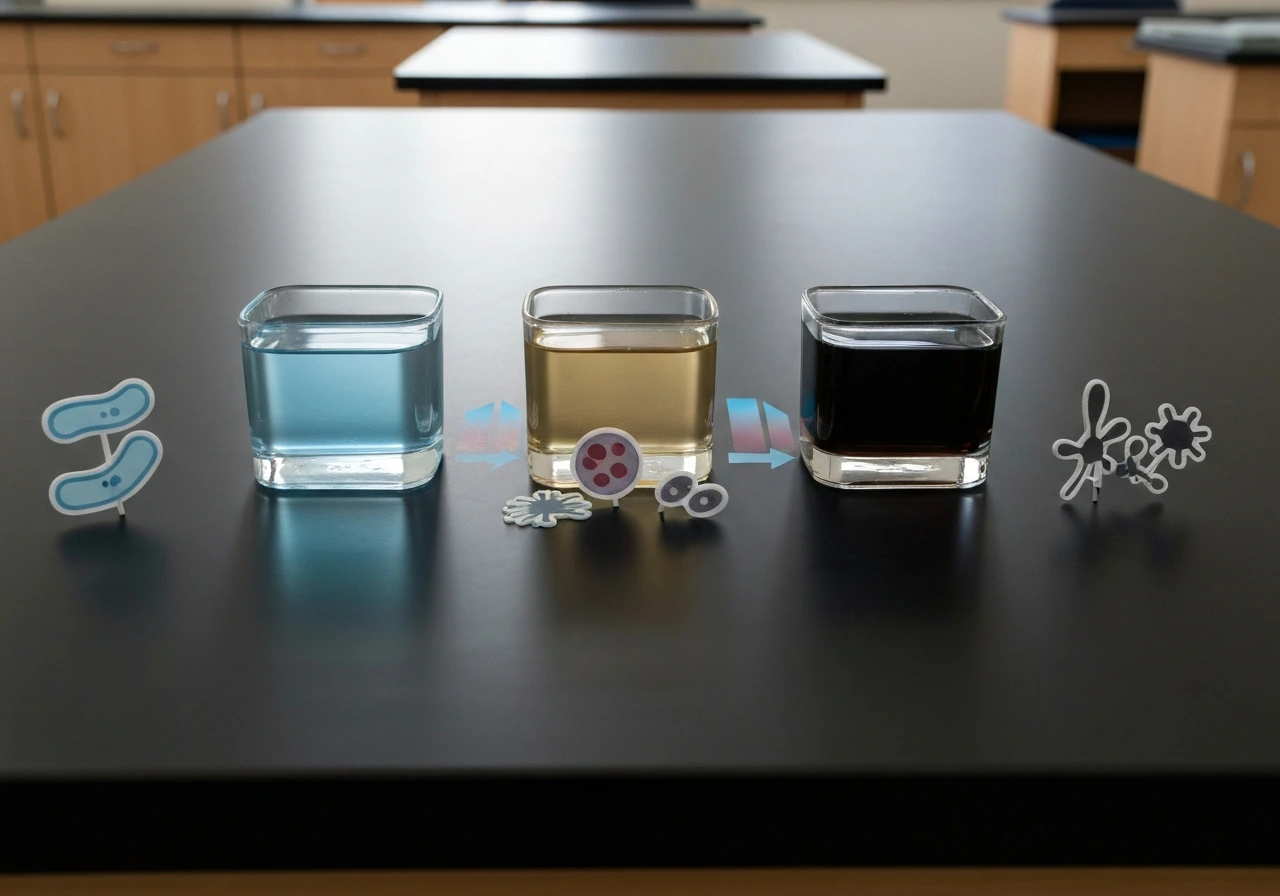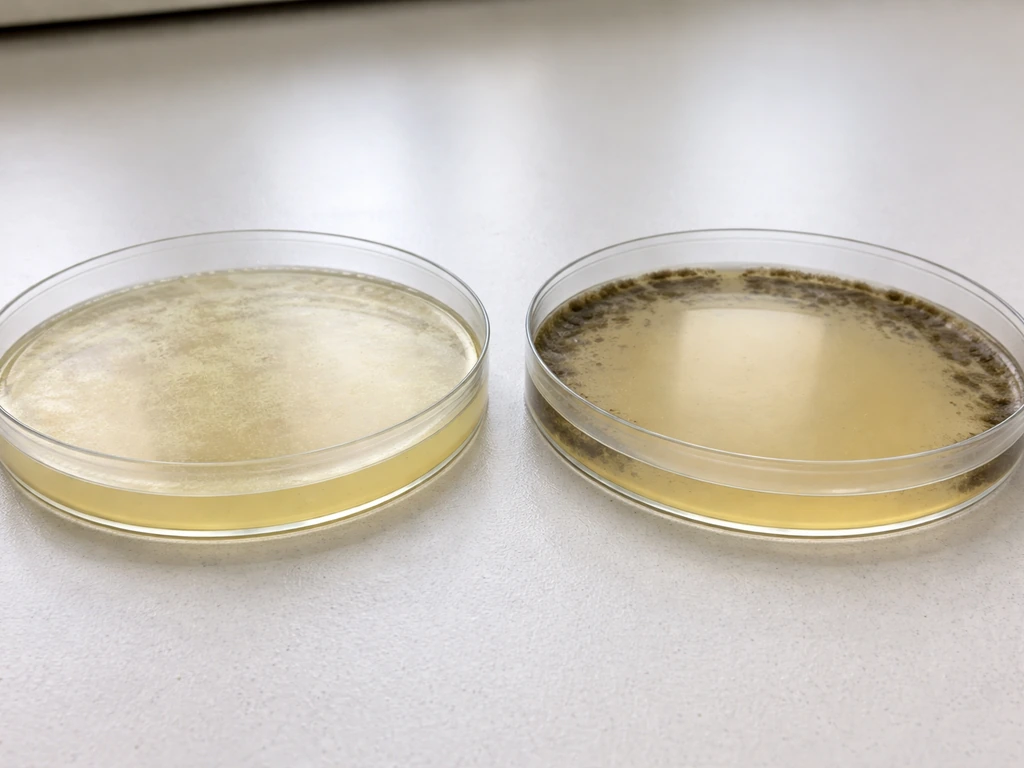
Yes, pills can grow mold, but it rarely happens under normal conditions. The key factor is moisture. Pills are manufactured to have extremely low water activity (the measure of available water a microorganism can actually use), which starves mold spores of what they need to germinate. The moment a pill absorbs enough moisture, that protection breaks down, and fungal growth becomes possible. Most of the time, what you see on a pill is not mold at all, but knowing how to tell the difference and what to do about it matters, especially if you've already taken one.
Can Pills Grow Mold? Causes, Signs, and Safe Next Steps

Marcus Holloway
2 Jun 2026

When pills can (and can't) support mold growth
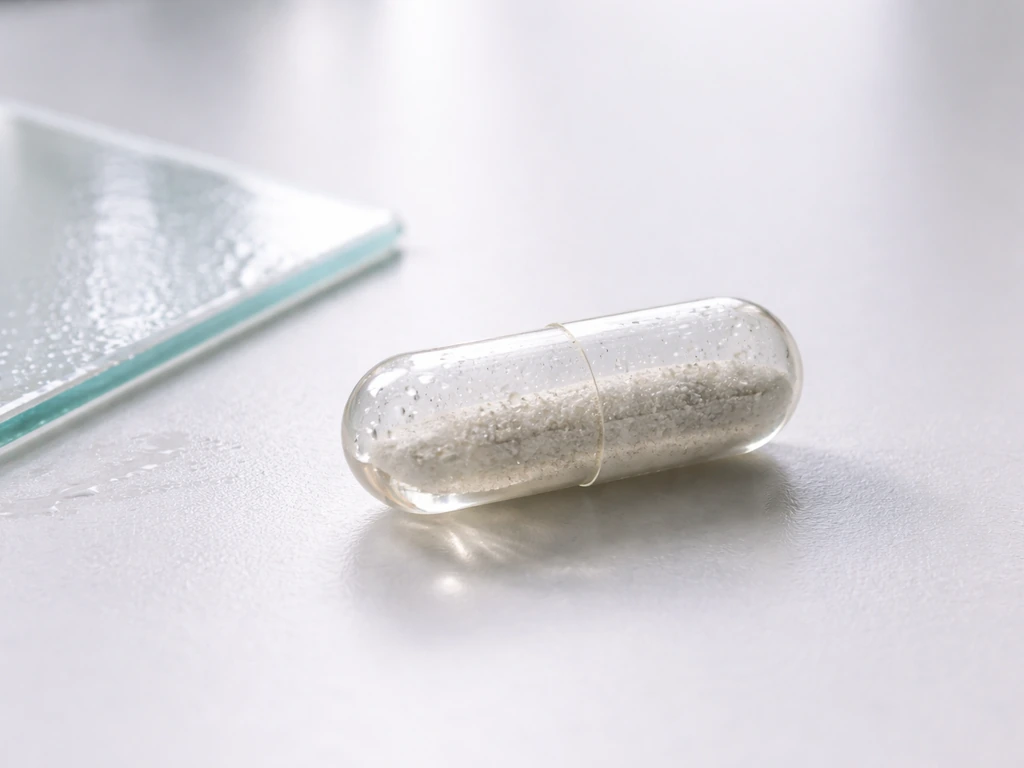
Mold is a fungus, and like all fungi it needs a few things to grow: moisture, a nutrient source, and the right temperature. Pills are engineered to resist that first requirement. Manufacturers test every formulation against water activity benchmarks, and the goal is to keep available moisture so low that spore germination is essentially impossible. As the FDA explains in its guidance on microbial contamination, mold spores can land on any surface, but they can only germinate if that surface is moist enough to support them. A dry tablet sitting in a sealed bottle with a desiccant packet provides almost nothing a mold spore can use.
Capsules are slightly more vulnerable than tablets because the gelatin shell is more hygroscopic (meaning it absorbs moisture from the air more readily), and any crack in the shell creates an entry point. Coated tablets add a protective layer, but if that coating chips or cracks, the compressed powder inside is exposed. Real fungal contamination in pharmaceutical products does happen. In one documented case, the FDA tracked a recall of 45 lots of Glyburide tablets specifically for fungal contamination. These events are serious and rare, but they confirm that contamination is not just theoretical.
The conditions that flip a dry, safe pill into something that can support microbial growth are predictable: high ambient humidity, temperature fluctuations that cause condensation inside the container, broken or compromised packaging, or direct water exposure. A pill stored in a bathroom cabinet experiences all of these on a regular basis, which is exactly why pharmacists tell you not to store medications there.
What 'mold on a pill' usually turns out to be
Before you assume the worst, it helps to know what else can make a pill look contaminated. Why did my slime grow mold? It is usually the same issue: moisture that allows mold spores to grow once protective conditions are disrupted mold look contaminated. The United States Pharmacopeia (USP) outlines several physical instability signs that are commonly mistaken for mold: cracks and chips in the tablet surface, mottling or discoloration, swelling, fusion between tablets, and crystals on the container walls or tablet surface that are not part of the original formulation. Light and air can also trigger chemical reactions on a tablet's outer surface that change its color without any microbial involvement at all.
Crystals on or around tablets are a particularly common source of confusion. When humidity cycles, moisture can move into and then out of the tablet, depositing dissolved salts on the surface as it evaporates, a process similar to the efflorescence you sometimes see on tile grout or brick. Coating tackiness, clumping, and color changes are also driven by moisture instability rather than mold growth. Powder or crumbles at the bottom of a pill bottle usually mean the tablet has physically degraded, not that something biological is growing.
| What you see | Most likely cause | Is it mold? |
|---|---|---|
| Fuzzy or filamentous growth, especially green, black, or white | Actual fungal growth (rare) | Possibly yes |
| Dark spots or uneven coloring on tablet surface | Light/air driven chemical reaction or coating issue | Probably not |
| White powder or residue on surface | Coating breakdown, crystallization, or tablet abrasion | Probably not |
| Crystals on container walls or tablet edges | Humidity cycling and salt efflorescence | No |
| Clumped or fused tablets | Moisture absorption softening the coating or binder | No |
| Crumbles or fine powder at bottle bottom | Physical degradation from moisture or age | No |
| Unusual smell (musty, sour) | Could indicate microbial activity or chemical degradation | Investigate further |
How to safely inspect your pills and decide what to do
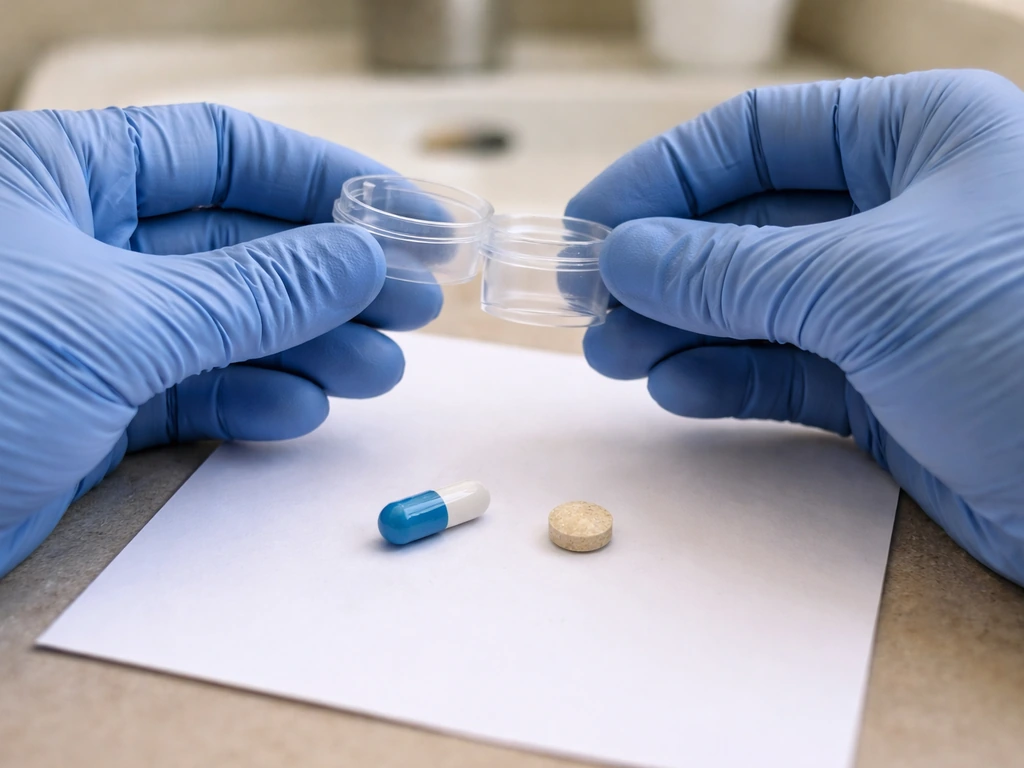
Do not handle a potentially contaminated pill with bare hands, and do not smell it closely or taste it to test. Mold releases spores that you can inhale, and people with compromised immune systems are at particular risk of invasive fungal infections from that kind of exposure. The inspection should be visual and done carefully.
- Wash your hands first, then use a clean piece of paper or a gloved hand to hold the pill under good lighting.
- Check the pill itself for any fuzzy, filamentous, or raised texture that looks biological rather than crystalline or powdery. True mold typically has a three-dimensional, fuzzy appearance, often green, black, grey, or white.
- Check the container. Look at the inside lid, the walls, and the bottom of the bottle for any fuzzy growth, unusual residue, or signs of moisture (droplets, condensation rings, wet powder).
- Check the packaging integrity. Is the bottle seal intact? If it came in a blister pack, is every seal undamaged? A compromised seal means moisture could have entered.
- Check the expiration date. An expired medication may have degraded physically even without visible mold, and the FDA is clear that expired medications can be less effective or riskier due to changes in chemical composition.
- Check the storage location and conditions. Has this bottle been in a bathroom, car, or anywhere with high heat or humidity? Those conditions create risk even before the expiration date.
- If you see anything that looks genuinely fuzzy or filamentous, or if the pill smells musty, treat it as contaminated. When in doubt, throw it out.
One practical rule borrowed from FDA guidance on flood-damaged medications applies broadly here: if the packaging has been compromised or the pills have been exposed to excess moisture, discard them. There is no reliable at-home test to confirm whether a contaminated pill is safe to use, and the potential downside of being wrong is not worth it.
What to do if you already took a suspicious pill
First, don't panic. A single pill with mild surface contamination is unlikely to cause a serious systemic infection in a healthy person with a normal immune system. The stomach's acidic environment is hostile to most molds, and the dose of any contamination from one pill is typically very low. That said, the risk is not the same for everyone.
If you or someone in your household has a weakened immune system due to chemotherapy, organ transplant medication, HIV, diabetes, or any other condition that reduces immune function, treat this more seriously. The CDC notes that people with weakened immune systems face a significantly higher risk from invasive mold infections, with symptoms that can include cough, shortness of breath, and sinus problems.
The practical steps after taking a potentially contaminated pill are straightforward. Call Poison Control at 1-800-222-1222 if you have any concern at all. They provide free, expert, 24-hour guidance and can help you assess the actual risk based on the specific pill, the person who took it, and the amount involved. Do not guess, and do not rely on internet searches alone when a real expert is a phone call away. When you call, have the pill name, dosage, and a description of what you saw ready. If symptoms like nausea, vomiting, difficulty breathing, or signs of an allergic reaction develop within hours, go to an emergency room and bring the pill container.
Preventing mold growth: controlling the conditions that matter
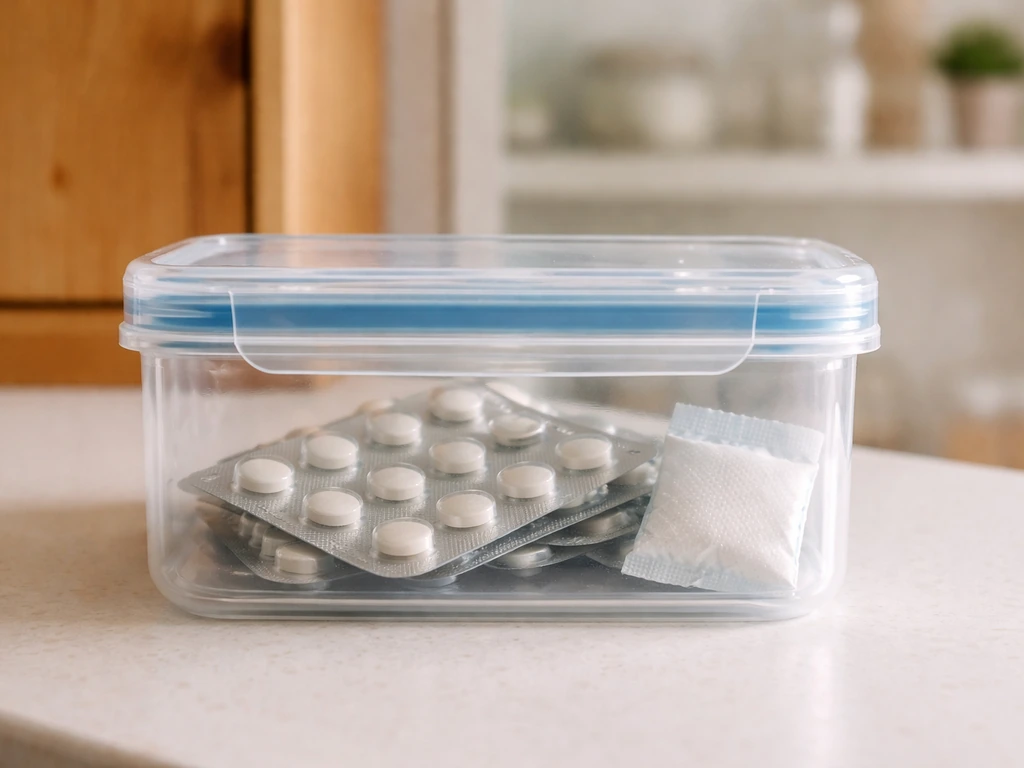
Mold prevention in pills comes down to controlling the same environmental conditions that govern microbial growth anywhere. Think of it the same way you think about keeping food from growing mold: reduce available moisture, control temperature, and protect the food from exposure. The principles are identical because the biology is identical.
The WHO's good storage and distribution guidance recommends keeping medications in environments with no more than 60% relative humidity alongside appropriate temperature ranges. Most prescription labels and medication package inserts include specific storage instructions, and those instructions exist because the manufacturer tested exactly where the formulation remains stable. Ignoring them does not just risk mold, it can change the medication's chemistry and reduce its effectiveness even before any visible contamination appears.
- Store medications in a cool, dry place away from direct sunlight. A bedroom drawer or a dedicated medicine box in a living area is far better than a bathroom cabinet.
- Never store pills in a bathroom or near a stove, dishwasher, or any source of steam and humidity.
- Keep pills in their original container with the lid tightly closed. Manufacturer containers are specifically designed with moisture barriers and desiccants to protect the product.
- Do not remove the desiccant packet from the bottle. It is there to absorb any moisture that enters the container and is part of the packaging system.
- Avoid transferring pills into non-original pill organizers for long-term storage. These rarely have moisture control and expose the tablets to ambient humidity cycles.
- If you use a weekly pill organizer, fill it only for a short period (a few days to a week at most) rather than storing a month's supply in open plastic cells.
- Check blister pack seals before each use. If a cell is punctured or the foil is peeled back, that pill has had uncontrolled humidity exposure.
- Inspect your supply occasionally for any of the physical signs listed above, especially if the storage location has been warm or humid.
One thing worth understanding at a deeper level: pharmaceutical packaging is not just a container. The container-closure system is engineered and tested as part of the drug's stability profile, which the FDA requires manufacturers to demonstrate before approval. FDA guidance on container closures discusses that container closure systems are designed to protect against air and moisture, including approaches such as desiccant usage and barrier qualification. When you move pills into a different container or leave the cap loose, you are effectively removing them from the conditions under which their safety and shelf life were validated. The same logic explains why food scientists obsess over packaging integrity when preventing spoilage, and why slime, cookies, compost, and many organic materials grow mold once their protective barriers or low-moisture conditions are disrupted. Compost can also grow mold if it stays moist and has enough nutrients to support fungal growth, so proper moisture and aeration matter. Cookies can grow mold when they are exposed to enough moisture, which lets mold spores germinate and spread do cookies grow mold.
The bottom line is simple: pills resist mold because they are designed to be dry, and the main job of storage is to keep them that way. Moisture is the variable that changes everything. Using improperly stored pills, especially where moisture is allowed in, may cause superbugs to grow Moisture is the variable that changes everything.. Control moisture, use the original packaging, store in the right environment, and check periodically. If something looks wrong, throw it out and replace it rather than trying to assess whether it is safe enough to use.
FAQ
If only one pill looks off, can I keep the rest in the same bottle?
If the bottle seal was compromised or you see visible contamination (fungal growth, active slime, or strong irregular spots), it is safest to discard the whole lot in that container. Mold risk is driven by moisture exposure, and a contaminated pill usually indicates the packaging barrier has failed for everyone inside, even if others look normal.
What should I do if I accidentally dropped pills on a wet surface or got them splashed with water?
Treat it as a moisture-exposure event. If the container and seal stayed intact and the pills dried quickly, risk may be lower, but there is still no reliable home test. Follow the “discard when packaging is compromised or excess moisture exposure occurred” approach, especially for people with weakened immune systems.
Can heat in a car or near a heater cause mold on pills?
Heat alone is not usually the main driver of mold, but it can raise humidity inside the container and trigger condensation during cooling. If the pills were in a hot, humid environment long enough for the label temperature range to be exceeded, discard them rather than assuming they are fine.
How can I tell crystals from mold without swabbing or testing?
Look for patterns consistent with surface residue rather than growth. Efflorescence or salt crystals often form after humidity cycles and can appear as gritty white deposits on the tablet or bottle walls, with no fuzzy, filament-like spread. If you see fuzzy growth, rapid changes, or dark patches that look like organisms, do not use the pill.
Is smelling a pill a safe way to check for mold?
No. Mold spores can become airborne and inhalation can be risky, especially for immunocompromised people. Use only careful visual inspection. If anything looks biologically grown or the pill has been exposed to excess moisture, discard it and replace.
If I already took one potentially moldy pill and feel okay, do I still need to call?
If there is any doubt, calling Poison Control is reasonable because they can assess risk based on the pill, the amount exposure, and the person’s immune status. If symptoms start (vomiting, difficulty breathing, allergic-type reactions), seek emergency care and bring the pill container.
Does mold on pills always mean the medication is unsafe or ineffective?
Not always, but mold indicates the moisture and stability conditions were disrupted. Even when you cannot confirm microbial contamination, moisture can change drug chemistry, potency, or appearance. If the packaging integrity was compromised or you see contamination-like changes, replacing the medication is the safest option.
Are liquid medications safer than pills regarding mold growth?
Liquid products can be more or less vulnerable depending on preservatives, packaging, and how they were stored. However, liquid contamination is often detected earlier as cloudiness or growth. The same principle applies: if the container was exposed to excess moisture or the seal was compromised, do not rely on appearance alone for safety.
Should I keep medication in a pill organizer, or is that a risk for mold?
A pill organizer can increase risk if it is not sealed well against humidity or if it is left open during refilling. Prefer the original container when possible. If you use an organizer, keep it dry, keep lids closed, and avoid bathrooms or other humidity-prone areas.
Who should take potentially mold-contaminated pills more seriously?
People with weakened immune systems, and those on treatments such as chemotherapy or transplant medications, should treat this as higher risk. They should not wait for symptoms if they suspect moisture exposure or visible contamination, because invasive fungal infections are more likely in this group.