Most spoilage bacteria grow best at a pH between 6.5 and 7.5, right around neutral, and the majority of them struggle or stop growing below pH 4.5. That lower boundary is why vinegar-based pickles resist bacterial rot, and why food safety regulations draw a hard line at pH 4.6 for safe water-bath canning. The important exceptions are yeasts and molds, which are fungi rather than bacteria, but which cause enormous amounts of food spoilage at pH values far too acidic for most bacteria to survive. If you remember one number from this topic, make it 4.6.
Most spoilage bacteria grow at what pH: Typical ranges

Marcus Holloway
27 Jul 2026
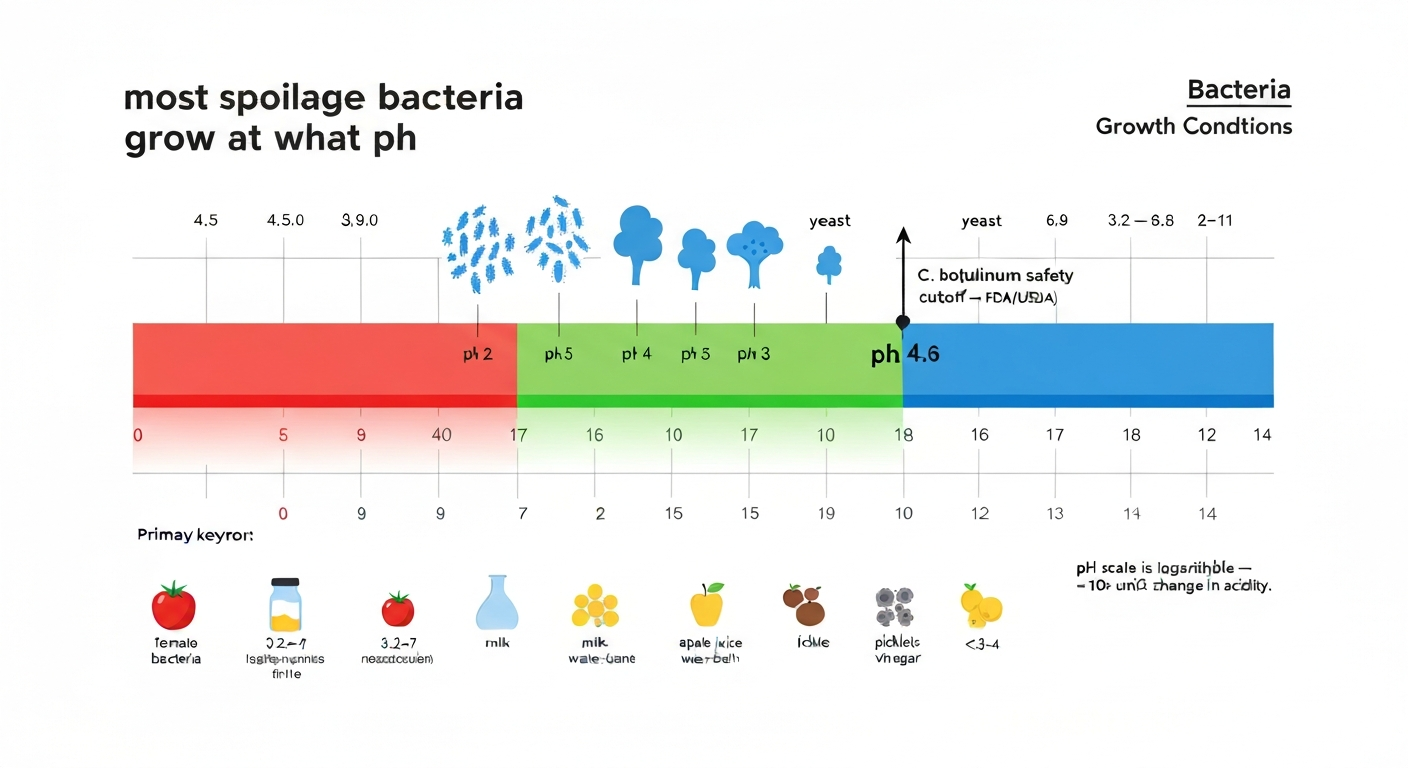
The direct answer, with the exceptions spelled out
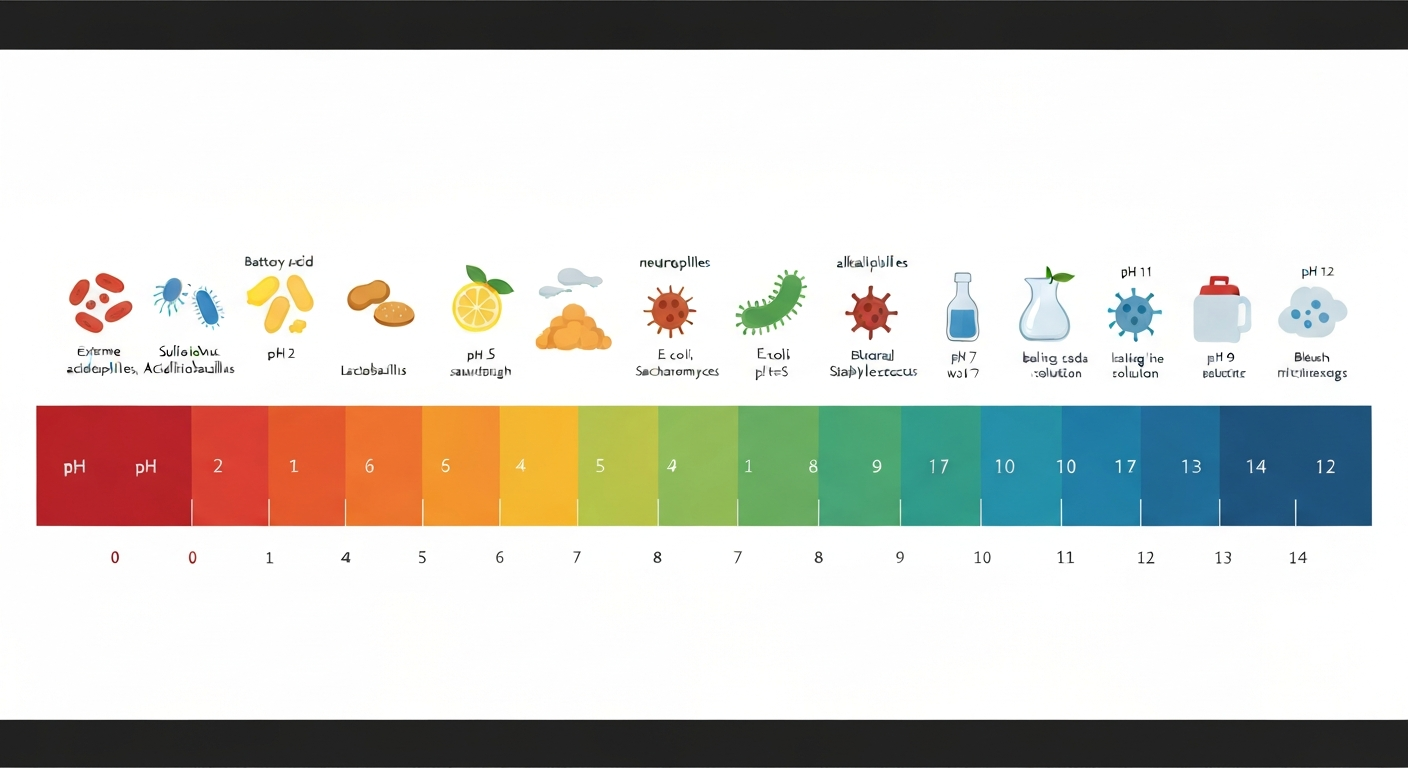
Spoilage bacteria are overwhelmingly neutrophiles, meaning they prefer pH conditions close to neutral (7.0). Their practical growth window runs roughly from pH 4.5 to 9.0, with peak activity between 6.5 and 7.5. Will all microorganisms grow optimally at a neutral pH? Read a concise explanation that highlights key exceptions such as yeasts, molds, and acid-tolerant bacteria. Below pH 4.5, most bacterial species either grow very slowly or not at all, which is exactly why acidification is one of the oldest food-preservation strategies humans have used.
The key exceptions worth knowing: some lactic acid bacteria (like Lactobacillus species) are aciduric, meaning they tolerate and even grow in moderately acidic conditions down to about pH 4.0. Yeasts, such as the notorious Zygosaccharomyces bailii, can grow at pH values as low as 2 to 3, happily spoiling acidified beverages and salad dressings. Molds push even further, with some species reported growing near pH 0.5 in extremely hostile environments, though common food-spoilage molds typically operate between pH 2 and 9. So while low pH stops most bacteria, it does not stop fungi.
Another practical exception is Clostridium botulinum, not typically described as a spoilage organism since it does not always visibly change food, but critically important for safety. Proteolytic Group I strains cannot grow or produce toxin at pH 4.6 or below. Non-proteolytic Group II (the cold-tolerant type) has a slightly higher minimum, around pH 5.0. These thresholds are the biological foundation for federal canning law.
A quick tour of the pH scale and why 4.6 is a magic number in food safety
pH is a logarithmic scale running from 0 (most acidic) to 14 (most alkaline), with 7.0 defined as neutral. Because the scale is logarithmic, pH 5 is ten times more acidic than pH 6, and pH 4 is one hundred times more acidic than pH 6. That means small pH changes have large practical effects on whether bacteria can grow.
Foods are generally grouped into high-acid (pH 4.6 and below) and low-acid (pH above 4.6). High-acid foods include most fruits, fruit juices, and properly acidified pickles. Apple juice typically runs pH 3. USDA ARS 'pH of Selected Foods, Pathogen Modeling Program (USDA ARS)' reports typical pH ranges: apple juice ~3.2–3.8; orange juice ~3.2–4.2; lemon juice ~2.2; tomato/tomato juice ~3.2–4.7; raw beef ~5.1–6.2; milk ~6.1–6.9 pH of Selected Foods — Pathogen Modeling Program (USDA ARS). 2 to 3.8, orange juice pH 3.2 to 4.2, and lemon juice near pH 2.2. Low-acid foods include most vegetables, meat, fish, dairy, and grains. Raw beef sits around pH 5.1 to 6.2, milk around pH 6.1 to 6.9, and canned corn or beans can be pH 5.0 to 6.5.
The 4.6 cutoff comes directly from C. botulinum biology. At pH 4.6 or below, even under otherwise ideal conditions, this bacterium cannot germinate, grow, or make toxin. The U.S. FDA and USDA use this threshold in regulations (21 CFR Parts 113 and 114) to determine whether a canned food can be safely processed in a boiling-water bath (for high-acid foods at or below pH 4.6) or must go through pressure canning at temperatures above 100°C (for low-acid foods above pH 4.6). This is not arbitrary: it is grounded in decades of challenge-study data. Tomatoes sit right on the boundary, with natural pH variation from roughly 3. See Resources for Home Preserving Tomatoes, National Center for Home Food Preservation (NCHFP / UGA extension) for plain‑language guidance, reproducible pH charts, and instructions on adding citric acid or bottled lemon juice to ensure safe home‑canned tomatoes Resources for Home Preserving Tomatoes — National Center for Home Food Preservation (NCHFP / UGA extension). 2 to 4.7 depending on variety and ripeness, which is why home-canning guidelines require adding citric acid or bottled lemon juice to ensure the finished pH stays at or below 4.6.
Why pH controls whether bacteria can grow at all
Here is the mechanism in plain language. Bacterial cells need to keep their internal (cytoplasmic) pH close to neutral, roughly 7.4 to 7.8, in order for their enzymes to work. Enzymes are proteins, and proteins fold into shapes that only function correctly within a narrow pH range. When the environment around a bacterial cell becomes acidic, hydrogen ions (protons) flood in across the cell membrane, threatening to drag the internal pH down with them. If the cell cannot pump those protons back out fast enough, internal pH crashes, enzyme function collapses, and the cell either stops growing or dies.
Bacteria fight back with several tools. They run proton pumps (specifically, the F0F1-ATPase) to actively expel hydrogen ions, burning ATP in the process. Some species, including pathogenic E. coli, use amino-acid decarboxylase systems: they consume internal protons in a decarboxylation reaction and export the basic product in exchange for another amino acid from outside the cell, effectively neutralizing internal acid. Cells also remodel their membrane composition to reduce proton permeability. Bacteria that repeatedly encounter acid can upregulate all of these systems through what is called an acid tolerance response (ATR), becoming temporarily harder to kill. This is one reason why acid adaptation matters in challenge studies.
Organic acids used as preservatives (acetic acid in vinegar, lactic acid in fermented foods, citric acid in acidified canned goods) are actually more effective than inorganic acids (like hydrochloric acid) at the same pH. Why? In their undissociated form, organic acid molecules can slip across the cell membrane and release protons directly inside the cell, bypassing the proton-pump defense. That is why Salmonella minimum growth pH can be as low as pH 3.8 to 4.5 with inorganic acid but closer to pH 5.0 or above when an organic acid is the acidulant. The type of acid matters, not just the pH number.
pH ranges for spoilage bacteria, yeasts, and molds at a glance
The table below summarizes typical growth ranges and optima for organism groups commonly responsible for food spoilage. These are consensus ranges drawn from food microbiology literature and regulatory sources; actual limits shift based on temperature, water activity, nutrient availability, and the type of acid present.
| Organism Group | Minimum pH | Optimum pH | Maximum pH | Notes |
|---|---|---|---|---|
| Most spoilage bacteria (neutrophiles) | ~4.5 | 6.5–7.5 | ~9.0 | Typical range for common genera like Pseudomonas, Enterobacteriaceae |
| Lactic acid bacteria (aciduric) | ~4.0 (some ~3.5) | 5.5–6.5 | ~8.0 | Tolerate acid well; common in fermented foods; also cause spoilage |
| Bacillus cereus | ~5.0 | 6.0–7.0 | ~8.8 | Spore-former; low-acid foods at risk |
| Clostridium botulinum (Group I) | ~4.6 | 6.0–7.0 | ~8.5 | The 4.6 regulatory cutoff is based on this organism |
| Clostridium botulinum (Group II) | ~5.0 | 6.0–7.0 | ~8.5 | Non-proteolytic; also psychrotrophic (grows at refrigeration temps) |
| Listeria monocytogenes | ~4.4–4.6 | 7.0 | ~9.6 | Relatively acid-tolerant; strong ATR; refrigeration does not stop it |
| Salmonella spp. | ~3.8–5.0* | 6.5–7.5 | ~9.5 | *Lower with inorganic acid; higher with organic acids |
| Escherichia coli (non-pathogenic spoilage strains) | ~4.3–4.4 | 6.0–7.0 | ~9.0 | Similar range to Salmonella; depends on acid type and conditions |
| Pseudomonas spp. | ~4.4 (reported minimum) | 6.5–7.0 | ~8.0 | Aerobic; major spoilers in refrigerated meat and dairy |
| Spoilage yeasts (e.g., Zygosaccharomyces bailii) | ~2.0–3.0 | 4.5–6.5 | ~8.0 | Acid-tolerant; grows in vinegar-based and preserved products |
| Saccharomyces cerevisiae | ~2.5–3.0 | 4.5–6.0 | ~8.5 | Fermentative yeast; common in sugary/acidic environments |
| Molds (general food-spoilage genera) | ~2.0 (some lower) | 4.5–6.5 | ~11.0 | Widest pH tolerance of any food-spoilage group; very acid-tolerant |
Reading across that table, the pattern is clear: bacteria occupy a narrower pH window than fungi, and their lower limits sit considerably higher than those of yeasts and molds. This is why a jar of salsa acidified to pH 3.8 is safe from most bacterial spoilage but is still susceptible to mold growth on the surface where oxygen is present.
Profiles of common spoilage organisms
Pseudomonas spp.
Pseudomonas species are aerobic, gram-negative bacteria and some of the most economically significant spoilers of refrigerated meat, poultry, fish, and dairy. They thrive in near-neutral conditions (pH optimum around 6.5 to 7.0), produce proteases and lipases that break down food structure and create off-odors and slime, and are psychrotrophic, meaning they grow at refrigerator temperatures around 4°C. Their minimum pH is around 4.4, but they grow so poorly below about pH 5.5 that acidification effectively excludes them.
Lactic acid bacteria (LAB)
Genera including Lactobacillus, Leuconostoc, and Lactococcus are famously acid-tolerant because they produce lactic acid themselves. They can grow down to around pH 4.0 and are responsible for desirable fermentation in yogurt, cheese, sauerkraut, and sourdough, but they also cause spoilage in wine (ropy wine, off-flavors), processed meats, and vacuum-packed products. Because they themselves acidify their environment, they are self-limiting to a degree, eventually inhibiting their own growth.
Bacillus cereus
This spore-forming bacterium is a common cause of foodborne illness from cooked rice, pasta, dairy, and spiced foods. Its minimum growth pH is around 5.0, meaning it does not grow in genuinely acidic foods, but it thrives in the near-neutral pH of cooked starchy foods left at room temperature. The spores survive boiling, and the vegetative cells that germinate in cooked food produce heat-stable emetic toxin and heat-labile diarrheal toxin.
Zygosaccharomyces bailii (yeast)
Z. bailii is the spoilage organism that acidified-food producers genuinely fear. It grows at pH values as low as 2 to 3, tolerates weak organic acids at concentrations that kill most other microbes, and has been isolated from mayonnaise, salad dressings, soft drinks, wine, and fruit concentrates that should, by all accounts, be hostile environments. Its genome encodes multiple acid-tolerance mechanisms, including membrane adaptations and active proton pumping, that make it exceptionally resistant to standard chemical preservation.
Molds: Aspergillus, Penicillium, and Botrytis
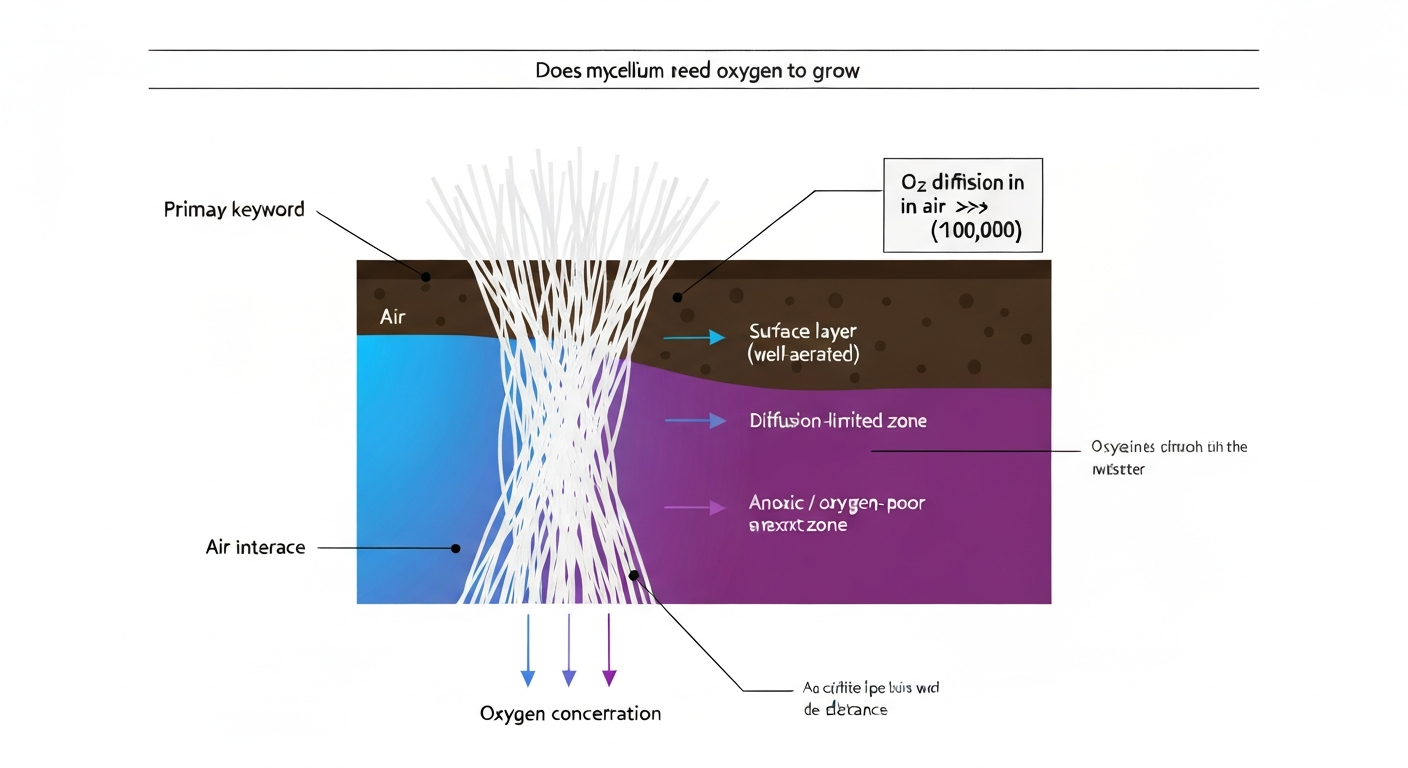
Food-spoilage molds collectively span one of the widest pH ranges of any microbial group, roughly pH 2 to 9, with many species growing best around pH 4.5 to 6.5. Aspergillus species spoil grains, nuts, and dried fruits, and several produce mycotoxins (aflatoxins) that are hazardous regardless of the food's acid content. Penicillium causes the familiar blue-green mold on citrus fruit and bread. Botrytis cinerea is responsible for gray mold rot on grapes, strawberries, and other soft fruit. Molds need oxygen and surface moisture more than a particular pH, which is why vacuum packaging or modified atmosphere packaging effectively suppresses them even at pH values where they would otherwise thrive.
Which foods are most vulnerable, and why
A food's pH effectively predicts which group of spoilage organisms it needs to be protected from. For a quick listing of specific foods that favor bacterial growth, see what food does bacteria grow best on. Near-neutral foods like raw meat (pH 5.1 to 6.2), milk (pH 6.1 to 6.9), cooked vegetables, and cooked grains sit squarely in the bacterial sweet spot. Without refrigeration or other controls, bacteria such as Pseudomonas, Enterobacteriaceae, and Bacillus species will multiply rapidly. See the internal note "in what condition will bacteria grow best harris teeter" for specifics on how retail food conditions affect bacterial growth. These are your high bacterial-risk foods.
Moderately acidic foods, roughly pH 4.0 to 5.5, represent a transition zone. Most neutrophilic bacteria are slowed or excluded, but acid-tolerant bacteria (especially LAB), yeasts, and molds remain active. Fermented dairy products, soft drinks, fruit-based sauces, and acidified condiments fall here. The spoilage you see in this zone tends to be gas production from yeast fermentation, off-flavors from LAB activity, and surface mold growth where oxygen is present.
Strongly acidic foods, below pH 4.0, are essentially off-limits to all bacteria but remain susceptible to yeasts (especially Z. bailii and related species) and molds. Fruit juices, vinegar-based pickles, and fermented hot sauces in this range are stable against bacterial growth but must still be protected from fungal contamination. See the section on microorganisms grow best in an acidic environment for more about which yeasts and molds thrive at low pH and why acid tolerance varies across species. This is a point that trips up many students: a food being acidic does not mean it is microbiologically stable across the board.
- Raw beef and pork (pH 5.1–6.2): high bacterial spoilage risk; Pseudomonas dominant under aerobic refrigeration
- Milk (pH 6.1–6.9): rapid bacterial and yeast spoilage without refrigeration; LAB souring at room temperature is classic example
- Tomatoes (pH 3.2–4.7): right at the regulatory boundary; natural variation means some tomatoes are technically low-acid, requiring added acid for safe water-bath canning
- Apple juice (pH 3.2–3.8): safe from bacterial growth but vulnerable to yeast fermentation and mold
- Mayonnaise (pH ~3.6–4.0): protected from bacteria by vinegar but notoriously susceptible to Z. bailii spoilage
- Cooked rice and pasta (pH ~6.0–7.0): high-risk substrate for Bacillus cereus if left unrefrigerated
- Home-canned low-acid vegetables (pH 5.0–6.5): primary risk vehicle for C. botulinum toxin production if improperly processed
Practical ways pH is used to control spoilage
Acidification and fermentation
Adding acid directly (vinegar, citric acid, lemon juice) or generating it biologically through fermentation (lactic acid bacteria converting sugars to lactic acid) drops food pH below the 4.5 to 4.6 threshold that excludes most spoilage and pathogenic bacteria. Sauerkraut, kimchi, yogurt, sourdough, pickles, and fermented sausages all rely on this principle. For commercial acidified foods, FDA regulations require measuring finished equilibrium pH and maintaining records to demonstrate the product consistently reaches pH 4.6 or below throughout.
Safe canning: the 4.6 rule in practice
High-acid foods at pH 4.6 or below can be safely processed in a boiling-water bath (100°C) because C. botulinum cannot grow at that pH, and the heat treatment is sufficient to kill other vegetative spoilage organisms. Low-acid foods above pH 4.6 must be pressure-canned, reaching internal temperatures of 116 to 121°C (240 to 250°F) to destroy heat-resistant C. botulinum spores. At home, this means every jar of green beans, corn, meat, or pumpkin must go into a pressure canner, not a water bath. Using a water bath for low-acid foods is not just a quality issue: it is a life-safety issue. The National Center for Home Food Preservation validates every published home-canning recipe specifically against the pH 4.6 criterion.
Refrigeration, drying, and salt or sugar
pH rarely works alone. This is the core idea behind hurdle technology: combining multiple preservation factors so each one does not have to carry the entire load. Refrigeration (below 4°C) slows bacterial enzymatic activity and growth rate even at near-neutral pH. Drying lowers water activity (aw), and when aw drops below 0.85, most bacteria cannot grow regardless of pH. Salt and sugar work by lowering aw and, in salt's case, also by disrupting ion transport across bacterial membranes. FDA's regulatory system for canned foods explicitly uses pH 4.6 or aw 0.85 as the combined criteria for determining processing requirements, recognizing that either control, when sufficient, reduces risk. A food that is both acidic (pH 4.0) and dry (aw 0.75) is protected by two independent mechanisms simultaneously.
Chemical preservatives
Preservatives like sodium benzoate, potassium sorbate, and sulfur dioxide are more effective at lower pH because they remain in their undissociated (membrane-permeable) form in acidic conditions. At near-neutral pH, they ionize and lose much of their antimicrobial activity. This is why sodium benzoate is used in acidic beverages and condiments rather than in near-neutral foods: the acid environment is not incidental, it is what makes the preservative work. Even with effective preservatives, Z. bailii's unique tolerance means it can still grow in acidified preserved products, which is why food manufacturers often use hurdle combinations.
Measuring and adjusting pH: what students and food handlers need to know
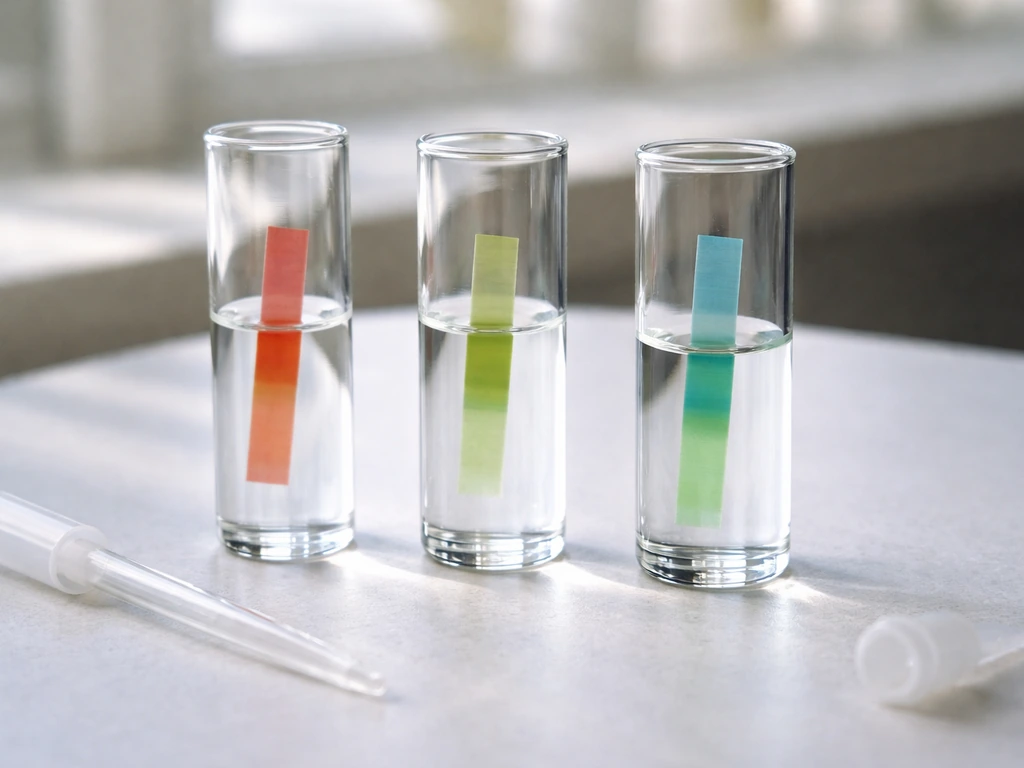
For classroom purposes, pH can be measured with litmus or universal indicator paper (low precision, useful for rough range estimates), narrow-range pH paper (better for distinguishing whether a food is above or below pH 4.6, roughly), or a calibrated digital pH meter (the standard for any serious food-safety application). pH meters should be calibrated with two buffer solutions (typically pH 4.0 and 7.0 buffer standards) before each use, and the electrode should be kept clean, hydrated, and replaced according to the manufacturer's schedule.
For home canners and small food producers, the practical rule is straightforward: measure pH in the finished, blended product, not just the liquid portion, because pieces of low-acid vegetable in a high-acid brine will equilibrate to a pH higher than the brine alone. This equilibrium pH (sometimes called the finished equilibrium pH in regulatory language) is what matters for safety. If you are making an acidified salsa or relish, stir, blend a sample, and measure the blended mix.
Adjusting pH downward is done by adding food-grade acids: bottled lemon juice, citric acid, or white vinegar with a known and consistent acidity (5% acidity for standard US commercial white vinegar). Home canners should not substitute fresh-squeezed lemon juice for bottled, because the acid concentration in fresh citrus varies unpredictably by variety, ripeness, and season, making pH control unreliable. Commercial operations use titration (measuring total titratable acidity) in addition to pH measurement, because pH alone does not fully capture the buffering capacity of the food.
A caution worth stating clearly: measuring pH does not tell you whether pathogenic bacteria or their toxins are already present. pH is a preventive control, not a detection tool. If a food has been held at improper temperatures or improperly processed before you measure it, low pH will not destroy toxins that are already there. Botulinum toxin, in particular, is heat-labile (destroyed by boiling for 10 minutes), but the safest approach is always to prevent the conditions that allow toxin production in the first place, using validated processing methods and proper pH control from the start.
Understanding pH is genuinely more powerful once you see it as part of a connected system alongside temperature, oxygen availability, water activity, and nutrient supply. No single factor fully controls microbial growth on its own, but pH is one of the most manipulable levers we have in food preservation, and it is one of the clearest examples in all of applied microbiology of basic biochemistry translated directly into practical safety rules.
FAQ
Most spoilage bacteria grow at what pH — short direct answer?
Most spoilage bacteria are neutrophiles and grow best near neutral pH; a practical summary is: optimum roughly pH 6.5–7.5 and many can grow across roughly pH ~4.5–9.0. The important regulatory boundary for canning is pH 4.6: foods with finished/equilibrium pH ≤4.6 are classed as high‑acid/acidified (boiling‑water processing may be used when other conditions are met); foods with pH >4.6 are low‑acid and require higher‑temperature processing because of Clostridium botulinum risk.
Which organism groups are exceptions and tolerate much lower pH?
Fungi (yeasts and molds) tolerate far lower pH than most bacteria. Many spoilage yeasts (e.g., Zygosaccharomyces bailii) grow well at pH 2–4 and resist weak organic acids; molds also grow across very wide pH ranges. Some specific bacterial species show elevated acid tolerance (strain‑dependent), but fungi are the typical low‑pH spoilers.
Quick table: common spoilage/pathogen groups and their typical pH optima and practical growth limits
(approximate, guideline ranges; values vary with strain, temperature, water activity and acid type) - Typical spoilage bacteria (Pseudomonas, many Enterobacteriaceae): optimum ~6.5–7.5; growth roughly pH 4.5–9.0. - Lactic acid bacteria (Lactobacillus, Pediococcus): optimum ~5.5–6.5; can grow down to ~pH 3.5–4.0 (important in fermented foods). - Bacillus spp. (spoilage, some pathogens): optimum ~6.0–7.5; minima often ≈pH 5.0 (species/strain dependent). - Clostridium botulinum: proteolytic Group I minimum ≈4.6; non‑proteolytic Group II minimum ≈5.0 (used in regulatory process decisions). - Enteric pathogens (E. coli, Salmonella): optima near neutral; reported minima vary with conditions (E. coli ~4.3–4.4 in some studies; Salmonella variable ≈3.8–5.0 depending on acid and temp). - Yeasts (e.g., Zygosaccharomyces): optimum varies; many grow well at pH 2–4 and tolerate organic acids. - Molds: very wide pH tolerance (often from very acidic to alkaline), frequently spoil low‑pH products. These are general guidelines; specific minima/optima shift with temperature, water activity (aw), preservatives and nutrient availability.
Why does pH control microbial growth? Plain‑language mechanism explanation
pH affects microbes because it changes the concentration of hydrogen ions (H+) that interact with cell membranes, proteins and enzymes. Low external pH forces cells to work to keep their internal (cytoplasmic) pH in a range where essential enzymes function. Maintaining that balance uses energy (proton pumps, ATP) and damages cell components when stress is severe. Organic acids add another effect: the undissociated acid crosses membranes and then dissociates inside the cell, releasing protons and acidifying the cytoplasm. Some microbes have inducible acid‑tolerance systems (proton pumps, decarboxylases, membrane changes) that let them survive or grow at moderately acidic pH, but those mechanisms have limits, so lowering pH reduces growth rate, survival and toxin formation for many organisms.
Which foods are at higher risk of bacterial spoilage vs fungal spoilage based on pH?
- Foods near neutral pH (fresh meats, milk, many vegetables, cooked grains): higher risk of bacterial spoilage (Pseudomonas, Enterobacteriaceae, lactic acid bacteria) and bacterial pathogens. - Moderately acidic foods (tomato products, some pickles, fermented vegetables): can still support some bacteria and lactic acid bacteria; processing/acidification matters. - Low‑pH foods (fruit juices, vinegar‑based dressings, many sauces with pH ≤4.6): bacterial growth is limited; spoilage is more often from yeasts and molds (and some acid‑tolerant bacteria/strains). Remember that other factors (temperature, oxygen, water activity, preservatives) also determine which organisms grow.
What practical, actionable controls use pH to reduce spoilage and food‑safety risk?
- Acidification: lower finished/equilibrium pH (commonly to ≤4.6 for canning guidance) using approved recipes. This prevents growth of Clostridium botulinum and reduces many bacterial spoilers. - Proper canning: follow validated recipes—boiling‑water canning is for pH ≤4.6 products; pH >4.6 requires pressure canning (higher temperature) and validated processes. - Refrigeration: lowers microbial growth rates for bacteria and many fungi; combine with pH controls (hurdle approach). - Drying / reducing water activity (aw): many bacteria cannot grow below aw ≈0.85–0.90; combined with acidity this is powerful. - Use of preservatives and formulations: organic acids, salt, sugar and preservatives potentiate acidity and inhibit growth. - Good hygiene, rapid cooling and short shelf life for higher‑risk (near‑neutral) foods. Always use validated, regulatory‑aligned recipes and controls for commercial or home preservation.