Most microorganisms do not grow best in acidic environments. The majority of bacteria, including the pathogens you hear most about in food safety and medicine, are neutrophiles that thrive closest to neutral pH, roughly pH 5.5 to 7.5. Acidity is actually one of the most powerful tools we have for slowing or stopping microbial growth, which is exactly why pickling, fermentation, and acidified foods work as preservation methods. That said, a fascinating subset of microorganisms called acidophiles have evolved to not just tolerate but genuinely prefer strongly acidic conditions, and understanding where they fit in the bigger picture tells you a great deal about how pH shapes life at the microbial scale.
Microorganisms Grow Best in an Acidic Environment? Explained

Marcus Holloway
19 Jul 2026
What pH actually measures
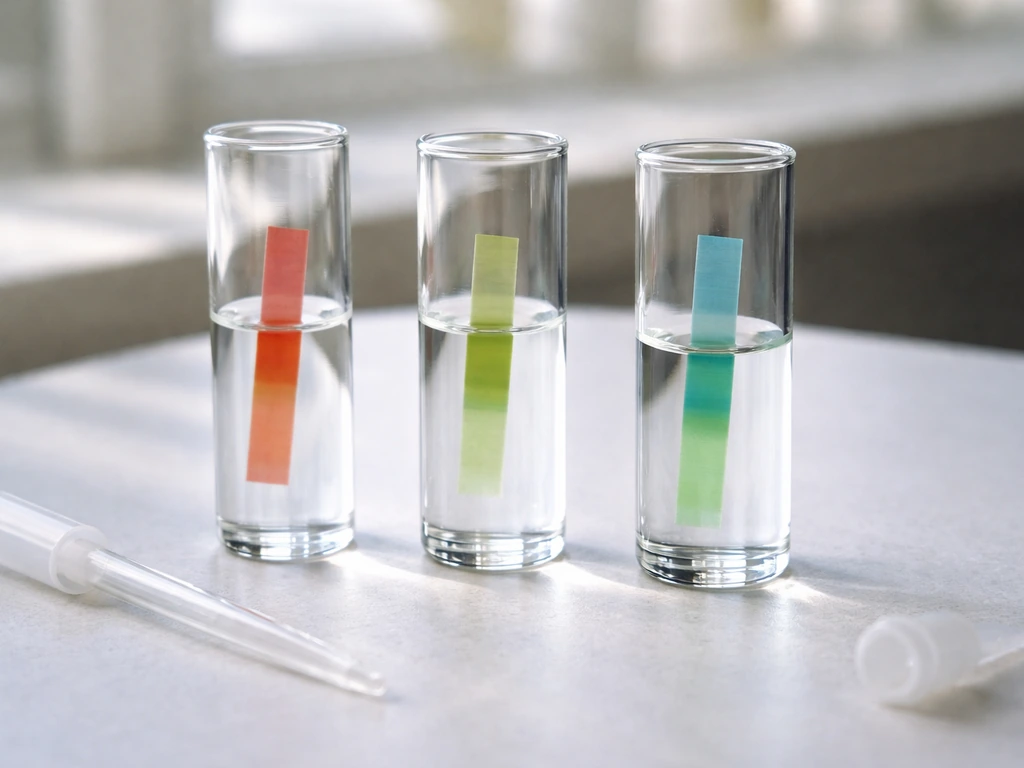
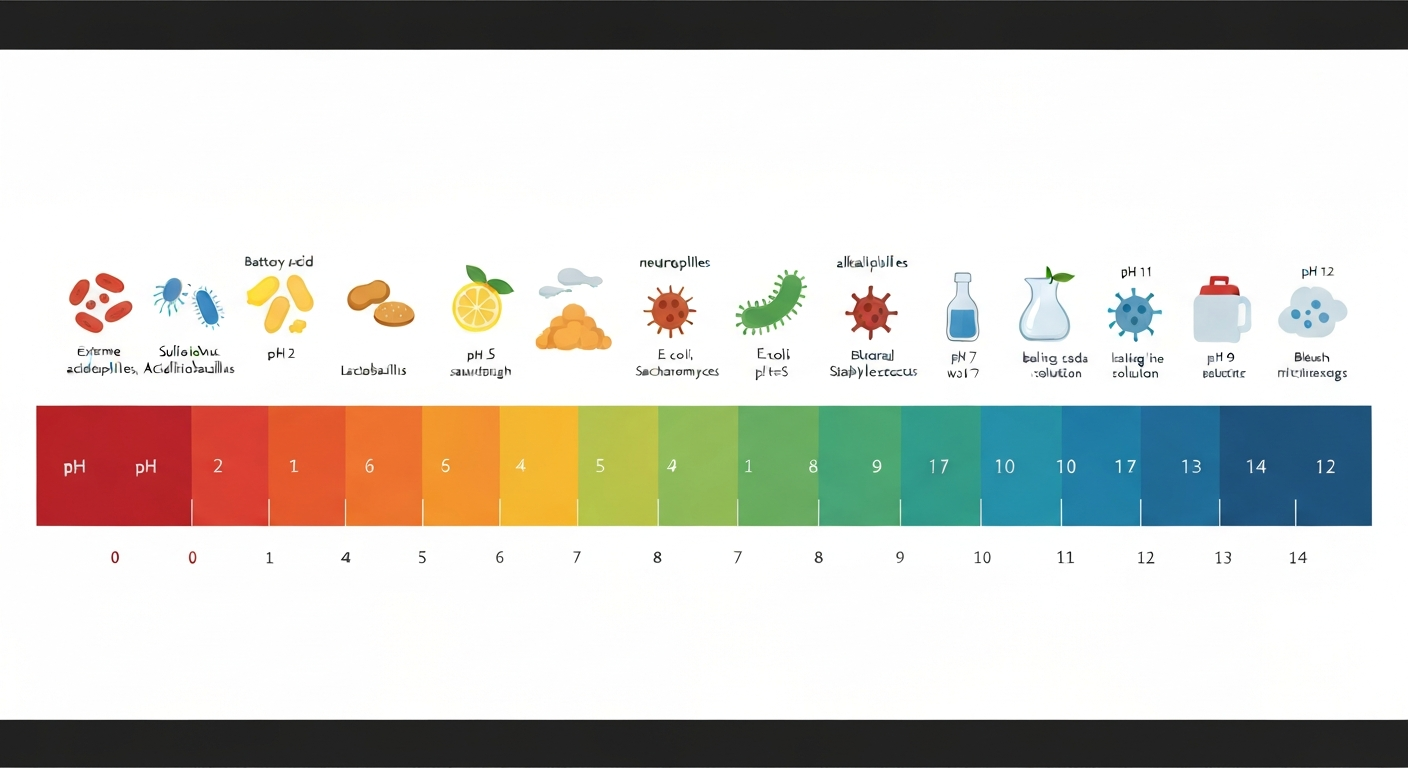
pH is a way of expressing the concentration of hydrogen ions (H+) in a solution. The scale runs from 0 to 14. A pH of 7 is neutral, meaning hydrogen and hydroxide ions are balanced. Values below 7 are acidic (more H+ ions), and values above 7 are alkaline or basic (fewer H+ ions). Because the scale is logarithmic, each step represents a tenfold change: pH 5 is ten times more acidic than pH 6, and pH 4 is one hundred times more acidic than pH 6. That logarithmic reality matters enormously in microbiology because what looks like a small numeric shift on paper is a dramatic change in the chemical environment a cell has to survive.
When reading a pH value, you can think of it as a snapshot of how hydrogen-ion-rich a solution is at that moment. Battery acid sits around pH 0, lemon juice around pH 2, vinegar around pH 2.5, black coffee around pH 5, pure water at pH 7, baking soda solution around pH 9, and household bleach near pH 12. Food scientists, clinicians, and microbiologists all use pH as a shorthand for predicting how hospitable an environment will be for a given organism.
Numeric pH zones in biology
Biology broadly divides pH environments into three zones that correspond to the three main microbial pH preference categories. Strongly acidic conditions sit below pH 5. Mildly acidic to neutral conditions span roughly pH 5 to 8. Alkaline conditions rise above pH 8 and into the double digits. In the human body, most tissues maintain a tightly regulated pH close to 7.4, which explains why the majority of pathogens that infect us prefer conditions in that neutral band. The stomach is a notable exception, with a resting pH of about 1.5 to 3.5, creating one of the most hostile environments in biology.
In soils, natural waters, and food matrices, pH varies enormously. Agricultural soils range from pH 4 to 8 depending on geography and mineral composition. The surface of healthy human skin sits at around pH 4.5 to 5.5, a mildly acidic "acid mantle" that helps keep pathogenic bacteria in check. Fermented foods like yogurt and sauerkraut drop to pH 3.5 to 4.5 during production, which actively selects for acid-tolerant species while killing or suppressing others. Knowing where a food or environment sits on this scale is the first step in predicting which microorganisms will find it hospitable.
Acidophiles, neutrophiles, and alkaliphiles: who lives where and why
Microbiologists classify organisms by their pH growth optimum, the pH at which a species grows fastest and most efficiently. There are three main categories, and it is worth knowing all three because a common misconception is that microorganisms as a group prefer acidic conditions. They do not. Each category occupies a different pH niche, and within each category there is additional variation.
Acidophiles
Acidophiles have a growth optimum at pH 5 or below. Extreme acidophiles, the most remarkable members of this group, grow optimally at pH 3 or lower, with some thriving at pH 1 to 2. These are mostly archaea and chemolithotrophs found in volcanic hot springs, acid mine drainage, and geothermal soils. Moderate acidophiles, which include many lactic acid bacteria and yeasts, do well in the pH 3 to 5 range and are the microorganisms you encounter most often in fermented foods. The word "acidophile" literally means "acid-loving," and these organisms have evolved specific cellular machinery to function in environments that would quickly destroy most cells.
Lactobacillus (now reclassified in some species as Lactiplantibacillus) species are classic moderate acidophiles. Many Lactobacillus strains grow optimally around pH 5 to 6 and continue to function at pH values well below that as they produce lactic acid during fermentation. Saccharomyces cerevisiae, the yeast behind bread, beer, and wine, prefers pH 4 to 5, which is why it competes so successfully in acidic fermentation environments where many competing bacteria cannot grow. Aspergillus niger, a filamentous mold, tolerates an exceptionally wide pH range from about 2 to 8 and is industrially exploited to produce citric acid at pH 2 to 3.
Neutrophiles
Neutrophiles grow best in the pH range of approximately 5.5 to 7.5, with most pathogenic bacteria clustering around pH 6 to 8. This is the most populated category in microbiology because the majority of habitats that support life, including soil, fresh water, blood, and most tissues, hover near neutral pH. Escherichia coli, Staphylococcus aureus, Salmonella species, Listeria monocytogenes, and most of the bacteria responsible for foodborne illness are neutrophiles. Helicobacter pylori, famously associated with stomach ulcers, is also a neutrophile. It does not enjoy the stomach's harsh pH; instead it survives there by producing urease, an enzyme that generates ammonia from urea to neutralize the acid in its immediate microenvironment, essentially building a tiny pH buffer around itself.
Alkaliphiles
Alkaliphiles thrive at pH 9 or above and are found in environments like soda lakes, alkaline soils, and concrete surfaces. Bacillus alcalophilus and related species have optima above pH 9 and cannot grow at all near neutral pH. These organisms are less relevant to everyday food safety but are increasingly interesting in industrial biotechnology for enzyme production. Some alkaliphiles survive at pH values above 12, which is even more basic than many household cleaning products.
pH ranges and representative species at a glance
| Organism | Type | pH Growth Range | pH Optimum | Relevant Context |
|---|---|---|---|---|
| Lactobacillus / Lactiplantibacillus spp. | Bacteria (moderate acidophile) | pH 3.5–7 | ~pH 5–6 | Yogurt, sauerkraut, sourdough fermentation |
| Saccharomyces cerevisiae | Yeast (moderate acidophile) | pH 2.5–8 | ~pH 4–5 | Bread, beer, wine fermentation |
| Aspergillus niger | Mold (acid-tolerant) | pH 2–8 | ~pH 4–6 | Citric acid production; food spoilage mold |
| Helicobacter pylori | Bacteria (neutrophile) | pH ~5–8 (in vitro) | ~pH 6–7 | Gastric ulcers; survives stomach via urease buffering |
| Escherichia coli / Salmonella spp. | Bacteria (neutrophile) | pH 4.4–9 | ~pH 6.5–7.5 | Common foodborne pathogens; food danger zone |
| Staphylococcus aureus | Bacteria (neutrophile) | pH 4.5–9.3 | ~pH 7–7.5 | Toxin producer; skin, food contamination |
| Acidithiobacillus ferrooxidans / ferrianus | Bacteria (extreme acidophile) | pH 0.5–4 | ~pH 1–2 | Acid mine drainage, biomining |
| Sulfolobus / Sulfurisphaera spp. | Archaea (thermoacidophile) | pH 1–5 | ~pH 2–3 | Volcanic hot springs; optimal ~70–85 °C |
| Bacillus alcalophilus | Bacteria (alkaliphile) | pH 8.5–12 | ~pH 9–10 | Soda lakes, alkaline soils |
How microbial cells survive and grow in acid
One of the most counterintuitive facts in microbiology is that even the most extreme acidophiles keep the inside of their cells (the cytoplasm) close to neutral pH, typically around pH 6 to 7, even when living in environments at pH 1 to 2. Extremely acidophilic prokaryotes can maintain a near‑neutral cytoplasmic pH (~pH 6) while growing in media with external pH 1–3, intracellular pH homeostasis is a central adaptation in extreme acidophiles Extremely acidophilic prokaryotes can maintain a near‑neutral cytoplasmic pH (~pH 6) while growing in media with external pH 1–3 — intracellular pH homeostasis is a central adaptation in extreme acidophiles.. This phenomenon, called intracellular pH homeostasis, is the central challenge for any acid-tolerant organism. Protons (H+ ions) constantly push inward from the acidic environment, and the cell must continuously work to expel them. The mechanisms cells use to do this are worth understanding because they illustrate how elegantly evolution can solve a thermodynamic problem.
Proton pumps and ATPase activity
The F1F0-ATPase enzyme is essentially a molecular turbine embedded in the cell membrane. In most bacteria it runs in reverse under acidic conditions, using the electrochemical gradient created by proton influx to synthesize ATP while simultaneously limiting dangerous proton accumulation in the cytoplasm. Upregulation of this and other proton-export pumps is one of the first responses many bacteria mount when pH drops. The acid tolerance response (ATR), a well-documented phenomenon in organisms like Salmonella and Listeria, involves a coordinated shift in gene expression that ramps up proton-export capacity and other protective systems after brief exposure to sublethal acidity, effectively training the cell to withstand lower pH.
Amino acid decarboxylase systems
Several bacteria use amino acid decarboxylation as a biochemical proton sink. Glutamate decarboxylase (GAD), arginine deiminase (ADI), and lysine decarboxylase systems all consume a cytoplasmic proton during the decarboxylation reaction, and the resulting amine product is exported through a paired antiporter in exchange for importing more amino acid substrate. The net effect is proton removal from the cytoplasm. Lactic acid bacteria rely heavily on these systems, which partly explains their ability to survive and even grow in highly acidic fermentation environments that they themselves create.
Urease-based neutralization
Helicobacter pylori and some other urease-positive bacteria take a different approach. Urease catalyzes the breakdown of urea into carbon dioxide and ammonia. The ammonia directly neutralizes protons, raising pH locally around and inside the cell. This is why H. pylori can colonize the gastric mucosa (where pH hovers around 2) despite being a neutrophile. It is not acid-loving; it is acid-surviving, using a chemical buffer it manufactures itself.
Acid-shock proteins, chaperones, and membrane adaptations
When pH drops sharply, proteins risk misfolding. Bacteria respond by producing acid-shock proteins and molecular chaperones that refold or stabilize damaged proteins and protect DNA repair machinery. At the membrane level, many acid-tolerant organisms adjust their lipid composition to reduce membrane proton permeability, essentially making the cell's outer boundary less "leaky" to hydrogen ions. Acidophilic archaea such as Sulfolobus go further, using ether-linked membrane lipids rather than the ester-linked lipids found in bacteria, which provides exceptional chemical stability under extreme acid and high-temperature conditions.
pH does not work alone: how acidity interacts with other growth factors
This is arguably the most important concept for understanding microbial growth in real-world settings, whether you are a student studying food safety or a teacher designing a microbiology lesson. pH never acts in isolation. It interacts with temperature, oxygen availability, water activity (a measure of available moisture), and nutrient supply to produce a combined environment that either supports or suppresses growth. Think of it as a combination lock: getting one number right does not open it.
- Temperature: Most spoilage and pathogenic bacteria grow fastest between 5°C and 60°C (the food safety 'danger zone'). At refrigeration temperatures (below 4°C) even organisms at their optimal pH grow very slowly or not at all. Some acidophilic archaea like Sulfolobus are also thermophiles requiring temperatures above 70°C, meaning their growth requires the combination of low pH and high heat.
- Oxygen: Many Lactobacillus species are aerotolerant anaerobes that grow well in low-oxygen fermentation environments at mildly acidic pH. Clostridia, including the botulinum toxin producer Clostridium botulinum, are strict anaerobes that thrive in sealed, low-acid foods at neutral pH. Their growth at pH above 4.6 in anaerobic environments is precisely what makes inadequately acidified canned goods dangerous.
- Water activity (moisture): Even optimal pH cannot enable growth if free water is insufficient. Molds like Aspergillus tolerate low water activity more readily than most bacteria, which is why dried foods can still spoil with mold even when they are acidic enough to suppress bacteria.
- Nutrients: A highly acidic environment with no available carbon or nitrogen sources will not support growth regardless of how well pH matches an organism's optimum. Nutrient-rich environments like meat, dairy, and cooked grains amplify the risk posed by pathogens operating at near-neutral pH.
Predictive microbiology tools like ComBase, a curated database of around 60,000 microbial growth and survival records, quantify exactly these interactions. Scientists and food safety professionals use ComBase to model growth rates under combined conditions of pH, temperature, water activity, and preservative concentration, making it possible to predict whether a given food formulation is safe without testing every possible combination in a laboratory.
Food safety, the danger zone, and what this means in your kitchen
The practical implications of pH for food safety are direct and well-supported by regulatory science. The U.S. FDA uses pH 4.6 as the critical threshold for food regulation. Foods with a finished equilibrium pH at or below 4.6 are classified as high-acid or acidified foods. At this pH, proteolytic Clostridium botulinum cannot grow or produce its toxin, which is why low-acid canned foods (pH above 4.6) require high-pressure thermal processing while vinegar-pickled vegetables do not. Commercial producers of acidified foods are required under 21 CFR Parts 108 and 114 to document and file their scheduled processes and demonstrate that the finished equilibrium pH stays at or below 4. See an Example FDA warning letter discussing acidified foods and the requirement for finished equilibrium pH < 4.6, FDA enforcement letter Example FDA warning letter discussing acidified foods and the requirement for finished equilibrium pH < 4.6 — FDA enforcement letter. 6.
For everyday food handlers, the key takeaway is that pH reduction is a powerful but not unlimited control measure. Vinegar-based marinades lower surface pH and slow bacterial growth, but if the food is also held at room temperature in the danger zone (between 5°C and 60°C), even acid-tolerant spoilage organisms and some pathogens can continue to grow, especially near the surface where equilibrium pH may differ from the bulk of the food. Acid alone does not make food shelf-stable unless pH is consistently below 4.6 throughout the product. Temperature control remains the most reliable single intervention for the home kitchen.
Grocery and food-service settings, including supermarket deli counters and prepared food departments, apply these principles through HACCP (Hazard Analysis and Critical Control Points) plans that identify pH and temperature as paired critical control points. Storing prepared foods below 4°C and acidifying products to a measured, consistent pH below 4.6 are the two most important levers for keeping pathogens like Salmonella, E. coli O157:H7, and Listeria monocytogenes under control. Most spoilage bacteria grow best at pH values between 5.5 and 7.5, which overlaps almost entirely with the neutral pH zone where pathogenic bacteria are also most active. Most spoilage bacteria grow best at pH 5.5–7.5, roughly the neutral range where many pathogens and spoilage organisms are most active Most spoilage bacteria grow best at pH 5.5–7.5..
Which foods support bacterial growth most readily
Foods that combine near-neutral pH with high water activity and abundant nutrients are the highest-risk substrates. For more detail, see a discussion of what food does bacteria grow best on which explains high-risk food characteristics and examples. For practical, store-specific guidance on conditions that promote bacterial growth, see our in what condition will bacteria grow best Harris Teeter resource. Raw meat, poultry, and seafood sit at pH 5.5 to 7 and have high water activity, which is why they are considered potentially hazardous foods requiring temperature control. Cooked rice, pasta, and bean dishes are also high risk because cooking neutralizes natural acidity and softens cell walls, releasing nutrients while the pH of the food often rises toward neutral. Dairy products vary: fresh milk is near-neutral (pH ~6.5 to 6.8) and supports rapid bacterial growth, while aged hard cheeses and yogurt drop well below pH 5 and resist most pathogens. Fruits are naturally acidic (most below pH 4.5) and are far less prone to pathogenic bacterial growth, though they can support mold growth because molds tolerate acid far better than most bacteria do.
Putting it together: a summary of who grows where
To directly answer the question that often comes up in classroom discussions: no, microorganisms as a group do not grow best in acidic environments. For a concise Q&A on this point, see will all microorganisms grow optimally at a neutral ph. The majority grow best near neutral pH, and acidity is a genuine inhibitor for most of them. What makes this topic rich and worth studying carefully is the variation within microbiology. Acidophiles are real, they are extraordinary, and they reveal how flexible life can be in adapting cellular chemistry to hostile conditions. Neutrophiles dominate everyday food safety concerns. The interaction between pH and other factors like temperature, oxygen, and moisture is what determines outcomes in real food, real laboratories, and real bodies.
A classroom experiment worth trying
One straightforward way to demonstrate pH and microbial growth in a classroom setting is to set up parallel yogurt fermentations or bread-dough rises at different starting pH values, adjusted with food-grade acids or buffers, and measure the rate of fermentation (gas production or pH drop) over time. Students quickly observe that Saccharomyces in bread dough rises faster at mildly acidic pH than at neutral pH, while sourdough starters dominated by Lactobacillus produce acid progressively and self-select for acid tolerance. A second experiment involves testing whether lemon juice (pH ~2) or vinegar (pH ~2.5) stops visible mold growth on bread at room temperature compared to a control slice, illustrating the practical limits of acid preservation when temperature and moisture are not also controlled. Both experiments reinforce the central lesson: pH is one variable in a system, and understanding microbial growth means thinking about all the variables together.
FAQ
Do microorganisms generally grow best in acidic environments?
Short answer: No — different microorganisms have different pH optima. Many bacteria (including most common pathogens) grow best near neutral pH (~6–8), whereas yeasts, many fungi, and specialized acidophilic bacteria or archaea prefer mildly or strongly acidic conditions. pH is one of several environmental factors that together determine whether a particular species will grow in a given situation.
What are the basic pH categories for microorganisms and their typical numerical ranges?
Microbes are commonly grouped by pH preference: - Acidophiles: prefer acidic conditions. Extreme acidophiles often have optima < pH 3; moderate acidophiles commonly pH ≈ 3–5. - Neutrophiles: prefer near‑neutral conditions, typically with optima ≈ pH 5.5–7.5 (many human pathogens ≈ pH 6–8). - Alkaliphiles: prefer alkaline conditions, often with optima ≥ pH 9. These ranges are conventions rather than strict cutoffs; individual species vary.
Can you give examples of organisms and their typical pH optima in a comparative table?
Table — common groups, typical growth pH ranges, and examples: - Acidophiles: range ≈ pH 0.5–5; examples: Acidithiobacillus spp. (chemolithotrophs, biomining), Sulfolobus and other thermoacidophilic archaea (optima ≈ pH 1–3). - Mildly acidic fermenters: range ≈ pH 3.5–6; examples: Lactobacillus/Lactiplantibacillus (many strains grow best ~pH 5–6), Saccharomyces cerevisiae (yeast often ~pH 4–5). - Neutrophiles: range ≈ pH 5.5–8; examples: Escherichia coli, Salmonella spp., many soil and water bacteria. - Alkaliphiles: range ≈ pH 8.5–11+; examples: Bacillus alcalophilus and other alkaliphilic Bacillus spp. Note: filamentous fungi (molds) tolerate broad ranges (≈ pH 2–8) and many are acid‑tolerant (e.g., Aspergillus niger).
What cellular mechanisms let microbes tolerate or grow in acidic environments?
Key adaptations include: - Proton export: energized pumps (F1F0‑ATPase and other transporters) actively remove H+ to keep the cytoplasm near neutral. - Amino‑acid decarboxylase/antiporter systems: decarboxylation consumes protons and antiporters export the reaction products. - Enzymes that generate basic molecules locally (e.g., urease producing ammonia). - Acid‑shock proteins and chaperones that protect and refold damaged proteins. - Membrane and cell‑surface modifications that reduce proton permeability. - DNA‑repair and stress‑response systems. Many acidophiles maintain a near‑neutral intracellular pH even when external pH is extremely low.
Do specialist acidophiles keep their cytoplasm acidic too?
No — extreme acidophiles typically maintain a cytoplasmic pH close to neutral (commonly around pH 6) despite an external medium at pH 1–3. Intracellular pH homeostasis is essential: the adaptations above act to prevent excessive proton influx and preserve enzyme function.
How does pH interact with other growth factors like temperature, oxygen, moisture, and nutrients?
pH is one of several interacting factors that set growth/no‑growth boundaries. Temperature, oxygen (aerobic/anaerobic/facultative), water activity (moisture), available nutrients, and preservatives all change an organism’s allowable pH range and growth rate. For example, a food with low water activity or stored cold may prevent growth of an organism even if its pH is within that organism’s nominal range. Predictive tools (e.g., ComBase) and HACCP approaches use combined factors to estimate growth risk.