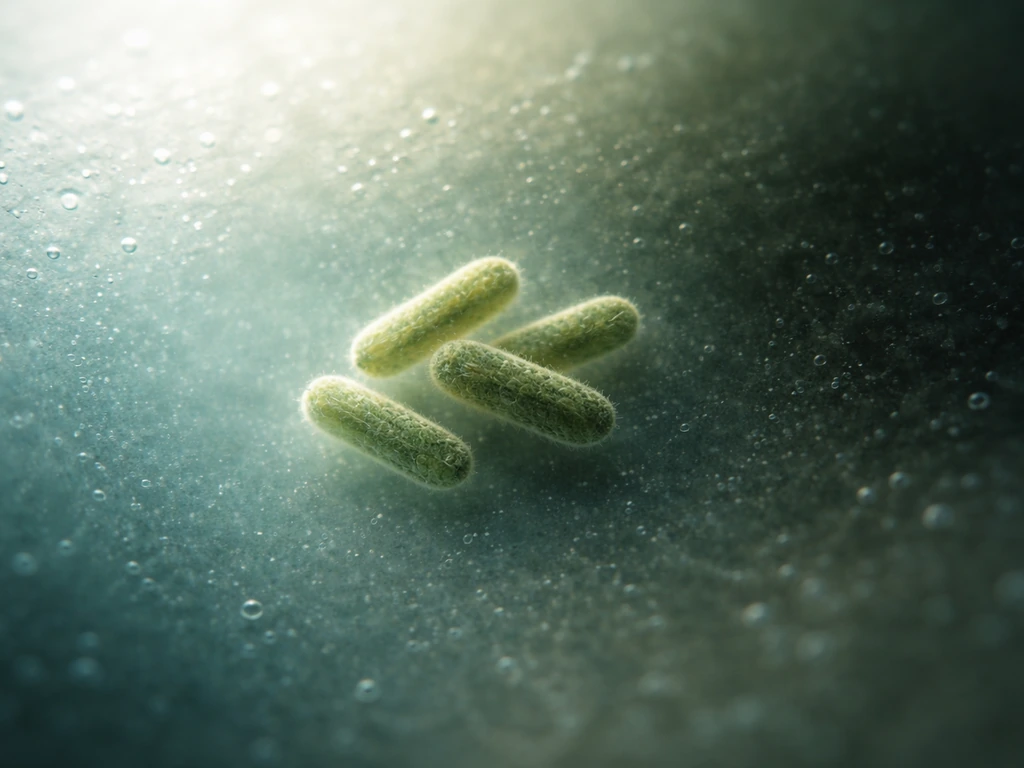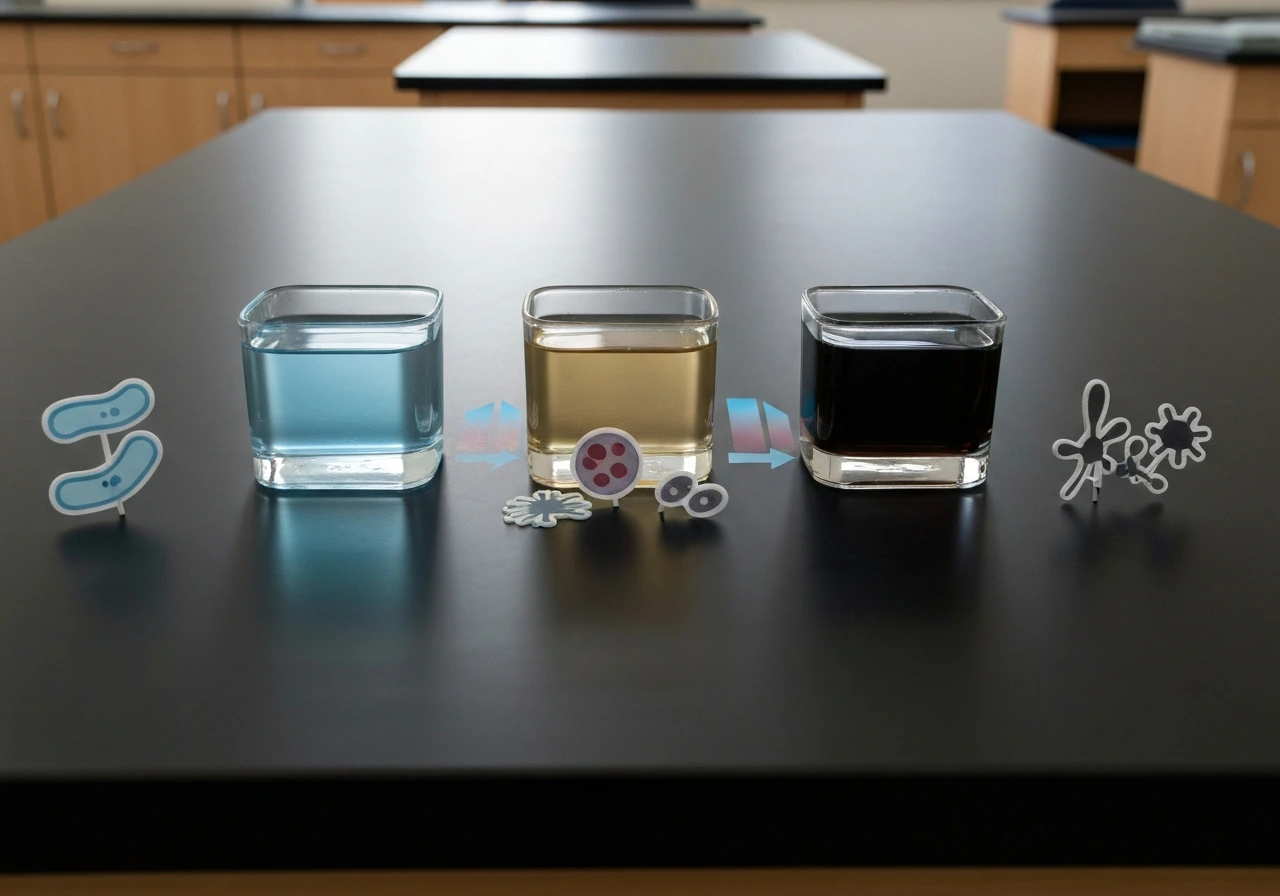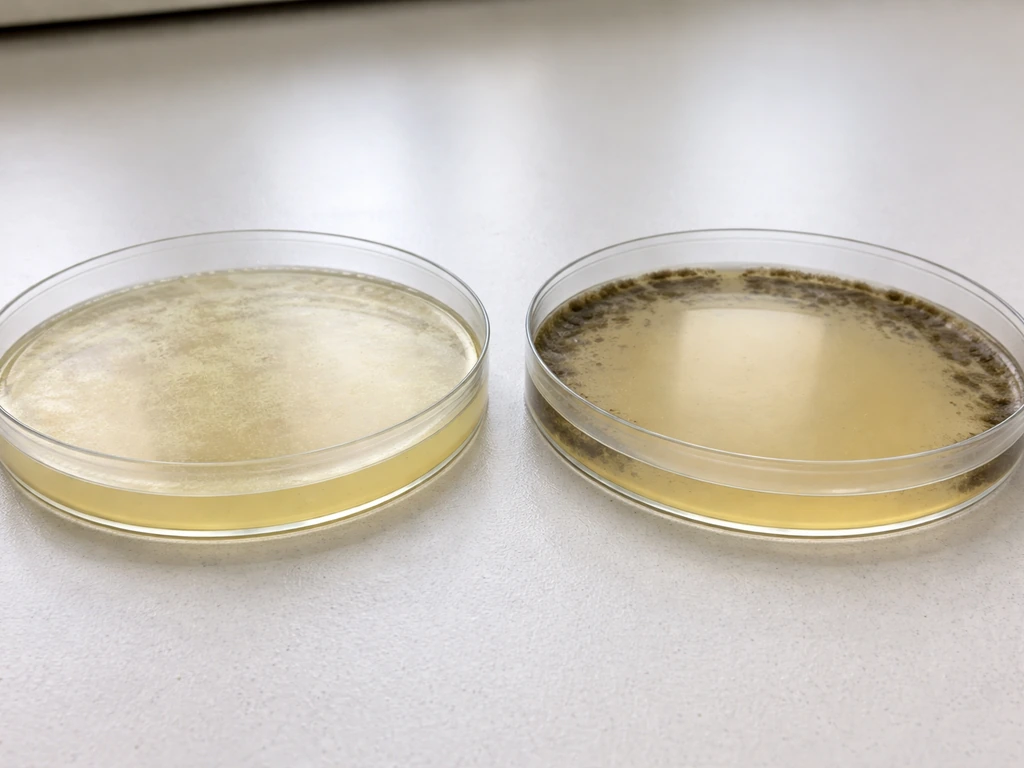
The most common microorganisms that grow in flour are molds from the genera Aspergillus, Penicillium, and Fusarium, along with various yeasts and bacteria like certain Salmonella strains. When people spot clumps, musty smells, or visible spots in their flour, mold is almost always the culprit. But here's the thing most people miss: the real risk isn't just what you can see. Mold in flour can produce invisible chemical toxins called mycotoxins, and bacteria can be growing right alongside visible mold without any obvious signs at all.
What Bugs Grow in Flour: Mold, Yeast, Bacteria and Why

Marcus Holloway
21 May 2026
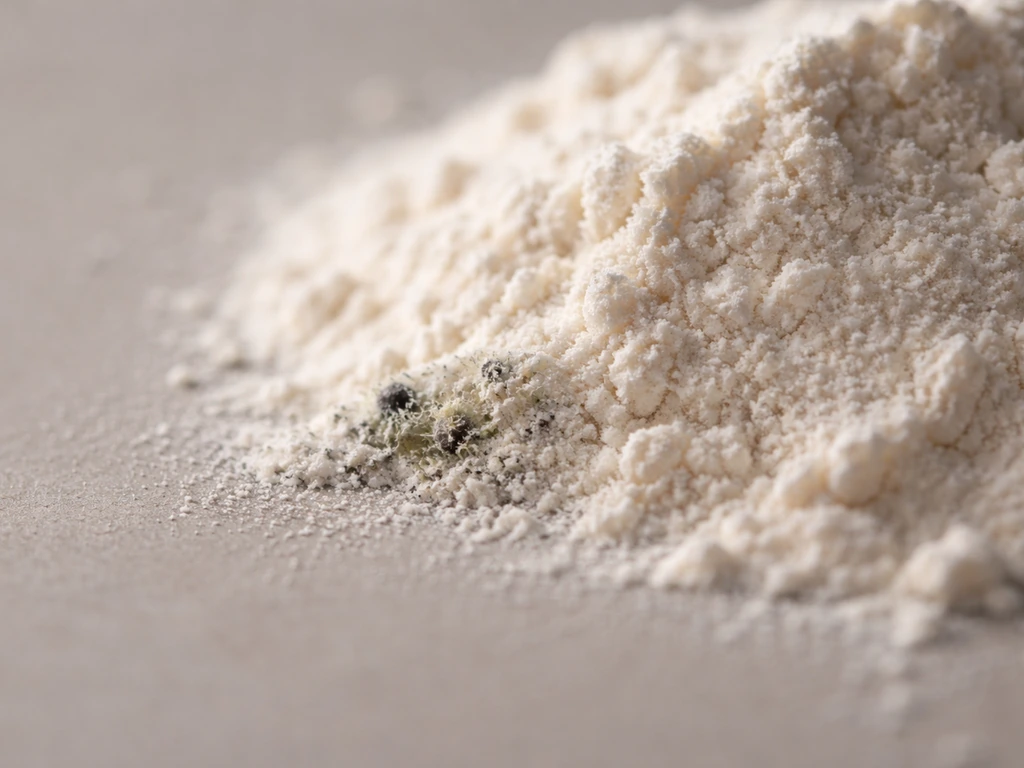
The main microorganisms found in flour
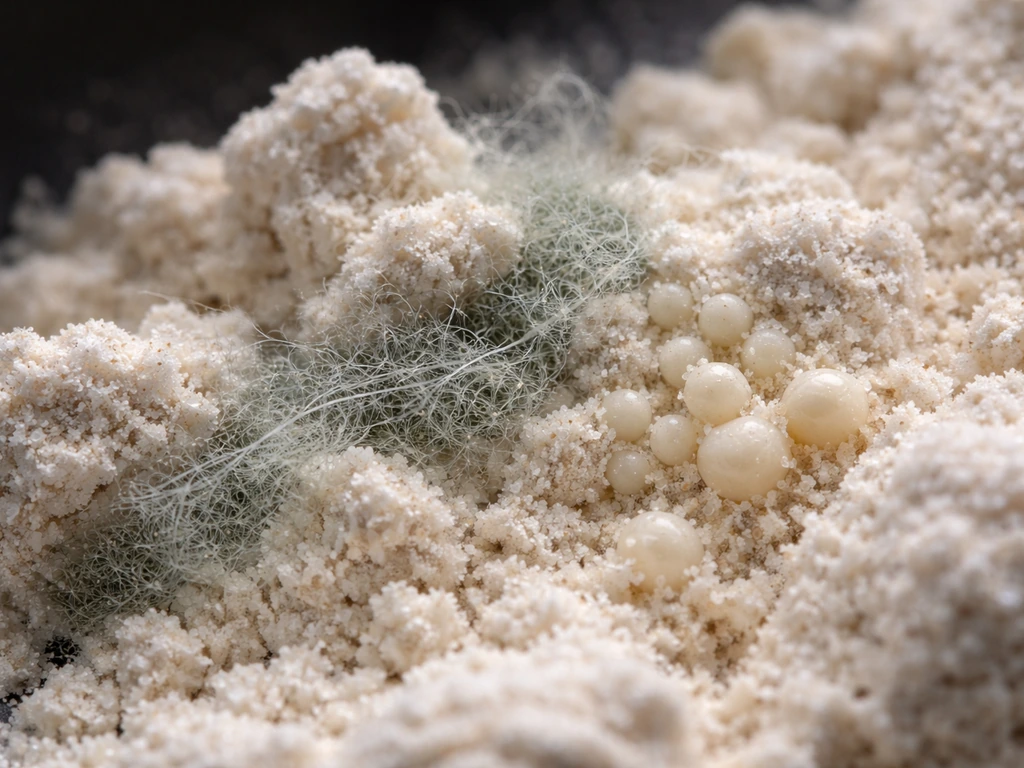
Flour is a dry, nutrient-rich environment made from ground grain, and grain naturally carries a community of microorganisms from the field right through to your pantry. These fall into three main categories: molds, yeasts, and bacteria.
Molds: the most common flour contaminants
Molds are filamentous fungi, meaning they grow in branching thread-like structures called hyphae. The three genera you'll hear about most in grain and flour contamination are Aspergillus, Penicillium, and Fusarium. Aspergillus species are particularly important from a food safety standpoint because certain strains produce aflatoxins, which the FDA actively monitors with established action levels in grain commodities. Penicillium species are the classic blue-green fuzz you might recognize from old bread or cheese, and they thrive in cool, slightly humid storage conditions. Fusarium tends to colonize grain in the field before harvest, so it can already be present in flour before you ever open the bag.
Yeasts
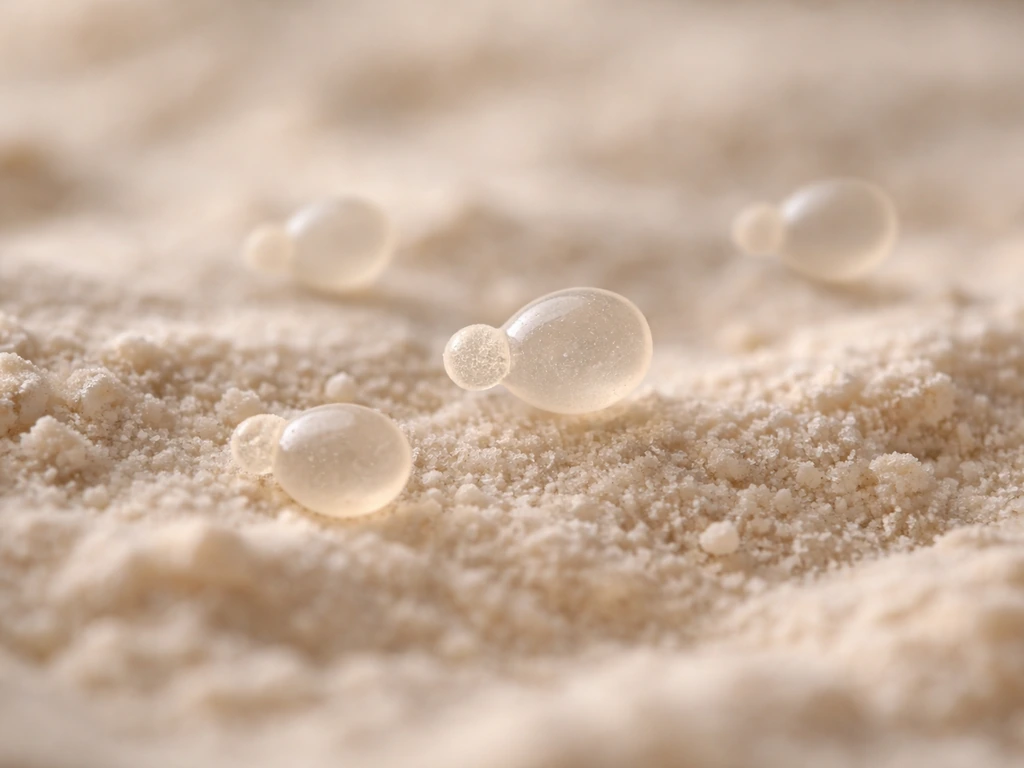
Yeasts are single-celled fungi, and while they're less of a contamination concern in dry flour than molds are, they can still be present. Yeasts generally need more moisture than molds to grow actively, so in a properly stored, dry flour they stay largely dormant. For mealworms to live and grow, they also require a suitable environment with consistent moisture levels, the right temperature, and proper bedding and food need more moisture. They become more relevant when flour gets damp, is mixed into dough, or is stored in humid conditions. The FDA's Bacteriological Analytical Manual (BAM) includes yeasts alongside molds and mycotoxins in its official grain analysis chapter, which tells you they're considered part of the same contamination picture.
Bacteria
Bacteria in flour don't get as much attention as mold, but they deserve serious respect. Flour is considered a raw agricultural product, and it can harbor pathogens including Salmonella and certain strains of E. coli. The FDA's flour handling guidance treats flour as raw for exactly this reason. Unlike mold, bacteria leave no visible trail in dry flour. You cannot see, smell, or taste their presence, which makes them arguably more dangerous for people who think their flour looks fine. The USDA points out that when you can see mold on a food, invisible bacteria are often growing alongside it, compounding the risk.
Why microorganisms grow in flour: the conditions that switch them on
Microorganisms don't just appear out of nowhere. They're almost certainly already present in your flour in dormant or very low numbers. What determines whether they stay quiet or start multiplying is a combination of environmental conditions. Think of these as a set of switches: flip enough of them to "on" and you get active growth.
Moisture and water activity: the most important switch
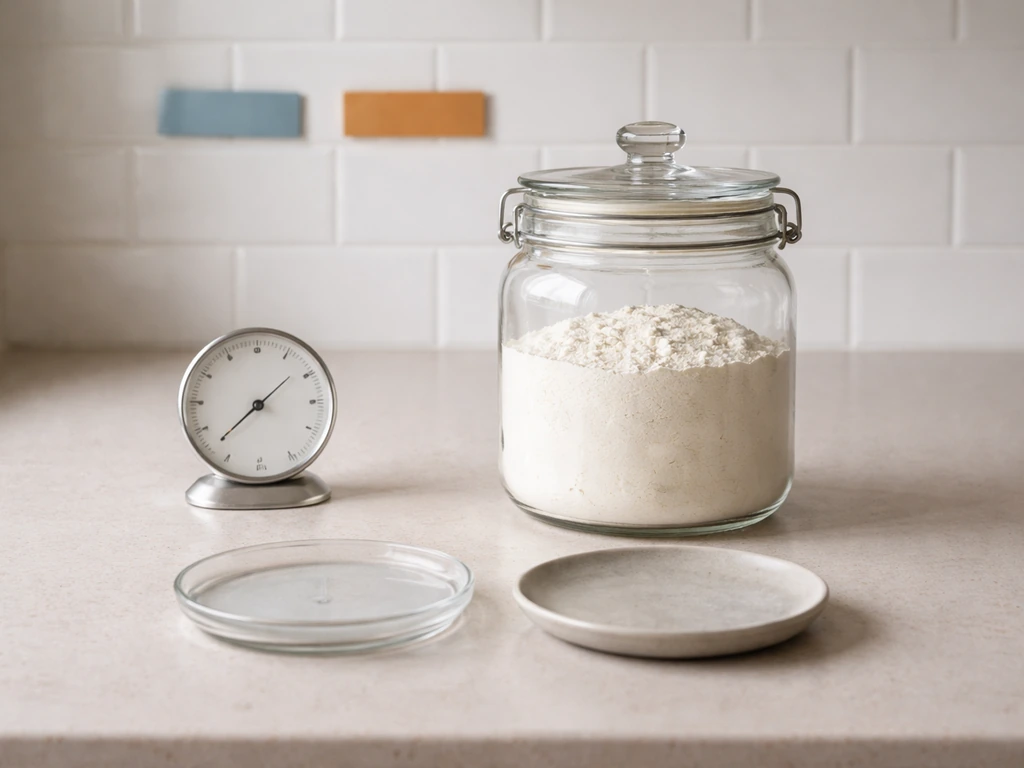
Water activity (written as a_w) is a measure of how much available water a substance has for microbial use. It runs from 0 to 1. 0, where 1. 0 is pure water.
Dry flour typically sits at a water activity around 0. 60, which is too low for most microbes to grow. FAO research on post-harvest grain losses shows that storage fungi require a minimum water activity of about 0. 65, which corresponds to roughly 65% relative humidity in the storage environment.
Once flour absorbs enough ambient moisture to push its water activity above that threshold, mold growth becomes possible. At a_w of 0. 75, wheat flour is already at a moisture content around 15. Codex / FAO materials include a grain moisture versus water activity table for wheat that illustrates how equilibrium moisture content rises with water activity, for example around 13.
0% at aw 0. 60 and about 15. 8% at aw 0. 75, linking higher moisture to greater fungal and mycotoxin risk [wheat flour is already at a moisture content around 15](https://www.
fao. org/fao-who-codexalimentarius/sh-proxy/tr/? lnk=1&url=https%253A%252F%252Fworkspace. fao.
org%252Fsites%252Fcodex%252FStandards%252FCXC%2B51-2003%252FCXC_051e. pdf). 8%, and mold risk rises noticeably. This is why flour left in a humid kitchen, a garage, or any environment with poor air circulation is so vulnerable: it's passively absorbing moisture from the air.
Temperature: warmer means faster growth
Most storage molds and spoilage bacteria grow fastest in the range of 68 to 86 degrees Fahrenheit (20 to 30 degrees Celsius), which unfortunately overlaps with typical room temperature in most homes. Refrigerating flour (at or below 40 degrees Fahrenheit, as the FDA recommends) slows microbial metabolism dramatically. Freezing it stops active growth almost entirely, though it doesn't sterilize the flour. Higher temperatures don't just speed up existing growth; they can also encourage bacteria that were barely active at room temperature to multiply to dangerous levels quickly.
Oxygen and nutrients
Most molds are aerobic, meaning they need oxygen to grow. This is why vacuum-sealed or oxygen-reduced packaging slows mold growth so effectively, and why an airtight container is better than a loosely folded bag. Flour itself is loaded with nutrients: starches, proteins, and small amounts of lipids that give mold and bacteria everything they need once water and temperature conditions are right. Nutrients are essentially never the limiting factor in flour contamination. The microbes always have plenty to eat.
pH
Wheat flour has a slightly acidic to near-neutral pH, generally between 6.0 and 6.8. This range happens to suit a wide variety of molds, yeasts, and many bacteria just fine. Unlike some other foods where acidity (low pH) acts as a natural preservative, flour's pH offers very little protective barrier. This is part of why moisture control is so critical: pH alone won't save improperly stored flour.
How to tell if your flour has active microbial growth
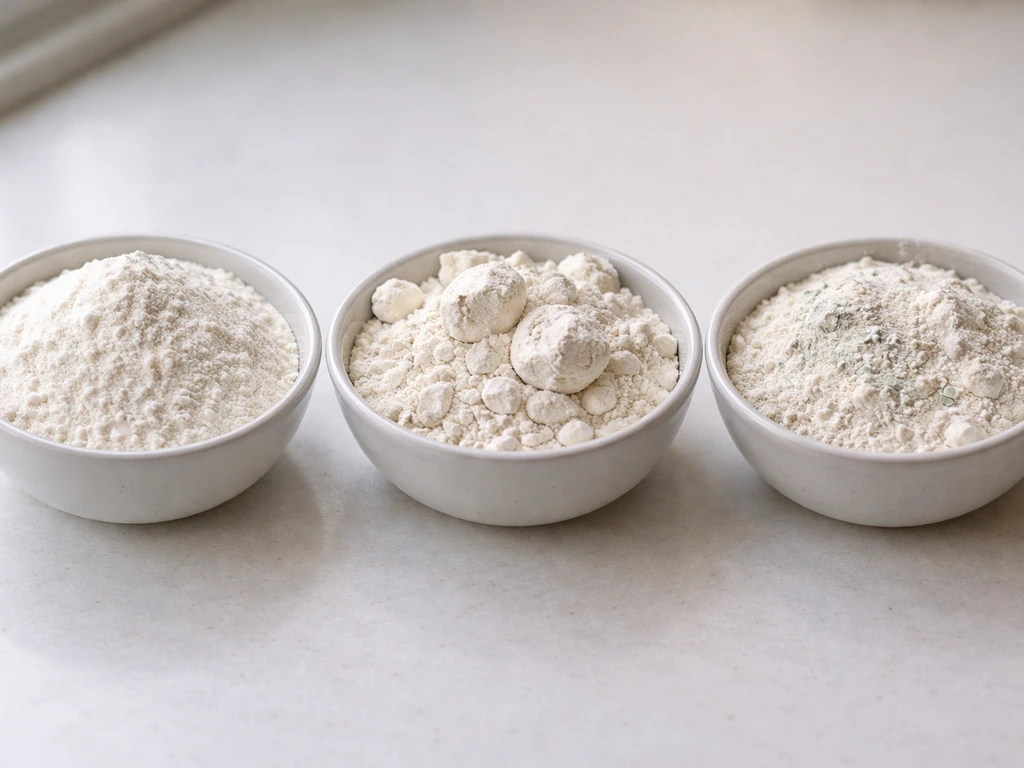
People sometimes panic over normal flour changes, and sometimes they dismiss real contamination as "just a little clumping." Here's how to read the actual signs.
| What you observe | Likely explanation | Action needed |
|---|---|---|
| Hard clumps that dissolve when pressed | Moisture absorption, no active growth yet | Sift and use quickly, fix storage |
| Musty, sour, or "off" smell | Early mold or yeast activity | Discard — smell indicates microbial metabolism |
| Visible colored spots (green, blue, black, gray) | Active mold colony growth | Discard immediately |
| Flour feels slightly damp or sticky | High moisture uptake, elevated mold risk | Spread thin, check storage; when in doubt, discard |
| Insects or larvae visible | Flour weevils or pantry moth larvae (not mold) | Discard and sanitize storage area |
| No smell, no color change, slightly compacted | Normal settling during storage | Safe to use if within date and storage was dry |
The musty or sour smell is the most reliable warning sign for microbial activity. Molds release volatile organic compounds as metabolic byproducts, and you'll often smell contamination before you see it. If your flour smells off in any way, treat it as contaminated regardless of how it looks visually. Bacteria, on the other hand, produce no reliable sensory signal in dry flour, which is why the FDA's advice to treat all flour as raw and potentially contaminated isn't just conservative caution: it's microbiologically accurate.
Are these microorganisms actually dangerous?
The answer depends on the type of microorganism, but the honest answer for visible mold in flour is: yes, treat it as a real hazard. Here's why.
The most serious risk from flour molds isn't the mold itself but the mycotoxins it can produce. Mycotoxins are chemical compounds that mold releases as part of its metabolic process. They don't go away when you remove the visible mold, and they're not destroyed by normal baking temperatures in many cases. Aflatoxins, produced by certain Aspergillus species, are among the most potent naturally occurring carcinogens known. The FDA sets action levels for aflatoxin in grain precisely because this is a documented public health concern, not a theoretical one.
The USDA is clear that when you see mold on a food, you should assume invisible bacteria may be growing alongside it. For moldy flour specifically, you can't scrape out the visibly affected part and consider the rest safe. Mycotoxins have already diffused through the material, and bacterial contamination doesn't leave a physical trail to follow.
For pathogenic bacteria like Salmonella, the risk is present even in flour that looks and smells completely normal. This is why eating raw dough or batter made with flour is a genuine food safety risk, not an old wives' tale.
- Mold mycotoxins (especially aflatoxins from Aspergillus) are heat-stable and chemically persistent, meaning baking doesn't reliably make contaminated flour safe
- Visible mold is never an isolated problem: assume deeper contamination and invisible bacterial co-growth
- Salmonella in flour poses a real illness risk from raw dough and can survive dry storage conditions for extended periods
- Children, pregnant individuals, older adults, and immunocompromised people face higher risk from all of these contaminants
What to do if your flour is contaminated right now
If you've opened your flour and something looks, smells, or feels wrong, here's a straightforward decision framework.
- Discard flour with any visible mold spots, colored patches, or musty smell. There is no rescue method for moldy flour. The mycotoxin contamination is invisible and not reversible by removing visible growth or by cooking.
- Discard flour that has been stored improperly for an extended period, even if it looks normal, especially if the storage environment was humid or warm.
- If flour smells fine but has hard clumps, you can sift it and assess further. Clumping alone from moisture absorption isn't proof of active microbial growth, but it means conditions were not ideal and you should use it promptly.
- When discarding moldy flour, seal it in a bag before putting it in the trash to avoid spreading mold spores in your kitchen. Wear gloves, and if you're handling a large amount of visibly moldy material, consider wearing a mask to avoid inhaling spores.
- Clean the storage container or pantry shelf where the flour was kept. Mold spores can linger on surfaces and contaminate the next bag you store there. Wipe down with a solution of water and dish soap, let it dry completely, and ensure the area is well-ventilated.
- Check nearby stored foods. Pantry molds and insects (like flour weevils or pantry moths, which are actual insects rather than microbes) can spread to neighboring packages. If you find signs of infestation or mold in one item, check everything nearby.
One myth worth addressing directly: "if I just bake it, the heat will kill everything." This is true for bacteria in many cases, since thorough baking reaches temperatures that kill most pathogens. But it's not true for mycotoxins, which are chemical compounds, not living organisms. Heat kills the mold but does not break down the toxins it already produced. If your flour shows any sign of mold activity, baking it is not a safety fix.
How to keep flour from becoming a microbial habitat
Prevention here is genuinely straightforward because the science points directly at one main lever: control moisture. Red worms, like most worms, need a suitable bedding and the right moisture level to live and grow control moisture. Everything else is secondary.
Storage conditions that make the real difference
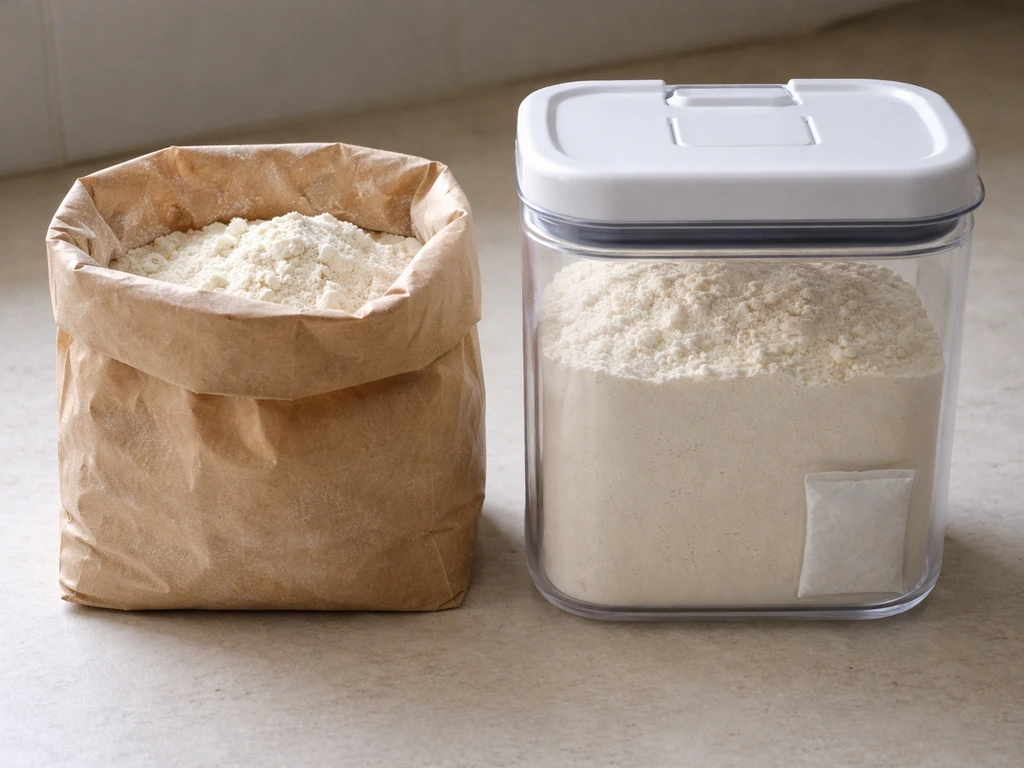
- Transfer flour to an airtight container as soon as you open the bag. The paper bags flour comes in are not moisture barriers over time, and they allow oxygen in for mold growth.
- Store in a cool, dry location. A pantry that stays below 70 degrees Fahrenheit is suitable for short-term storage. For longer storage (more than a few weeks), refrigerating flour at or below 40 degrees Fahrenheit significantly slows microbial activity.
- Freeze flour for long-term storage. Freezing halts microbial growth almost entirely. Bring flour to room temperature before using it to avoid condensation forming inside the container, which would add moisture.
- Keep flour away from humidity sources: dishwashers, sinks, steam from cooking pots. Even brief repeated exposure to steam adds moisture over time.
- Use clean, dry utensils every time you scoop flour. Wet or food-contaminated spoons introduce moisture and organic matter that give microbes a head start.
- Rotate your stock. Use older flour first. Most all-purpose white flour has a shelf life of 6 to 12 months at room temperature; whole wheat flour, which contains oils from the bran and germ, goes rancid and can support microbial growth faster, typically within 3 to 6 months at room temperature.
- Check your storage environment's humidity if you live in a humid climate. Keeping the room below 65% relative humidity is the threshold that matters for mold: that's the minimum a_w that storage fungi need, tied directly to ambient humidity.
Why airtight and dry matters more than you might think
The reason dry storage works so well is directly tied to the biology: storage fungi like Aspergillus and Penicillium cannot grow when water activity stays below 0.65. By keeping flour sealed and away from humidity, you're denying them the one resource they can't do without. Oxygen is also harder to control in a home setting, but airtight containers reduce oxygen exposure enough to meaningfully slow aerobic mold growth even without going to full vacuum sealing. This is the same principle that makes vacuum-packed pantry goods last so much longer.
It's worth noting that flour insects, like flour weevils and pantry moth larvae, are a separate issue from microbial growth (they're macroscopic pests, not microorganisms), though they often coexist with mold in improperly stored flour. The conditions that allow mold to thrive (warmth, humidity, improperly sealed containers) also invite insect pests. Keeping storage conditions tight addresses both problems at once. If you're curious about how insects specifically develop in stored food environments, the biology of how organisms like worms and larvae grow in food follows some of the same environmental logic as microbial growth.
The core biology in one place
Flour isn't sterile when it reaches you. If you're wondering why you might see maggots in garbage, it's a similar biology problem where warmth and moisture let larvae grow from eggs laid by flies. It carries dormant mold spores, yeasts, and sometimes bacterial pathogens from the grain it was milled from. None of that is unusual or preventable at the consumer level.
What you can control is whether those organisms get the conditions they need to grow: enough moisture (water activity above ~0. 65), a warm temperature, oxygen access, and time. Remove any one of those factors and you slow or stop growth. Remove moisture especially, and most flour contamination problems become dramatically less likely.
That's the core principle, and all the practical advice above flows directly from it.
FAQ
If I only see a small clump or a little fuzzy spot, can I scrape it out and use the rest of the flour?
No. Visible mold colonies are a sign that water activity and time conditions were sufficient for growth, and mold toxins can spread through flour. Scraping off the top does not remove dissolved or diffused mycotoxins, and it does not address the possibility of bacteria that may be present without any visible or noticeable cues.
How will I know if moldy flour made me sick, and what symptoms should worry me?
It can, and symptoms are not reliable for flour contamination. People can react to mold fragments or dust, but they can also be exposed to mycotoxins without immediate obvious symptoms. If you suspect moldy flour was used and you develop persistent vomiting, diarrhea, fever, or worsening illness, contact a healthcare professional and mention possible flour spoilage.
What if my flour got a little damp in the pantry, can I dry it back out and use it?
If flour becomes damp, the main safety issue is that it can allow microbial growth and, in some cases, mycotoxin production. The practical approach is to discard flour that has absorbed moisture (for example, caked lumps after kitchen humidity, condensation on the bag, or flour stored after a leak). If only a minor surface moisture event happened and the flour is fully dry again, you still cannot assume safety, because bacteria and toxins may already have developed.
If my flour smells fine, is it definitely safe to eat, especially for raw recipes?
You cannot use smell as a safety test. A “neutral” smell can still occur with bacteria, and “musty” odor may worsen over time as volatile compounds build. Treat any off odor, clumping, or visible growth as a discard signal, especially for flour used in raw applications like cookie dough or batter.
Does freezing flour kill mold and bacteria so it becomes safe again?
Freezing prevents active growth, it does not sterilize. If flour already had active mold, freezing may stop further expansion but toxins can remain. Freezing is most useful as a prevention step after purchase and for long-term storage of dry, uncontaminated flour.
If I bake the goods thoroughly, does that make mold-contaminated flour safe to eat?
Not necessarily. If flour is contaminated with mycotoxins, typical baking does not reliably break them down. Heat can kill many living bacteria, but mycotoxins are chemical compounds, not organisms, and may persist after baking.
My flour has bugs. Does that mean it also has mold or bacteria, or is it only an insect issue?
No. Flour insects, like weevils or pantry moth larvae, are a different problem from microorganisms. Insect activity often indicates poor storage conditions, which also increases moisture and oxygen exposure risks for mold. If insects are present, discard the flour, or at minimum do not assume cleanliness by removing visible insects alone.
How can I tell the difference between normal flour settling and real spoilage?
That depends on how quickly the flour was used after opening and how it was stored. Unopened flour is usually dry and low risk, but once opened, it can absorb humidity. If you see normal aging changes like slight settling of powder, that is not the same as mold growth, which shows off odors, clumps that persist, or visible spots.
What’s the safest way to handle flour for no-bake recipes or raw dough?
Yes, and you should be extra cautious with raw flour consumption. Even when flour looks and smells normal, pathogenic bacteria risk cannot be excluded. Consider using heat-treated flour for no-bake items, and always wash hands and surfaces after handling flour, since batter can spread contamination to counters.
If I throw out the flour, what should I clean to prevent mold or bugs from coming back?
Use discard and replacement guidance rather than trying to disinfect. Do not try to salvage heavily contaminated flour by washing or re-sifting, because toxins and fine spores can spread through the whole batch. Clean the container, surrounding pantry shelf, and scoop area with hot soapy water, then dry fully before storing fresh flour.