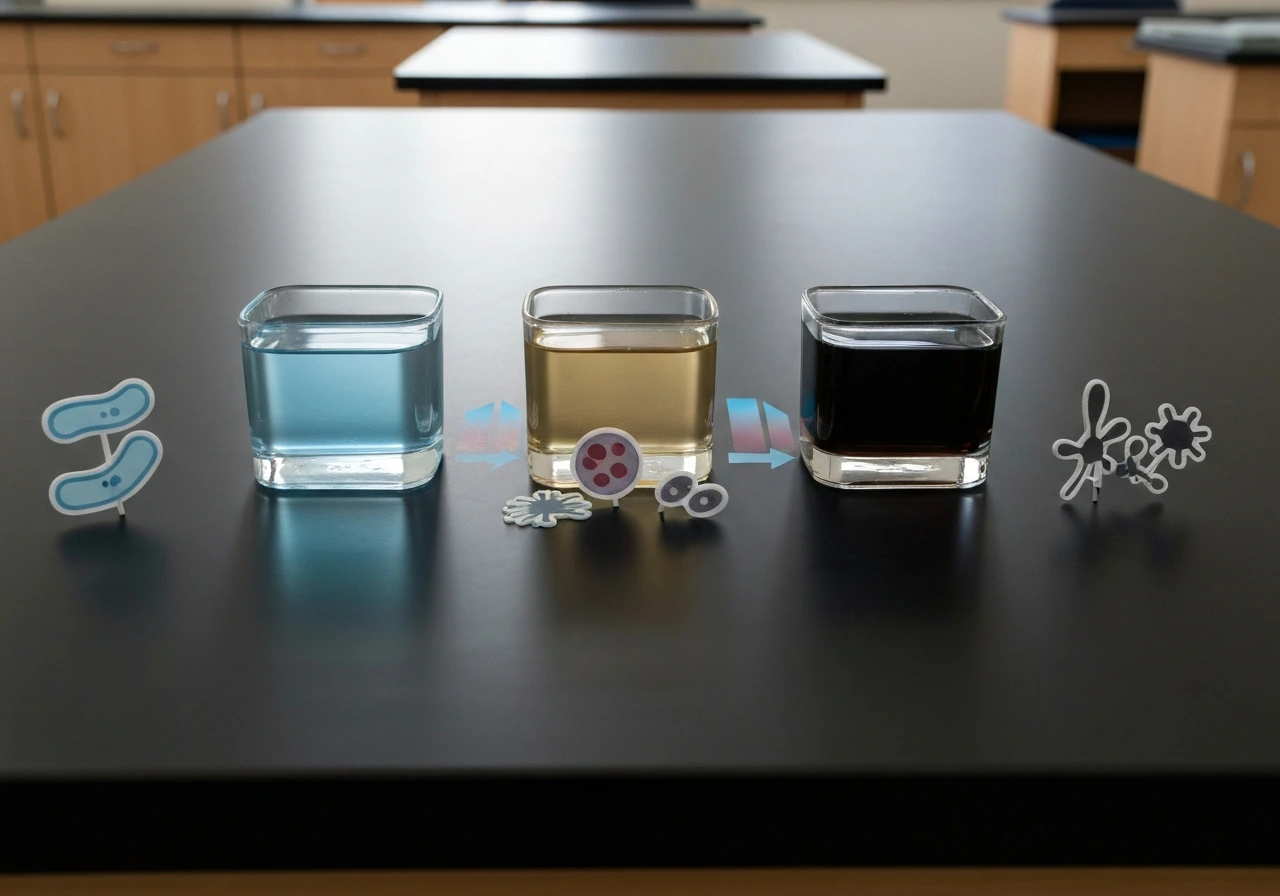
Bacteria need five things to grow: the right temperature, enough moisture, available nutrients, a suitable pH, and the correct oxygen environment. If your Lesson 5 activity sheet is asking 'how do bacteria grow,' every prompt on that sheet is really asking you to connect one of those five conditions to a predicted or observed outcome. Once you know what each condition does biologically, filling in the blanks, tables, or checkboxes becomes straightforward.
Lesson 5 Bacteria Growth Activity Sheets How Do Bacteria Grow Answers

Marcus Holloway
24 Apr 2026

What Lesson 5 is really asking you to do

Most versions of a Lesson 5 bacterial growth activity sheet follow the same structure: a prediction section, a time-lapse observation section (where you draw or describe what you see at different time points), and a record-keeping table that links conditions to results. The core question underneath all of it is: given a specific set of conditions, will bacteria grow, grow slowly, or not grow at all? You are expected to predict what will happen before the experiment, record what you actually observe during it, and then explain the difference between conditions that supported growth and conditions that stopped it.
Some worksheets phrase this as matching exercises ('match each condition to the correct growth outcome'), some use fill-in-the-blank tables (temperature range, expected growth, yes/no), and others ask for short written justifications. Regardless of the format, the underlying biology is the same. Nail the five factors, and you can answer any version of this sheet.
The conditions that let bacteria grow
Temperature
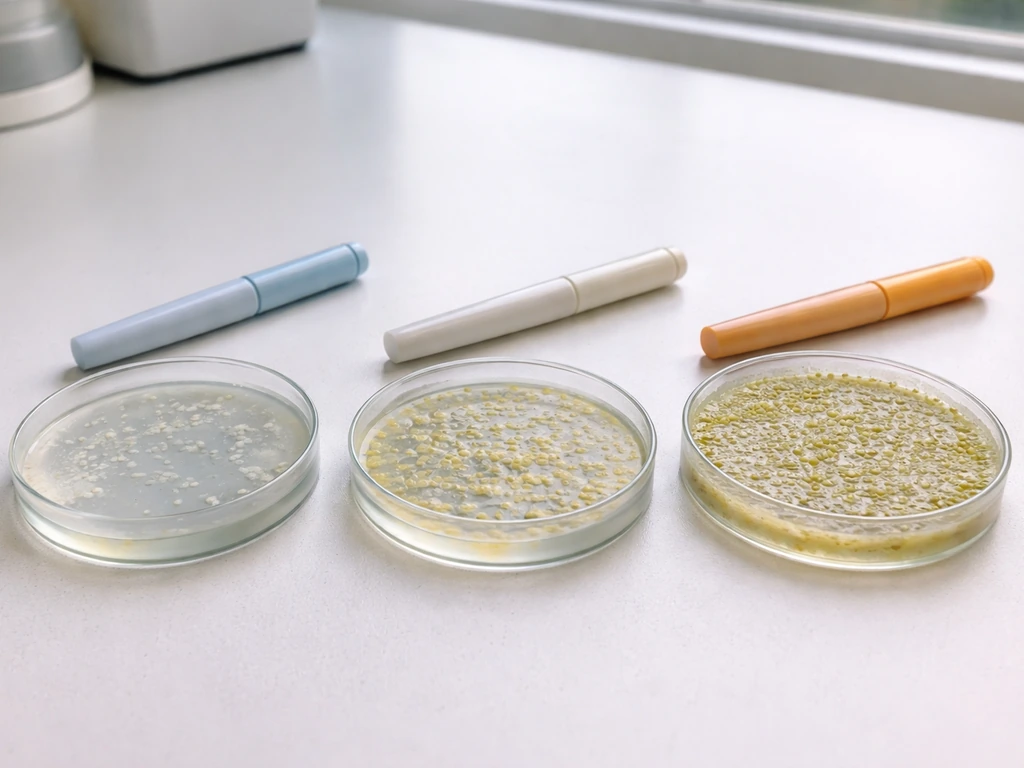
Temperature is usually the first condition your worksheet addresses, and it has the clearest numerical answers. Bacteria are grouped into three broad categories based on the temperature they prefer. Typical temperature ranges used in microbiology categorize psychrophiles as 0, 15°C, psychrotrophs as 4, 25°C, mesophiles as about 20°C to roughly 45°C, and thermophiles or hyperthermophiles as above 50°C blank" rel="noopener noreferrer">psychrophiles, psychrotrophs, mesophiles, and thermophiles. Psychrophiles thrive in cold conditions, roughly 15 to 20°C. Mesophiles do best between 30 and 37°C, and this group includes almost all bacteria that cause human disease or food spoilage, because 37°C is close to normal human body temperature. Thermophiles prefer heat, with optimal growth around 50 to 60°C, though extreme thermophiles push above 70°C.
For your worksheet, the most important rule is: closer to a bacterium's optimal temperature means faster, more visible growth. Below 5°C (standard refrigerator temperature) or above 60°C, growth slows dramatically or stops. This is why refrigeration and cooking are both used as food safety tools. If your sheet asks you to predict growth at a given temperature, check whether that temperature falls inside or outside the mesophile range, since most activity sheets use common food-safety bacteria as examples.
Moisture
Bacteria cannot grow without sufficient water. In the USDA ARS Pathogen Modeling Program (PMP), water activity (aw) is noted as a key way to predict growth risk for bacteria, yeasts, and molds, including threshold guidance such as low-acid foods (pH > 4.5) and higher aw (for example, aw > 0.86) water activity (aw) predicts growth risk for bacteria, yeasts, and molds. The scientific term is water activity, but on a Lesson 5 sheet it usually just shows up as 'moisture.' Protein-rich, moist foods like meat, eggs, milk, and fish are ideal growth environments because they supply both water and nutrients simultaneously. Dry foods, salted foods, and dehydrated environments suppress growth by making water unavailable to bacterial cells. If your worksheet gives you a scenario with a dry or low-moisture condition, the correct answer is reduced or no growth.
Nutrients
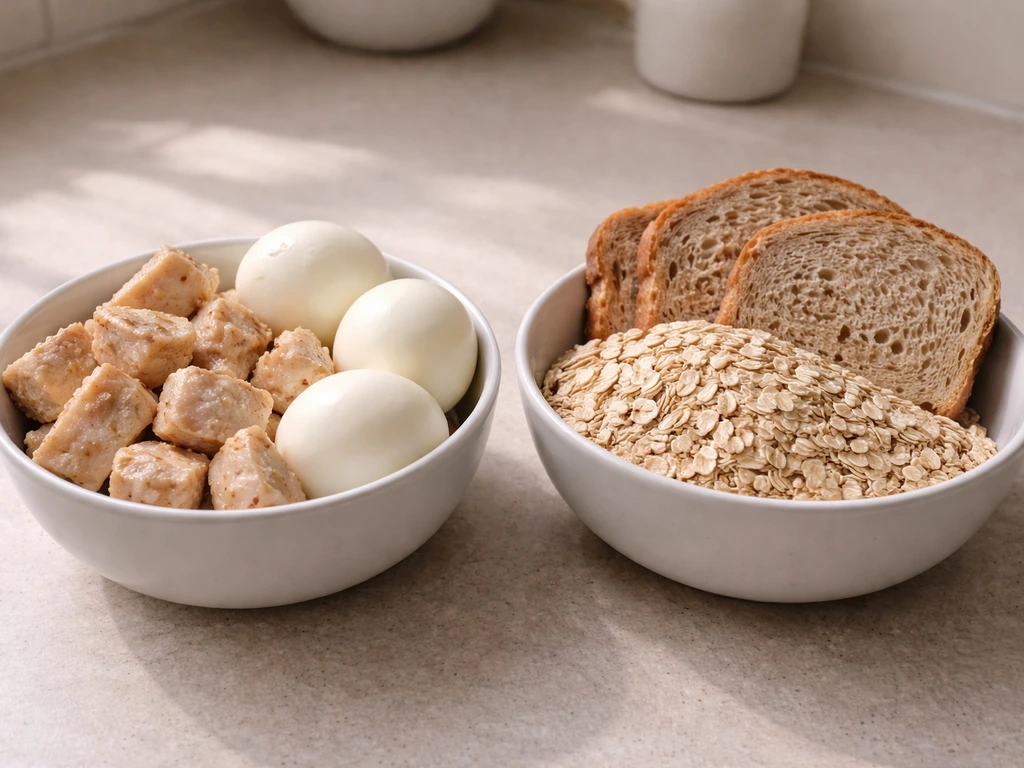
Bacteria need a food source, specifically proteins and carbohydrates, to fuel cell division. Protein-rich foods are the highest-risk nutrients because they provide the building blocks bacteria need most. On your activity sheet, if a scenario describes a nutrient-rich environment (raw chicken sitting at room temperature, for example), the expected answer is rapid bacterial growth. A nutrient-poor environment, like a clean glass of water, limits how much bacteria can multiply even if temperature and moisture are otherwise fine.
pH
pH measures how acidic or alkaline an environment is on a scale of 0 to 14, with 7 being neutral. Most bacteria that appear on classroom worksheets are neutrophiles, meaning they grow best at a pH close to neutral, roughly between pH 6 and pH 8. A more practical worksheet number to remember is that bacteria grow within a pH range of about 4.6 to 9.0. Below pH 4.6 (strongly acidic, like vinegar or lemon juice), growth is significantly inhibited. This is why pickling and fermentation are preservation methods. If your sheet asks whether bacteria will grow in a highly acidic environment, the answer is no or very little growth.
Oxygen and space: the aerobic vs anaerobic question
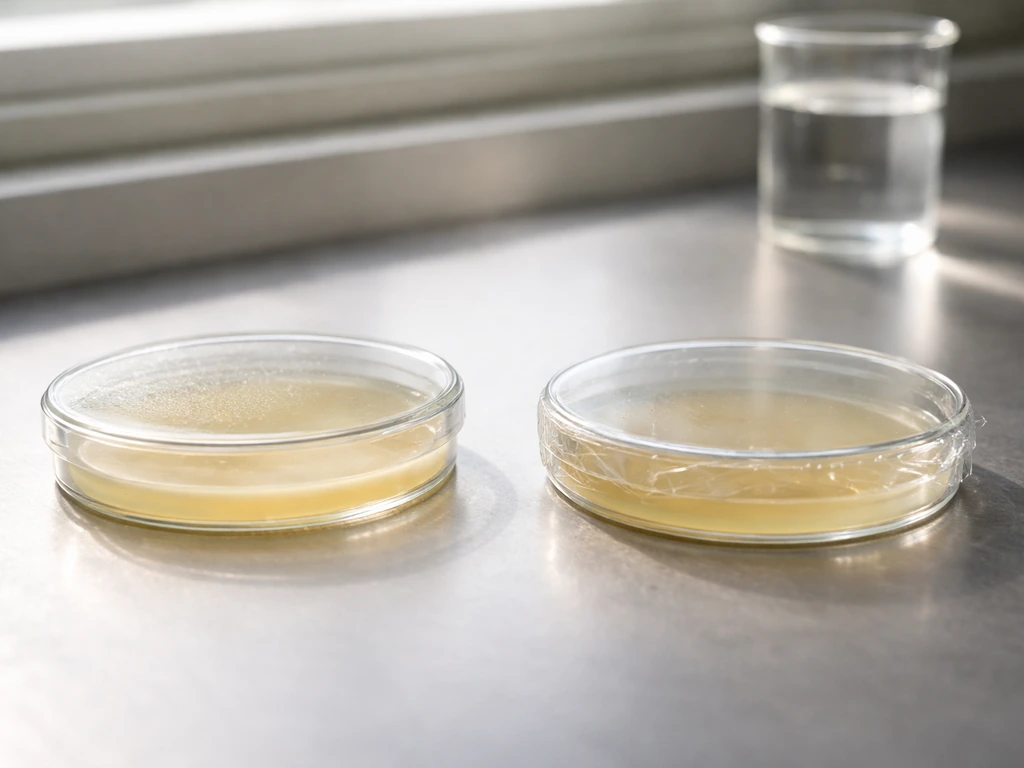
Oxygen is the condition students most often get wrong, so pay close attention here. Not all bacteria need oxygen, and not all bacteria are harmed by it. There are three main categories your worksheet is likely testing.
| Type | Oxygen Requirement | Where They Grow | Worksheet signal |
|---|---|---|---|
| Obligate aerobe | Must have oxygen | Surface of food, exposed environments | Growth only where oxygen is present |
| Obligate anaerobe | Cannot tolerate oxygen | Deep wounds, sealed food containers, soil | Growth only in oxygen-free environments |
| Facultative anaerobe | Grows with or without oxygen | Most common in food safety examples | Growth happens in both conditions |
Many common bacteria studied in school, including E. coli, are facultative anaerobes. If your worksheet gives you a scenario and asks whether bacteria will grow 'with oxygen' or 'without oxygen,' and the bacteria in question is a facultative anaerobe, the correct answer is both. If it is an obligate anaerobe, growth only appears in the oxygen-free scenario. If a question says 'sealed container, no air,' and the bacterium is an obligate aerobe, the answer is no growth.
Space matters too, though it shows up less often on Lesson 5 sheets. Bacteria divide by binary fission, splitting one cell into two. In a confined environment with limited nutrients or space, this process slows and eventually stops. If your sheet connects space or population density to growth rate, link it back to nutrient depletion: as bacteria consume available nutrients, the rate of division decreases.
Time, phases, and what you should actually observe
Bacterial growth over time follows four phases, and your observation section of the activity sheet maps directly onto them. Understanding the phases helps you explain why you do not see immediate visible growth when an experiment starts.
- Lag phase: Bacteria have just arrived in a new environment and are adjusting. They are not dividing yet. You will see little or no visible change. This phase can last minutes or hours depending on how different the new conditions are from the starting conditions.
- Log (exponential) phase: Bacteria are now dividing rapidly. Numbers double at a regular interval called the generation time. This is when you would start to see visible cloudiness in a liquid culture, or visible colonies appearing on a plate or surface.
- Stationary phase: Nutrient supplies are running low and waste products are building up. The number of new cells being produced roughly equals the number dying. Growth appears to plateau.
- Death phase: Resources are depleted and toxic waste products accumulate. The bacterial population declines.
If your Lesson 5 sheet has a time-lapse drawing or summary table, fill it in using this sequence. At early time points (hour 0 to 2), predict little visible change (lag phase). At middle time points, predict visible growth or cloudiness (log phase). At later time points, predict a plateau or decline. The exact timing depends on what conditions the worksheet gives you: optimal conditions (right temperature, moisture, nutrients, neutral pH, correct oxygen) will shorten the lag phase and accelerate the log phase. When a bacteria culture is known to grow at a rate, the conditions determine how quickly the log phase accelerates optimal conditions (right temperature, moisture, nutrients, neutral pH, correct oxygen).
How to fill in the answers, step by step
Here is a direct method for working through any prompt on a Lesson 5 bacterial growth sheet. Read each scenario or question, then run through this checklist before writing your answer.
- Identify the temperature: Is it below 5°C, between 5°C and 60°C, or above 60°C? Below 5°C or above 60°C means slowed or no growth. In the 30–37°C range means optimal mesophile growth.
- Check moisture: Is the environment described as wet, moist, or protein-rich? Yes means growth is supported. Is it dry, dehydrated, or salted? That means growth is suppressed.
- Assess nutrients: Does the scenario involve protein-rich food (meat, dairy, eggs)? That supports rapid growth. Does it involve a nutrient-poor surface or clean water? Growth will be limited.
- Evaluate pH: Is the environment described as acidic (vinegar, citrus, pickled)? That suppresses growth. Neutral or slightly acidic (most cooked foods, body tissues) supports growth.
- Determine oxygen situation: Is the bacterium named? Look up whether it is an aerobe, anaerobe, or facultative anaerobe. If not named, assume facultative anaerobe (most common in classroom worksheets) and answer that growth can occur in both conditions.
- Predict the growth phase based on time: Short time = lag phase observation. Longer time = log or stationary phase. Link the visual observation (clear, cloudy, colonies present) to the phase.
- Write your prediction or observation using the condition language from the question. If the sheet says 'moist environment,' use the word 'moisture' in your answer to connect your reasoning to the prompt.
Common mistakes and how to double-check yourself
The single most common mistake is treating 'warm and dirty' as the whole answer. Students write something like 'bacteria grow in warm, dirty places' and call it done. That misses pH, moisture specifics, and oxygen entirely, and it will lose you marks on any detailed worksheet. Growth depends on all five conditions being met, not just one or two.
The second most common mistake is mixing up oxygen categories. Students assume all bacteria either need oxygen or hate it. If you see the word 'facultative' on a sheet, it means the organism can handle both situations. Do not mark 'no growth' in an oxygen-free scenario if the bacterium is a facultative anaerobe.
A third common error is predicting immediate visible growth at time zero. Remember the lag phase: bacteria need time to adjust before dividing. If a worksheet prompt asks what you observe at the very start of an experiment, the correct answer is no visible change yet, even under ideal conditions.
Use this quick self-check before you hand in the sheet:
- Did I address all five conditions (temperature, moisture, nutrients, pH, oxygen) at least where the question gives you that information?
- Did I use specific temperature ranges rather than just 'warm' or 'cold'?
- Did I identify the oxygen category correctly (aerobe, anaerobe, or facultative)?
- Did I connect my observation to the correct growth phase (lag, log, stationary, death)?
- Did I use the same terminology the worksheet uses in my written answers?
- For prediction prompts, did I state what I expect to see AND why (link condition to outcome)?
Taking this further at home and connecting it to real life
Once you understand the five growth conditions, you will start seeing bacterial growth logic everywhere in daily life, particularly around food. The temperature danger zone (5°C to 60°C) is exactly the range your refrigerator is designed to stay below. Cooking food to above 60°C (and ideally 70–75°C for most meats) knocks out temperature tolerance for most mesophiles. Pickling and fermenting foods intentionally drop pH below 4.6 to stop bacterial growth without refrigeration. Salting and drying foods reduces moisture availability. These are not separate food safety rules; they are all direct applications of the same five-factor biology you just worked through on your sheet.
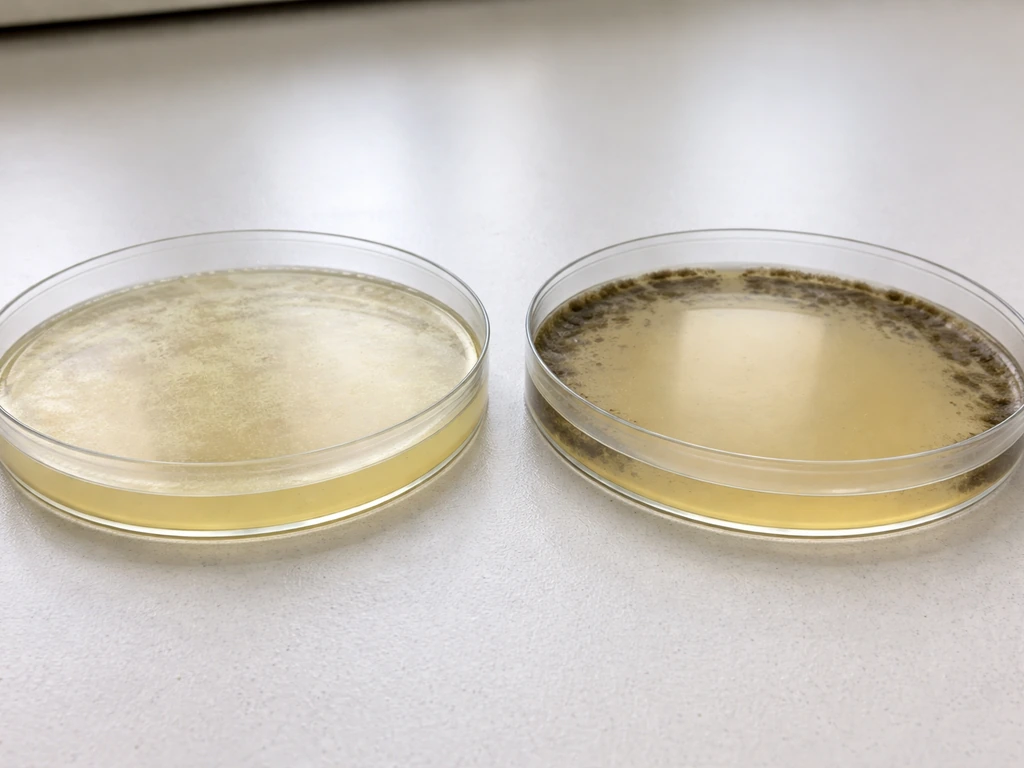
For a safe home extension, try comparing two identical slices of bread: leave one in a sealed bag at room temperature and seal the other after lightly dampening it. Over several days (check daily without opening the bags), you will see how moisture accelerates visible mold growth. Mold is a fungus rather than a bacterium, but it responds to the same moisture and nutrient principles. This kind of structured prediction and observation is exactly what the activity sheet is training you to do, and it connects directly to the hygiene principle that keeping surfaces dry slows microbial growth.
If you want to explore how bacteria behave when conditions change more dramatically, the biology of simulated environments is a fascinating extension: researchers and students use controlled lab setups to test how bacteria adapt when one variable shifts while others stay constant. Similarly, understanding how bacteria grow at different rates depending on starting conditions connects naturally to mathematical growth rate problems, where you calculate how a population doubles over time given a known generation interval. You can also extend this logic to genetic changes, such as bacteria are genetically modified to grow bacteria grow. These connections show that the five factors you learned for Lesson 5 are not just worksheet answers; they are the foundation for everything from food production to medical microbiology.
FAQ
What should I write if my worksheet asks for “the best” conditions for bacteria growth?
Name all five factors together, then state the direction of each one (temperature near the bacterium’s optimum, enough moisture, nutrients present, pH near neutral, and an oxygen setting that matches the organism’s category). If the sheet names a specific bacterium, use its temperature group and oxygen type rather than giving generic “warm and dirty” wording.
If a worksheet uses a single variable change (like only temperature changes), do I still consider the other four conditions?
Yes. The correct prediction depends on which variables are held constant. If the prompt says all else is the same, you can treat moisture, nutrients, and pH as already “supporting growth,” then focus only on whether the new temperature falls inside or outside the bacterium’s preferred range.
How do I answer when the sheet gives an “unknown” pH or moisture value?
State a conditional outcome. For example, if pH is not specified but the prompt implies acidity from the food type, choose “inhibited” if it indicates strongly acidic conditions. If it truly gives no clue, write that you need the missing pH or moisture to predict whether growth is likely.
What does “no growth” mean on a time-lapse table? Is it literally zero bacteria?
On these worksheets, “no growth” typically means no detectable increase over the observation period, not that bacteria never exist. You can still see no visible change if conditions block division, such as oxygen incompatibility for obligate aerobes or pH far below the viable range.
If the worksheet shows cloudiness, is that always bacteria growth?
Usually it’s the expected sign of microbial population increase, but treat the sheet’s context as the evidence rule. If the activity specifically describes bacterial cultures and time points, cloudiness is the intended observable. If the prompt is about mold or “bread,” cloudiness may not be the best cue, since mold can appear differently.
How should I handle questions that mix oxygen terms like aerobic, anaerobic, and facultative?
Match the exact wording to the bacterium’s category. Facultative anaerobes can grow both with and without oxygen, obligate anaerobes grow only without oxygen, and obligate aerobes grow only with oxygen. If the question gives “sealed, no air,” that supports anaerobe conditions.
What should I put for lag phase if the worksheet asks for a specific time like hour 1 or day 1?
Use the prompt’s time scale and write “little to no visible change” during early time points. Even under ideal conditions, division often starts after adjustment, so the expected answer at the very first observation is typically “no visible growth yet” rather than immediate cloudiness.
Can bacteria grow in a clean glass of water if temperature is ideal?
Not much. Even with a good temperature, limited nutrients mean multiplication is restricted, so the worksheet answer should reflect reduced or minimal growth compared with a nutrient-rich scenario. This is a common place where students over-focus on temperature alone.
If a worksheet mentions refrigerator temperature or cooking temperature, what quick rule should I use?
Use the temperature danger zone rule in the prompt’s context. Refrigerator conditions (around below 5°C) usually slow or stop growth, cooking above about 60°C knocks down mesophiles, and the sheet may ask you to connect that directly to “no growth” or “very slow growth.”
My activity sheet uses “water activity” language instead of “moisture.” Are they the same thing for answers?
Treat them as the same concept on these worksheets: water availability. Low water activity corresponds to low moisture availability, so the expected effect is reduced growth, salt-and-dry type conditions suppressing bacterial multiplication.
What’s the safest strategy if I’m unsure which bacterium the worksheet is talking about?
Look for clues in the question text, like “E. coli,” “psychrophile,” “thermophile,” “human body temperature,” or explicit temperature/oxygen descriptions. If the sheet does not specify the organism, rely on the general ranges it provides in the problem and justify your prediction using the five-factor checklist.