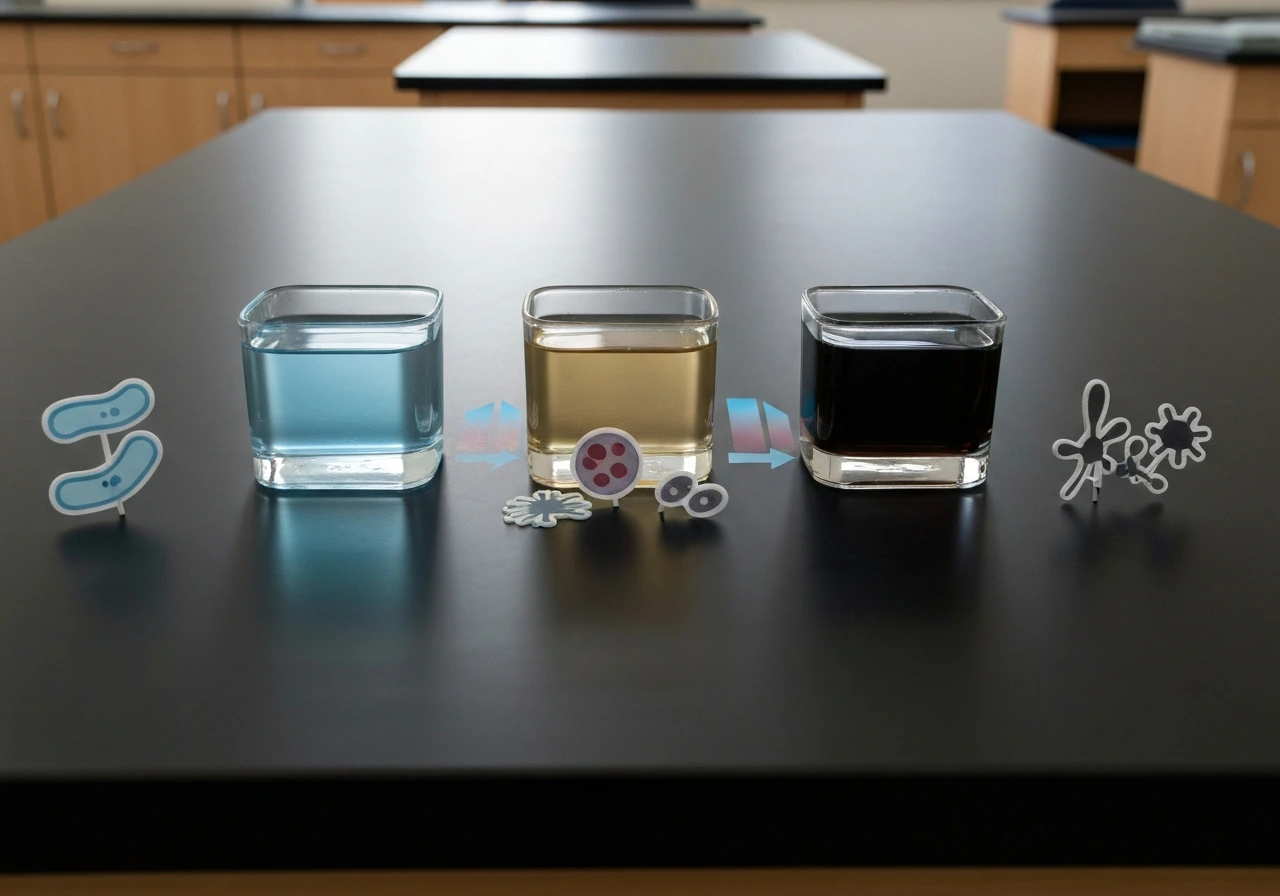
Bacteria grow in a simulated environment when you match five core conditions to what that species actually needs: the right temperature range, a suitable pH, the correct oxygen level, enough available water, and a nutrient source the bacteria can metabolize. If the engineered plasmid is present, the bacteria containing the engineered plasmid would grow in the same environment that supports their needs for temperature, pH, oxygen, water activity, and nutrients.
How Do Bacteria Grow in a Simulated Environment

Marcus Holloway
15 May 2026
Get all five right and you will see growth move from a quiet lag phase into visible, measurable exponential division. Miss even one, and the culture stalls or dies. This guide walks you through each condition, how to set it up, and how to tell whether it is actually working.
Core conditions bacteria need to grow in the lab
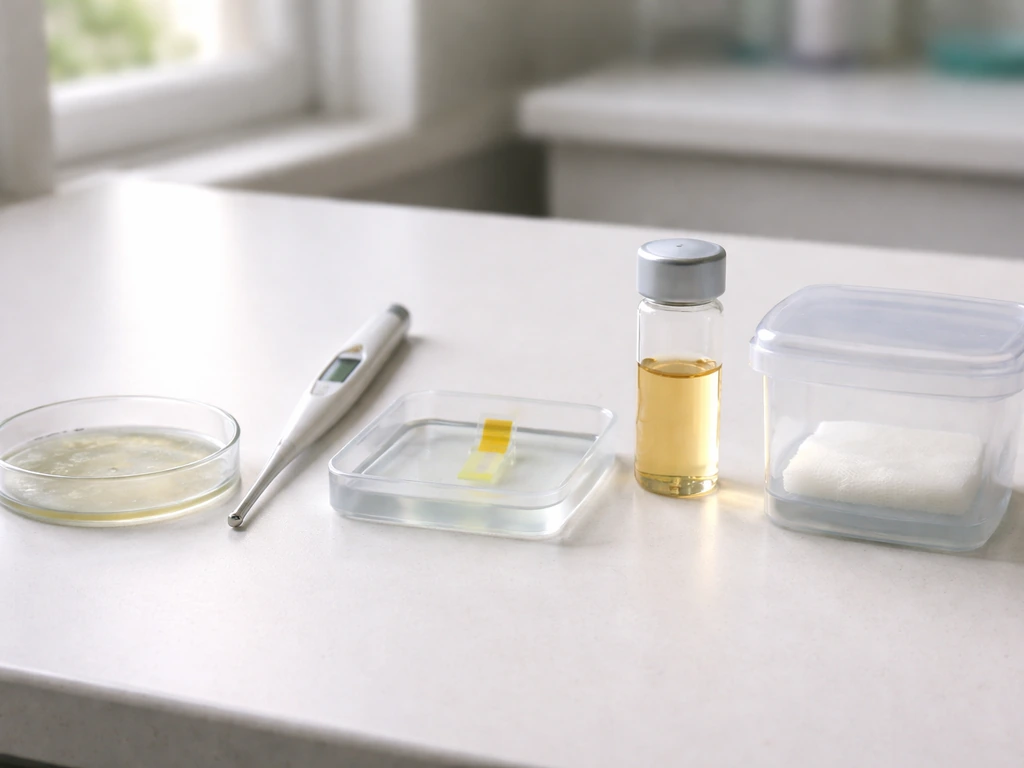
Before you touch a flask or a petri dish, it helps to know what bacteria are actually responding to. Growth is not just about food. It is about whether every environmental signal says "it is safe to divide." Think of it like a checklist the bacterium runs through: Is the temperature survivable? Is the water available to drive biochemical reactions? Is the pH compatible with enzyme function? Is there oxygen (or no oxygen, depending on the species)? Are there usable nutrients? Every one of those questions has to come back "yes" before the cell commits energy to replication.
These conditions are not independent of each other, either. A culture at the perfect temperature but the wrong pH will not grow. A culture in ideal media but too dry will stay dormant. This interconnection is exactly why troubleshooting simulated growth requires checking all five variables together, not just the most obvious one.
| Condition | Typical target for mesophiles | What goes wrong outside range |
|---|---|---|
| Temperature | 35–37°C for human-associated strains | Enzyme denaturation (too hot) or metabolic shutdown (too cold) |
| pH | 6.5–7.5 for most lab strains | Protein/enzyme dysfunction, membrane stress |
| Oxygen | Species-dependent (aerobic/anaerobic/microaerophilic) | Cell death or arrested growth if mismatched |
| Water activity (aw) | Above 0.90 for most bacteria | Osmotic stress, dormancy, death |
| Nutrients | Carbon, nitrogen, mineral salts, vitamins | Stalled lag phase, failure to enter log phase |
Designing a simulated environment: media, temperature, pH
The growth medium is your simulation of a real environment. Liquid broth (like nutrient broth or LB broth) mimics a nutrient-rich fluid environment and lets you track turbidity as a growth indicator. Solid agar plates add 1.5% agar to solidify the medium and let you count discrete colonies. Which you use depends on what you want to measure: broth for kinetics and density trends, agar for counting and isolation.
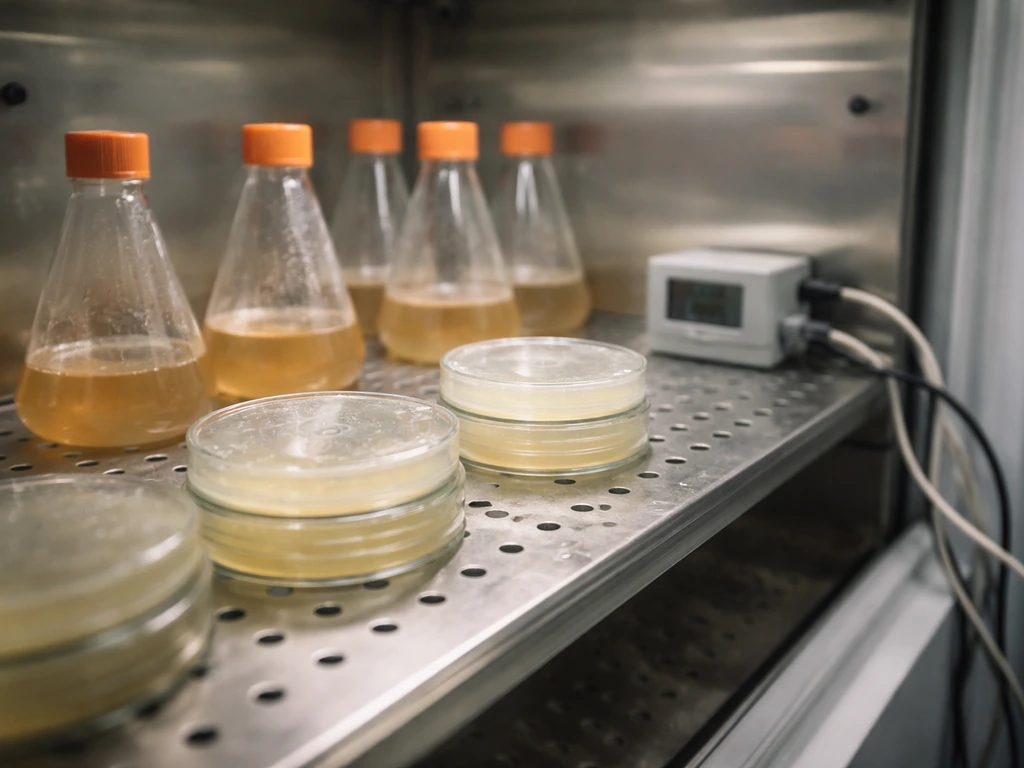
Temperature is the easiest variable to control and one of the most powerful. Most bacteria you will work with in an educational or food-safety context are mesophiles, meaning they prefer a moderate temperature range. Human-associated species like Escherichia coli, Salmonella, and Lactobacillus have an optimum around 37°C, which is no coincidence since that matches human body temperature. Set your incubator to 37°C for these species. Going 5 to 10°C above optimum is not just slower growth, it starts denaturing the proteins the cell needs to divide. Going 10°C below optimum does not always kill cells but can extend lag phase dramatically, which matters a lot if you are trying to run an experiment in a fixed time window.
pH control is trickier because medium pH can drift during growth as bacteria produce acidic or alkaline metabolic byproducts. Most laboratory media are buffered to pH 7.0–7.4 at preparation. Check the pH of your medium before inoculation using a calibrated pH meter or indicator strips accurate to at least 0.5 units. If you are making medium from scratch rather than a commercial powder, buffer it with phosphate buffer salts. A culture that looks like it is growing slowly might simply be in medium that started at pH 6.0 instead of 7.0, which is enough to suppress many common lab strains.
Oxygen and gas control (aerobic, anaerobic, microaerophilic)

Oxygen is the condition most students underestimate. Not all bacteria want it, and giving the wrong oxygen environment to a strain is one of the most common reasons a simulation fails. There are three broad categories to know.
- Obligate aerobes (like Mycobacterium species) must have oxygen and die in its absence. These need well-aerated broth (shake cultures or loosely capped flasks) or plates exposed to air.
- Obligate anaerobes (like Clostridium species) are killed by oxygen. These require anaerobic chambers, anaerobic jars with gas-pak sachets, or sealed environments flushed with nitrogen or CO2.
- Facultative anaerobes (like E. coli) grow best with oxygen but can switch to fermentation pathways without it. They are the most forgiving in a standard lab setup.
- Microaerophiles (like Campylobacter) need oxygen but at low concentrations, typically 2–10% rather than the 21% in room air. These need a special gas blend or microaerophilic incubation pouch.
One thing worth knowing: even in a flask of aerobic culture, oxygen is not unlimited. As the cell density rises in a closed system, dissolved oxygen gets consumed faster than it can diffuse back in from the headspace. In closed systems, gradual oxygen depletion limits aerobic cell growth as the culture proceeds blank" rel="noopener noreferrer">oxygen is not unlimited. This is one reason why static broth cultures eventually plateau even if nutrients are still available. Shaking or stirring the flask dramatically extends the aerobic growth window by mixing oxygen back into solution.
Moisture, water activity, and timing (lag and growth phases)
Water is not just a solvent. Bacteria need free, available water to run their biochemistry, and the relevant measure is water activity (aw), which runs from 0 (bone dry) to 1.0 (pure water). Most bacteria require an aw above 0.90 to grow. Below that threshold, osmotic stress draws water out of the cell, halting metabolism. This is the principle behind preserving food with salt or sugar: they lower water activity, not necessarily by poisoning the bacteria but by making the water unavailable. In your simulation, this means your medium should never be allowed to dry out, gel surfaces on agar plates should stay moist, and high-salt formulations should only be used intentionally for halophile work.
Timing matters because bacterial growth in a closed system follows a predictable four-phase curve: lag, logarithmic (exponential), stationary, and death/decline. During lag phase the culture looks like nothing is happening, but the bacteria are actively synthesizing enzymes, ribosomes, and other machinery needed to divide in this specific medium. The length of lag phase depends on the species, the composition of the medium, and the size of the inoculum you started with.
Once the bacteria are adapted, they enter exponential (log) phase, where cell numbers double at a consistent rate. This is the phase you want to capture in most educational experiments. After that, [stationary phase sets in as nutrients deplete or waste products accumulate, and eventually the culture enters decline. ](https://openstax.
org/books/microbiology/pages/9-summary) If you sample too early (deep in lag phase) or too late (stationary or death phase), your results will look like the simulation failed even if you set it up correctly.
Nutrients and inoculum: cell source, concentration, and carryover
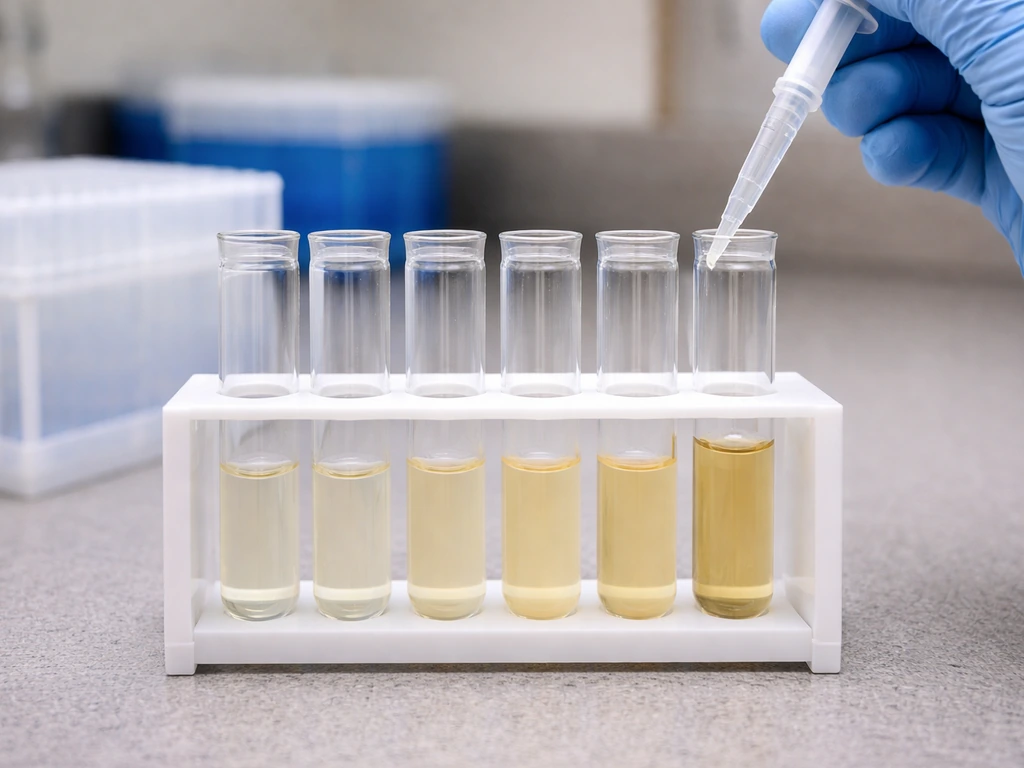
The composition of your growth medium determines what metabolic pathways are available and how quickly cells can build biomass. At minimum, bacteria need a carbon source (for energy and carbon skeletons), a nitrogen source (for proteins and nucleic acids), mineral salts (phosphorus, sulfur, magnesium, potassium), and for many species, specific vitamins or growth factors they cannot synthesize themselves. Commercial prepared media like tryptic soy broth (TSB) or nutrient broth cover these bases for general-purpose work. If you are simulating a specific environment, like a human gut or a food matrix, you need to think more carefully about what that environment actually provides.
Inoculum size and quality matter more than most beginners realize. If you inoculate from a culture that was already in stationary or death phase, you are starting with stressed, damaged cells, and lag phase will be much longer. Use a log-phase or early stationary culture whenever possible.
Inoculum concentration also sets the starting clock: too few cells and you will be waiting hours before any detectable growth; too many cells and you can overwhelm the medium quickly, skip a usable log phase, or introduce so much carryover from the original medium that it changes the chemistry of your simulation. A standard starting density for broth cultures in educational settings is around 10^5 to 10^6 CFU/mL.
This is low enough to give you a clear lag and log phase within a reasonable experiment window.
Monitoring growth safely: turbidity, colony counts, microscopy, contamination checks
You have several practical tools for tracking whether the simulation is working. Each one tells you something slightly different, and using more than one gives you a much clearer picture.
Turbidity (OD600)
In liquid broth, bacterial growth makes the culture go from clear to cloudy as cell density increases. You can measure this quantitatively using a spectrophotometer at 600 nm, which gives you an optical density reading called OD600. A reading above roughly 0.1 typically indicates detectable growth; log phase cultures in most lab strains peak somewhere around OD600 of 0.5 to 1.0 before growth rate slows. You can take readings every 30 to 60 minutes and plot a curve to see exactly when log phase starts and ends. If you do not have a spectrophotometer, a simple visual comparison against an uninoculated broth blank is still useful as a pass/fail check.
Colony counts (serial dilution plating)
For a quantitative count from a broth culture, use serial dilution and plate on agar. The goal is to land in the countable range of 30 to 300 colonies per plate. Fewer than 30 colonies introduces too much statistical noise; more than 300 makes counting unreliable because colonies merge and overlap. Once you have a countable plate, use the formula: CFU/mL equals the number of colonies counted, multiplied by the reciprocal of the dilution used, divided by the volume plated in milliliters. This gives you the viable cell concentration in your original sample.
Microscopy
A direct smear and Gram stain under a light microscope at 100x (oil immersion) lets you confirm cell morphology, check that your culture is a single cell type, and get a rough sense of cell density. If you see multiple morphologies or unexpected colors in your Gram stain, contamination is likely. Microscopy also lets you distinguish living from dead cells if you use a viability stain like LIVE/DEAD (where live cells fluoresce green and dead cells fluoresce red under fluorescence microscopy).
Contamination indicators
Watch for unexpected color changes in the medium, unusual odors, pellicle formation on the broth surface, or colonies with multiple morphologies on plates. A negative control (uninoculated medium incubated under the same conditions) is essential: if the negative control shows turbidity or colony growth, your aseptic technique has broken down and you need to restart with freshly prepared, sterile media.
Common reasons simulated growth fails and how to troubleshoot
Most simulated-environment failures come down to a short list of fixable problems. Here is how to diagnose and address each one.
- Wrong temperature: Incubator set points drift over time. Verify with a calibrated thermometer inside the incubator, not just the display. A 5°C error is enough to significantly extend lag phase or halt growth in a strict mesophile.
- pH out of range: Test medium pH before inoculation, not just after preparation. Medium that has been stored improperly or used past its shelf life can drift. Remake and buffer fresh medium if pH is below 6.0 or above 8.0 for most standard lab strains.
- Oxygen mismatch: Confirm your species' oxygen requirements before setup. Anaerobes inoculated into open flasks will die; obligate aerobes in sealed, unshaken tubes will plateau quickly. Use the right vessel and gas environment for the organism.
- Low water activity or desiccated plates: Agar plates that have been stored dry or left open will inhibit or kill surface colonies. Store plates inverted, sealed in bags, and use them within the recommended window (usually 2–4 weeks for poured plates).
- Inoculum problems: If lag phase seems unusually long, check the age and phase of your source culture. Inoculating from a dead or deep-stationary culture extends lag dramatically. If growth is fast but uncontrolled, you may have inoculated at too high a density and burned through nutrients before you could measure a useful log phase.
- Insufficient or wrong nutrients: If growth stalls after a short log phase or never really starts, the medium may be missing a required growth factor. Confirm your medium formulation matches the nutritional needs of your strain. Fastidious organisms (like Streptococcus species) need enriched media such as blood agar, not plain nutrient agar.
- Contamination: If results are inconsistent across replicate cultures, contamination is almost always the explanation. Review your aseptic technique: flame loops until red-hot, work near a flame or in a biosafety cabinet, never pour unused medium back into stock bottles, and always run a negative control.
One final point worth making: growth in a simulation is a model of a real biological process, and every model has limits. The patterns you observe here, the lag-to-log transition, the plateau at stationary phase, the sensitivity to each environmental variable, are the same principles that explain bacterial behavior in food safety scenarios, clinical infections, and hygiene contexts.
If you are also exploring topics like how bacteria grow at a calculable rate or how genetic changes alter growth parameters, the same five-condition framework applies, just with different values plugged in for each variable. In practice, a bacteria culture is known to grow at a rate that depends on temperature, pH, oxygen, available water, and nutrients how bacteria grow at a calculable rate.
Some strains can also be engineered, for example when bacteria are genetically modified to grow under conditions where their wild type would not. Understanding those fundamentals is what lets you move from following a protocol to actually interpreting what you see.
FAQ
How can I tell whether a lack of growth is from one missing condition versus an inoculum problem?
Run two parallel checks: measure inoculum viability (for example, plate a small aliquot immediately at time zero) and confirm media parameters (temperature, pH, and oxygen setup) with the negative control. If the time-zero plate is already low, the issue is the inoculum, not the simulation environment.
Why do bacteria sometimes grow but only after a long lag, even when temperature and pH look correct?
A long lag often means the cells are stressed or not metabolically adapted to that specific medium. Starting from stationary or late-death cultures, using too large a carryover volume from the donor culture, or using a medium missing a required growth factor can extend lag without any obvious sign in preparation.
What’s the safest way to handle oxygen requirements if my species is anaerobic or microaerophilic?
Do not rely on “less shaking” as a substitute. Use the correct container and gas method for the species (for example, anaerobic jars or controlled gas systems) and keep the incubation setup consistent across replicates, since oxygen gradients can develop even in the same incubator.
My broth becomes cloudy, but the plate count is unexpectedly low. What could be going on?
Cloudiness can reflect clumping, precipitated media components, or dead cells that remain suspended. Add a mixing step before sampling, consider checking colony morphology from multiple colonies, and verify CFU by serial dilution and plating rather than trusting turbidity alone.
How do I avoid confusing pH drift with a true environmental limitation?
Track pH at the start and at the time point you sample for growth (especially if you are sampling during log phase). Buffered media helps, but if pH is drifting into an incompatible range, growth can slow even when initial pH was correct.
What water-activity related mistakes cause common “it shouldn’t matter” failures?
Do not let agar surfaces dry out during incubation or storage. Even slight dehydration reduces effective aw and can suppress growth, especially for organisms sensitive to osmotic stress. Also avoid repeatedly opening plates and containers during setup.
How should I choose the sampling time to capture the log phase reliably?
Plan a time-course pilot with more frequent early readings (for example, every 30 minutes) until you identify when OD600 or CFU starts rising. Then, in the main experiment, sample multiple points around that window to avoid missing the log-phase peak due to small day-to-day variations.
Why does changing inoculum density sometimes skip the exponential phase completely?
If you start too dense, nutrients and oxygen can become limiting sooner, pushing the culture toward stationary earlier. If you start too dilute, detection limits delay observable growth. Adjust starting density so you have enough time for lag to finish and a measurable rise before the culture plateaus.
What control(s) are most useful when troubleshooting simulated growth?
Use at least a negative control (uninoculated media under identical conditions). If possible, also include a positive control culture known to grow under those settings. The combination quickly distinguishes contamination or media preparation errors from environment setup problems.
How can I confirm my sample is not contaminated when growth looks “right” on OD600?
Do a plate-based check and verify colony uniformity. Multiple colony morphologies, unexpected Gram stain patterns, or different growth behavior across dilutions suggest contamination, even if overall turbidity seems consistent.
If I am modeling a specific environment like a gut or food matrix, what’s the most common missing ingredient?
Often it is not “more nutrients” but the right usable nutrients and cofactors, such as specific carbon sources, required vitamins, or ion balance (magnesium, phosphate, potassium). Mimicking the matrix also means accounting for available water and oxygen exposure, not just temperature and pH.